
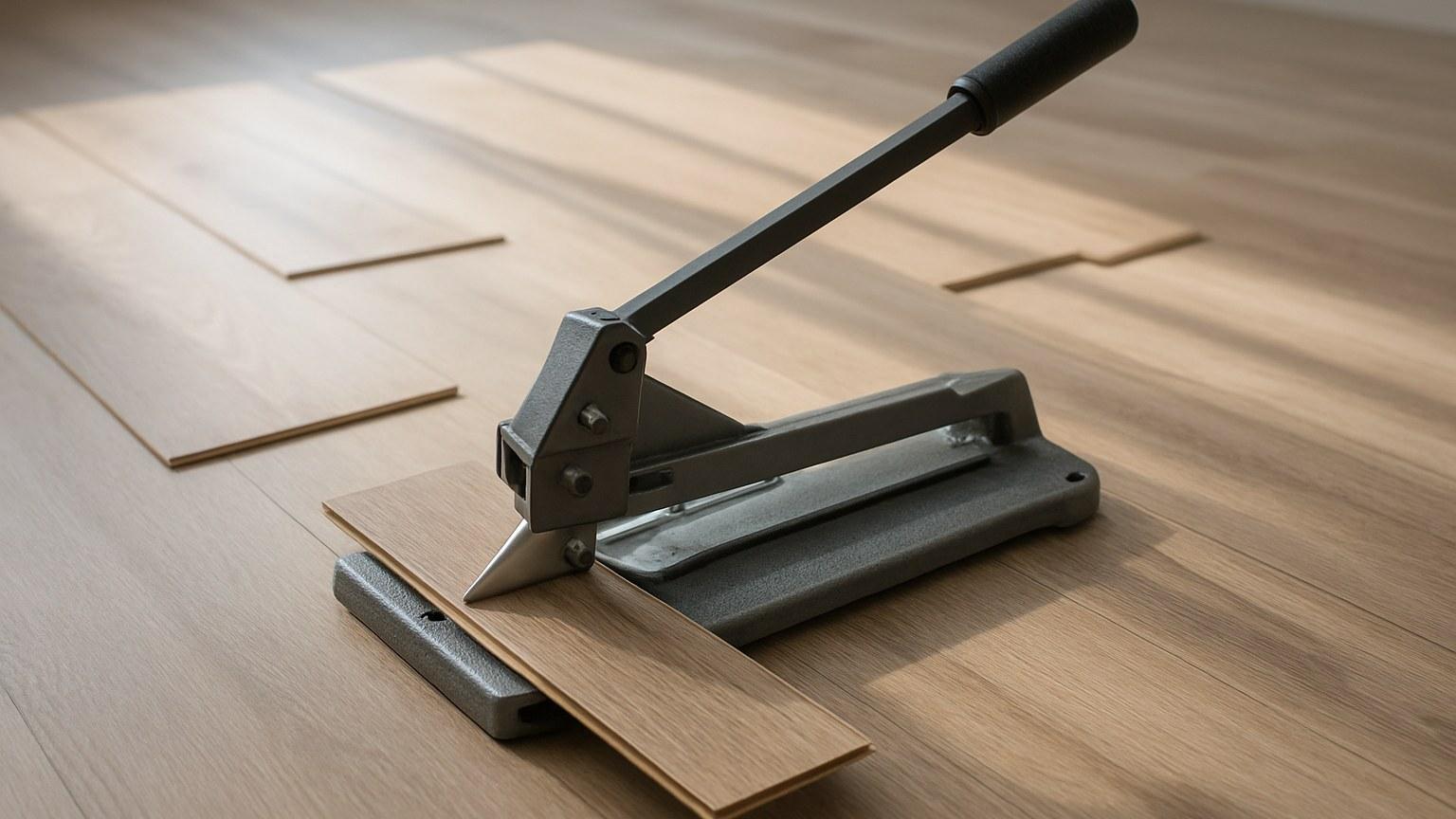
A manual score-and-snap vinyl plank cutter gives the cleanest, fastest crosscut on most LVP (luxury vinyl plank), but thick rigid core and long rip cuts belong to a fine-tooth saw. I put a score-and-snap cutter, a utility knife, and vinyl shears through the same hands-on edge test, then cover separately where a saw fits in for rips and thick rigid core. No single tool handles every plank thickness and every cut, so shoppers end up buying the wrong one.
Key takeaways
- A manual score-and-snap vinyl plank cutter gives the cleanest, fastest crosscut on flexible LVP (luxury vinyl plank) and thinner rigid core, with no cord, dust, or noise.
- A utility knife handles thin flexible vinyl and small rooms; vinyl shears cut soft sheet vinyl fast but crack rigid SPC/WPC.
- For thick rigid core, lengthwise rip cuts, or a big job, a fine-tooth miter or table saw beats a manual cutter.
- Homeowner cutters run about $79.96 at Lumber Liquidators and $94.99-$134.99 at Walmart; renting a manual tile cutter adds up fast, so buying wins past a one-off small job.
- Keep the finish side up, score firm in one pass, and wear eye protection and gloves; a dull wheel or blade is the main cause of chipped edges.
What a Vinyl Plank Cutter Is and How It Works
A vinyl plank cutter, also sold as an LVP cutter, vinyl flooring cutter, or vinyl plank flooring cutter, is a manual lever press. A carbide wheel scores the plank, and an anvil under it snaps the plank clean. No power, no cord, no dust.
Think of it like a paper guillotine or a score-and-snap tile cutter, just with a table sized for plank widths instead of square tiles.
The parts are simple: a flat working table, a carbide scoring wheel on a lever handle, and a square fence that holds the plank straight. You push the handle down, the wheel presses and scores the surface, and the leverage does the snapping for you.
People reach for one over a saw because it makes clean crosscuts indoors with no dust mask and no screaming motor. The catch: a snap cutter only crosscuts, meaning across the width of the plank. It can't run a long cut down the length, and it can't cut a notch.
Types of Tools That Cut Vinyl Plank (and Which Plank Each Suits)
Four tools actually cut vinyl plank well, and the right one depends on your plank type more than your budget.
A score-and-snap cutter, like a Bon Tool-style unit, is the best all-rounder for flexible LVP and thinner rigid core crosscuts. Very thick SPC (stone plastic composite) takes more muscle on the handle, but it still works.
A utility knife is just a score-and-snap done by hand. It's fine on thin flexible vinyl and small rooms, but slow and rough on rigid core, where the knife skips instead of biting.
Vinyl shears are quick on soft sheet vinyl and thin LVP. They do poorly on rigid SPC or WPC (wood plastic composite), which tends to crack instead of cut.
A miter or table saw with a fine-tooth blade is the tool for thick rigid core, lengthwise rips, and a lot of cuts. You pay for it in dust and noise.
One thing to keep straight: cutting sheet vinyl off a roll is a different job from cutting planks. If you are laying rolls, follow a sheet vinyl cutting and installation walkthrough instead, because the technique and the tools differ.
| Tool | Best plank | Project size | Edge | Dust/noise | Rip cuts |
|---|---|---|---|---|---|
| Score-and-snap cutter | Flexible LVP + thin rigid core | Rooms up to whole house | Cleanest crosscut | None | No |
| Utility knife | Thin flexible vinyl | Small rooms, closets | Clean on flexible, rough on rigid | None | Yes, slow |
| Vinyl shears | Soft sheet vinyl, thin LVP | Small jobs, trims | Clean on soft, cracks rigid | None | No |
| Miter/table saw (fine blade) | Thick rigid SPC/WPC | Large jobs, many cuts | Clean with fine blade | High | Yes |
Which cutting tool suits which plank thickness and project size.
The Best Vinyl Plank Cutter for a DIY Budget
For most homeowners laying flexible LVP or standard rigid core, the manual score-and-snap cutter is the pick. It gives you the cleanest crosscut, costs far less than a job-site saw, and you can run it in the living room while someone sleeps in the next room. Once you've settled on a cutter, the actual installation process, from layout to the final row, follows its own set of steps, which the vinyl plank flooring installation guide walks through in order.
If your plank is thick SPC and you have a lot of it, skip the manual cutter as your only tool and plan on a saw for the long cuts. A manual cutter plus a utility knife for notches covers the rest.
Our Hands-On Test: Which Method Gives the Cleanest Edge?
The score-and-snap cutter won on both planks. I cut the same two planks, a flexible LVP and a rigid core SPC, with a score-and-snap cutter, a utility knife, and vinyl shears, and scored each on edge cleanliness, chipping, and speed.
The cutter was cleanest and fastest on both, though the SPC needed a firmer press on the handle. The utility knife was clean on the flexible plank once I cut a deep score, but turned ragged and tiring on the SPC. The shears flew through the flexible plank but cracked the SPC outright.
On a rec-room floor outside Dayton I once tried trimming an SPC plank with shears just to save a walk back to the truck for the cutter, and it split corner to corner. Rigid core punishes the knife and shears. Flexible vinyl forgives almost any method.
One more thing I watched for. Where I got chipping, the cause was a dull wheel or a worn blade, not the tool itself. The carbide wheel has to cut cleanly through the wear layer, the clear top coat that takes the wear, in one pass. So I sharpen or swap the blade before I blame the method.
| Method | Flexible LVP | Rigid SPC | Speed | Verdict |
|---|---|---|---|---|
| Score-and-snap | Clean, no chips | Clean, needs firm press | Fastest | Best all-round |
| Utility knife | Clean with a deep score | Ragged, tiring | Slow | Thin flexible vinyl only |
| Vinyl shears | Fast, edge slightly rounded | Cracked the plank | Fast on soft | Soft sheet vinyl only |
Hands-on results cutting the same two planks three ways, rated on edge, chipping, and speed.
How to Cut Vinyl Plank Cleanly, Step by Step
Flexible LVP is genuinely easy to cut. Rigid core SPC and WPC is harder and more brittle, so the tool you pick matters much more there. Picking the right type up front also affects how long the floor holds up once it's down, which the vinyl flooring buyer's guide breaks down room by room.
Here's the order I follow on a crosscut:
- Measure from the wall and leave room for the expansion gap. Floating floors move, and the gap size is set by your plank's own install sheet, not a one-size number, so check the box.
- Mark the cut line.
- Set the plank square against the cutter's fence.
- Score firm in one pass.
- Snap the plank down and away from you.
Keep the finish side, the wear-layer side, facing up on a score-and-snap cutter. Any chipping then lands on the hidden back of the plank instead of the face that shows.
On thick rigid core, don't force one heavy pass. Make two or three lighter scores along the same line, then snap. You get a straighter break and less chipping.
Is vinyl plank easy to cut?
Yes for flexible LVP, mostly yes for rigid core if your tool and blade are right. A sharp wheel scored deep enough gives you a clean break. A shallow score is what tears the plank off your line and chips the edge, as the drawing below shows.
Cutting is only the first step. Once your planks are cut to size, the full luxury vinyl plank installation guide walks through laying them, and both that and the cut depend on a flat, dry subfloor underneath. On most floating floors the whole job lasts only as long as that prep, so check flatness and moisture before any plank goes down.
Cutting Vinyl Plank Lengthwise and Around Doorways
Most manual cutters only crosscut to the width of their table, so a long rip down the length of a plank needs a utility knife and straightedge or a table or circular saw.
How to Cut Vinyl Plank Lengthwise (Rip Cuts)
To rip with a knife, clamp a straightedge on your line, score deep in several passes, then snap the plank over the edge of a table. This is fine on flexible vinyl. On rigid core it's slow and tiring, and a saw does it faster and straighter.
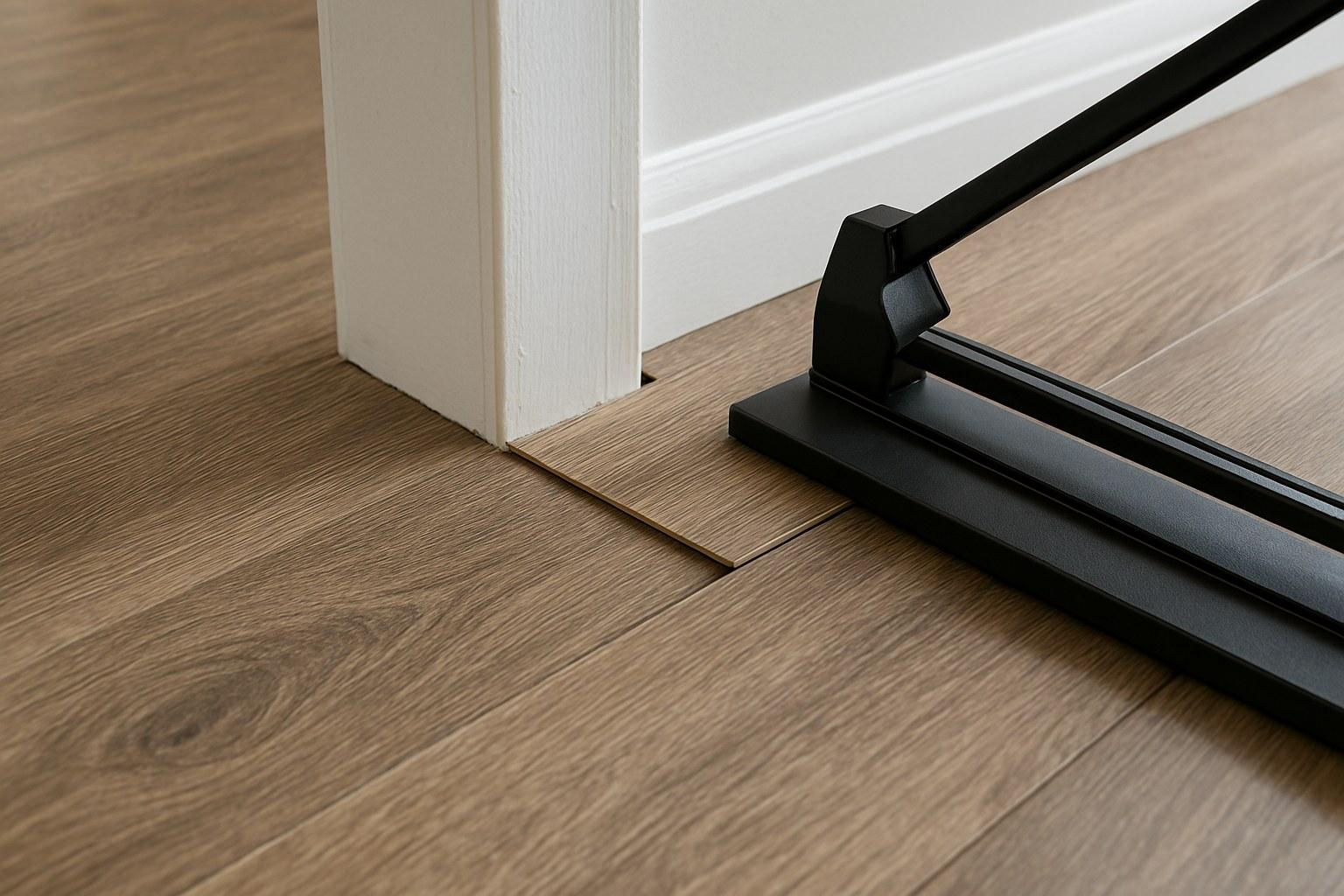
Doorway jambs, pipes, and inside corners need a different approach. A snap cutter can't cut a notch, so you want a jigsaw, or a sharp knife and a cardboard template, for those odd shapes.
Protect the click-lock edge when you cut the wall-side planks. Trim off the factory tongue or groove you don't need against the wall, but keep the locking edge that joins the next plank fully intact, or the seam won't hold.
For the layout and doorway mistakes that trip people up, the installing LVP guide covers them, and if you're gluing down instead of floating, the glue-down vinyl plank guide shows how cutting fits into that install.
Renting vs. Buying a Vinyl Plank Cutter
Buy a cutter if you're doing more than a room or two. Rent only for a one-off small job, and even then a manual tile cutter is often all you can get.
Homeowner cutters run about $79.96 per unit at Lumber Liquidators and $94.99 to $134.99 at Walmart. Tools4Flooring lists a wider range, from about $97 up to $819.49 once pro guillotine cutters are included. On the rental side, DIYTileGuy puts a manual tile cutter at roughly $15 to $25 a day.
Amazon and Harbor Freight both carry score-and-snap cutters too. Listings move around by brand and model, so weigh what you find there against the ranges above before you buy.
| Option | Typical price | Where |
|---|---|---|
| Homeowner score-and-snap cutter | ~$79.96 | Lumber Liquidators |
| Homeowner cutter | $94.99-$134.99 | Walmart |
| Full range incl. pro guillotines | $97-$819.49 | Tools4Flooring |
| Rent a manual tile cutter | $15-$25/day | DIYTileGuy |
Source: walmart.com, diytileguy.com, lumberliquidators.com and tools4flooring.com
Prices for buying versus renting a manual plank or tile cutter.
Run the math on your own job. Past a one-off closet or small bath, buying wins almost every time.
Safety Gear You Need
Eye protection and cut-resistant gloves are the two pieces of gear that matter most, since the snap force on a score-and-snap cutter and the carbide wheel itself are the two biggest hazards in this job. Safety glasses belong on for every cut, not just the saw work. A clean snap can still send small chips flying off the break line, and a dull wheel that skips across the surface instead of scoring sends more.
Gloves rated for cutting matter around the carbide wheel and around a utility knife blade. Hands end up close to both tools when a plank is held square against the fence, and a slip on a knife score is the most common way fingers get cut on this job. Snug-fitting gloves, not loose work gloves, keep a good grip on the plank without catching on the lever handle.
When a saw comes out for rigid core rip cuts, the gear list grows. A dust mask or respirator is worth wearing, since a fine-tooth blade on rigid core throws fine dust the way the manual cutter never does. Hearing protection matters too; a miter or table saw running for a full room of cuts is loud in a way a manual cutter and a utility knife simply are not.
Knee protection is worth adding on any floor laid in a basement or on a hard subfloor, since most of the measuring, scoring, and test-fitting happens down at plank level.
Sources
- ASTM F0511-17(2021) Standard
- Walmart.com
- Diytileguy.com
- Lumberliquidators.com
- Tools4flooring.com