
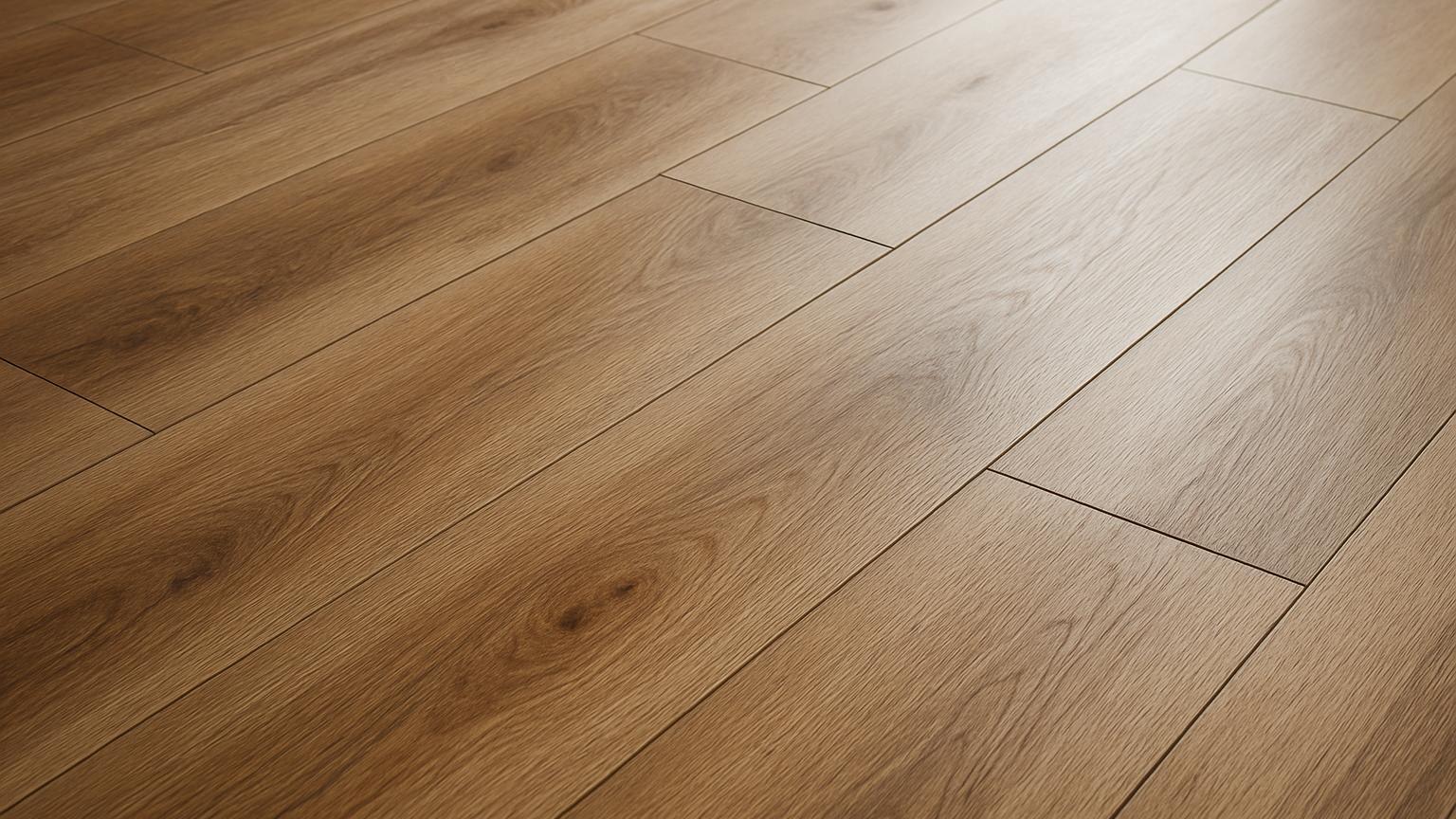
Rigid core vinyl plank flooring is luxury vinyl plank built on a stiff core. The three cores split simply: SPC (stone plastic composite) is the hard, stone-based one stores usually mean by "rigid," WPC (wood plastic composite) is softer and warmer, and MgO is a newer mineral core. The catch is that brands stamp different acronyms on nearly the same board, so shoppers end up paying for a label instead of choosing a core that fits the room.
Key takeaways
- Rigid core vinyl plank is just LVP (luxury vinyl plank) built on a stiff core; in most stores "rigid core" and "SPC" mean the same thing.
- SPC (stone-based) is harder and best for kitchens, entries, and pets; WPC (foam/wood-composite) is warmer and quieter underfoot; MgO is a newer mineral core.
- Material runs about $6-$12 per sq ft and fully installed about $8-$13 per sq ft, per nedesestimating.com.
- The core is waterproof, but the seams and perimeter are only water-resistant, so standing water can still reach the subfloor.
- Click-lock floating is realistic for most DIYers; glue-down, stairs, and big open rooms are worth hiring out.
What Is Rigid Core Vinyl Plank Flooring?
Rigid core vinyl plank is luxury vinyl plank (LVP) built on a stiff, stay-flat core instead of a bendy one. That stiffness is the whole point. A rigid plank won't flex underfoot, won't telegraph every little bump in the subfloor, and won't dent as easily as the thin, floppy vinyl of years past. Most of these planks are printed with a wood-look finish, and knowing the things to check before buying wood-look vinyl flooring can save a return trip to the store.
The rigid core family covers two main cores: SPC (stone-plastic) and WPC (wood-plastic). Most of what stores now label simply "rigid core" is SPC.
Why did it take over so fast? The stiff core rides over minor subfloor flaws, stays flat, and the core itself is waterproof. That combination pushed glue-down vinyl out of kitchens, baths, and basements. The exact history is fuzzy, but accounts in the flooring trade often point to US Floors as the company that first brought WPC to the US market around 2012, and sales of rigid-core plank took off from there.
Is Rigid Core Flooring the Same as Vinyl Plank?
Yes, with one practical wrinkle. Rigid core is still vinyl plank, it just swaps the old flexible core for a stiff one, which changes how it installs and how it feels underfoot, not what it's made of at heart. If a store clerk says "rigid core," ask which core is actually under that label, because most of the time it's SPC, not WPC or MgO.
Decoding the Acronyms: LVT, LVP, WPC, SPC, MgO, and EIR
The alphabet soup on vinyl boxes trips up more buyers than the flooring itself does. Here is what each tag actually tells you.
The shape terms describe what the plank looks like. LVP is luxury vinyl plank, which carries a wood look. LVT is luxury vinyl tile, made to look like stone or ceramic. LVF is the umbrella term that covers both. EVP, "engineered vinyl plank," is just a marketing name for rigid core, not a separate product. If you're leaning toward the tile-look side of that split, the differences between LVT and VCT (vinyl composition tile) affect durability, water resistance, and cost more than the shape alone.
The core terms describe the body underneath. WPC (wood-plastic composite) is foamier and warmer. SPC (stone-plastic composite) is denser and harder, and it's the one people mean when they say "rigid." MgO (magnesium oxide, or mineral core) is a newer, very hard option. None of these core labels say anything about the range of lvp flooring colors available on top of them, which varies widely from brand to brand.
EIR stands for embossed in register. It's a surface texture that lines up with the printed grain, so the plank feels like real wood under your hand instead of a flat photo. That's a look-and-feel term, not a durability rating. Photos alone struggle to capture that texture difference, which is why browsing images of embossed vinyl flooring side by side helps more than a single showroom sample.
What are the cores actually made of? PVC (polyvinyl chloride) plus filler. SPC is mostly calcium carbonate, which is limestone powder, blended with PVC. That limestone is where the hardness comes from. If you want to see what the word "luxury" really buys past these acronyms, the breakdown in what the word "luxury" vinyl actually means is worth a read.
WPC vs SPC vs MgO: How the Three Cores Compare
The short version: all three cores are waterproof, so the real difference is how they feel and how well they resist dents, not whether the plank survives water.
SPC is the hardest and densest, usually the thinnest of the three. It gives the best dent and traffic resistance, but it runs cooler and firmer underfoot and can be a touch louder to walk on. That makes it a pick for kitchens, entries, mudrooms, pets, and busy households. Picking vinyl flooring for a kitchen specifically brings in a few more variables than core hardness alone, like spill zones near the sink and how the layout reads under cabinets.
WPC is softer and thicker, with a bit more give. It's warmer and quieter to walk on, which bedrooms and living rooms appreciate. The tradeoff is that it dents easier under heavy point loads, like a fridge leg or a piano wheel. That bedroom-friendly warmth is just one factor in what decides vinyl flooring's lifespan, which also weighs basement use and everyday wear.
MgO is a mineral core that's very hard and tolerant of heat and moisture. It's newer and less common on store shelves, and it sits between the other two on feel.
| Core | Hardness | Underfoot | Thickness | Moisture | Best room |
|---|---|---|---|---|---|
| SPC (stone-plastic / "rigid") | Hardest, densest | Cooler, firmer, can be louder | Usually thinnest | Waterproof core | Kitchens, entries, mudrooms, high traffic, pets |
| WPC (wood-plastic) | Softer, more give | Warmer, quieter | Usually thickest | Waterproof core | Bedrooms, living rooms, comfort spaces |
| MgO (mineral / magnesium oxide) | Very hard | Firm | Varies | Waterproof core, heat-tolerant | Mixed-use; newer and less common |
How the three rigid cores compare on hardness, feel, thickness, moisture, and room fit.
Rigid Core vs Regular Luxury Vinyl Plank (and Laminate)
Rigid core and flexible LVP are both vinyl plank, but they install nothing alike. Rigid core is stiff, hides minor subfloor flaws, and clicks together as a floating floor. Flexible, standard LVP is thinner and cheaper, and it has to be glued down to a near-perfect subfloor. If your slab or plywood has any waviness, the flexible stuff shows every bit of it.
Against laminate, the tradeoff is worth knowing. Laminate's core is wood fiber (HDF), and it swells if water sits on it. A rigid core shrugs water off instead. In exchange, laminate often looks and feels a shade more like real wood and usually costs a little less per square foot.
One money note: "EVP" and "rigid core LVP" are the same thing under different brand names. Don't pay a premium for the acronym.
For a room-by-room look at where each one wins, the breakdown in the vinyl vs laminate by room guide matches the tradeoff to each space instead of crowning one winner for the whole house.
How Rigid Core Vinyl Plank Is Built, Layer by Layer
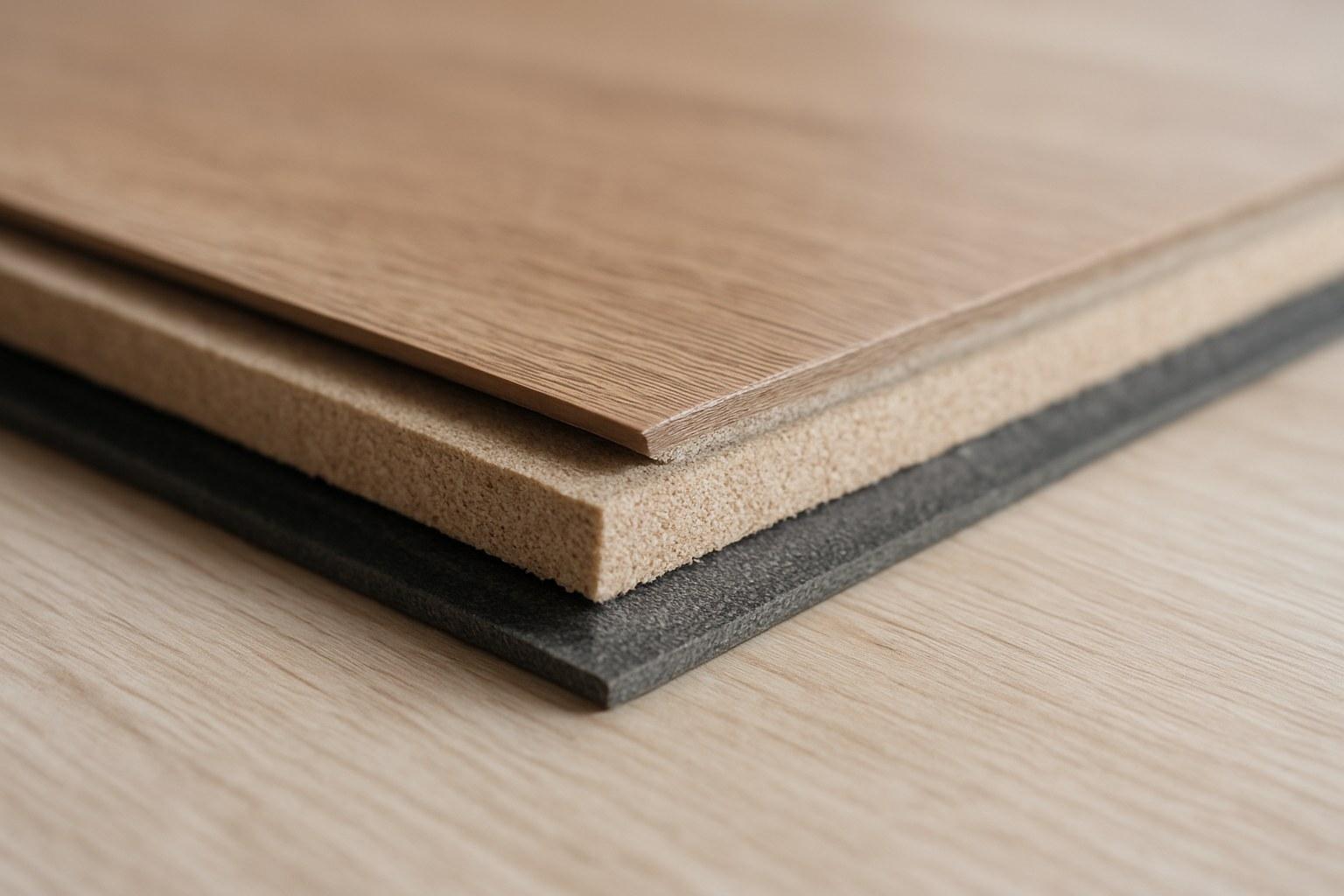
A rigid core plank is a stack. From top to bottom: a scuff and UV coating, a clear wear layer, the printed design layer, the rigid core, and often an attached pad on the bottom.
The wear layer is the one spec that actually predicts how the floor holds up. It's the clear top that takes the scratches, measured in mils, which are thousandths of an inch. Don't trust a category number you read online. Check the specific product's mil rating before you buy, because a thin wear layer that's fine for a guest bedroom will scuff fast in a kitchen.
Many rigid-core planks come with an attached pad already on the back, often an IXPE pad, that's a cross-linked, closed-cell polyethylene foam pad fused to the plank at the factory. That answers the common question about waterproof vinyl plank flooring with a pad built in. But that attached pad matters for another reason: on a lot of these products, placing a second underlayment beneath the existing one voids the warranty. Follow the product's own instructions on that, every time.
Overall thickness often runs 4-8mm including the pad. So a "6mm vinyl plank" is a mid-range total thickness, not a measure of the wear layer or the core by itself. Two planks can both say 6mm and have very different wear layers, which is why the mil number beats the millimeter number when you're comparing.
Is Rigid Core Vinyl Plank Really Waterproof?
The core is waterproof. The floor is not. "Waterproof" on the box describes the material of the plank, not the seams and not the room.
Water can still work its way through the seams and the perimeter gap, slip under the floating floor, and sit on the subfloor underneath. That's where the damage happens. A waterproof core and water-resistant seams are not the same promise. Failures I'm called to fix start at the edges; the plank face itself remains unaffected.
On a kitchen job in a Dayton split-level, a slow dishwasher leak ran for weeks. The planks themselves came up perfect. The particleboard beneath the row by the sink had turned to mush, because water had crept past the edge and had nowhere to go. The core did its job; the seam let it down.
For a waterproof setup in a wet room, look for an SPC core with a tight click-lock and a clean perimeter detail. It still doesn't replace caulk around tubs and toilets. And it's exactly why a basement or bath needs a dry, flat slab underneath, not just a "waterproof" label on the carton. The slab matters more than the plank.
Installing Rigid Core: Click, Glue-Down, or Loose Lay
Before a single plank goes down, two checks come first, no matter which format you picked. Check the subfloor for flatness, because even a stiff floating floor will telegraph a hump you talked yourself into ignoring. And check concrete for moisture before anything floats over it. Whether you acclimate the planks, and for how long, depends on that product's own sheet, not a rule of thumb somebody repeated online.
Expansion space around the perimeter is another requirement for every floating rigid floor. The exact size is set by the manufacturer's instructions, so treat "leave a gap" as the rule and look up the number per product.
Click-lock floating is a common format and DIY-friendly. Planks snap together over an underlayment or an attached pad, using angle-tap or drop-lock systems like Uniclic and Valinge. If your subfloor is flat and dry, this is realistic for most handy homeowners in a square room.
Glue-down is either thinner flexible vinyl or rigid board bonded straight to the subfloor, usually in big commercial spaces. It demands a near-perfect subfloor and clean adhesive work, so hire it out.
Loose lay uses a heavy, grippy backing that holds the planks in place by weight and friction, sometimes with perimeter glue. It's handy for spaces where you may want to pull a plank later.
Click-lock in a bedroom or a straightforward living room is a weekend many people can handle. Stairs, glue-down, and big open-plan floors with doorways and moisture transitions are where hiring a pro pays for itself.
What Rigid Core Vinyl Plank Really Costs
Expect roughly $6-$12 per square foot for the material and about $8-$13 per square foot fully installed, according to nedesestimating.com. Where you land inside that range depends on the wear layer, the core, and the job, with stairs and basements pushing you toward the top end because of the added labor.
| Line item | Typical range (per sq ft) |
|---|---|
| Material only | $6-$12 |
| Fully installed (material + labor) | $8-$13 |
Figures per nedesestimating.com; installed cost includes labor.
A simple, square open room sits at the low end. Stairs and basements push to the high end. Stairs eat labor hours because each tread is a cut-and-fit job, and basements add slab prep, moisture testing, and sometimes leveling before anything floats.
For a full breakdown split by material and labor, with the per-square-foot math worked out, see the LVP flooring cost guide and run your own room size against it.
Which Rigid Core Fits Your Room and Household?
The right rigid core depends less on the room's name and more on what lives in it. Start with traffic and moisture first, then let comfort preferences settle the rest.
For households with pets, young kids, or anyone who tracks grit and water across an entry, lean toward an SPC core. It resists dents from dropped toys and chew encounters, and it holds up in mudrooms, kitchens, and basements where moisture risk is higher. A Dayton homeowner named Teresa was deciding between cores for a kitchen that doubled as a dog's main hangout spot, and SPC's density settled it for her once she felt how little a kibble bowl dented the sample.
For bedrooms, home offices, and living rooms where people are barefoot and sitting on the floor, WPC earns its keep. The extra give feels warmer in January and quieter when someone drops a book, which matters more in a room meant for comfort than for durability.
Household size and mobility matter too. Older adults or anyone sensitive to hard, cold surfaces often prefer WPC's softer feel underfoot in main living spaces, while still choosing SPC for the entry and kitchen where spills and wear concentrate. Renters or anyone who expects to move planks later should favor a click-lock format in either core, since it stays easiest to lift and replace.
Best Value: Where to Buy and What to Buy
Best value comes from matching the wear layer and core to the room first, then letting price settle the choice between comparably spec'd planks, whether you're shopping a home improvement store or a flooring specialty retailer in the Dayton area. Chasing the lowest shelf price without checking the mil rating is how a kitchen floor ends up scuffed in a year.
Start by asking for the spec sheet on any plank before comparing tags. A mid-tier SPC line with a documented wear layer and a tight click-lock system is usually a better buy than a premium-looking WPC plank with a thin wear layer and no published mil number. Within the $6-$12 material range already covered above, the planks near the middle often carry the thicker wear layers and the more dependable seam systems, which matters more for long-term value than shaving another dollar off the low end.
Buy a little extra, beyond simple waste allowance, and keep it. Dye lots vary between production runs, so a box bought later to patch a damaged area may not match the original floor. Order enough from the same lot to finish the room and set aside a few spare planks for repairs down the road, since that leftover box is what makes an easy swap possible if one plank ever gets damaged.