
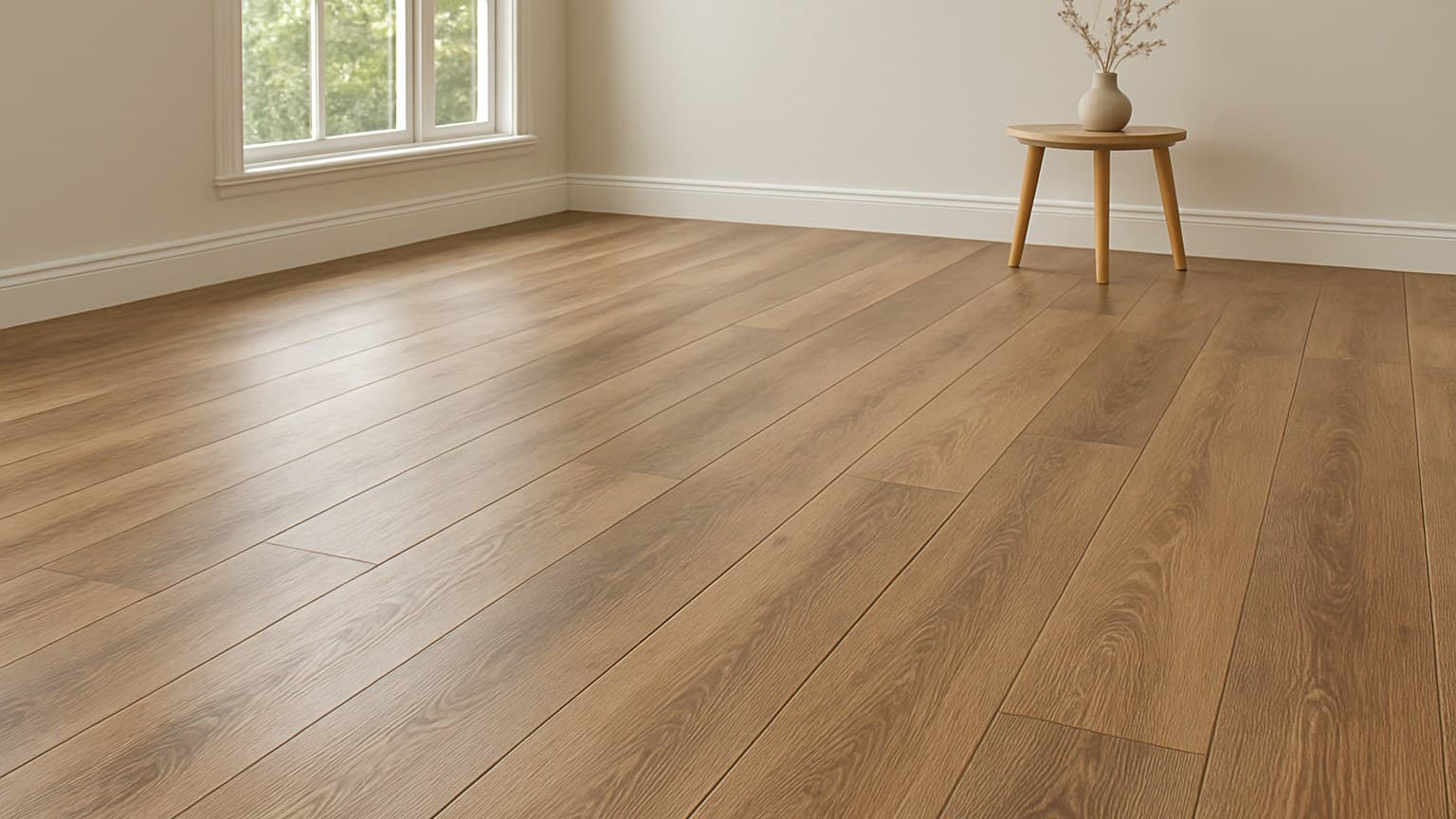
The best LVP (luxury vinyl plank) flooring isn't one product; it's the spec matched to your room, and for most living spaces COREtec's rigid core and 20-30 mil wear layer, per Carpet Exchange's listing, is the safe default. Star ratings rank logos while core type and wear layer are what actually hold up over time. Below are five picks, each tied to the room you're buying for, plus a side-by-side table at the end.
Key takeaways
- For most living spaces, COREtec is the safe default: a rigid core with an attached pad and a 20-30 mil wear layer, per Carpet Exchange's listing.
- Buy at least a 20 mil wear layer for everyday rooms and 28 mil or more for pets, kids, or heavy traffic.
- Use an SPC (stone-based) rigid core in basements, kitchens, and baths; a softer WPC (wood-based) core feels warmer underfoot in living rooms and bedrooms.
- 'Waterproof' describes the plank, not the floor: water still slips under a floating LVP (luxury vinyl plank) at the seams and perimeter and sits on the subfloor.
- Click-lock LVP in a square room is a realistic DIY; glue-down, stairs, and big open spans are worth hiring out.
How to Read a "Best LVP" List Before You Trust One
The pick that matters is the spec, not the badge on the display. Four things decide how a plank holds up: the core type, the wear layer (measured in mils), the surface texture, and any safety certification. Get those right and the brand almost sorts itself out.
Start with the wear layer. That's the clear top coat that takes all the scratching and scuffing. Carpet Exchange's buying guide lists 20 mil as a sane baseline for everyday rooms, and 28 mil or more for pets, kids, and heavy traffic. That range is set per product, not by some industry rule, so check the number printed on the box before you buy.
Texture is the next tell. Look for EIR, short for embossed-in-register. That means the texture pressed into the plank lines up with the printed wood grain, so you feel the grooves where you see them. It's what separates a floor that reads as real wood from a shiny photo of wood.
Certifications are easy to skim but worth a glance. FloorScore means the plank passed a test for low indoor air emissions. Phthalate-free means it skips a class of plasticizer softeners some shoppers want to avoid.
One quick sorting note: LVT (luxury vinyl tile) is the tile-shaped cousin of LVP, cut as squares instead of planks. Laminate is the other option people cross-shop, and it usually reads more like real wood and costs less, but it tolerates water worse. I break that down room by room in the vinyl vs laminate guide.
SPC vs WPC: Which Core for Which Room
SPC stands for stone polymer composite. It's a harder, stone-based core that stays put through damp and temperature swings, so it's my default for slabs and wet rooms. WPC stands for wood polymer composite. It's a softer, wood-based core that feels a little warmer and more forgiving underfoot, which is nice in a bedroom or a living room where you stand around a lot.
Which LVP core fits which room, with SPC marked for slabs, wet rooms, and hot sunrooms and WPC for living spaces. Not to scale.
Best All-Around LVP: COREtec
For most homes, COREtec is the default pick. It runs a rigid core, an attached pad on most lines, and a 20-30 mil wear layer according to Carpet Exchange's listing. That spread covers everyday living spaces without any drama.
The attached pad matters at install time. On most rigid-core lines, rolling a second underlayment underneath can void the warranty, because the attached pad is already doing that job. Check the line's own instructions before you put anything down. On one Dayton job I pulled out foam a homeowner had added "for comfort," because it was quietly working against the warranty he'd paid for.
COREtec sells several lines at different thicknesses and finishes, so match the line to the room instead of grabbing whatever's on the nearest display. A thicker, softer line suits a bedroom; a flatter, tougher one suits a mudroom. If you want the breakdown of which line fits where, I go deep on it in COREtec Flooring: Which Line Actually Holds Up in Your Room?.
Best for Pets, Kids, and Busy Living Rooms: Shaw Floorté Pro
For claws, dragged toys, and daily abuse, buy the thickest wear layer you can afford. Shaw Floorté Pro runs up to a 30 mil wear layer according to Carpet Exchange, and that thick top coat is what keeps scratches from dulling the finish.
It's a rigid SPC core, and here's the catch most lists skip: a rigid core telegraphs lumps instead of hiding them. People assume LVP is flexible enough to float over a bad floor, but the stiff stuff rides over every hump. I've had seams peak up over a ridge a homeowner swore was flat. This floor only earns its scratch rating if the subfloor is leveled first.
Carpet Exchange lists Floorté Pro around $2.50-6.50 per square foot for materials, so the price swings with which line you pick. That's the plank only; labor is on top of it.
Best for Basements, Kitchens, and Baths: Mohawk SolidTech Plus (SPC)
For a slab or a wet room, pick an SPC rigid core like Mohawk SolidTech Plus. The stone-based core stays dimensionally stable over concrete and through temperature swings, which is exactly what a basement, kitchen, or bath asks for. Whether that basement floor lasts five years or twenty still comes down to a handful of core and wear-layer decisions covered in what decides if vinyl flooring lasts.
Read "waterproof" narrowly, because this is where failures actually start. Waterproof describes the plank, not the floor. The wear layer sheds water fine, but on a floating floor, water still creeps through the seams and down the perimeter expansion gap, then sits on the slab underneath. That trapped water is what buckles a floor, not the surface.
So before any plank goes down, do two checks. Moisture-test the slab, and check it for flatness. Those two steps are what the manufacturer warranty quietly hinges on, far more than the logo on the box. Skip them and a "waterproof" floor can still fail from below. If you want the full layer-by-layer picture of how LVP is built and where it leaks, the guide to what LVP actually is walks through it.
Best Budget LVP That Still Holds Up: CALI Vinyl
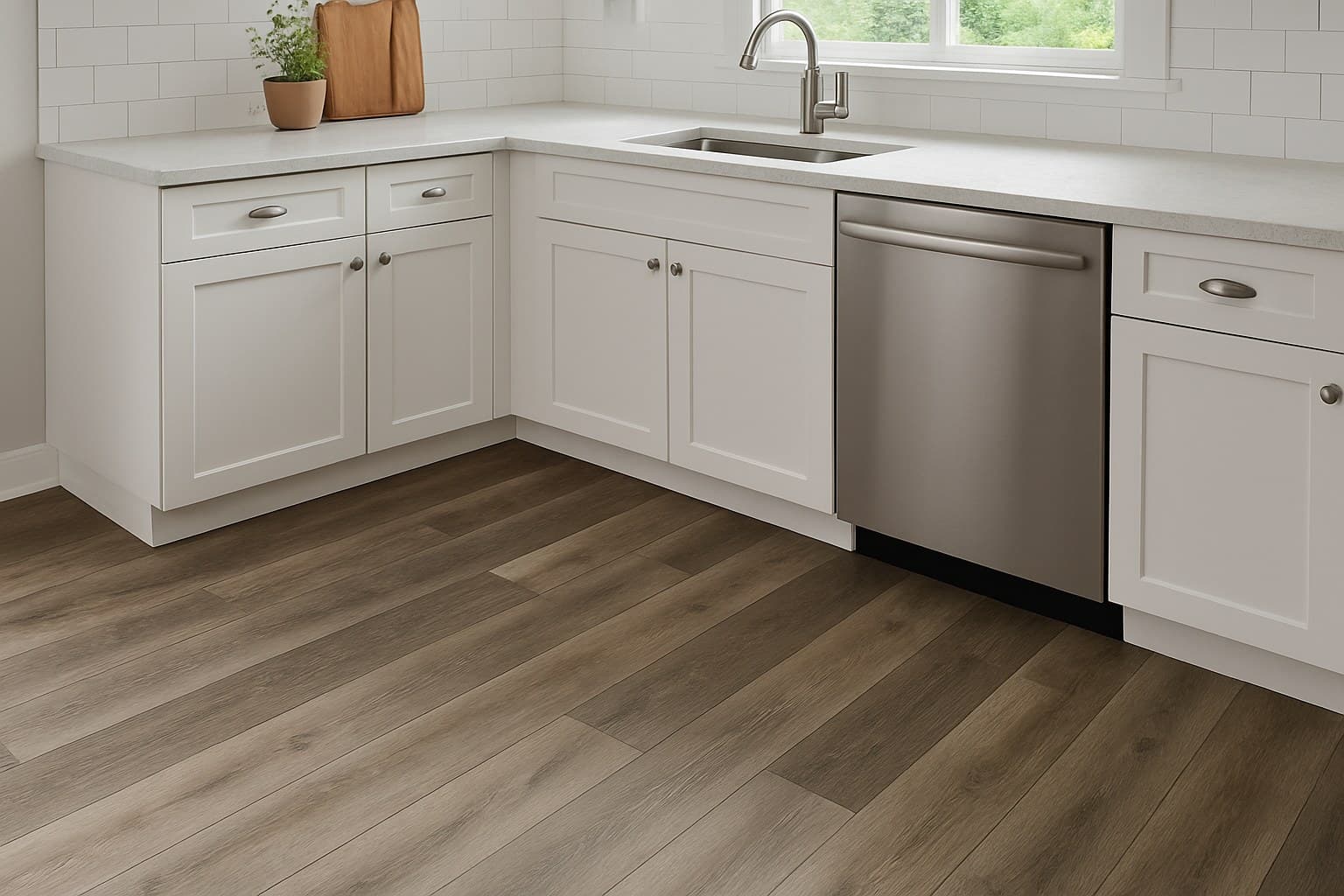
The budget pick that doesn't fall apart is an SPC core like CALI Vinyl. Judge it on mil per dollar, not just the sticker.
The cheapest LVP cuts corners on the wear layer, and a thin wear layer scuffs and dulls fast in a hallway or kitchen. That's the one spec I won't let a tight budget talk me out of. Set a 20 mil floor even when you're pinching, because a floor that looks tired in two years isn't cheap, it's expensive twice.
CALI's price varies by line, so figure the real installed number before you commit, plank plus labor, not just the per-square-foot tag that caught your eye.
Best Realistic Wood Look: Karndean Korlok
If you want it to read as real wood, chase EIR texture and a matte finish, not a glossy photo print. Karndean Korlok's embossing follows the printed grain, so the floor feels the way the picture looks when you walk on it.
The glue-down version gives the flattest, most convincing result, because nothing floats or bounces underfoot. The tradeoff is that glue-down is a hire-it-out install for most people. It's unforgiving of a bad subfloor and messy to redo, so this is not the place to learn.
A believable floor is also about how you lay it. Mix up the plank patterns so the same knot doesn't repeat every few rows, and keep the sheen low. If a floor looks fake, it's usually a shiny finish and a repeating print, not the brand. I list the other tells in 9 Things to Check Before You Buy Wood-Look Vinyl Flooring.
Best LVP Brands Compared Side by Side (and What Reddit Gets Right)
Here's a buying checklist (core, wear layer) and named-brand materials comparison in one place.
| Brand | Core | Wear layer | Materials price | Best for |
|---|---|---|---|---|
| COREtec | Rigid WPC-style core, attached pad on most lines | 20-30 mil | $1.99-7.50/sq ft | All-around living spaces |
| Shaw Floorté Pro | SPC rigid core | Up to 30 mil | $2.50-6.50/sq ft | Pets, kids, high traffic |
| Karastan | Rigid core | 20 mil | $3.99-4.99/sq ft | Mid-tier reference |
| Mohawk SolidTech Plus | SPC rigid core | Varies by line | Not published here | Basements, kitchens, baths |
| CALI Vinyl | SPC rigid core | Varies by line | Varies by line | Budget SPC |
Source: Carpet Exchange's published LVP pricing
Core type, wear layer, and materials-only price for five LVP picks; labor is extra and varies by room and install type.
One bias worth naming: the guides other on guide one mostly sell their own stock, so their "best" list tends to match their shelves. Independent lab testing exists from outlets like Consumer Reports, Good Housekeeping, and Better Homes & Gardens, so cross-check a star rating against those instead of trusting one store.
What the Reddit threads agree on lines up with what I see on jobs: wear layer and subfloor prep decide more than the logo, and anyone ranking brands without naming specs is guessing. The floor only lasts as long as the prep beneath it.
Sources
- Carpet Exchange's published LVP pricing