
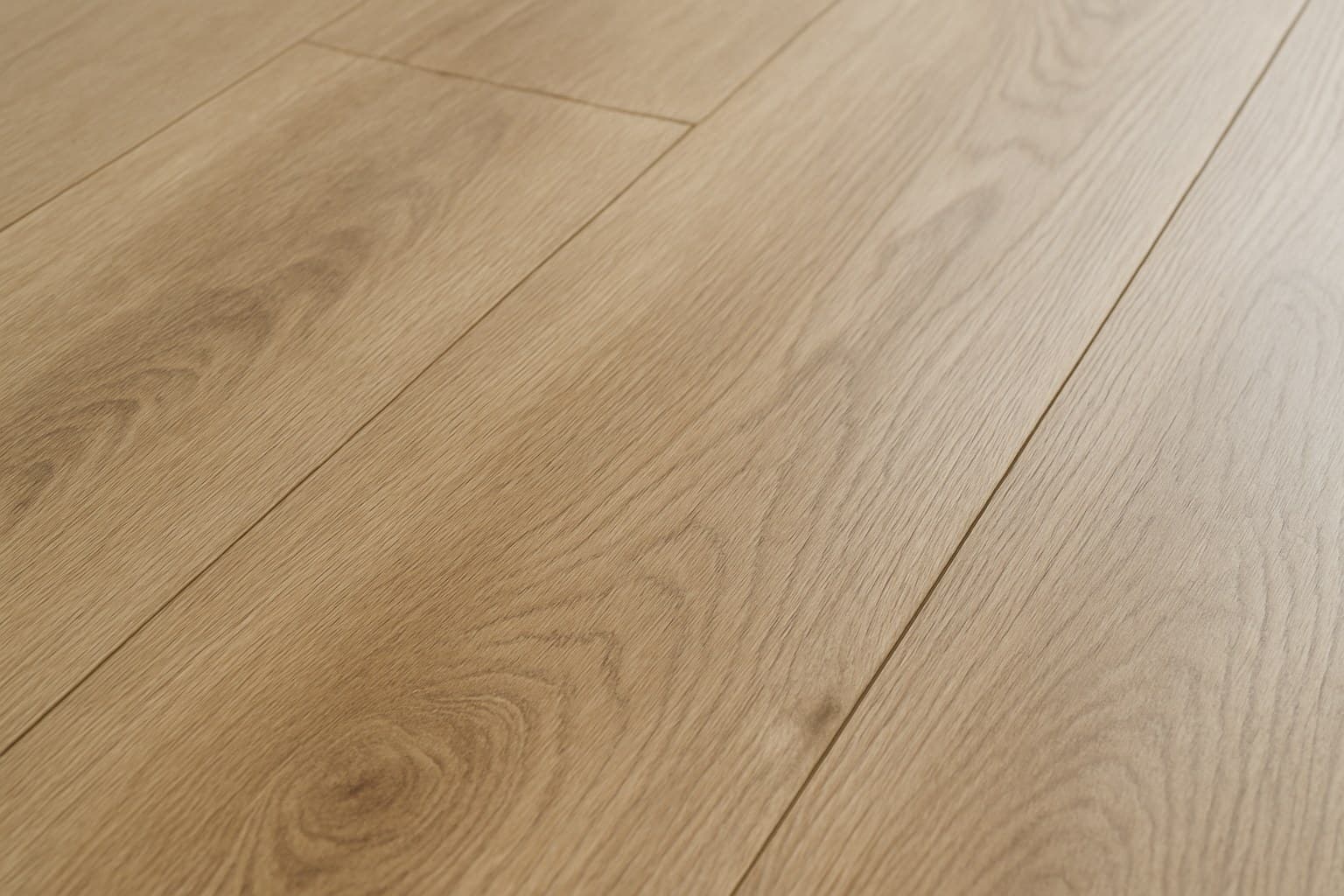
LVP color is where I watch homeowners freeze, because the trend flipped hard and the gray plank everyone laid in 2019 now dates a room fast. The color topping every job I quote for 2026 is warm honey and wheat oak, it reads like real sawn wood, not the flat gray that used to dominate. Knowing that up front keeps you from installing something that reads old on day one. Below is the ranked list, and what each color actually hides. For homeowners still torn between the real material and the plank, engineered hardwood versus vinyl plank walks through how each holds up long term.
Key takeaways
- Warm honey and wheat oak is the No. 1 trending LVP color for 2026; cool gray is fading across every major design outlet.
- Matte and low-gloss finishes now win; high-gloss LVP looks dated and shows every scuff and footprint.
- Mid-brown walnut and pecan hide dirt and scratches best, so they are the smart pick for pets and high-traffic homes.
- Wide planks (7-9 in) with EIR texture (embossing pressed to line up with the printed grain) and wire-brushed grain are the current default.
- Match the floor's undertone to your cabinets first; light floors open small, low-light rooms, while dark floors show every crumb.
Top LVP Colors Trending in 2026, Ranked
Warm honey and wheat oak is the color buyers are speccing most for 2026, and it's a safe bet against dating. On a whole-house job I did last winter for the Bauer family in Tulsa, they walked in wanting gray and left with a warm honey oak once they saw the two side by side in real light. That swap keeps happening on the quotes I write.
Here's how the top tier stacks up, ranked by how fast each one dates.
| Rank | Color | Undertone | What it hides | Best room | Dating risk |
|---|---|---|---|---|---|
| 1 | Warm honey / wheat oak | Golden warm | Light scuffs, everyday dust | Whole-home, small and dark rooms | Low |
| 2 | Greige (gray-beige) | Neutral warm-gray | Some dust, light grit | Open-plan, transitional homes | Low |
| 3 | Mid-brown walnut / pecan | Rich brown | Dirt and pet scratches best | Kitchens, entries, homes with pets | Very low |
| 4 | Blonde / light oak | Pale warm | Dust, opens tight rooms | Small, low-light, modern spaces | Low-medium |
| 5 | Deep chocolate / charcoal (statement) | Dark cool or warm | Little; shows crumbs and dust | Accent areas, big bright rooms | Medium |
Source: the LVP colors my customers picked most over this past year of jobs
Notice the pattern here: every color in the top three leans warm, and dating risk drops as the tone gets richer, that's the shift I see homeowners react to most when they walk showroom floors side by side. For a broader breakdown across every material and room type, this roundup of floor colors that never go out of style lays out the safest long-term picks.
A quick word on why warm oak works now when it didn't used to. LVP color is a printed film under a clear wear layer, and the printing got good. A few years back the warm tones looked plasticky and orange. The 2026 films read like real sawn oak, so you get the warm look without the fake sheen that used to give cheap vinyl away. If you're weighing that printed look against the real thing, this guide to solid vs. engineered hardwood floors breaks down picking the right species too.
Blonde and light oak are also having a real moment, especially in tight rooms. I dug into whether blonde floors are here to stay if that's the direction you're leaning. For a closer look at the two most popular light options, see how blonde maple vs blonde oak vinyl plank compare for your room.
What's Fading: Cool Gray, High-Gloss, and Orange Oak
Cool, blue-gray LVP is the big one on the way out. Outlets from Veranda to The Spruce are calling gray done for 2026, and I see it on the floor too. The stark, cold gray that defined the 2010s now makes a fresh install look like it's already five years old.
High-gloss, shiny planks are fading too. They read cheap, and every scuff, footprint, and dust bunny shows on them. In a kitchen or entry that gloss looks scratched within a season.
Orange-toned, yellow 2000s oak is a dated wood tone. Don't confuse it with warm honey oak, which is the opposite: honey is a clean golden tone, while the old orange oak has a loud, brassy cast. One is trending, one is not.
If you already have gray, you don't have to rip it out. Gray LVP still wears fine, so I tell clients to ride it until the floor is actually worn or they're renovating anyway. Replacing a sound floor just to chase a color is money you'll wish you kept.
Finish, Texture, and Plank Width for 2026
Matte and low-gloss sheen wins now. It hides scuffs and reads more like real wood than the shiny stuff did. On every install this year, matte is the default I reach for.
Wide planks in the 7 to 9 inch range are the standard, and herringbone and chevron layouts (planks set in a repeating V or zigzag) are trending for feature spaces like entries and dining rooms.
Two texture terms worth knowing:
- EIR means embossed-in-register: the pressed-in grain texture you feel is lined up with the printed grain you see, so it looks and feels like one piece of wood instead of a photo under a flat surface.
- Wire-brushed means the grain looks lightly scraped, giving the plank depth and hiding fine scratches.
Texture also ties to the core under your feet. SPC (stone plastic composite) is a harder, denser core that resists dents better and feels firm. WPC (wood plastic composite) has a bit more give, so it feels slightly softer and warmer to stand on. Both come in every trending color, so pick the color first and the core for how the room gets used.
How to Choose Your LVP Color for Your Room
First rule: match the floor's undertone to the cabinets and trim you're keeping. Those are the expensive things you can't easily swap, so the floor works around them, not the reverse. A warm honey floor fights cool white-gray cabinets, and that clash is what makes a room feel off even when people can't name why.
From there it comes down to the room:
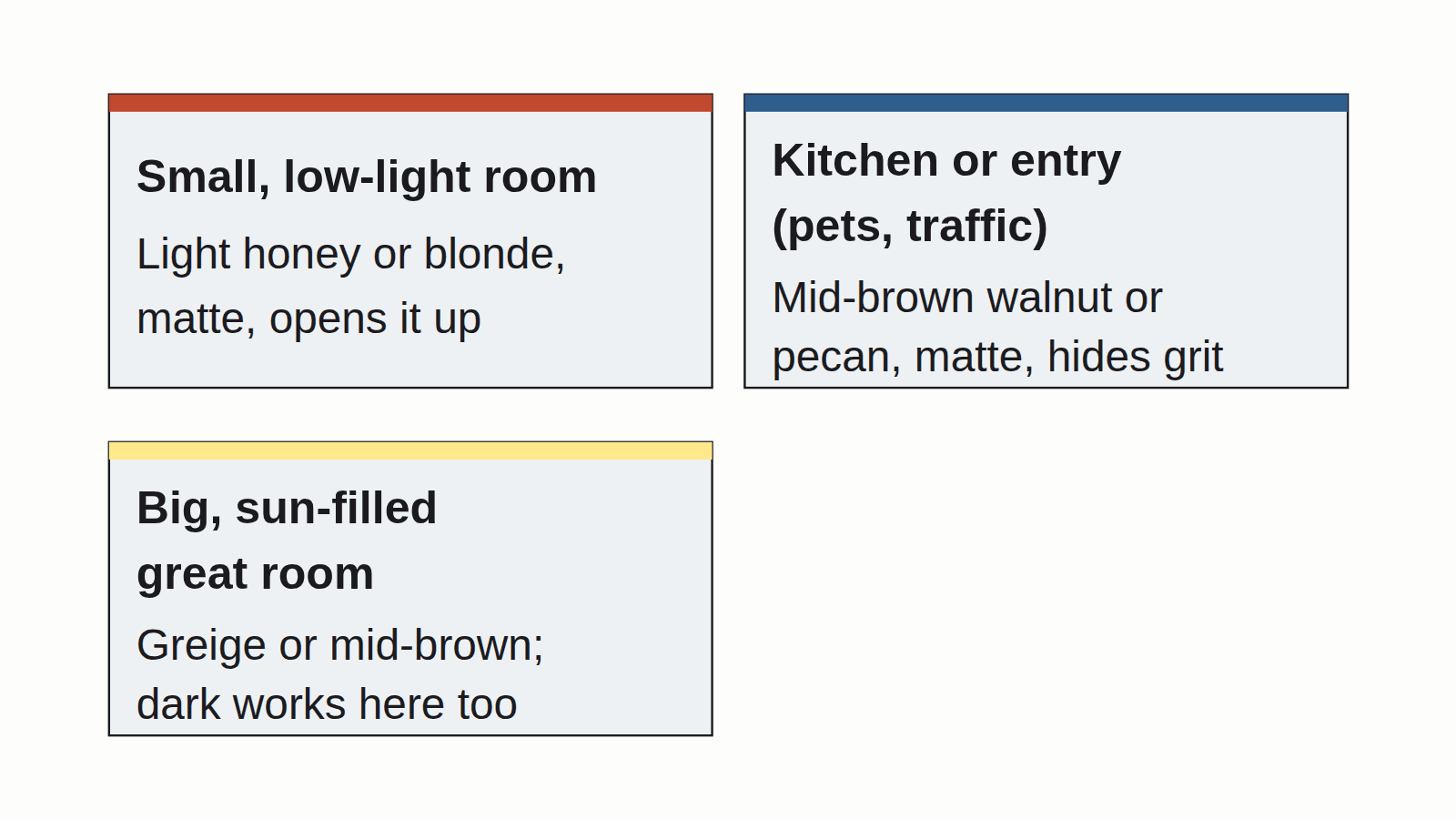
- Small or low-light rooms open up with light honey or blonde oak. The pale tone bounces what little light you have.
- Big, sun-filled rooms can carry dark tones without feeling like a cave, so a deep walnut or charcoal reads rich instead of heavy.
- High-traffic homes and pet owners should lean mid-brown walnut or pecan. It hides grit and scratches between cleanings, which is why I steer dog owners there.
On sheen, matte everywhere is the safe call. Skip high-gloss in kitchens and entries, where every footprint and scratch will show within months.
Drawing is not to scale; it shows the recommended color and finish for four common room types.
What the 2026 Design Outlets Actually Named
Warm woods are in and cool gray is out, across nearly every major outlet. Where they split is on the dark end, and that split is honest, not a contradiction.
| Outlet | Trending in | On the way out |
|---|---|---|
| Veranda | Warm, natural wood tones | Cool gray |
| Martha Stewart | Honey and natural oak | Orange-yellow oak |
| The Spruce | Warm mid-tones, matte finish | High-gloss |
| Forbes | Warm neutrals, wide planks | Cool, stark tones |
| KSL.com | Deep brown and charcoal contrast | Flat, all-over gray |
Source: each outlet's own 2026 flooring-trend coverage
Every outlet agrees warm woods are rising and cool gray is fading, the only real split is whether dark, dramatic tones count as 'in' or 'out,' and that comes down to room size more than trend.
Most outlets push warm and light. KSL.com is the outlier flagging deep brown and charcoal contrast still in demand, and they're right for the room it suits: a big, bright space that can carry a dark floor. So dark isn't a mistake, it's a room-dependent choice. Warm honey oak is the pick that works almost anywhere.
For the whole-home picture beyond LVP, including carpet and tile, see what is the most popular floor color right now.