
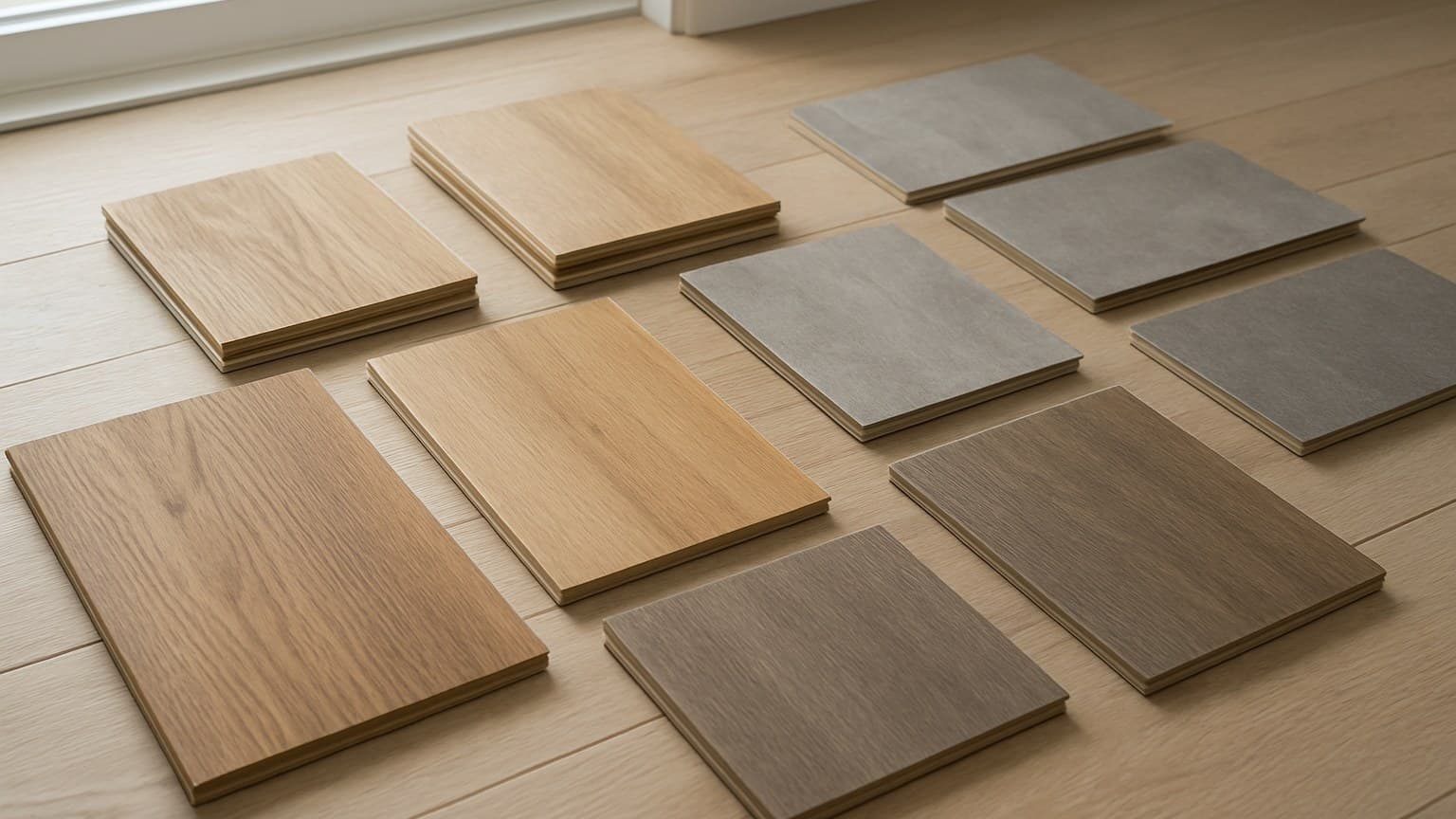
When I quoted a floor for the Delgado family in Round Rock, Texas last month, they'd already read guides calling engineered hardwood and LVP basically interchangeable. They aren't: engineered hardwood is real wood you can refinish, LVP is waterproof-core plastic you replace, and picking wrong for the room means you either replace a cupped floor early or buy wood you can never sand again. Here are nine facts that settle it.
Key takeaways
- Only engineered hardwood is real wood you can sand and refinish; LVP is a printed photo under vinyl and gets replaced, not refinished.
- Engineered veneer runs about 0.6-6 mm; you can usually refinish only a 2 mm+ veneer, and just 1-2 times, not the 10 some pages claim.
- An SPC-core LVP is the safer pick for wet rooms and basements, but water still reaches the subfloor through seams and edges, not the plank face.
- Budget roughly $6-22 per sq ft installed for engineered hardwood vs $3-11 for LVP, split materials vs labor, with basements and stairs costing more.
- Engineered hardwood usually returns more at resale; LVP wins on price, water tolerance, and DIY-friendly install.
Engineered Hardwood vs LVP at a Glance
The short version: engineered hardwood is real wood you can refinish, LVP is waterproof plastic you replace, and the room usually decides which one is right.
LVP means luxury vinyl plank. Engineered hardwood is a thin slice of real wood glued over a stable core. Every version of this question I hear, "luxury vinyl vs engineered hardwood," "wood vs vinyl plank," "which is better for my house," comes down to the same short list of specs. Here they are side by side.
| Factor | Engineered Hardwood | LVP |
|---|---|---|
| Surface you walk on | Real wood veneer, roughly 0.6 mm on thin, entry-level lines up to about 6 mm on thick-sawn, premium lines | Printed photo under a clear vinyl wear layer, roughly 6 mil on economy planks up to about 30 mil on premium lines (a mil is one thousandth of an inch) |
| Core | Plywood, HDF, or LVL | SPC (stone-plastic composite) or WPC (wood-plastic composite) |
| Refinish? | Yes if the veneer is 2 mm or thicker, usually 1-2 times; thick sawn faces more | No, you replace it |
| Water | Water-resistant, not for standing water | Waterproof core, but seams and edges still leak to the subfloor |
| Realistic lifespan | 30-100 yrs if refinished | 5-30 yrs, then replace |
| Installed cost per sq ft | $6-22 | $3-11 |
| DIY? | Click-lock is doable; glue-down and stairs hire out | Click-lock is the easiest DIY |
| Resale pull | Higher; buyers want real wood | Neutral; fine in wet rooms and rentals |
Source: The manufacturer spec sheets I read before quoting a job
Those veneer thicknesses and refinish counts are where the internet contradicts itself the most. I reconcile them further down instead of picking a number and moving on.
What Counts as "Real Wood"? The NWFA Definition
Engineered hardwood is real wood. According to the National Wood Flooring Association (NWFA), the trade group behind the official definition of real wood flooring, a floor only counts as real wood flooring when the surface you walk on is actual wood, not a printed image of it. Engineered fits that definition. LVP does not, because its "wood" is a printed photo under a clear vinyl layer.
That line matters more than pride. When a buyer or an appraiser sees real wood, they read it as an upgrade. A vinyl floor, however good it looks, reads as a practical, replaceable surface.
So drop the idea that engineered is "fake wood." It's a real wood veneer bonded to a core that stays flatter over concrete than a solid board would. A photo of wood under plastic is a different thing, and no wear layer changes that.
If you want to see how that wood layer differs from a solid plank sawn from one piece, my solid vs engineered hardwood breakdown walks through where each one belongs.
What's Under Your Feet: Veneer and Core vs Wear Layer and SPC
Both floors are built in layers, and the layers explain almost every difference in price, durability, and repair.
Engineered Hardwood: Veneer Over a Plywood Core
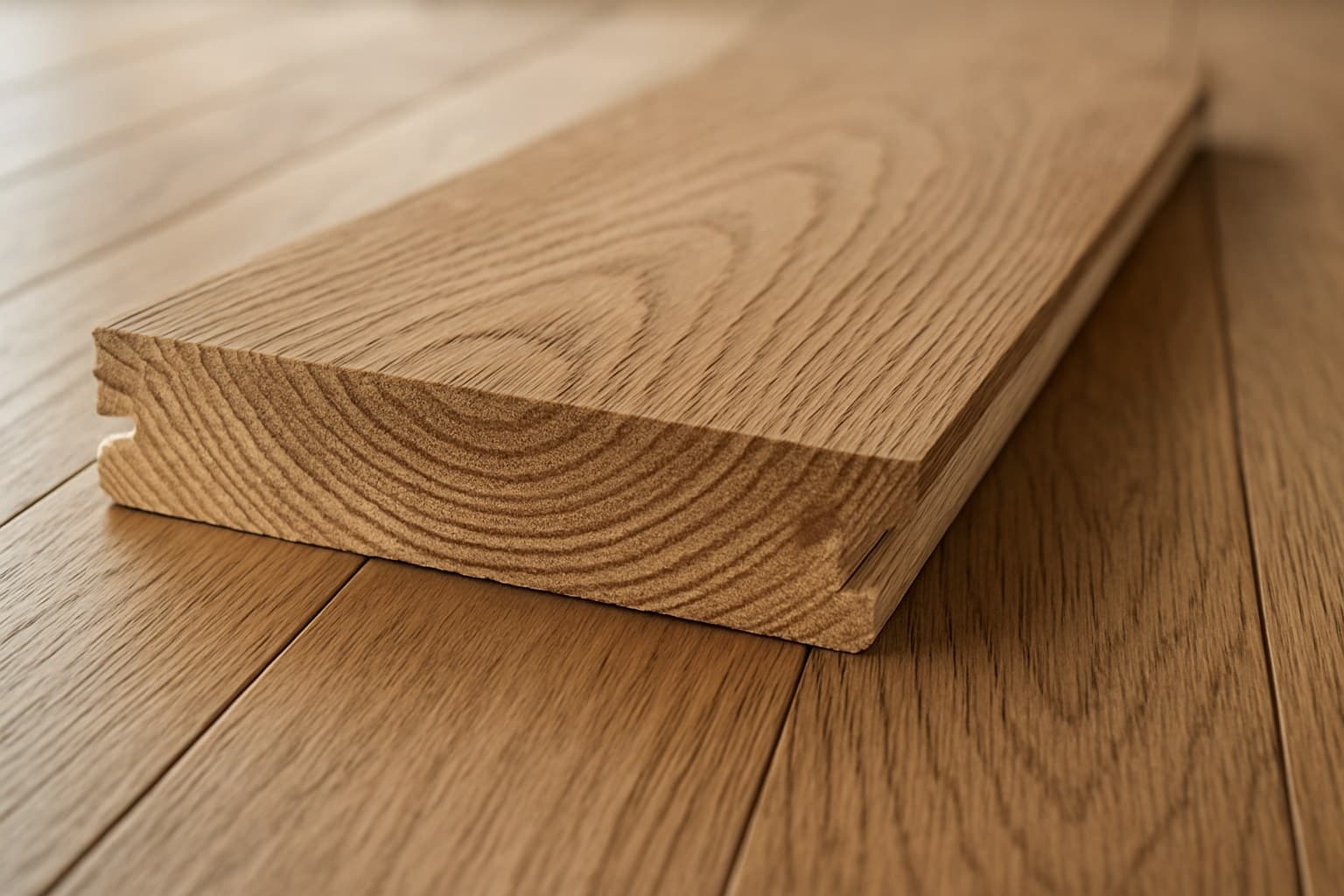
From the top down, an engineered plank is a finish coat, the real wood veneer, the core, and a backing layer. The finish is usually aluminum oxide, a hard clear coating that fights scratches. The veneer is the wood you see and the only part you can ever sand. The core, made of plywood, HDF (high-density fiberboard), or LVL (laminated veneer lumber), is cross-layered so the plank stays put over concrete.
Here is the veneer confusion, sorted. The NWFA's Homeowners Handbook to Real Wood Floors ties refinish life to veneer thickness rather than to a marketing number, and the general breakdown looks like this:
- Thin, roughly 0.6-2 mm: the cheap lines. You generally cannot refinish these.
- Mid, roughly 2-3 mm: refinish once, maybe twice, with a light sanding.
- Thick sawn face, roughly 3-6 mm: several refinishes, closest to solid wood.
So "how many times can I refinish this" is a spec question you look up per product, not a slogan. If you want wide-plank engineered boards, know they demand a flatter subfloor, because wide planks show every dip and telegraph movement faster than narrow ones.
LVP: Wear Layer Over SPC or WPC Core
An LVP plank is a clear wear layer on top, then the printed film that gives it the wood look, then the core. The wear layer is measured in mils, and thicker means tougher. A 6-mil residential plank scratches far sooner than a 20-mil one.
The core is where LVP splits into two families. SPC (stone-plastic composite) is harder and denser, so it resists dents and feels solid but cold. WPC (wood-plastic composite) is softer and a little warmer underfoot, with more give.
LVP is one branch of a bigger vinyl category. If you're weighing sheet vinyl, glue-down, and rigid-core planks against each other, my vinyl flooring buyer's guide covers what makes a vinyl floor last 5 years or 20. And if part of your question is really vinyl against laminate, the engineered hardwood vs laminate comparison sorts that fork out.
Water Resistance by Room: Where Each One Fails
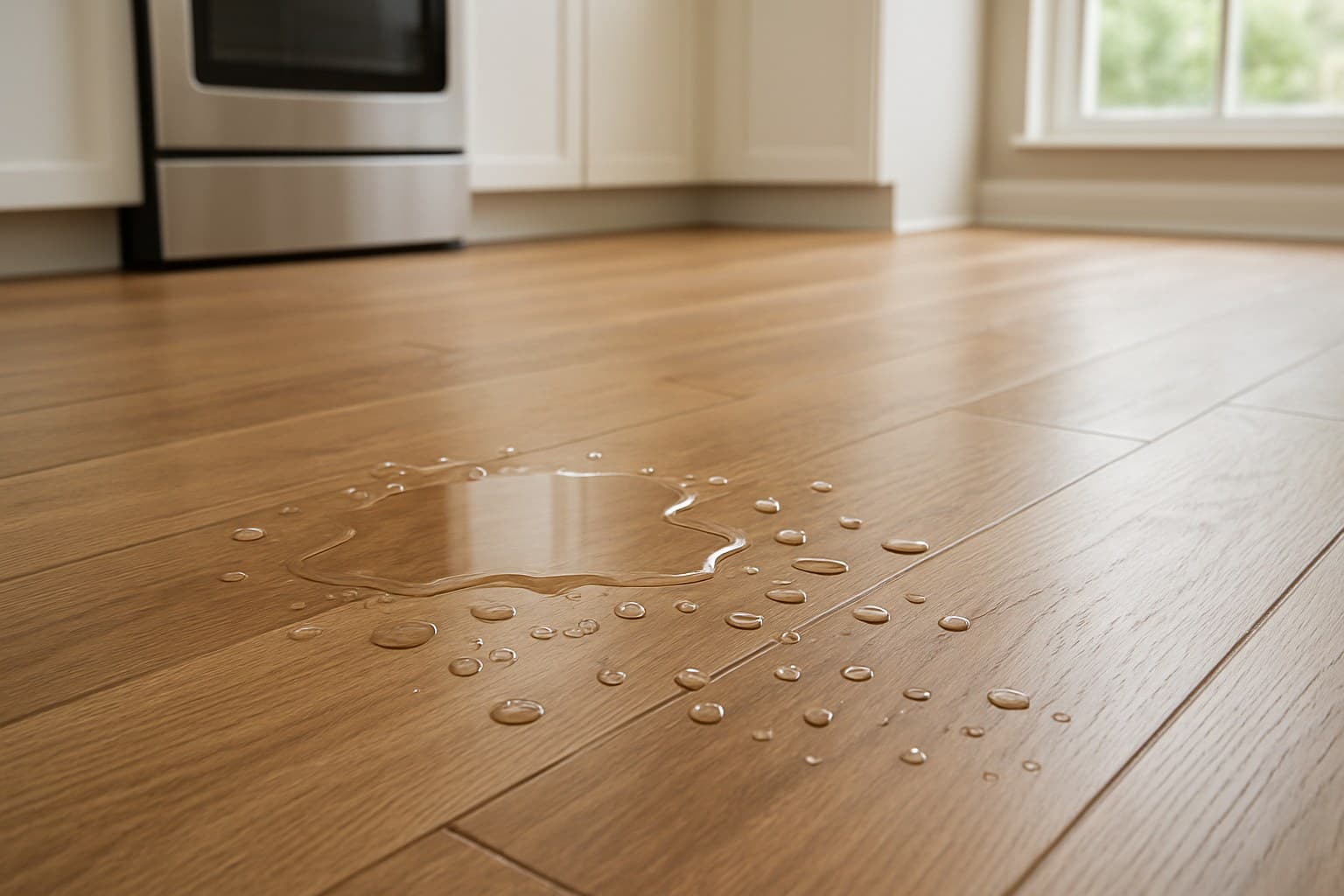
LVP handles water far better than engineered wood. But you have to separate the waterproof core from the seams, because that's where floors actually fail. The plank face sheds spills all day. Water that sits works its way down through the click-lock joints and the edge gaps at walls, reaches the subfloor, and swells it. So "waterproof core" and "waterproof floor" are not the same claim.
Room by room:
- Full baths and laundry rooms: lean LVP. Standing water is a when, not an if.
- Kitchens: either works if the seams stay tight and spills get wiped fast.
- Basements (below grade, meaning below ground level): run a moisture test first, every time. Solid wood is out down there, and I've steered people off both engineered and LVP when the slab readings came back high.
Engineered's limit is simple. It's water-resistant, so it handles a spill you wipe up. Standing water and moisture wicking up from a slab still swell the core and cup the boards. If you need more margin than that without giving up real wood underfoot, waterproof engineered hardwood options close much of that gap.
I learned that the hard way. A homeowner named Denise in Tulsa talked me out of a moisture test to save an afternoon, and I let her skip it. The floor cupped before the season was out, and I relaid it on my own dime rather than argue about whose call it was. That's the day the test stopped being optional for me.
Engineered Hardwood vs LVP for the Kitchen
Kitchens are the real toss-up. There's water, but it's spills and drips, not a flooded floor. Engineered hardwood works here and looks like the upgrade buyers want, as long as you wipe spills quickly and keep the seams tight near the sink and dishwasher. LVP is the lower-worry pick if you have kids, a busy sink, or a dishwasher you don't fully trust. Neither one likes a slow leak that sits under the cabinets for a week.
Scratches, Dents, and Impact: The Real Durability Showdown
Day to day, SPC-core LVP shrugs off dents and scratches better than engineered wood. But engineered wins on repair, because you can sand or spot-fix it, while damaged LVP means pulling and swapping planks.
The reason is the core. That rigid mineral core under SPC doesn't dent when you drop a pan, and the tough wear layer resists scratches. Engineered wood is real wood, so a hard hit can dent it and a dragged chair can scratch the finish. The trade is that a scratch in wood can be buffed or a plank sanded, while a gouge through an LVP wear layer is permanent for that plank.
For dogs and kids, be honest about the load. Big dogs, dropped toys, and dining chairs favor SPC LVP or an engineered floor with a surface that hides marks. Skip gloss and very dark colors in busy rooms, because both show every scratch and every hair.
Which Handles Dogs and Kids Better?
If you want wood and a house full of traffic, pick a texture that camouflages wear. A hand-scraped engineered floor or a distressed engineered line hides scuffs that a smooth, glossy board would broadcast. Matte and wire-brushed finishes (where the soft grain is brushed out to leave texture) do the same job. If you want the lowest-maintenance surface for claws and spills, a 20-mil SPC LVP is hard to beat.
Refinishing vs Replacing: True Lifespan and Cost Per Year
Here's the refinish myth, settled: per the NWFA's Homeowners Handbook to Real Wood Floors, how many times a floor can be refinished comes down to veneer thickness, not a marketing claim, the "you can refinish it 10 times" line only applies to thick sawn veneers, which most homeowners never buy. A typical engineered floor refinishes once or twice, and a thin-veneer floor not at all. LVP is never refinished; when it wears or the color dates, you replace it.
That changes the money in a way no ranking page bothers to compute. The NWFA's 2023 Life Cycle Cost Analysis, which compared 18 flooring types over their full service life, uses exactly this kind of math: divide the installed cost by the realistic years of life and you get a cost per square foot per year.
The arithmetic is simple: cost per year = installed cost per sq ft ÷ realistic years of life. Run typical numbers through it:
| Floor | Typical installed $/sq ft | Realistic years | Cost per sq ft per year |
|---|---|---|---|
| Engineered hardwood (refinished once or twice) | about $12 | about 40 | about $0.30 |
| LVP | about $7 | about 15 | about $0.47 |
Source: My own cost-per-year math using the NWFA Life Cycle Cost Analysis method
Typical mid-range figures run through cost ÷ years; your own numbers shift with veneer thickness, wear layer, and how long you keep the floor.
So engineered often costs less per year even though the sticker is higher, because it lasts longer and you can renew the surface. That flips if you buy a thin-veneer engineered floor you cannot refinish, or if you plan to sell in a few years and never reach the wood's second life. Match the veneer to how long you'll actually keep the floor.
What Each Costs Installed: Materials vs Labor
Don't trust a single flat number for either floor. The install splits into materials and labor, and both swing with the product and the room.
| Cost piece | Engineered hardwood | LVP |
|---|---|---|
| Materials per sq ft | $3-14 | $2-7 |
| Labor per sq ft | $3-8 | $1-4 |
| Typical installed total | $6-22 | $3-11 |
LVP is cheaper on both lines, mostly because click-lock LVP goes down fast and simple planks are cheap to make. Engineered materials climb with veneer thickness and species, and labor climbs with glue-down installs.
Two things push either floor to the top of its range. Stairs are slow, fussy, per-step work, so they always cost more than an open room. Basements cost more too, because the moisture test, any needed underlayment, and dealing with a slab all add labor before a single plank goes down. Open, flat, main-floor rooms are the cheapest to do.
For the wood side specifically, I break the numbers down further in the engineered hardwood flooring cost guide and the cost to install engineered hardwood walkthrough, including where the labor line really lands.
DIY or Hire It Out: An Honest Call
Click-lock is realistic for a determined DIYer on both floors. Glue-down, stairs, and big open-plan rooms with moisture transitions are where I tell people to hire out.
Click-lock LVP is the easiest floating floor there is, and most handy homeowners can lay a bedroom or living room over a weekend. Click-lock engineered is a step harder, mostly because wood is less forgiving of a subfloor that isn't flat, and the planks cost too much to waste on bad cuts.
Glue-down anything, engineered or vinyl, is a pro job. The adhesive gives you no second chances, and mistakes show. Stairs are their own skill, and a large open floor that runs from a dry room into a kitchen or bath needs proper transitions and expansion gaps done right, or the floor buckles.
Whichever you pick, the prep is the part people skip and regret. Check the subfloor for flatness and run a moisture test before a single plank goes down, the NWFA's installation guidelines call for both, regardless of which floor you choose. Most manufacturers write that same prep into the warranty terms, so skipping it can void your coverage before the floor ever fails. If you want the full sequence for the wood side, the how to install engineered hardwood guide covers the checks first, then the planks.
Room-by-Room Verdict and Resale
Engineered hardwood usually returns more at resale, and LVP wins on price, water tolerance, and easy DIY. Put each where its strength is.
- Living rooms, bedrooms, hallways, dining rooms: engineered hardwood. Dry, high-visibility rooms where real wood pays back at sale.
- Full baths, laundry, mudrooms: LVP. Water is coming, and you want the plank that shrugs it off.
- Kitchens: either, based on your household. Wood for the look and resale, LVP for a busy, spill-prone family.
- Basements: test the slab first, then usually LVP if the readings allow it.
- Rentals and flips: LVP, for the price and the low upkeep.
On resale, buyers and appraisers still read real wood as an upgrade and vinyl as neutral, so the wood tends to pull more in rooms they see first. If you're choosing a wood line for those rooms, my roundup of the best engineered hardwood flooring sorts the lines worth the money, and the list of engineered hardwood brands to avoid flags the ones that come back as callbacks. Johnson Hardwood comes up constantly in those conversations, so I put together things to check before buying Johnson Hardwood covering the specifics worth confirming before you sign off on that line.