
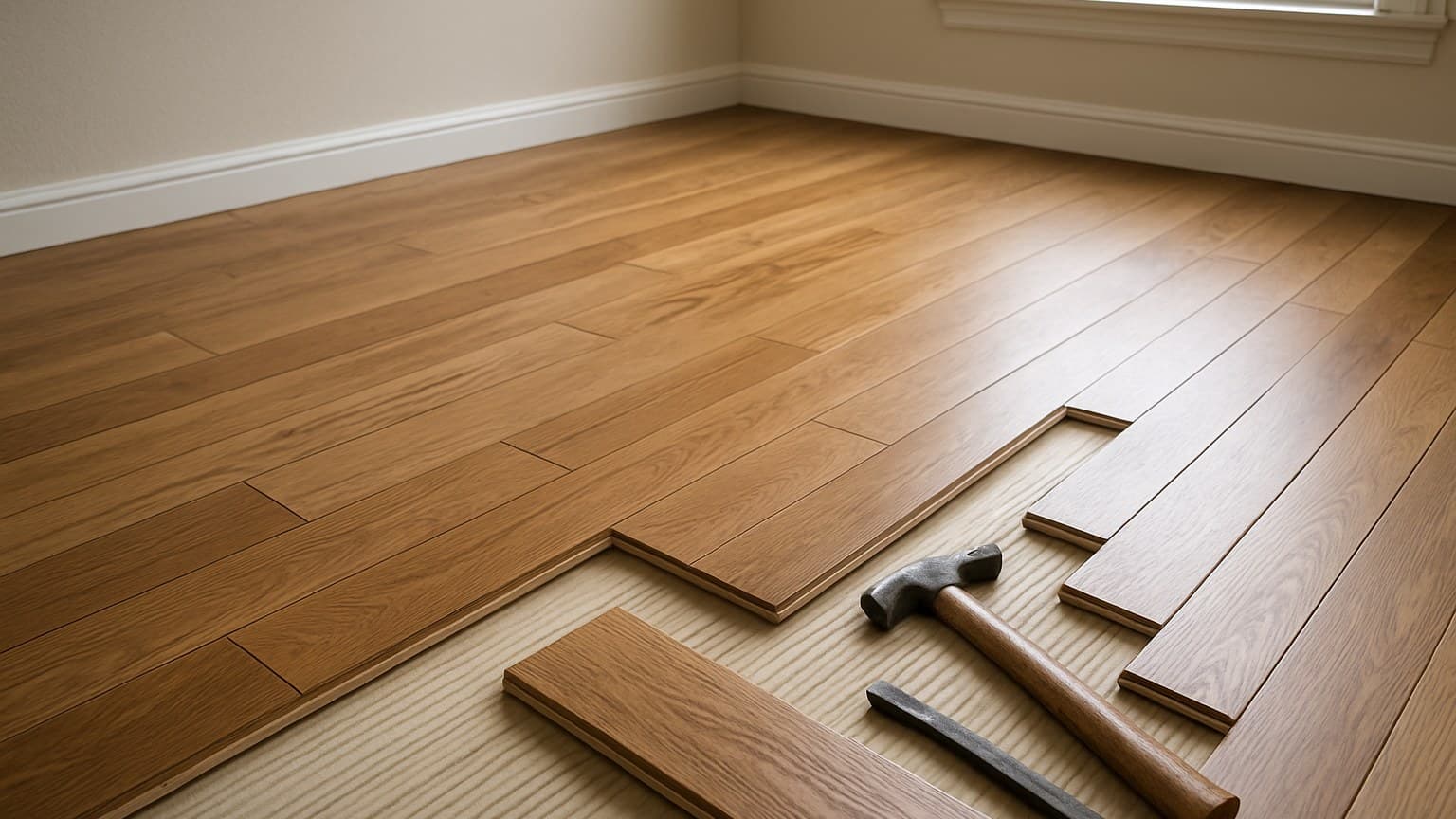
When Maria in Dayton asked me which hardwood brand to trust for her great room, I checked the two big "best hardwood floor brand" lists online and they didn't even agree, because each one just describes its own warehouse. My answer: Somerset is the closest thing to a neutral pick, the only name both lists landed on without copying each other. But most of those "best" claims can't be checked, and missing that gap costs you premium money for a marketing word.
Key takeaways
- The most trustworthy 'best brand' is the one whose claims you can confirm on NWFA/NOFMA's own certified-mill list, not any single name on a blog roundup.
- Somerset (Tennessee Appalachian hardwood) is the only brand both major ranking lists independently name, which makes it a real consensus pick rather than one installer's favorite.
- Mirage, AHF Products, Preverco, and Vintage belong to the NWFA Engineered Refinishable Program, plus 2024-2025 additions like Maine Traditions, which is proof an engineered floor can actually be sanded.
- Big-box names like Bruce, Shaw, Mohawk, and Mullican sell fine floors but rarely publish cert status or exact warranty years, so verify per product line before you pay.
- Check three things yourself before buying: mill certification, refinishable-program membership, and the warranty written in years, not a vague 'ask us.'
How We Ranked: 3 Signals You Can Check Before You Spend a Dime
The best hardwood floor brand is the one whose claims you can confirm on a primary source before you hand over a deposit. So instead of telling you which brand I happen to like, I scored every name below on three facts a buyer can look up alone.
The first is mill certification: is the maker on the National Wood Flooring Association's certified-mill list? The second is refinishing proof: is the engineered line in the NWFA Engineered Refinishable Program, or is "refinishable" just a word on the box? The third is the warranty, written in real years, not a vague "ask us in the showroom."
Both of the ranking blogs that dominate this search are installers listing what they stock. Their "best" quietly means "what's in my warehouse." That's not a lie, but it's not neutral either.
Here's the honest bottom line up front. No single brand wins for everyone. But Somerset is the closest thing to a neutral pick, because it's the only brand both of those competing lists named on their own, without copying each other.
Solid vs. Engineered: Why the "Best Brand" Changes With the Room
There's no one best brand because the right pick depends on where the floor is going. The biggest fork in the road is concrete. If you're laying over a slab or below ground level, that decision matters more than any logo. Plank width is another major fork worth settling early, and the wide-plank hardwood flooring guide walks through those same room-by-room tradeoffs.
Engineered hardwood uses a plywood-style core under a real wood top layer. That core holds its shape better when moisture and humidity move, so it's the safer choice over concrete and below grade. Solid wood is one piece of lumber, so it swells and shrinks more, and most makers don't recommend it below grade at all. If your project is a basement, start with what actually holds up in below-grade rooms before you shop brands.
Refinishing is the other split. Solid wood can usually be sanded several times over its life. An engineered floor can only be sanded as many times as its top wood layer, called the veneer, allows. Some thick veneers take a light sanding once. Thin ones take none at all. That number is published by the maker, so treat "can I refinish this later" as a spec question, not a yes or no. If you're still weighing which construction fits your room in the first place, this guide to picking solid vs. engineered hardwood walks through that decision by species and room before you get to the refinishing math.
| Factor | Solid | Engineered |
|---|---|---|
| On or below grade (basement, slab) | Generally not recommended | Yes, more stable |
| Refinishing | Can sand several times | Capped by veneer thickness; some once or not at all |
| Reaction to humidity swings | Expands and contracts more | More dimensionally stable |
| Typical best use | Main floors above grade | Anywhere, including over concrete |
Source: grade limits in NWFA's installation guidelines
Where each construction type belongs, based on grade limits in standard wood-flooring installation guidance.
This section is about brand choice, not the full bill. For the money side split into materials and labor, see the 500 to 2,500 sq ft cost breakdown.
NWFA and NOFMA Certification: The Quality Signal Both Ranking Lists Skip
Certification is a quality signal the popular "best brand" lists rarely mention, and it's easy to verify. The NWFA (National Wood Flooring Association) is the trade group for wood flooring. According to the NWFA's certified-mill program, which grew out of the older NOFMA (National Oak Flooring Manufacturers Association) standard, a mill's boards must meet a written grading standard to earn certification.
What does certification confirm? It verifies the boring stuff that decides whether a floor installs clean: the grade of the wood, the moisture content, and the milled thickness being consistent board to board. It also has nothing to do with whether you buy the floor prefinished or unfinished, a separate call the prefinished vs. unfinished hardwood guide walks through on its own terms.
What it doesn't do is promise you'll like the color, or that the floor is right for your room. Certification is a floor of quality, not a taste rating.
There's a second, separate list worth knowing. The NWFA Engineered Refinishable Program names engineered floors with enough top wood layer to genuinely be sanded down the road. That turns "refinishable" from a sales word into something a third party checked.
Here's how to read these lists yourself, so you're not taking any blog's word, including mine. Go to the NWFA site, find the certified-mill directory and the Engineered Refinishable Program list, and search the exact brand and product line a store quotes you. If it's not there, the claim is unconfirmed. That's not proof the floor is bad. It just means the paper trail stops, and you should treat the marketing as marketing. That's the exact checklist to run before buying a less-mainstream name, and this what to know before you buy Johnson Hardwood guide applies it directly to that brand's flooring and vinyl lines.
Certified and Refinishable: The Brands Whose Claims Hold Up
These are the names whose claims you can actually confirm on a list, not just in a brochure. I'm giving you one checkable detail for each instead of a promotional blurb, because a checkable detail is the whole point.
One caution first: program membership applies to specific product lines, not a company's entire catalog. A brand can have one line in the refinishable program and five that are not. Always confirm the exact SKU on the store's quote.
Somerset: The Closest Thing to a Neutral Pick
Somerset is my consensus pick, and the reason is simple. It's the only brand both competing ranking lists named on their own. When two sources with different warehouses land on the same name without coordinating, that's a real signal rather than one installer's favorite.
The checkable detail: Somerset is American-made, milling Appalachian hardwood in Tennessee, and it sells both solid and engineered lines. If made-in-USA boards matter to you, this is a brand where that claim holds up per product line.
The Refinishable Program Names You Can Trust
Four names carry weight because, per the NWFA, their engineered lines appear in its Engineered Refinishable Program: Mirage (Canada), AHF Products (USA), Preverco (Canada), and Vintage (Canada). That listing is your proof an engineered floor can genuinely be sanded, not just marketed that way.
The program keeps adding members, so newer entries count too. According to the NWFA, Maine Traditions, made by WW Flooring Group in the USA, is among the 2024 to 2025 additions. If you're shopping a brand that isn't on any of these lists, that's your cue to ask for the veneer thickness in writing before you compare it against one that is. Many of the strongest options here are also sold factory-finished, which changes what you can verify at the store.
Popular but Unverified: Big Names Without the Paper Trail
This isn't a knock on quality. Bruce, Shaw, Mohawk, and Mullican sell plenty of floors that install fine and last for years. The problem for a buyer trying to compare is that these brands rarely publish cert status or exact warranty years per line, so you're left trusting the name instead of a document.
You'll also see a lot of finish-technology branding: aluminum oxide, ScufResist, ArmorMax, and similar. Aluminum oxide is a tough coating and it's worth having. But a trademarked name for the coating isn't the same as a checkable durability standard you can look up. It's the maker grading its own homework.
Watch the origin claims too. With these big lines, the boards can be USA-made or imported depending on the specific product. "American brand" does not always mean American-milled wood. If that matters to you, the box or spec sheet will say where the wood was made.
The move is the same one that runs through this whole article. Pick the specific product line first. Then verify its certification and its warranty in years before you commit. The brand on the truck tells you less than the spec sheet in your hand.
Best Hardwood Flooring Brands, Scored Side by Side
Here's every brand named above, scored on origin, construction, price tier, and what you can verify. Read it as a shortlist filter, not a ranking of taste.
| Brand | Origin | Type | Price tier | Verifiable status |
|---|---|---|---|---|
| Somerset | USA (Tennessee) | Solid & engineered | $$ | American-made; consensus pick on both lists |
| Mirage | Canada | Engineered & solid | $$$ | NWFA Engineered Refinishable Program |
| AHF Products | USA | Engineered | $$ | NWFA Engineered Refinishable Program |
| Preverco | Canada | Engineered & solid | $$$ | NWFA Engineered Refinishable Program |
| Vintage | Canada | Engineered | $$$ | NWFA Engineered Refinishable Program |
| Maine Traditions (WW Flooring) | USA | Solid | $$ | 2024-2025 program addition |
| Bruce | USA / imported | Solid & engineered | $ | Widely sold; verify cert per line |
| Shaw | USA / imported | Engineered | $-$$ | Widely sold; verify cert per line |
| Mohawk | USA / imported | Engineered | $-$$ | Widely sold; verify cert per line |
| Mullican | USA | Solid & engineered | $$ | Widely sold; verify cert per line |
Source: the NWFA/NOFMA certified-mill list cross-checked against each maker's own spec sheets
Hardwood brands scored on origin, construction, price tier, and verifiable certification status.
The price tiers above are materials only. Labor is a separate line on your quote, and it isn't flat. Basement installs and stairs cost more per square foot than an open living room, because both take more cutting, more transitions, and slower work. For the labor side in full, use the seven cost factors that move a hardwood price rather than guessing from a tier symbol.
Here's roughly what each tier means in materials-only dollars per square foot. These are ranges to confirm with a local quote, not fixed prices, because species and region swing them.
| Price tier | Materials only, per sq ft |
|---|---|
| $ (budget) | $2 - $5 |
| $$ (mid) | $4 - $9 |
| $$$ (premium) | $8 - $14 |