
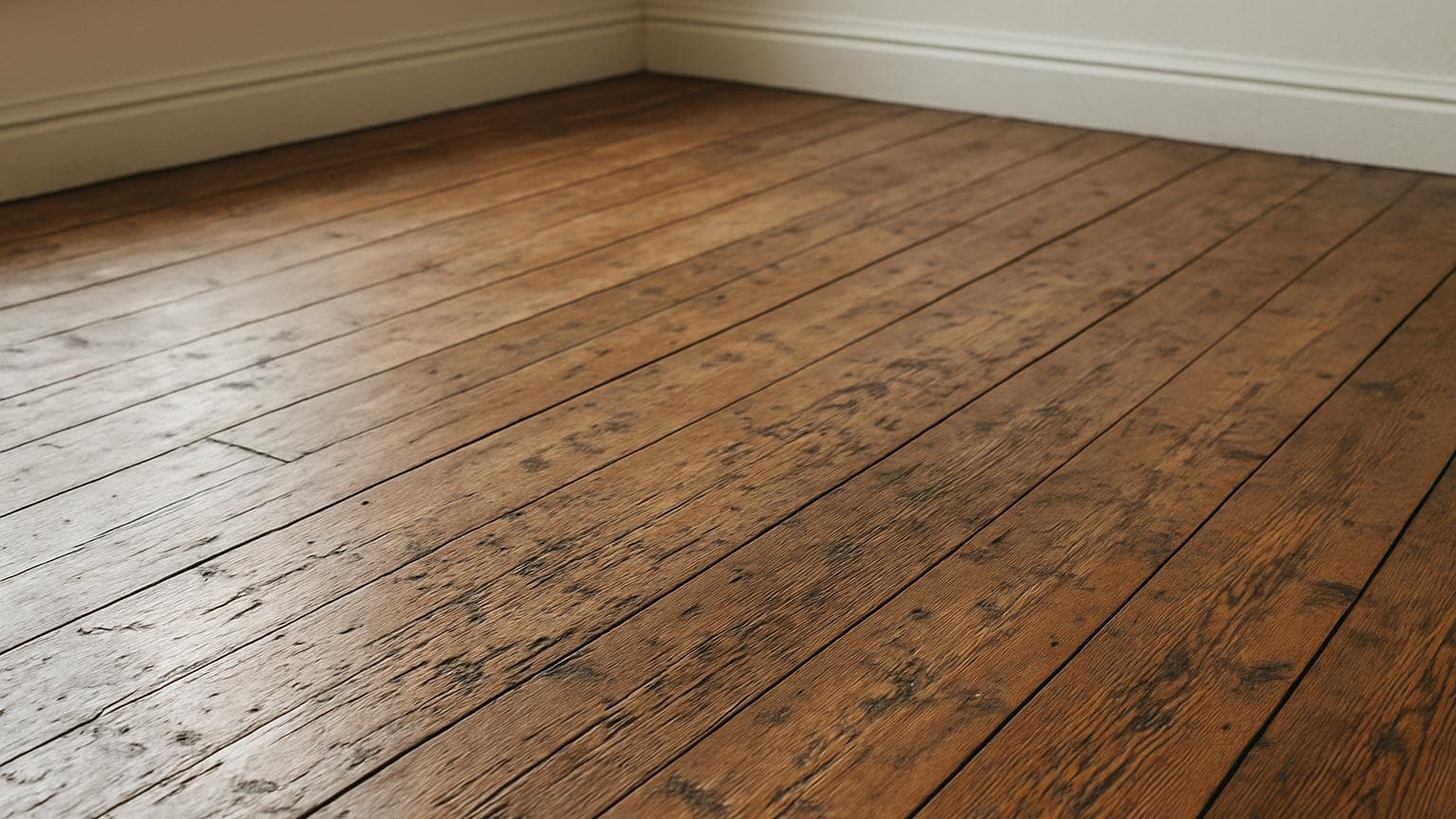
Sarah in Aurora, Colorado called me out to bid her living room floor, dead set on a hand-scraped hickory she'd seen online, sure it would hide anything her golden retriever could dish out. Distressed engineered hardwood gets sold as the floor that hides everything, and that half-truth is where people get burned. The texture, the finish, and the thin veneer underneath each do a different job, and mixing them up costs money. Here are seven things I told her before she signed off on the order.
Key takeaways
- Distressing hides light dents and pet scratches well, but the matte low-sheen finish does more of the hiding than the texture does; deep gouges still show.
- Veneer thickness (commonly around 1-4 mm, listed on the spec sheet) caps refinishing; many thin-veneer distressed floors can't be sanded at all without erasing the texture.
- The core can be stable, but water still gets in at plank seams and edges, not the surface; keep it out of bathrooms and watch kitchen sink zones.
- Installed cost commonly runs about $7-18 per square foot split into materials and labor, and stairs or basements cost more than open rooms.
- Those grooves trap grit, so cleaning shifts to regular vacuuming and a barely-damp mop; no standing water, no wet mopping.
1. "Distressed" Isn't One Thing, So Know Which Texture You're Buying
"Distressed" is a look, not a durability grade. Two planks with that word on the box can feel and perform completely differently, so the first thing I do on a job is figure out which texture the homeowner actually picked.
There are three you see over and over. Hand-scraped has deep, uneven waves you can feel with a bare foot. Wire-brushed is subtler; the maker runs a stiff brush over the plank to dig out the soft grain and leave the hard grain slightly raised. Hand-carved or sculpted planks keep a smooth face but work the edges to look old and worn. If hand-scraped is the look you keep circling back to, hand-scraped engineered hardwood guide walks through what to settle before you commit to it.
Distressed engineered leans heavily toward hickory and oak, because those grains are busy enough to carry the texture. Softer, cleaner-grained species just look muddy scraped. If you want a wider spread of species and looks, that's worth sorting through the best engineered hardwood flooring options before you lock in a texture.
How deep the texture goes changes how you clean the floor and how much wood is left to refinish later.
| Texture | How it feels | What it hides | Cleaning |
|---|---|---|---|
| Hand-scraped | Deep, uneven waves you feel underfoot | Best at hiding dents and dropped-toy dings | Grooves trap the most grit; needs regular vacuuming |
| Wire-brushed | Fine raised grain, subtle texture | Good at hiding fine scratches, less at deep dents | Easiest of the three to keep clean |
| Hand-carved / sculpted edges | Smooth face with worked plank edges | Hides edge chips and gapping, not face dents | Dirt collects along the beveled edges |
How the three common distressed textures compare on feel, hiding power, and upkeep.
2. It Hides Dents and Pet Scratches, Partly, Not Magically
Distressing genuinely camouflages everyday dings, chair scoots, and light dog-nail scratches. Your eye can't pick out one fresh mark in a floor that's already full of marks by design. On a smooth glossy floor, that same scratch jumps right out.
What it does not do is stop damage. A deep gouge from a dropped cast-iron pan still shows. A gray water stain still shows. Hardness comes from the wood species and the finish on top, not from the texture, so a scraped soft plank dents just as easily as a smooth one.
The marks people still call me back about are almost never the wood. They're shiny scuff lines on a glossy finish. The distressing hides the mark you'd never notice; it doesn't stop the dent from happening. That points straight at the next thing homeowners underrate: the sheen.
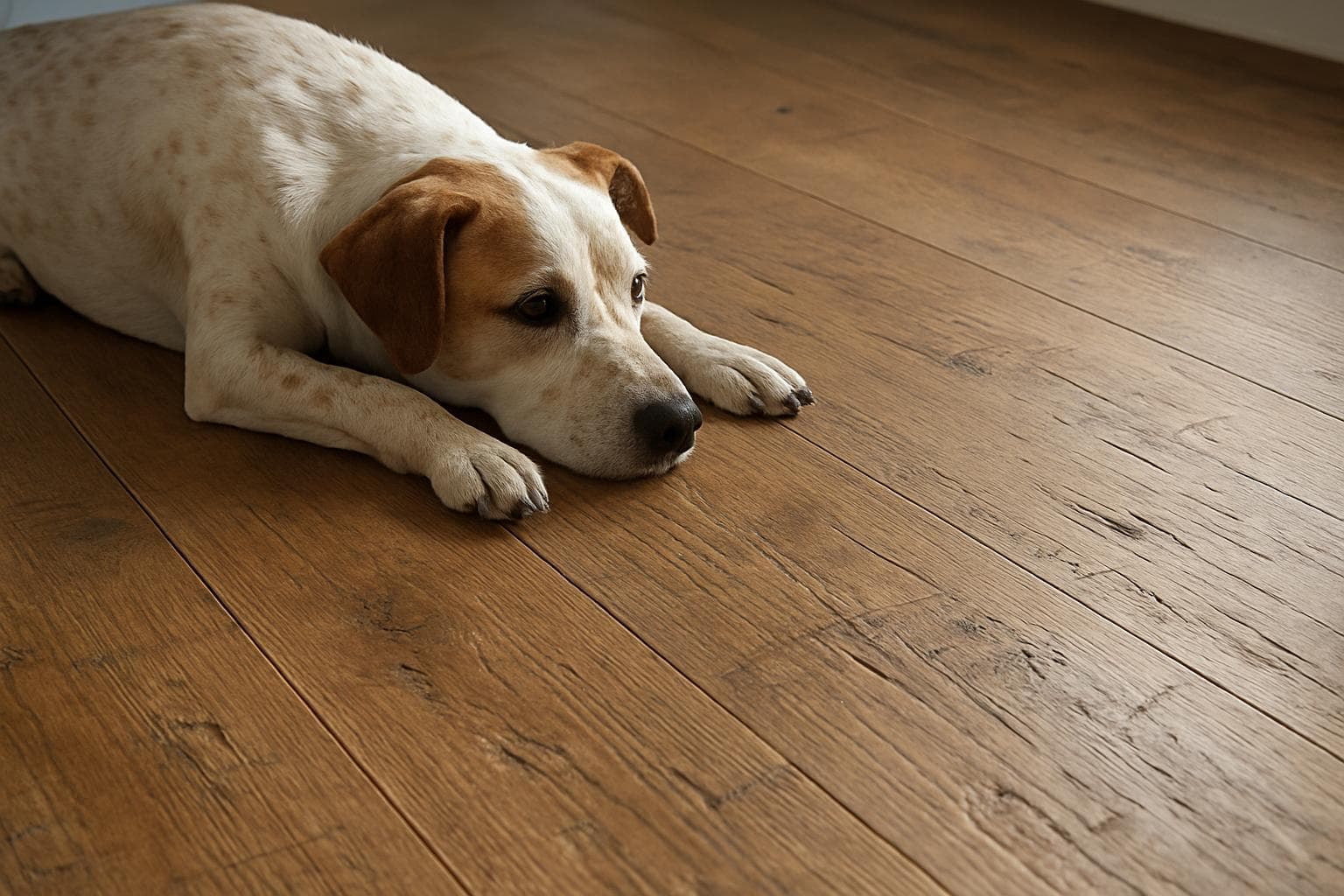
3. Those Grooves Trap Dirt, So Your Cleaning Changes
The deeper the scrape, the more grit settles into the low spots, and that trapped grit is what dulls and scratches a floor over time. The trade for that hide-everything look is that cleaning changes a little.
Vacuum regularly on a hard-floor setting or a soft brush head so the grit lifts out of the grooves before it grinds in. Then, only when you need it, go over the floor with a barely damp microfiber that you've wrung out hard. No wet mop, no bucket of water sitting on the seams.
Skip the steam mop and the "shine-restoring" refresher polishes. Steam drives moisture into the joints, and those polishes settle into the texture and leave shiny patches that are hard to fix. Put a mat at every outside door. Entry points and mudrooms load the grooves with grit faster than any other spot in the house.
4. A Thin Veneer Caps How Often You Can Refinish, If at All
Engineered hardwood is a layer of real wood over a plywood or fiberboard core, and only that top layer of real wood can ever be sanded. That fact decides your whole refinishing future.
Here's the trap with distressed floors. Sanding a floor flat is how you refinish it, but sanding a distressed floor flat erases the very texture you paid for. Makers often say to refinish rarely or not at all, and thin budget lines can't survive a single full sanding without cutting through to the core.
The National Wood Flooring Association (NWFA) runs an Engineered Refinishable Program, working with manufacturers to identify which engineered floors carry enough of a wear layer to be sanded and refinished more than once, a sign of how much veneer thickness matters industry-wide, not just on distressed planks. Not every manufacturer plays it straight on that spec, so it helps to know which engineered hardwood flooring brands to avoid before you shop on price alone.
Before you buy, read the veneer thickness off the spec sheet. Wear layers vary widely by product, some budget planks run under 1 mm, while premium lines can reach around 3 mm, so check the exact plank you're buying, not just the brand name. If a floor lists a very thin wear layer, treat it as a floor you'll replace rather than refinish. That's worth knowing before the low price talks you into it, see which corners get cut on discount engineered hardwood flooring.
5. The Low-Sheen Finish Forgives More Than the Texture Does
Here's the part that surprises people: the matte or satin finish hides scratches better than the texture does. That low sheen is doing most of the forgiving that homeowners credit to the distressing.
It comes down to light. A gloss finish reflects light off every scuff line, so a fresh scratch lights up like a scar. A matte finish scatters that light, so the same scratch just disappears into the surface. Put the two side by side after a year of a dog and kids, and the matte floor looks years younger.
So if you've got pets and children, pair the distressing with a matte or satin finish and you get both effects working together. A high-gloss distressed plank fights itself, all that texture under a shiny coat that shows every mark. Watch out for floors that get a site-applied or "refreshed" topcoat later, because a shinier coat undoes the benefit.
6. Water Gets In at the Seams, Not the Surface
A stable core is not a waterproof floor, and the marketing blurs that line hard. The sealed finish on the plank face will shed a quick spill just fine. The weak point is the seams and edges between planks, and no texture hides a failure there. NWFA's Homeowners' Handbook to Real Wood Floors advises wiping up spills promptly, since standing moisture that reaches the seams and edges is one of the most common causes of damage to wood flooring.
On a tear-out for a homeowner in Lakewood, Ohio, I found the real failure: standing water from a leaky dishwasher line had sat for days, wicked into the seams, and swelled the veneer edges until they darkened and cupped. Once that happens, the plank is done. Wipe spills fast, and treat the zones in front of a kitchen sink and dishwasher as real risk areas, not just splash zones.
If moisture is your main worry, especially in a basement or on a slab, don't decide on looks. Weigh it on the water question directly, which is what my engineered hardwood vs. LVP breakdown is built to help you do. In below-grade rooms, the slab reading pushes people to vinyl, and that's the honest call.
7. It Works in Some Rooms and Fails in Others
The room decides more than the plank does. Distressed engineered hardwood is great in living rooms, bedrooms, halls, and dining rooms, where traffic is steady and moisture is low. It gets a caution in kitchens, and a flat no in full bathrooms and laundry rooms where standing water is a matter of when, not if. Before you write those rooms off completely, it's worth checking whether a waterproof engineered hardwood option changes that calculation.
Basements are a maybe, not a yes. Engineered can go over a slab, but only after a real moisture test, and the slab reading decides the job, not the plank you liked. I've talked people off engineered and off solid down there when the meter, the tool that reads how wet the concrete is, came back too high.
Entryways and mudrooms load those grooves with grit fast, so mats aren't optional there. On cost, installed work commonly runs about $3 to $10 per square foot for materials and another $3 to $8 for labor, so roughly $7 to $18 in place. Stairs and basements run higher than open rooms because of the cutting, transitions, and prep, and you can see how those add up in this engineered hardwood flooring cost breakdown.
Room-by-room verdicts for distressed engineered hardwood. Not drawn to scale.
If you're still torn between engineered and solid for the long haul, read Hardwood Floors: How to Pick Solid vs. Engineered next, because it settles the refinishing question that decides which one belongs in your room.
Sources
- NWFA: Leading Wood Flooring Manufacturers Embrace NWFA Engineered Refinishable Program
- NWFA Hardwood Floors Magazine, Engineered Refinishable Feature (Aug/Sept 2022)
- NWFA Homeowners' Handbook to Real Wood Floors
- NWFA Engineered Wood Flooring Environmental Product Declaration (2025)
- NWFA Life Cycle Cost Analysis Sales Sheet (TISE 2024)