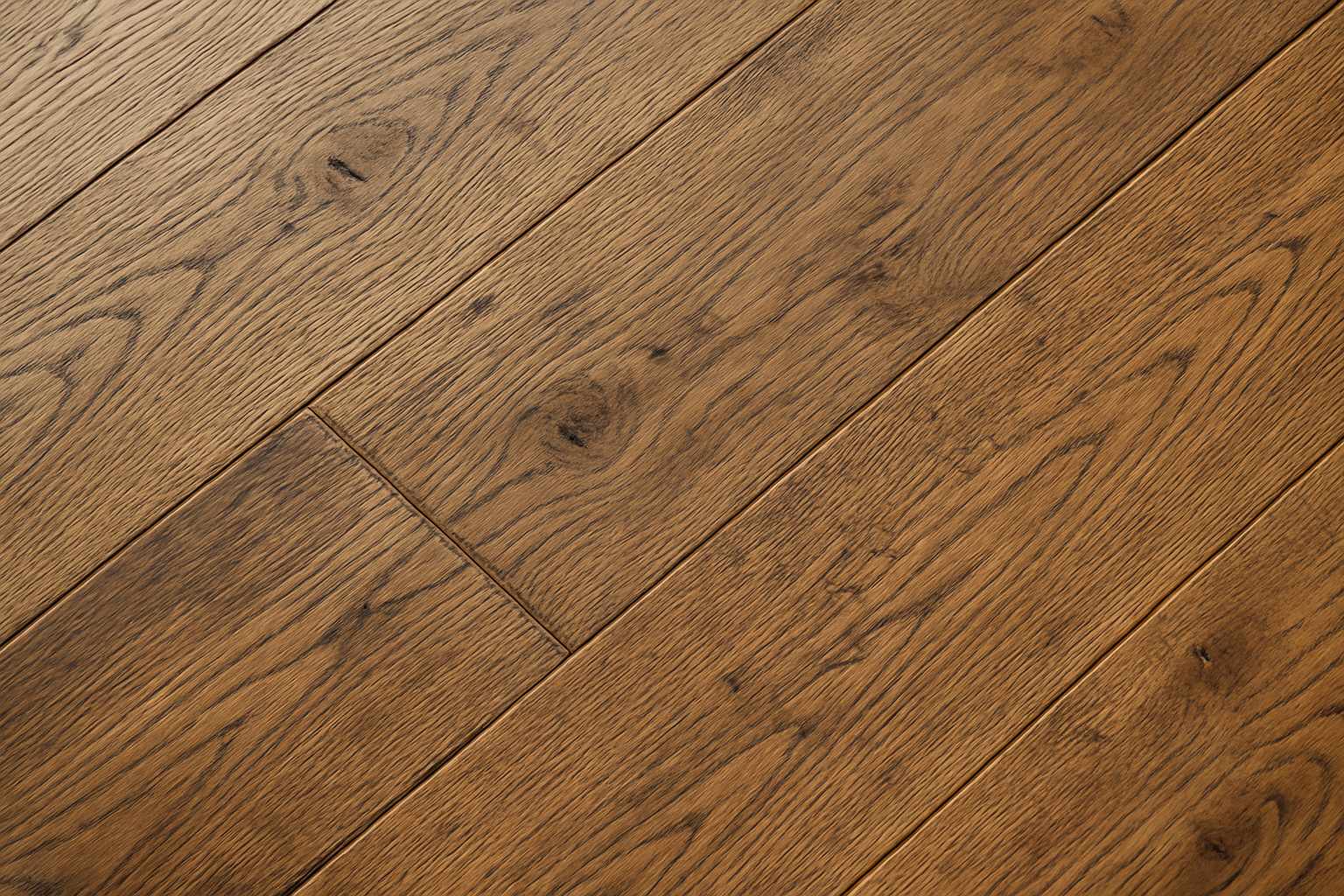
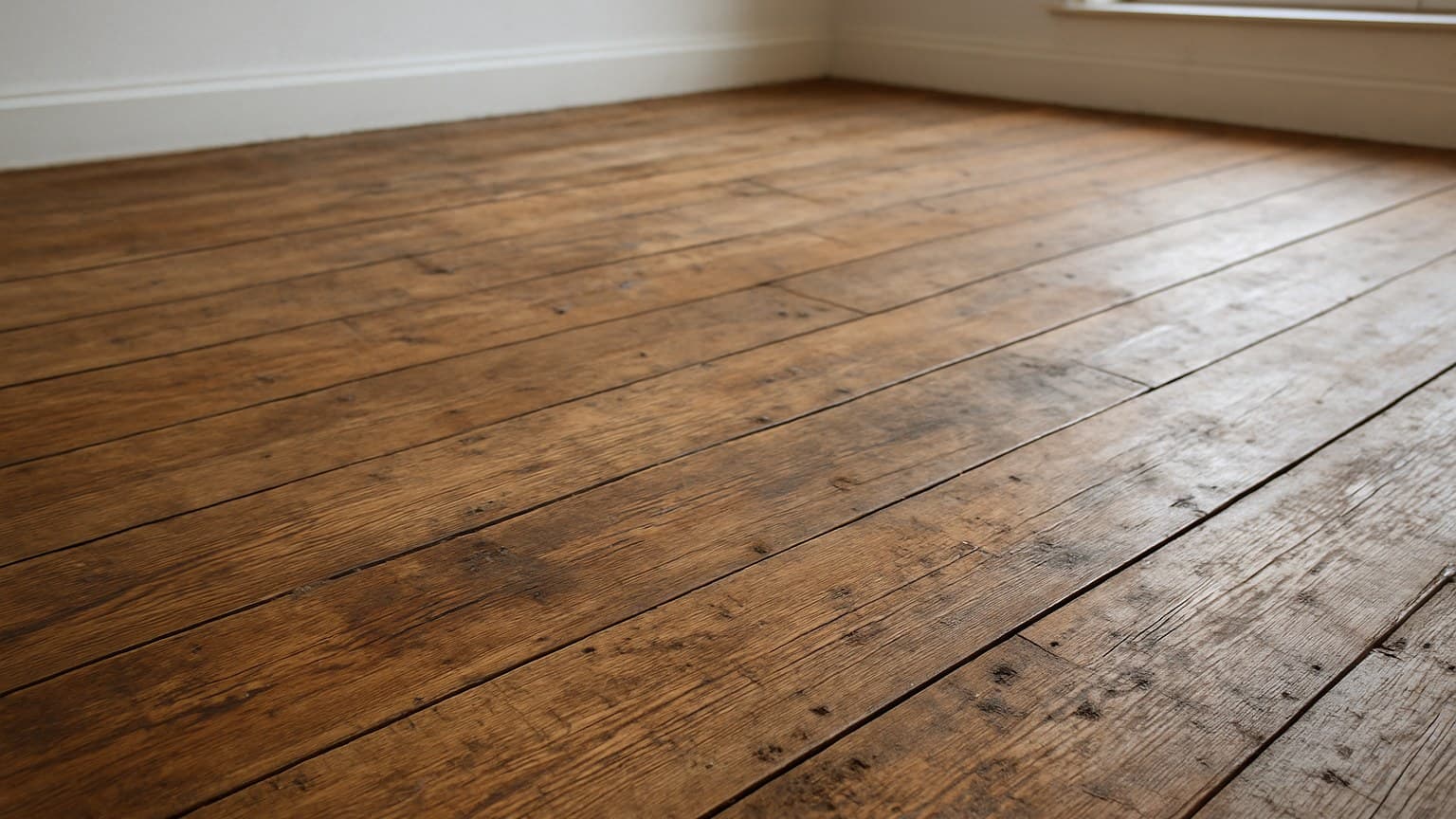
Walk into a flooring store and "distressed wood flooring" points at two very different products sitting on the same rack. Confuse them and you can overpay for a look, or buy a floor you can never sand back. Here is how to tell them apart before you spend a dime.
Key takeaways
- "Distressed" is sold two ways: genuine reclaimed wood that is often over a century old, and new wood run through machines to look aged. They are not the same product.
- For refinishing, wear layer decides everything: solid wood sands several times, but an engineered veneer needs at least 3.2mm (4/32") to qualify as refinishable under the NWFA Refinishable Program.
- Buyer-beware: NWFA/NOFMA factory-finish standards set no tolerance for distressed or hand-scraped surfaces, so normal grading rules don't reliably apply. Inspect boards yourself.
- Factory-distressed material typically runs about $3-9 per sq ft; reclaimed antique wood runs roughly $8-22 per sq ft. Install labor adds about $2-8 per sq ft on top, more for basements and stairs.
- The worn look genuinely hides scratches and scuffs, which makes distressed floors a smart pick for busy homes with kids and pets.
Two Floors, One Word: What Distressed Really Means
"Distressed" covers two things that share nothing but the look. One is genuine reclaimed wood, boards pulled from old barns and factories that often predate the 1930s and are over a century old. The other is brand-new wood that a factory beat up on purpose so it looks aged.
New wood gets that worn look a few ways. Workers hand-scrape the surface for an uneven feel, wire-brush it to raise the soft grain, or add chatter marks (short, repeated dents cut across the grain to fake old tool marks) and worm holes (small drilled pits that mimic insect damage), or tumble the planks so the edges look knocked around. Done well, it reads like decades of wear that never actually happened. Many mills pair these techniques with a deep espresso or walnut stain to sell the aged effect, and choosing the right shade is exactly what this guide to dark wood flooring covers.
Reclaimed wood carries real history and a patina you cannot fake. Factory-distressed gives you a similar look for less money, but there is no age or story under it.
The worn surface itself tells you nothing about how durable the wood is. A beat-up look can sit on a great old-growth plank or a thin, cheap one. Judge quality separately from style, every time.
The reclaimed board earned its wear. The other three had it added at the factory.
Reclaimed vs. Factory-Distressed: The Real Differences
Here is the short version: pick reclaimed when a genuine antique look is the whole point of the room, and pick factory-distressed when you want that worn look at a predictable price. Both hide daily scuffs well. They part ways on cost, character, and how much sorting the job takes. Whichever path you choose, pairing it with a cooler, contemporary tone is easy to plan for using this guide to grey wood floors.
Reclaimed is usually dense old-growth wood, harder and more character-rich than most new lumber. Every board is one of a kind. You pay more, and someone spends real time sorting, pulling nails, and milling odd boards to a usable size.
Factory-distressed comes off a line, so boards are consistent and easy to source and lay fast. Look closely across a room and you will spot the same scrape or knot pattern repeating, because the effect is stamped, not lived-in. For a busy family room on a budget, that is a fair trade.
| Feature | Reclaimed | Factory-distressed |
|---|---|---|
| Source | Salvaged old wood, often 100+ years old | New wood aged by machine or hand |
| Look | Every board unique, real patina | Worn look, but pattern repeats across planks |
| Durability | Dense old-growth, very hard-wearing | Depends on species and build quality |
| Refinishing | Usually thick enough to sand | Depends on solid vs engineered wear layer |
| Cost | Higher; more prep and sorting | Lower; consistent supply |
| Best for | Authentic-look rooms, feature spaces | High-traffic family homes on a budget |
Source: the reclaimed and factory-distressed floors I've pulled up and laid in Dayton and Columbus homes
This table compares the two products on the points that change your final bill and how the floor lives day to day.
Solid vs. Engineered: Wear Layer, Refinishing, and Judging Quality
Before you buy either version, find out whether the plank is solid or engineered, because that decides what you can do with the floor later. Solid is one piece of wood top to bottom. Engineered is a real wood top layer, called the veneer, bonded over a plywood-style core, which makes it far more stable over concrete and below grade where solid usually is not recommended. If you want a deeper walkthrough of that decision and how to match the species to your room, this guide on choosing solid vs. engineered hardwood floors breaks it down further.
That build shows up in the price tables too. Both distressed and reclaimed floors come in solid and engineered versions, so "reclaimed" does not automatically mean thick and sandable.
Wear-Layer Thickness and What You Can Refinish
"Can I sand this floor down the road" is a spec question, not a yes or no. Solid wood can usually be sanded several times over its life. On an engineered floor, the veneer sets the limit, and once you sand through it the plank is done.
The published number is what matters. According to the National Wood Flooring Association's Refinishable Program, unfinished smooth engineered flooring needs a minimum 3.2mm (4/32 inch) wear layer to qualify as refinishable. Ask the seller for the veneer thickness in writing before you buy. If nobody can tell you, treat it as thin.
The Distressed Grading Gap Nobody Warns You About
Here's a buyer-beware fact worth knowing. The NWFA/NOFMA (National Oak Flooring Manufacturers Association, the older grading group whose rules NWFA still references) Factory Finished Standards state plainly that there is "no tolerance established for distressed or hand-scraped surfaces." In other words, the normal grading rules that catch a bad batch do not reliably apply to distressed products.
So you inspect the boards yourself. Ask for the published veneer thickness, check that board-to-board color and texture look consistent, and run your eye down the edges and ends for splits or gaps. Before any of this goes over the subfloor, check it two ways: lay a straightedge across it to catch dips or humps, and take a moisture reading with a moisture meter made for wood, because a damp or uneven subfloor will wreck even a great plank.
One install note. Click-lock engineered distressed floors are realistic for most DIYers. Glue-down reclaimed and any stairs are usually worth hiring out, and if you do glue it down, the bond depends on using the right wood floor adhesive for that product and subfloor.
What Distressed Wood Flooring Costs
Every quote splits into material and labor, and the two products sit far apart on the material line. Factory-distressed material runs roughly $3 to $9 per square foot. Reclaimed antique material runs roughly $8 to $22 per square foot. Install labor adds about $2 to $8 per square foot on top of either one.
Reclaimed costs more before it ever reaches your floor. Someone has to sort old boards, pull nails, mill them true, and eat more waste per box, and all of that is paid labor built into the price.
Room type moves the labor number more than people expect. Open rooms sit at the low end. Basements and stairs cost more because of extra prep, more cuts, and moisture control on the slab.
| Line | Range |
|---|---|
| Factory-distressed material | $3-9 / sq ft |
| Reclaimed antique material | $8-22 / sq ft |
| Install labor (open room) | $2-5 / sq ft |
| Install labor (basement or stairs) | $5-8 / sq ft |
| Worked example: 200 sq ft factory-distressed, open room | ~$1,000-$2,800 total (material + labor) |
Source: what these floors have actually quoted at on my southwest Ohio jobs
These figures are per square foot except the worked example, which totals a whole small room.
To size your own job, use this: (material per sq ft x room size) + (labor per sq ft x room size) + a prep line if the subfloor is uneven or damp. For that 200 square foot family room in factory-distressed, material lands near $600 to $1,800 and open-room labor near $400 to $1,000, which is where the $1,000 to $2,800 total comes from. Swap in reclaimed and the material line alone jumps to roughly $1,600 to $4,400.
| Cost line (200 sq ft room) | Total range |
|---|---|
| Factory-distressed material | $600-1,800 |
| Reclaimed material | $1,600-4,400 |
| Install labor (open room) | $400-1,000 |
| Install labor (basement or stairs) | $1,000-1,600 |
Species, Looks, and Which Fits Your Room
Distressing looks different on every wood, so the species matters as much as the effect. Oak is affordable and takes scraping and brushing cleanly. Hickory is very hard with a busy, high-contrast grain that already looks rustic before anyone touches it. Heart pine is a softer, warm classic you mostly see in reclaimed form, and it dents more easily. Elm shows up in reclaimed barnwood looks with a wild, open grain. If you're chasing a brighter, more contemporary feel instead of that rustic contrast, oak's pale, even tone makes it the easiest species to start from when planning light wood flooring options for a room.
Wide-plank distressed floors, boards 5 inches and up, play to this look because the character spreads out instead of chopping into narrow strips. Just know wide planks move more with humidity, so acclimation and moisture control matter more, and the box's own instructions govern how long to acclimate, not a rule you read online.
Now match it to the room. A busy kitchen, hallway, or family room with kids and pets is where factory-distressed hickory or oak earns its keep, because the worn look hides new scratches and scuffs. A dining room, study, or feature entry where you want a real antique feel is where reclaimed heart pine or elm pays off. For a basement, go engineered over solid for the moisture stability, and confirm the veneer is thick enough to matter.