
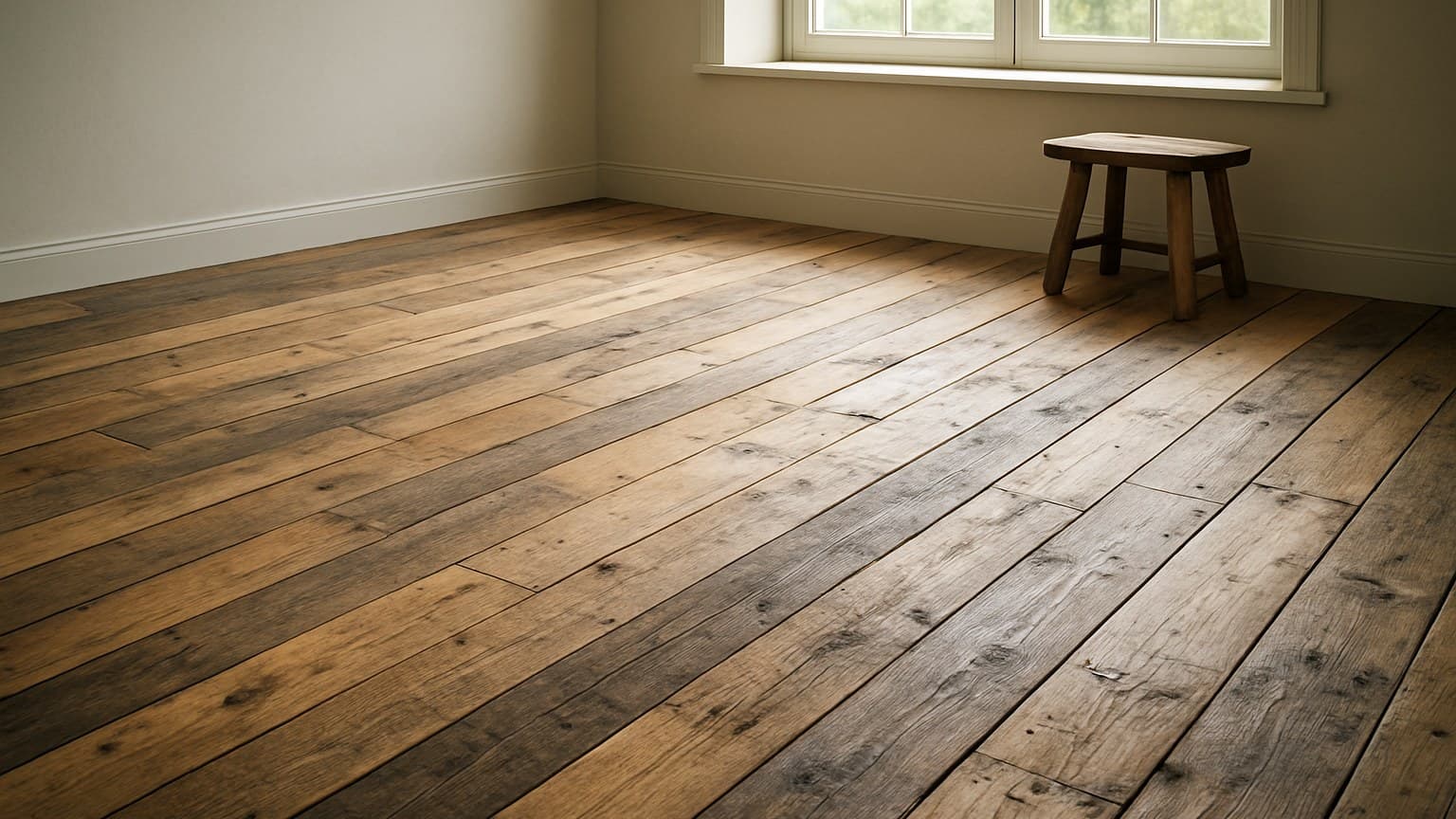
Buy reclaimed wood flooring blind and you can end up with three very different products for three very different prices: real barn-salvaged oak, thin veneer glued over plywood, or brand-new lumber wearing a green sticker. Which one lands on your truck decides how the floor looks, how much it moves, and what it costs. Settle these eight questions before the boards ship. And if you end up deciding reclaimed isn't the right call after all, a complete guide to buying wood flooring walks through the same kind of decisions for new stock instead.
Key takeaways
- The NWFA reserves "reclaimed" or "antique" for wood pulled from old structures like barns and factories; new FSC-certified stock is sustainable, but it is not reclaimed.
- Original-face planks keep the aged patina but hide fewer flaws and cost more; resawn boards give a cleaner, flatter, more uniform face.
- Reclaimed material often runs about $8-16 per square foot; installation adds roughly $3-8 more, with basements and stairs at the top of that range.
- Engineered reclaimed can go over concrete and below grade where solid usually can't; how many times you can sand it back depends on the veneer or wear-layer thickness.
- Old wood still moves. Acclimate the boards and check subfloor moisture and flatness before you lay a single plank.
1. Settle What "Reclaimed" Actually Means
Start by pinning down the word, because sellers use it loosely. According to the National Wood Flooring Association (NWFA), the trade group that sets standards for the wood flooring industry, terms like "post-consumer recycled" or "antique reclaimed" are reserved for wood pulled out of old structures, think barns, factories, and mills, not lumber fresh-cut from a forest. Antique reclaimed just means the wood already did a life somewhere before it became your floor.
Here's where it gets murky. Some sellers stock true salvaged stock right next to a new, FSC-certified "sustainable" line. FSC stands for Forest Stewardship Council, a group that certifies wood cut from responsibly managed forests. That's a good thing, but it's new lumber. It's eco-friendly. It's not reclaimed.
So ask the seller one flat question: was this wood in service somewhere before, in a barn, factory, or mill, or was it milled new from a managed forest? Then get the source structure and a rough age in writing. A real reclaimed dealer can tell you the building it came out of. A vague answer usually means it's the new line with a green sticker.
2. Decide Between Resawn and Original-Face
This choice shapes the whole look. Original-face planks keep the weathered skin, that gray-brown aged surface decades of use put there. Resawn boards are cut to expose fresh wood underneath, so you lose the old surface but gain a flatter, more even face.
The tradeoff is real. Original-face carries the character and the actual story, but it hides fewer flaws and costs more. Resawn is more uniform and takes stain evenly, so it's easier to match across a big room. Either way, deciding whether the boards arrive prefinished or get finished after install is a separate call, and comparing finished versus unfinished wood floors can help you weigh which fits a large, uniform room better.
One warning that trips people up: sanding original-face erases the patina you paid extra for. Plan the finish around keeping that surface, or don't buy original-face at all. It also keeps the nail holes and saw marks, which look great and trap dirt in equal measure, so those usually need resin-filling before finish. If that rough, story-first look is what you're after, my guide to distressed wood flooring walks through how to keep the character without the maintenance headaches.
Original-face keeps the aged surface and its flaws; resawn trades that patina for a flatter, more even board.
3. Choose Solid or Engineered Reclaimed
Solid reclaimed is one piece of old wood, top to bottom. Engineered reclaimed puts a thin layer of that reclaimed wood, the veneer, over a stable plywood-style core that handles concrete and below-grade rooms far better. That core is why engineered is often the honest answer for a basement or a slab, where solid usually isn't recommended. The same tradeoffs come up when you're shopping new hardwood too, and choosing solid vs engineered hardwood floors covers how to pick between them by species and room.
Don't treat refinishing as a plain yes or no. Solid reclaimed can usually be sanded back several times over its life. Engineered is capped by how thick that top veneer is, a spec NWFA's Engineered Wood Flooring Refinishable Program measures directly, so "can I sand this later" is a question you look up per product, not a guess. That veneer-thickness distinction is really the whole story of how engineered flooring is built in the first place, and an explainer on what engineered wood actually is covers the layered construction that limits how many times it can be sanded.
If you go engineered glue-down over a slab, the adhesive and the slab both matter. Use the right wood floor adhesive for the product, and get the slab flat first, or you'll chase hollow spots for years. Glue-down over concrete is one I hire out for most homeowners, a bad trowel pattern or a skipped moisture check ruins the whole floor, and there's no fixing it once the adhesive sets.
| Factor | Solid reclaimed | Engineered reclaimed |
|---|---|---|
| Build | One piece of reclaimed wood | Reclaimed veneer over a plywood-style core |
| Over concrete / below grade | Generally not recommended | Usually fine with moisture control |
| Refinishing | Sand several times over its life | Limited by veneer thickness (NWFA Refinishable Program) |
| Install methods | Nail or staple to a wood subfloor (DIY-friendly with a rented flooring nailer) | Float (doable DIY), glue-down over a slab (hire a pro), or nail |
| Best fit | Ground floor and upstairs over wood subfloor | Slabs, basements, radiant heat |
Source: NWFA's Engineered Wood Flooring Refinishable Program and install guidelines
How solid and engineered reclaimed differ across build, install method, and refinishing.
4. Pick Your Species (and Match It to Traffic)
The species decides how the floor wears, and that's a detail a lot of other guides skip. The number to watch is Janka hardness, a lab rating of how well a wood resists denting. Higher means it shrugs off dropped pans and dog claws better.
Reclaimed oak is the safe all-rounder: hard enough for a busy hallway or kitchen and easy to match. Ash runs about as hard and reads lighter. Antique heart pine, dense old-growth pine salvaged from old mills, holds up well in living and dining rooms. If you want the hardest domestic option full stop, reclaimed hickory (Janka ~1820) beats every species above it in this list, though its sharp light-and-dark grain contrast makes it harder to match board to board than oak. If that lighter ash tone is more what you're picturing, my guide to choosing light wood flooring walks through picking the right shade for your room.
Be honest about the soft ones. Reclaimed white pine and hemlock dent under a chair leg, so they belong in bedrooms, closets, and low-traffic rustic rooms, not a working kitchen. American chestnut is rare and beautiful but soft, so save it for a feature room. If you want a deeper, darker floor, walnut and chestnut both read rich and brown; my guide to dark wood flooring covers how those tones hold up and show dust.
| Species | Janka | Character | Best use |
|---|---|---|---|
| Hickory | ~1820 | Very hard, dramatic light-dark grain contrast | Highest-traffic areas, entryways |
| White Oak | ~1360 | Tight grain, warm brown | High-traffic, all-rounder |
| Red Oak | ~1290 | Open grain, reddish | Living areas, halls |
| Ash | ~1320 | Light, bold grain | High-traffic, lighter rooms |
| Antique Heart Pine | ~1225 | Amber, dense old-growth | Living and dining rooms |
| Teak | ~1155 | Oily, golden-brown | Kitchens, damp-prone rooms |
| Walnut | ~1010 | Rich chocolate tones | Bedrooms, studies (dents easier) |
| Elm | ~830 | Wavy, interlocked grain | Low to medium traffic |
| American Chestnut | ~540 | Wormy, rustic, rare | Feature rooms, low traffic |
| Hemlock | ~500 | Pale, knotty | Bedrooms, closets |
| Eastern White Pine | ~380 | Soft, creamy, knotty | Low-traffic rustic rooms |
Reclaimed species compared by hardness, grain character, and where each fits. Janka figures are approximate and vary by source and individual board.
Janka hardness by reclaimed species, from soft white pine to hard white oak; higher numbers resist dents better.
5. Nail Down Acclimation and Moisture Before Install
This is a step a lot of vendor pages skip, and it's the one that decides whether your floor lays flat or cups. Old wood still moves with humidity. So you acclimate the boards, letting them sit in the room until their moisture content matches the space, and you check moisture before you lay a single plank.
Don't trust a rule of thumb for the numbers. NWFA's installation guidelines call for acclimating boards to the room and checking both subfloor and wood moisture content before installation, but the exact acclimation time and the size of the expansion gap, the small space you leave around the edges of the room so the floor can swell without buckling, come off the product's own instruction sheet, not something passed around online.
Check moisture two ways: the subfloor and the wood itself. A moisture meter, a handheld tool that reads how wet the wood and subfloor are, tells you whether it's safe to start. If you've never used one, how to use a moisture meter on wood covers the readings that mean go and the ones that mean wait. Also check that the subfloor is flat; floating and glue-down floors both telegraph high and low spots.
I floated engineered reclaimed oak over a slab in a Dayton basement a couple of winters back. The boards the homeowner had let acclimate laid flat and stayed flat. A leftover bundle he installed straight off the truck in a back closet cupped within the month. Same floor, same room, different prep.
6. Budget It Out, Split Into Materials and Labor
Reclaimed material usually runs about $8 to $16 per square foot on its own. Installation adds roughly $3 to $8 per square foot on top, and that labor number climbs at the high end for basements and stairs, where the cutting, leveling, and moisture control take longer than an open room.
The math is simple once you split it. Total cost equals (material price per square foot plus labor price per square foot) times your room area, plus 10 to 15 percent extra material for waste, since reclaimed boards vary and you'll cull some. For a 300 square foot living room at $12 material and $4 labor, that's roughly $16 per square foot times 300, so somewhere around $4,800, plus a bit more material for the waste.
| Job part | Typical range (per sq ft) | Notes |
|---|---|---|
| Reclaimed material | $8 - $16 | Original-face and rare species sit at the top |
| Labor, open room | $3 - $5 | Nail-down or float over flat subfloor |
| Labor, basement or slab | $6 - $8 | Moisture control and leveling add time |
| Labor, stairs | $6 - $8+ | Priced per step, slow and fussy |
| Waste allowance | Add 10 - 15% material | Culling for flaws is normal with reclaimed |
Cost ranges for reclaimed wood flooring split into materials and labor, with basement and stair jobs at the top of the labor range. These are general planning ranges, not published figures from a single source.
Treat these as a starting range, not a quote. Prices swing hard by region, species, and how much prep your old subfloor needs, so confirm with two or three local quotes.
That spread shows up in real quotes, not just planning ranges. When I helped a client in Columbus, I'll call her Renee, price out solid reclaimed white oak this past spring, three area suppliers quoted her $9, $12.50, and $15 per square foot for materials alone, same species, similar grade, before any labor was added. None of the three was wrong or padding the number; the gap came down to how much original-face stock each yard had on hand versus resawn, and how much they'd already culled for waste. That's the reason I tell people to get two or three local quotes before budgeting off any single figure, including mine.
7. Check for Old Metal, Pests, and Lead Paint
Reclaimed wood carries its history, and some of that history you don't want in your home. Before boards go down, they should be de-nailed, kiln-dried, and inspected. Kiln-drying matters twice over: it stabilizes the wood and it kills any insects or larvae hiding inside.
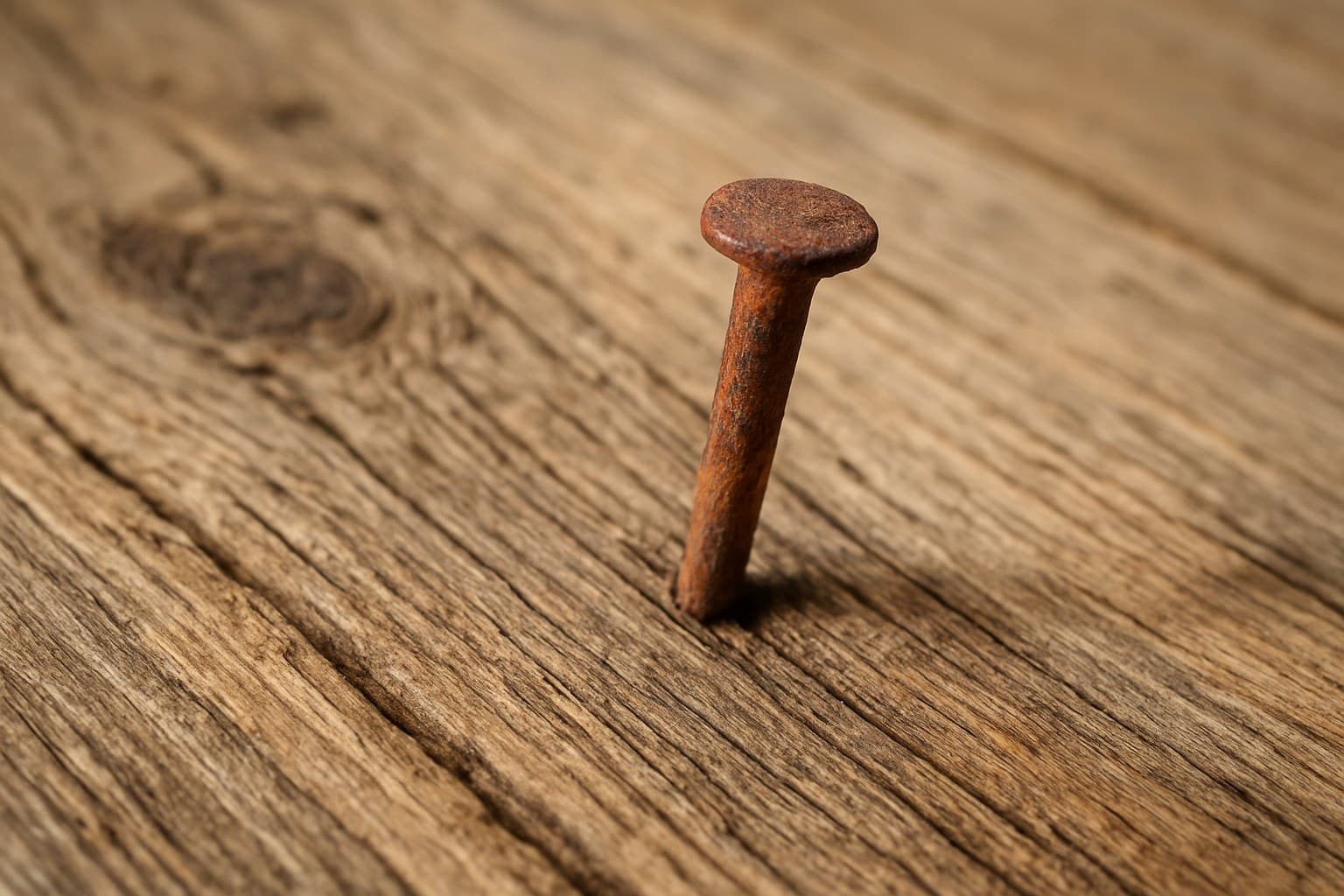
Old metal is the other hazard. Stray nails and staples dull blades and can wreck a planer, so a good supplier pulls them and runs a metal detector over the stock. Ask whether they do.
If the wood came off a painted structure, lead paint is a fair question for anything old enough. A reputable reclaimer removes painted faces or tests them. This is why a documented source matters so much: you're not just buying a look, you're trusting that someone cleaned up the wood's past before it reached your floor.
8. Buy From a Source That Documents It
The best defense against every problem above is a seller who documents the wood. A real reclaimed dealer can name the structure the wood came from, give a rough age, and tell you how it was processed: de-nailed, kiln-dried, and graded.
Look at the tier, not just the price. A cheap "reclaimed" quote with no source story is often the new FSC line, or wood that skipped kiln-drying. Ask for the source structure in writing, the moisture content off their meter, and whether the boards are original-face or resawn. A supplier who answers all three cleanly is the one to buy from.
That paperwork also protects the install. Knowing the species, the moisture reading, and the build tells you and your installer how to acclimate it and which subfloor it can go over, which is the whole point of settling these eight things before the boards ship.