
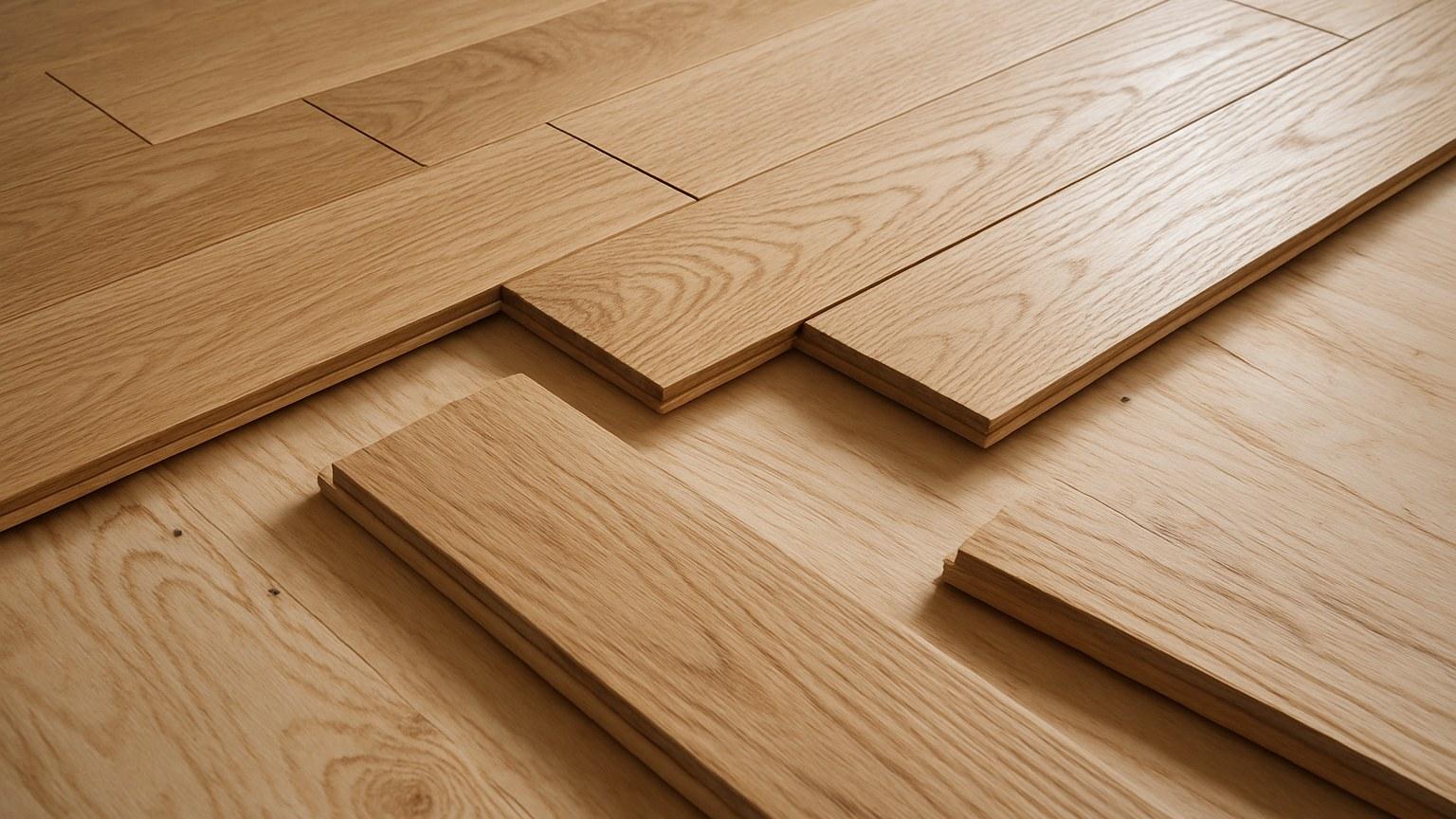
Buy prefinished (finished) wood when you want a floor you can walk on the same day with no sanding dust, and buy unfinished when you need to match existing boards or chase a custom stain. The finished vs unfinished wood choice trips people up because the cheaper board up front often costs more once it's installed. Get it wrong and you either pay for days of dust you didn't need, or you lock in a seam pattern you can't take back.
Key takeaways
- Prefinished (finished) installs and is walkable the same day with no sanding dust or fumes; unfinished is bare wood sanded and finished in place, which gives a seamless floor you can stain to match existing wood.
- flooring.org puts prefinished hardwood installed at $6-26 per sq ft; unfinished adds on-site finishing labor, and nerdwallet.com lists sanding at $0.50-3 per sq ft plus staining at $1-3 per sq ft.
- Factory UV-cured aluminum oxide coats are harder than most site-applied finishes, but superior-hardwoods.com notes prefinished floors can be sanded fewer times over their life because of how deep the factory coat sits.
- The NWFA (National Wood Flooring Association) lists 3/4 inch (19.05mm) as the standard solid-wood thickness and targets a 6% moisture-content tolerance before installation.
- Matching an existing floor or chasing a custom stain favors unfinished; a fast, low-dust turnaround favors prefinished.
What's the Difference Between Finished and Unfinished Wood?
Finished (prefinished) wood shows up at your door already sealed from the factory and installs ready to walk on. Unfinished wood is bare board that gets sanded, stained, and sealed in place after it's nailed or glued down.
The coat is where they split. Prefinished boards wear a factory UV-cured aluminum oxide finish, baked on under lights in a plant. Unfinished floors get site-applied polyurethane after install. According to flooring.org, oil-based poly adds an amber warmth and dries slow, while water-based poly stays clear and dries fast. That site coat is what lets you stain the whole floor one color, seams and all.
Construction usually follows the finish. Unfinished boards are almost always solid wood. Engineered boards, with their plywood-style core, almost always ship prefinished, and that core makes them a safer choice in concrete and basement applications where solid wood struggles. If you're weighing that core against vinyl for a basement, our 9 facts that settle engineered hardwood vs LVP (luxury vinyl plank) walks through it.
Raw Wood vs Finished Wood: How to Tell at a Glance
Run your hand across it. A uniform sheen with a tiny V-groove at every board edge means prefinished. A raw, slightly rough feel with square edges that sit flush means unfinished, still waiting for its coat.
Those little grooves, called micro-bevels, are the real difference you live with. A site-finished floor seals flat across the seams. A prefinished floor has a groove at every joint.
The seamless edge gives you nothing for grit to hide in. The micro-bevel looks sharp, but the groove collects dirt and can let water reach the raw edge of the board.
Installation Timeline: Days of Dust vs Walk On It Today
Prefinished installs and is usable the same day. Unfinished ties up the room for several days: sand it, stain it, then lay down multiple finish coats with dry time between each one. If you're also weighing that timeline against a floating vinyl floor, our LVP vs hardwood comparison breaks down which fits a busy household.
Before either floor goes down, the prep is identical and it's the part people skip at their peril. The subfloor has to be flat, and you have to check moisture, both in a concrete slab and in a wood subfloor. Acclimation follows the product's own sheet, not some rule of thumb you read online. On most floating or nailed jobs, a flat, dry subfloor is what keeps the warranty intact, not the plank you picked. A moisture meter for wood takes the guesswork out of that slab-or-subfloor check before any boards go down.
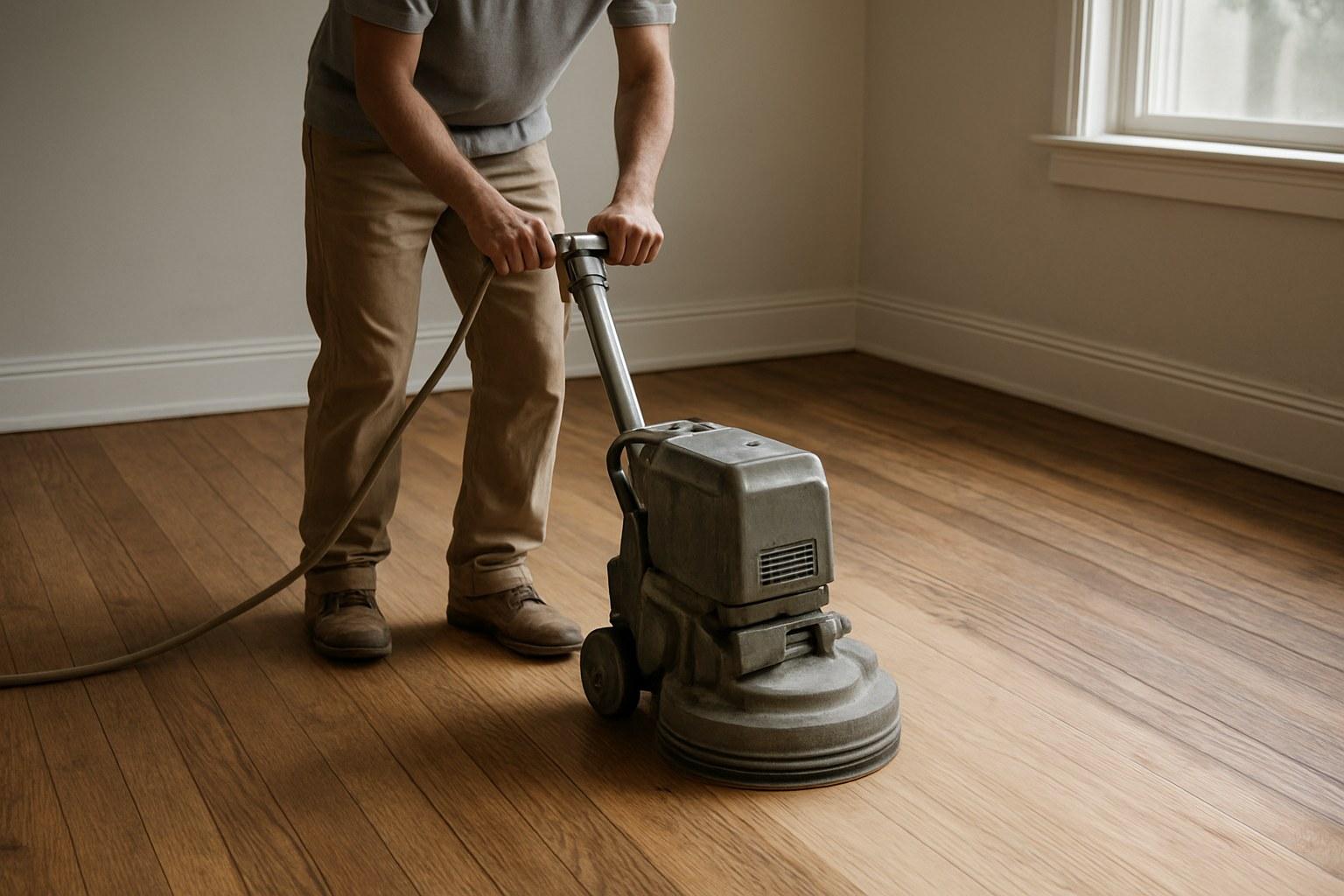
Site finishing is messy work. Even with dustless sanding, which pulls grit straight into a vacuum instead of the air, you still get days of fumes from the finish. Traditional sanding throws more dust around the house. For the step-by-step on that, see our guide on how to sand and finish unfinished hardwood on site.
On the DIY question: a steady do-it-yourselfer can handle click or nail-down prefinished in a bedroom or hallway. Site sanding, staining, and big open-plan finish jobs are where a bad coat shows forever, so that's the work I'd hand to a pro.
Finished vs Unfinished Wood Cost: Material vs Installed Total
Prefinished costs more per board but less to install. Unfinished bare boards often cost less up front, then you pay finishing labor on top after they're down, which is how the "cheaper" floor ends up pricier installed.
The cost pieces below run per square foot, pulled from published installer and manufacturer ranges including flooring.org, wagnermeters.com, and nerdwallet.com.
| Cost piece | Per square foot | Source |
|---|---|---|
| Prefinished material (engineered) | $3-10 | flooring.org |
| Prefinished material (solid) | $4-12 | flooring.org |
| Prefinished installed total | $6-26 | flooring.org |
| Nail-down labor only | $2-4 | wagnermeters.com |
| Glue-down labor only | $3-5 | wagnermeters.com |
| Sanding (refinishing) | $0.50-3 | nerdwallet.com |
| Staining | $1-3 | hallmarkfloors.com, nerdwallet.com |
| Screen and recoat | $1.50-3.50 | cavalieriflooring.com |
So which costs more over the long haul? Prefinished usually wins on total install cost because you skip the sanding, staining, and extra coats. Unfinished pulls ahead only when the bare board is cheap and you're doing the finish work yourself. Keep in mind those ranges are for open rooms, basement, below-grade, and stair installs run higher on labor for either finish type, because of the extra prep, cutting, and moisture work involved. For most people, prefinished is cheaper installed, and unfinished is worth the extra labor only when you need the match or the custom color it buys.
Durability, Maintenance, and Refinishing Limits
Factory UV-cured aluminum oxide is a harder, more scratch-resistant surface than most site-applied coats. The catch is those micro-beveled seams aren't sealed across the floor, so grit and spills can work into the grooves.
A site-finished floor cures into one continuous sealed sheet with no grooves at all. That's easier to keep clean, but it needs full cure time before heavy use and before you throw rugs down, or you'll trap the finish before it hardens.
Over the years, you refinish both floors in one of two ways. A buff-and-coat, sometimes called a screen and recoat, scuffs the top layer and lays a fresh coat, no bare wood exposed. A full sand-and-refinish grinds down to raw wood and starts over. One limit worth flagging: superior-hardwoods.com notes prefinished floors can be sanded fewer times over their life, because the factory coat sits deeper into the board, so you lose more wood getting past it.
Day to day, both floors want the same care. Sweep or vacuum grit before it grinds into the finish, because sand under your shoes acts like sandpaper. Damp-mop only, never let water stand on the seams. Put felt pads under every chair and table leg. And save the refinish shop for when wear actually reaches the wood; a recoat before that point keeps you off the sander for years.
The Specs That Settle It: NWFA, NOFMA, and Real Product Sizes
Two names set the rules behind all this. The NWFA, the National Wood Flooring Association, publishes the install guidance pros follow. NOFMA, which started as the National Oak Flooring Manufacturers Association, is the long-running wood-flooring grading and manufacturing standard.
The NWFA lists 3/4 inch (19.05mm) as the standard solid-wood thickness and targets a 6% moisture-content tolerance in the wood before it goes down. That moisture number matters because it's the subfloor and the room's humidity, not the plank, that end up deciding whether the warranty holds. A board installed too wet or too dry moves after it's nailed, and no finish saves it. Whether that 3/4 inch solid board or an engineered alternative suits your room better is exactly what our guide on solid vs. engineered hardwood floors walks through.
To picture what unfinished actually looks like on an order sheet, here are two real white oak products.
| Product | Construction | Thickness | Width | Cut |
|---|---|---|---|---|
| Maxwell Legacy Reserve Series, Unfinished Solid White Oak | Solid | 3/4 inch (19.05mm) | 6 inch | Rift and quartered |
| Maxwell Legacy Live Series, Unfinished Engineered Live Sawn White Oak | Engineered | 5/8 inch | 7 inch | Live sawn |
Source: Maxwell Hardwood Flooring's product specifications
Two unfinished white oak products compared by construction, thickness, width, and cut.
Those widths matter more than people expect. I had a client near Dayton set on wide solid oak for a room experiencing dry winter heat and swampy summer humidity. The boards gapped every winter and crowned every summer, and there was no finish fix for it. Now, in a room with big seasonal swings, I steer people toward narrower boards or engineered, which that plywood-style core holds flatter. If you're leaning toward a pale oak look either way, our guide on how to choose light wood flooring for your room sorts the species and finishes.
Which One for Whom: A Room-by-Room Verdict
Match the floor to the room and the household, not to a "best" label. Knowing the full range of types of hardwood floors on the market makes that match easier to get right.
Matching an existing hardwood floor, like tying a new addition into old oak, favors unfinished every time. You stain the new and old together so they read as one floor. Chasing a custom color nobody sells prefinished? Same answer, unfinished.
A fast, low-dust turnaround favors prefinished. Busy house, kids, pets, no spare days to live around sanding and fumes? Prefinished, walked on the same day, is the clear pick.
Over concrete, in a basement, or anywhere below grade, go engineered prefinished for the stability of that core. Solid unfinished doesn't belong there.
On install, click or nail-down prefinished is a realistic DIY for a steady hand in a bedroom or hall. Glue-down over concrete and any site-finish job are where I'd hire a pro, because the coat and the moisture transitions are unforgiving. If a basement has you choosing between an engineered floor and vinyl, read our engineered hardwood vs LVP (luxury vinyl plank) breakdown before you buy, since the moisture tolerance is the whole decision down there.
Sources
- NWFA Homeowner's Handbook to Real Wood Floors
- NWFA: Use Real Wood
- NWFA/NOFMA Factory Finished Flooring Standards (2019 update)
- NWFA/NOFMA Unfinished Wood Flooring Standard (2018)
- NWFA Installation Guidelines
- Maxwell Hardwood Flooring's product specifications