
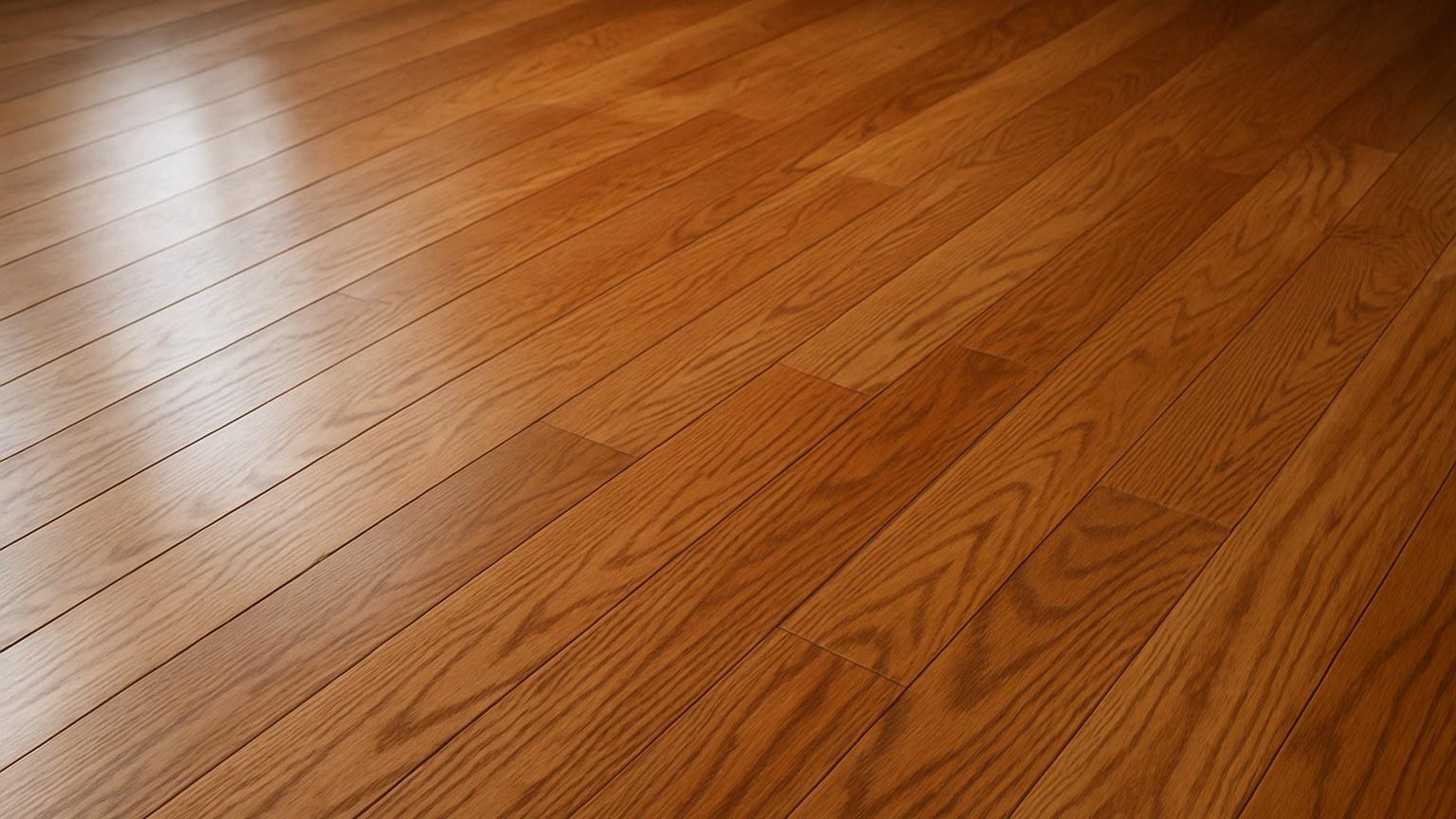
A red oak natural finish looks pinker, not neutral, because a clear coat adds no pigment of its own. It only wets the wood and seals in the tannin, and the word "natural" tricks people into expecting a flat, neutral result. The two fixes that actually work are Ciranova's Pink Blocker and Bona's NordicSeal.
Key takeaways
- A clear 'natural' finish adds no color of its own. It wets the wood and seals in red oak's tannin, so the pink and red read stronger, not weaker.
- There are two documented fixes: Ciranova's Pink Blocker 2C, a chemical pre-treatment that blocks tannin, versus Bona's NordicSeal, a more-pigmented waterborne sealer.
- Pink Blocker runs from $58.90 for a test size up to $602.70 for a 10L jug, per ciranovastore.com; Bona lists no public price for NordicSeal.
- Water-based finish keeps red oak the clearest; oil-based ambers and warms the pink over time, especially under sunlight.
- Refinishing labor runs roughly $0.50-$3 per sq ft to sand plus $1-$2 to finish, per nerdwallet.com and angi.com, before any color step. Test on a real sample board and check subfloor moisture first.
Why a 'Natural' Finish Makes Red Oak Look Pinker, Not Neutral
A clear or "natural" finish adds zero color. It wets the bare wood and seals in the tannin tone, so red oak's pink and red undertone reads stronger after the first coat, not softer. That surprises a lot of homeowners who picked "natural" hoping for neutral.
Natural red oak isn't neutral at all, it runs pinkish to salmon-brown with red-orange undertones. White oak sits browner and more neutral by comparison, which is why the two never match straight out of the box. Grade and sourcing swing the price of either species just as much as color does, which is why judging oak hardwood flooring quality before you buy is worth the extra time.
Watch it happen on your own floor. Bare sanded red oak looks pale and chalky, almost gray. Then the first coat goes on and the pink pops. That's normal product behavior, not a bad batch and not a defect in the finish.
If you want a controlled, even look without chasing color across a whole site-finished floor, prefinished red oak boards are one route worth weighing before you sand anything.
Two Ways to Neutralize the Pink: Chemical Blocker vs Pigmented Sealer
There are two documented systems that fight the pink, and they work in opposite ways. Ciranova's Pink Blocker 2C is a chemical pre-treatment that blocks the tannin before you ever lay a finish coat. Bona's NordicSeal is a more-pigmented waterborne sealer that masks the tone instead of stopping it, and bona.com describes it as carrying about twice the pigment of a standard sealer.
The steps differ, so plan for it. The blocker goes down first, then a topcoat of your choice. Ciranova lists Woodlook PLUS, Ecofix PLUS, Oculto PLUS, or Hardwaxoil MAGIC over it. NordicSeal gets applied, then topped with Bona Traffic Naturale or Traffic HD RAW.
Price is where the two split. ciranovastore.com lists Pink Blocker from $58.90 for a test size up to $602.70 for a 10L jug. Bona publishes no price for NordicSeal, so you have to price it through a dealer.
For a small room or a tester, the blocker-plus-topcoat path gives you more finish choices and real published pricing. The single-brand Bona system is simpler to spec on a whole-floor pro job where one supplier and one process keep things clean.
| Factor | Ciranova Pink Blocker 2C | Bona NordicSeal |
|---|---|---|
| Method | Chemical pre-treatment that blocks tannin before finish | More-pigmented waterborne sealer that masks the tone |
| Steps | Blocker first, then your topcoat (Woodlook PLUS, Ecofix PLUS, Oculto PLUS, or Hardwaxoil MAGIC) | NordicSeal, then Bona Traffic Naturale or Traffic HD RAW |
| Pigment | Clear blocker; color comes from the topcoat you pick | About 2x the pigment of a standard sealer |
| Safety | Low-odor waterborne | Low-odor waterborne |
| Price | $58.90 test size up to $602.70 for 10L | No public price listed |
Side-by-side of the two documented systems for neutralizing red oak's pink undertone.
Water-Based vs Oil (and Why the Old Bleach Methods Got Dropped)
Water-based finish keeps red oak the clearest, which is why "natural red oak floors with water based finish" is the go-to combo for a neutral look. Oil-based finish ambers and lays down a yellow-orange cast that pushes the pink warmer from day one.
Then there's the long game most guides skip. Oil ambers more over the years, and it does it faster under sunlight, so a floor that read neutral at install can warm up in a few seasons. Even a neutralized floor needs an occasional recoat to hold the look you paid for.
The old legacy tricks did pull color. Bleach, oxalic acid, and peroxide strippers all stripped some of the red out. But they were harsh, slow, fumey, and hard to keep even across a whole floor, so you got blotches where a brush load sat a second too long.
The real story is the safety swap. Modern low-odor waterborne blockers and sealers replaced those old chemistries. That's exactly why both systems above, the Ciranova blocker and the Bona sealer, are waterborne and low-odor.
How to Get a True Natural Oak Finish: Test Boards and Sheen
Before any sanding, confirm the subfloor is flat and take a moisture reading. On a refinish or a floating floor the finish only lasts as long as the prep beneath it, and the maker's warranty quietly hinges on that prep, not on the can you bought. That prep-then-finish order is the same sequence you'd follow with unfinished hardwood flooring sanded on site, just starting from bare new boards instead of an old finish.
Always test the blocker or sealer plus your chosen topcoat on a real sample board cut from your actual floor. Finish a 2-3 foot piece, let it fully cure, then look at it in daylight and again at night under your own bulbs. The wet sample lies, because the color shifts as it cures.
Pick sheen on the cured board, never off the can label. A natural matte finish reads closest to raw untreated wood, which is what most people chasing "natural" actually want. A natural satin finish adds a touch of sheen and depth if you like a little life in the floor.
A true natural oak look is the right product plus the right sheen plus a tested sample. It's never one clear coat straight from a single can.
Matching Red Oak and White Oak in One Room
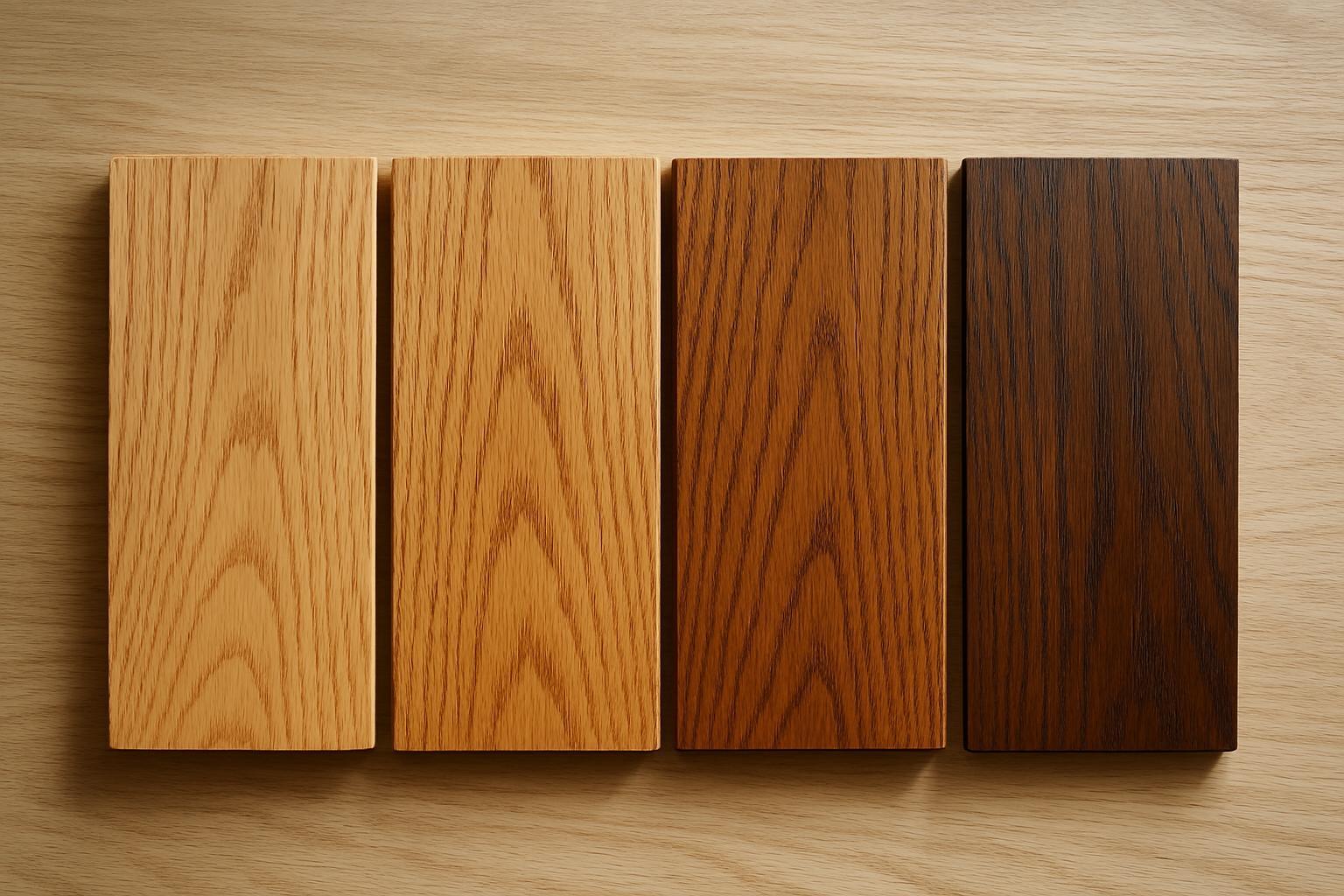
The common headache is new red oak meeting existing white oak in one open space. The pink against the brown jumps out the second the afternoon light hits the floor.
Color is easier to match than grain. Neutralizing red oak's tannin can pull it toward white oak's tone, but red oak's coarser, more open grain still reads different up close. You can get the hue close and the texture will still tell you which board is which.
You have three ways to handle it, ranked by how close they get the match. Block or neutralize the red oak toward neutral so it leans white oak's way. Or stain both species to a shared mid-tone so neither one fights the other. Or accept a clean threshold between the two rooms when the species simply won't blend.
On a whole-house blend, sample both woods side by side under the real room light before you commit. What looks matched in the garage under shop lights can clash under a south-facing window.
Should You DIY This or Hire It Out, and What It Costs
A closet or a sample board is fine to do yourself. Sanding a whole floor dead flat and laying a 2-part blocker system down evenly is where most DIY jobs go sideways, because an uneven blocker coat shows as patchy color once the topcoat pops it. A big open floor with transitions is worth hiring out.
The cost splits into materials and labor. New red oak material runs roughly $3-$7 per square foot for solid, per dgfloors.com. On a refinish you skip the board cost, and the labor stacks up by step: sanding at $0.50-$3 per square foot (per nerdwallet.com and angi.com), then a finish coat at roughly $1-$2 per square foot and a color or stain step at roughly $1-$3 per square foot, per angi.com, both vary by the specific product and your region. Basements and stairs cost more than an open room because of the cutting and the awkward reach. If you're still deciding between board types before any of this cost math applies, it helps to weigh solid versus engineered hardwood options first.
| Step | Cost per sq ft | Note |
|---|---|---|
| Sanding | $0.50-$3 | nerdwallet.com, angi.com |
| Finish coat | $1-$2 | angi.com; price varies by product and region |
| Color or stain step | $1-$3 | angi.com, thisoldhouse.com, nerdwallet.com; price varies by product and region |
| Red oak material (new boards only) | $3-$7 | solid, dgfloors.com |
Refinishing cost per square foot by step, with new-board material shown separately; ranges vary by region and floor condition.
Work a quick example. Say sanding lands at $1.50, the finish coat at $1.50, and the color step at $2. That's $5 per square foot in labor, so a 300 square foot room runs about $1,500 before any new boards.
The tool side matters too. A natural-neutral job means renting a drum or orbital floor sander and choosing between dustless and traditional sanding, which changes both your cleanup and your price.
One thing I learned the slow way: I once laid a finished floor while a drywall crew still had sanding to do, and the fine dust settled into the fresh coats and worked under the protective paper. Now I make the finish step the last work anyone does in that room, no exceptions. If you're also setting new boards, read up on the full hardwood installation sequence so the finish stays clean to the last coat.