
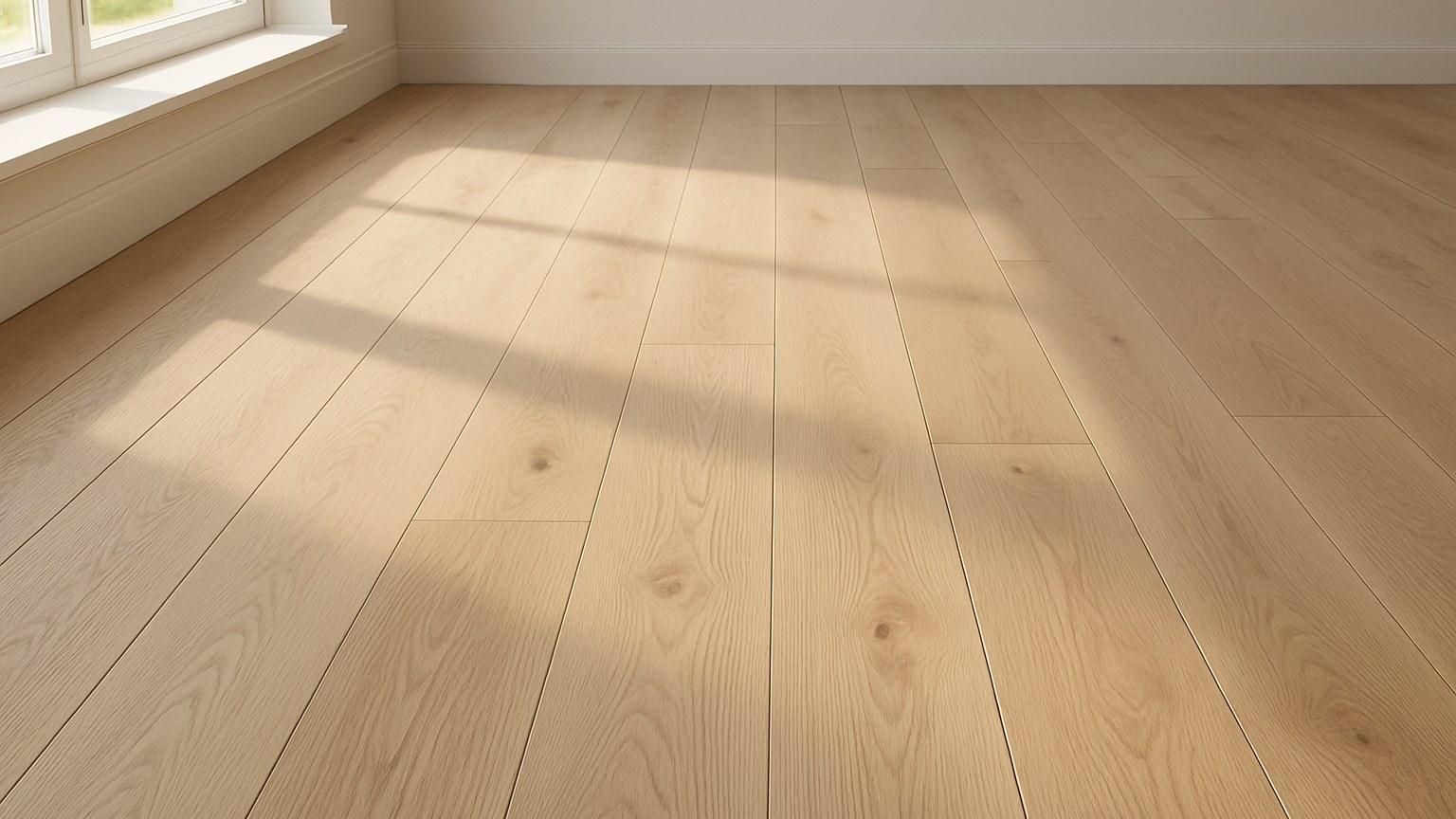
White oak flooring cost runs about $4-12 per square foot for standard-mill material, according to hartco.com, and $13-28 for custom wide-plank, according to vermontplankflooring.com, before labor and prep get added on. Most quotes blur those pieces into one number, so the same floor ends up priced all over the map. Below I pull them apart so you can read your own project off the tables.
Key takeaways
- Standard-mill white oak material runs about $4-12 per square foot (hartco.com), with hursthardwoods.com starting near $4.70, while custom wide-plank unfinished runs $13-28 per square foot (vermontplankflooring.com) — that spread is the single biggest thing to pin down before you budget.
- Prep adds up fast and most quotes bury it: old-floor removal runs about $2-4.50 per square foot (dropcurb.com) and a bad subfloor can cost $2.50-9 per square foot to replace (homeadvisor.com, angi.com).
- Refinishing a white oak floor later runs roughly $3-8 per square foot (todayshomeowner.com, homeguide.com, bigbrohardwood.com), which is why a sandable solid floor is cheap to keep going.
- A solid 3/4-inch wood floor can last more than 100 years, past the 75-year window the National Wood Flooring Association used in its life cycle cost analysis, so the upfront price spreads into pennies per square foot per year.
- Wood pays back at resale too: the National Wood Flooring Association's Savvy Consumer study found 66% of homeowners rank wood flooring 'excellent' for adding home value.
What White Oak Flooring Costs Installed: The Short Answer
Material is the part you can pin down: roughly $4-12 per square foot for standard-mill stock, according to hartco.com, and $13-28 per square foot for custom wide-plank unfinished boards, according to vermontplankflooring.com. Everything else, labor, prep, and finish, stacks on top of that.
Installation labor is the part nobody can hand you as one flat national number. It swings by region, by how choppy your layout is, and by the install method. Basements and stairs cost more per square foot than one open room. So the labor line belongs in a local quote, not in a chart.
Two decisions move your number more than anything else: standard-mill versus custom width, and whether your subfloor needs work before a plank goes down. Nail those two down and the rest is arithmetic.
The rest of this guide is read-your-case tables, not one average. Find the row that matches your room and your boards, and you'll have a real range to budget against.
Material Cost by Grade, Cut, and Width
White oak material splits into two worlds. Standard-mill stock in common widths and grades sits at the low end, while made-to-order wide boards in higher grades sit at the top.
Grade is simply how much knotting, streaking, and color change the boards carry. A clean, uniform look costs more because the mill has to pull more character boards out. Cut is how the log was sawn, which changes both the grain pattern and how much the board moves with humidity. If you want the full breakdown of grades and cuts, our guide to oak grades, cuts, and the specs a sample board hides walks through all of it.
How Grade Changes the Price
Within standard-mill stock, a clear select grade lands near the top of the $4-12 range from hartco.com, while a character or common grade with more knots lands lower. hursthardwoods.com lists unfinished white oak starting near $4.70 per square foot, which is about as low as new white oak material gets before you drop to seconds or shorts.
How Cut and Width Change the Price
Rift and quartered white oak costs more than plain-sawn because the mill gets fewer usable boards out of each log. Width works the same way. Wider boards waste more of the log, so custom wide-plank unfinished runs $13-28 per square foot, per vermontplankflooring.com, compared with the $4-12 for narrower standard stock.
| Spec | Material range | Note |
|---|---|---|
| Standard-mill select (strip/narrow) | $4-12/sq ft | most big-box and distributor stock |
| Hurst unfinished starting price | from ~$4.70/sq ft | budget unfinished entry point |
| Custom wide-plank unfinished | $13-28/sq ft | milled to order, wider boards |
White oak material cost per square foot by product type, material only.
This is material only. Finish and labor come later, and both can rival the wood itself.
Standard-Mill vs Custom Wide-Plank: Why the Same Wood Ranges From $5 to $28
The gap between the $4-12 figure from hartco.com and the $13-28 figure from vermontplankflooring.com isn't two qualities of oak. It's two ways of making the floor.
Standard-mill is high-volume stock, cut to common widths and grades and sitting on a distributor's rack. Custom wide-plank is milled to your order, in wider boards, from higher-grade logs, with far more waste along the way. Same tree, very different process.
Figuring out which price fits your project comes down to width and source. Narrow or common widths pulled from a distributor sit at the low end. Boards 7 inches and wider, made to order, sit at the top.
So when two quotes for "white oak" land thousands of dollars apart, the species is rarely the reason. The milling almost always is. A $5 floor and a $25 floor are usually standard-mill stock versus boards cut to order.
Installation Cost Per Square Foot
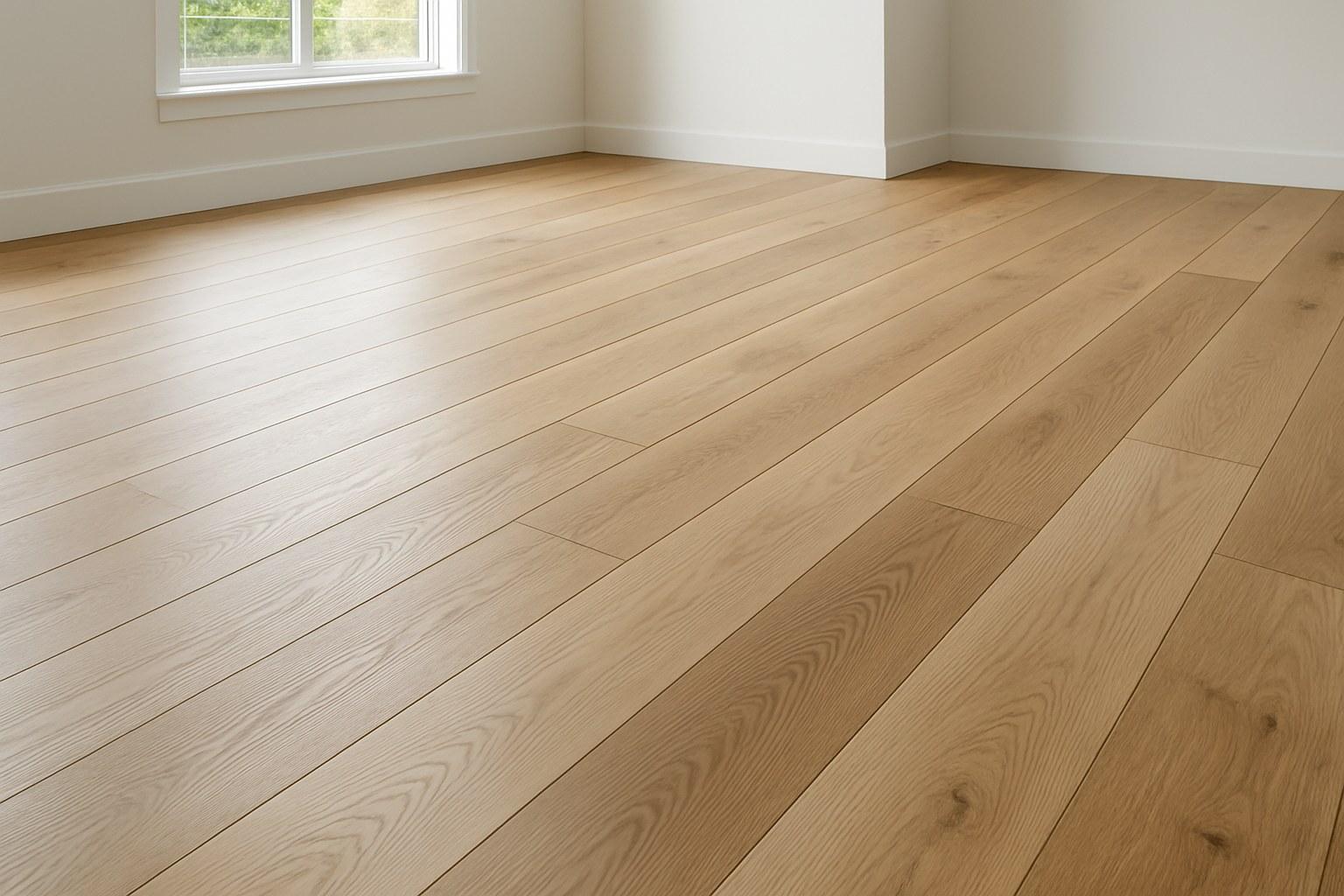
I won't hand you a flat labor figure, because no single number covers every job. Install labor swings by region, by layout, and by method, so it belongs in a local quote, not a national average.
What you're paying a pro for is the layout, the fastening, the transitions, and the trim. For solid white oak, that fastening is usually nail-down over a wood subfloor, which is the common and faster install. Engineered boards get glued or floated, and glue-down in particular takes more time and skill. You can full method breakdown in our walkthrough of installing hardwood flooring step by step.
Stairs and small, choppy rooms cost more per square foot than one big open room. Every doorway, closet, and stair tread is more cuts, more fitting, and more trim for less finished floor. A pro quoting a 400-square-foot great room will price it lower per foot than the same 400 feet broken into a hallway, a bath, and three closets.
Subfloor Prep, Old-Floor Removal, and Repair Costs
Prep is the part nobody quotes until it's too late. Removal and subfloor work can add several dollars a square foot before a single plank is down, and it's where the "cheap" quote quietly turns expensive.
Pulling up an old nailed hardwood floor runs about $2-4 per square foot, and a glued-down floor runs about $3-4.50 per square foot, according to dropcurb.com. If the subfloor underneath is shot, replacing it adds more: homeadvisor.com puts plywood replacement at $2.50-3.50 per square foot and OSB (oriented strand board) at $2.50-4.50, while a modular basement subfloor like DRIcore runs $2.50-9 per square foot, per homeadvisor.com and angi.com.
| Task | Range |
|---|---|
| Nailed hardwood removal | $2-4/sq ft |
| Glued-down removal | $3-4.50/sq ft |
| Plywood subfloor replacement | $2.50-3.50/sq ft |
| OSB subfloor replacement | $2.50-4.50/sq ft |
| DRIcore subfloor replacement | $2.50-9/sq ft |
Prep and old-floor removal cost per square foot.
Checking Flatness and Moisture First
Before any install, two checks come first: the subfloor has to be flat, and it has to read dry on a moisture meter. On most nailed and floating jobs, the finished floor only lasts as long as the prep beneath it. The manufacturer's coverage quietly rests on those two readings, not on the plank you selected.
Flatness you check by laying a straightedge across the floor and watching for rocking and for light showing underneath. High spots get ground down. Low spots get filled with leveler.
Checking subfloor flatness with a straightedge over a high spot and a low spot.
A good moisture meter is cheap insurance here, and I never skip the reading.
I learned to respect prep the expensive way. A homeowner near Dayton asked me to quote refinishing a floor because one spot squeaked, figuring a quick sanding would quiet it. When I pulled a board, I found the genuine issue was a failing subfloor underneath the squeak, and surface sanding never would have resolved it. Now I find the source of a squeak before I quote any surface work, because the floor on top is only as good as what it's nailed to.
Solid vs Engineered White Oak: What the Choice Does to Your Budget
Solid and engineered white oak get compared as if they're interchangeable, but the right choice is driven by where the floor is going as much as by price. Engineered's plywood-style core makes it more stable over concrete and below grade, where solid is generally not recommended. Our broader guide to picking solid vs. engineered hardwood floors walks through that same decision across species and room types beyond white oak.
So for a basement or a slab, engineered is usually the call, not because it's cheaper, but because solid can cup and gap in those spots. For a main floor over a wood subfloor, solid white oak is right at home.
The money difference shows up down the road, not always up front. A solid 3/4-inch floor can be sanded several times over its life. An engineered floor can only be refinished as many times as its veneer allows, and some thin-veneer products can't be sanded at all. That caps how long the floor lives, which matters for the cost-per-year math coming up. If you're weighing the two against a vinyl option instead, our side-by-side on LVP (luxury vinyl plank) versus hardwood by room lays out where each one wins.
Unfinished vs Prefinished: What the Finish Adds to the Bill
Prefinished boards arrive sanded, stained, and sealed, so you pay more per square foot for the wood but skip the on-site finishing labor. Unfinished boards cost less as material but need sanding and several coats of finish after they're down, which is its own labor line.
Prefinished is the faster, cleaner install and the usual pick for a busy household. Our guide to what to settle before you buy prefinished hardwood covers the tradeoffs in detail.
Unfinished gives you a seamless surface and any stain color you want, but you're paying for site work. If you want the raw-board route, our walkthrough of unfinished hardwood and site-finishing is the one to read, and for white oak specifically, the unfinished white oak order sheet breakdown helps you read every line before you buy.
Either way, the finish is a real cost, not a rounding error. Budget it as its own number.
Refinishing Cost Down the Road
Refinishing a white oak floor later runs roughly $3-8 per square foot, though estimates vary by source: todayshomeowner.com puts it at $3-5, homeguide.com at $3-7, and bigbrohardwood.com at $3-8 per square foot. That range is why a sandable solid floor is so cheap to keep going.
A solid 3/4-inch floor can take several sandings over its life, so you can refresh the surface multiple times instead of tearing it out. Scuffed, dated, or scratched? Sand and refinish, and it looks new again.
Engineered white oak is the opposite story. Its refinish count is set by the veneer thickness the maker publishes, so "can I refinish this later" is a spec question, not a given.
The Cost-Per-Year View: Why White Oak Looks Expensive and Isn't
White oak stops looking expensive once you spread the price over how long it lasts. The National Wood Flooring Association used a 75-year window in its life cycle cost analysis, and a solid 3/4-inch wood floor can outlast even that, living past 100 years with refinishing.
Divide the upfront material cost by the years of service and you get the real cost of owning it. The math is simple: cost per year equals the upfront cost per square foot divided by the years the floor serves. The table below runs that math across a few price points, over the 75-year window and over a 100-year life.
| Upfront material | Over 75 years | Over 100 years |
|---|---|---|
| $5/sq ft | $0.07/sq ft/yr | $0.05/sq ft/yr |
| $8/sq ft | $0.11/sq ft/yr | $0.08/sq ft/yr |
| $12/sq ft | $0.16/sq ft/yr | $0.12/sq ft/yr |
| $20/sq ft | $0.27/sq ft/yr | $0.20/sq ft/yr |
| $28/sq ft | $0.37/sq ft/yr | $0.28/sq ft/yr |
Material cost per square foot spread over 75-year and 100-year service lives, based on the National Wood Flooring Association's 75-year life cycle window.
Even the pricey custom wide-plank lands under forty cents a square foot per year at the long end. Labor adds to the upfront figure, but it spreads the same way. A floor you sand and keep instead of rip and replace is where the real savings sit.
White Oak and Resale Value
Wood flooring pays back at resale, which is part of the value math. The National Wood Flooring Association's Savvy Consumer study found that 66% of homeowners rank wood flooring "excellent" for adding value to a home.
That doesn't mean you recoup every dollar. It means a solid wood floor is a feature buyers notice and pay for, which softens the upfront cost in a way carpet or budget vinyl doesn't.
White oak in particular reads as current. Its tone takes natural and light finishes well, and that look has carried for years, so you're less likely to be stuck with a dated floor. For the bigger picture on how wood holds value, our breakdown of hardwood flooring prices and the real cost per year digs into the long view.
A Worked Example: 300 Square Feet From Bare Subfloor to Finished Floor
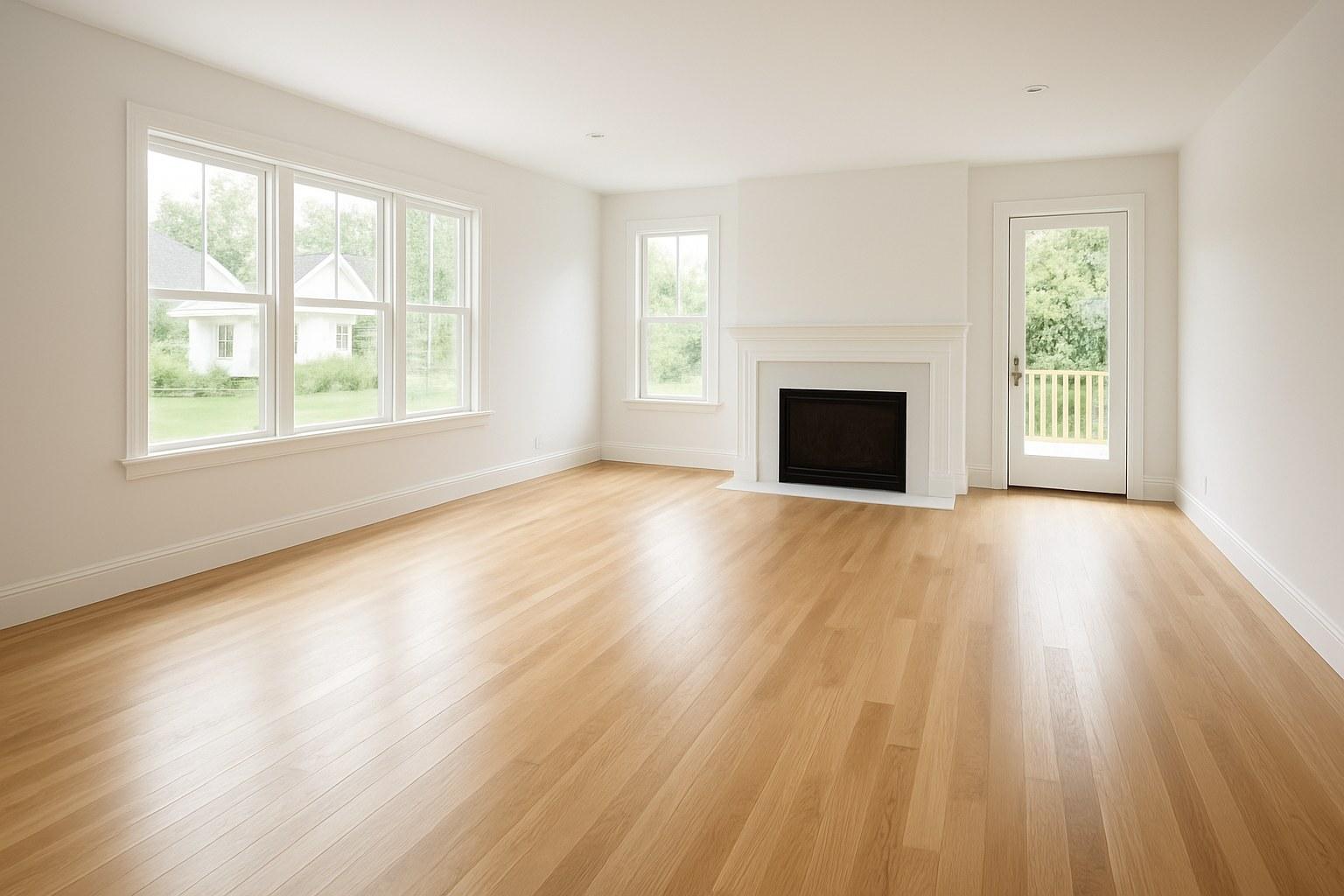
Let me put the pieces together for a real room: 300 square feet of standard-mill white oak, with an old nailed floor to pull up first. I'll stick to the sourced material and prep numbers and leave labor and finish as separate quote lines, because those aren't flat national figures.
| Line item | Low | High |
|---|---|---|
| Material, 300 sq ft at $4-12 (hartco.com) | $1,200 | $3,600 |
| Remove old nailed floor at $2-4 (dropcurb.com) | $600 | $1,200 |
| Material + removal subtotal | $1,800 | $4,800 |
| Install labor | local quote | local quote |
| Finish (if unfinished) | local quote | local quote |
| Subfloor repair (only if needed) | $2.50+/sq ft | $9/sq ft |
Material and removal cost for a 300-square-foot white oak job, before labor, finish, and any subfloor repair.
So before a single labor hour, this room is $1,800 to $4,800 just in boards and demo. That's the spread you budget against first. Install and finish stack on top, and if the subfloor needs replacing, add the homeadvisor.com ranges above for the affected square footage. For how these figures scale up or down across other room sizes, our cost guide covering 500 to 2,500 square feet of hardwood flooring breaks out the full range.
Why Two White Oak Quotes Can Differ by Thousands
Two fair quotes for the same room can land thousands apart, and it's almost never one contractor gouging you. They're usually pricing different floors or different prep.
The biggest swing is standard-mill versus custom wide-plank, which I covered above. A quote built on $5 distributor stock and one built on $20 made-to-order boards will never match, even at the same labor rate.
The second swing is prep. One contractor may have inspected the subfloor and priced the leveling and repair it needs. The other may have quoted bare install and planned to hit you with a change order once the old floor is up. When quotes diverge, ask each one exactly what grade, width, and finish they priced, and what they assumed about the subfloor.
The Extras That Blow Up a White Oak Budget
The line items that wreck budgets are the ones that never make the headline per-square-foot price. Transitions, thresholds, trim, and T-moldings all cost material and labor at every doorway and floor-height change.
Underlayment is another one. A floating or glued install may need a specific underlayment, and the right one isn't free.
Delivery and acclimation can matter too. Acclimation needs vary by product, so the box's own sheet governs whether and how long the boards sit in your home first, never a rule of thumb. Waste factor is the quiet one: you buy more square footage than the room measures to cover cuts and defects, and wider or character-grade boards waste more.
Two more line items show up on real quotes but rarely make the headline price. Furniture moving and removal is one: clearing a room before the crew starts, and resetting it after, takes labor a contractor has to charge for separately, and what it adds depends on how much you have and whether you move any of it yourself first. Dust containment is the other, especially on a sanding job. Sealing off the work area and running a dust-collection sander instead of a bare one costs more than a plain sand-and-finish, and the amount depends on the equipment the crew brings and how much of the house needs to stay dust-free.
Basements and Stairs: Why They Cost More
Basements and stairs cost more per square foot than an open room, and it's worth knowing why before a quote surprises you.
A basement is a below-grade concrete slab, which usually rules out solid white oak and pushes you to engineered. On top of that you may need a moisture barrier or a modular subfloor like DRIcore, which homeadvisor.com and angi.com put at $2.50-9 per square foot. That's prep an open main-floor room never needs.
Stairs are slow, skilled work. Each tread and riser is custom-cut and fitted, often with nosing, and there's very little square footage to spread the labor over. A flight of stairs can cost more than a small bedroom to finish in white oak.
DIY vs Hire: Where the Labor Money Goes
Most of the labor cost on a white oak job is skill and time, and some of it you can keep. Click-lock engineered white oak over a flat, dry subfloor is realistic for a careful DIYer with a weekend and the right tools.
I direct people toward hiring a pro when it comes to nail-down solid flooring for durability, adhesive-bonded installations at stairs, and any expansive open-plan floor that experiences moisture changes between different rooms. Those are the jobs where a mistake shows and a fix is expensive. Nail-down also wants the right tool.
Site-finishing an unfinished floor is its own skill set. Sanding leaves swirl marks and dips if you rush it, and those don't hide. If you're new to it, hiring the finish out while DIY-ing a prefinished floating floor is a fair middle ground.
Where to Buy White Oak and What to Check on Price
Where you buy sets which price tier you land in, so match the source to the floor you want. A big-box store and a flooring distributor carry standard-mill stock in common widths, which is the $4-12 world; that's where to shop if you want a budget narrow-strip floor like 2 1/4 white oak.
A specialty mill is where custom wide-plank comes from, in the $13-28 unfinished range, cut to the width and grade you order. That's the source to call if you want 7-inch-plus boards, not the store rack.
Whatever the source, check three things on any price: the grade, the exact board width, and whether the number is for finished or unfinished boards. Two quotes that leave those out aren't comparable, no matter how close the per-foot figure looks.