
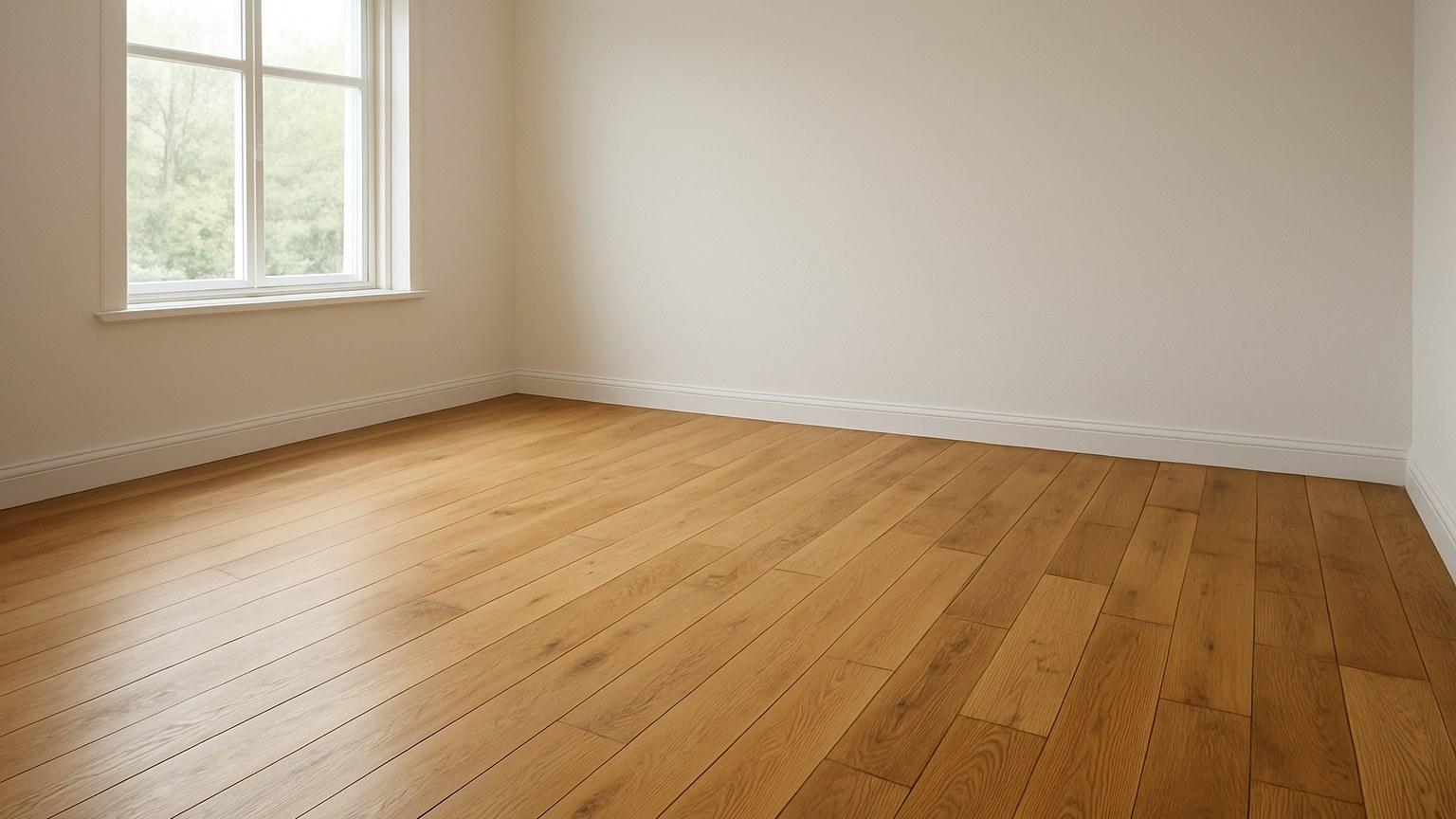
You tell a quality oak hardwood floor from an overpriced one by three things: the moisture reading, the grade name, and how the price splits between materials and labor. Every grade looks great as a showroom sample, so cost alone fools people. Here's how to read a board before you pay for it.
Key takeaways
- Kiln-dried oak should read 6-9% moisture content with a 5% allowance, per the NWFA/NOFMA standard; wrong moisture is what causes gaps and cupping later.
- Grade names (Clear, Select & Better, #1/#2/#3 Common) describe looks, not strength. All oak grades are the same hardness; lower grades just show more knots and color.
- White oak's tighter, closed grain handles moisture better than red oak's open grain, which matters in kitchens, entries, and baths.
- Engineered oak is more stable over concrete and below grade; solid oak belongs in above-grade rooms where it can be sanded several times.
- Unfinished solid oak materials run about $4.27-$6.29 per sq ft (lumberliquidators.com); engineered materials $4.50-$16 (easiklip.com); total installed solid oak $6-$25 (bankrate.com, hallmarkfloors.com).
Is Oak Good for Hardwood Flooring? What It Is and Why It Stays Popular
Yes. Oak is hard enough for daily foot traffic, takes stain evenly, and a solid oak floor can be sanded and refinished for decades. That combination of toughness, even color, and refinishing life is what's kept it a standard pick in American homes.
It stays popular for plain reasons. Oak grows widely across the US, so it costs less than exotic woods. Its open grain hides the little scuffs and dents a busy house hands out. And between red and white oak, the two species cover most of the looks people actually want.
The catch is that a showroom sample board looks the same no matter its grade or moisture content, so the price tag alone won't tell you if you're getting a sound floor or an overpriced one. The rest of this guide shows you how to check that for yourself.
If you're still torn between wood and plank, my LVP (luxury vinyl plank) vs hardwood comparison weighs durability and resale side by side so you can rule one out before you shop oak at all.
Red Oak vs White Oak: Match the Species to the Room
Pick your species by the room's moisture, not just the color. White oak has a tighter, closed grain that resists water better. Red oak's grain is more open, so it soaks up moisture faster.
Red oak runs a pinkish tone with a strong, wavy grain and sits a touch softer. It's fine for bedrooms and living rooms where the humidity stays steady. Buying it unfinished adds a handful of choices, like grade and width, that end up setting the final price, which I break down in my unfinished red oak flooring guide.
White oak reads browner and a little grey, with a closed grain and slightly more hardness. That makes it the better match for kitchens, entries, mudrooms, and anywhere splashes land.
One caution on wide boards. I put wide solid oak in a room near Dayton that went bone-dry in winter and sticky-humid by July, and the owner called me about gaps you could catch a fingernail in come January, then crowning edges by summer. Wide solid planks move more than any catalog photo lets on. In a room like that I now point people to narrower boards or engineered, and my wide plank pine flooring guide walks through why board width changes how much a floor moves.
Is Red Oak Hardwood Still Worth Buying?
Yes, in the right room. Red oak is usually the cheaper of the two and refinishes just as well. Keep it in rooms with stable humidity and off wet zones, and it holds up fine for years.
Is White Oak Hardwood Flooring Good?
It's good, and it's what I'd steer most people toward if the budget allows. The closed grain gives it a real edge against moisture, and the cooler color works with more modern stains, including greys.
Solid vs Engineered Oak: Where Each Belongs
Solid oak belongs in above-grade rooms. Engineered oak is the one to use over concrete or below grade, like a basement, where solid oak generally isn't recommended. That same solid-versus-engineered logic carries over to other species and room setups, which is covered more broadly in this hardwood floors solid vs engineered guide.
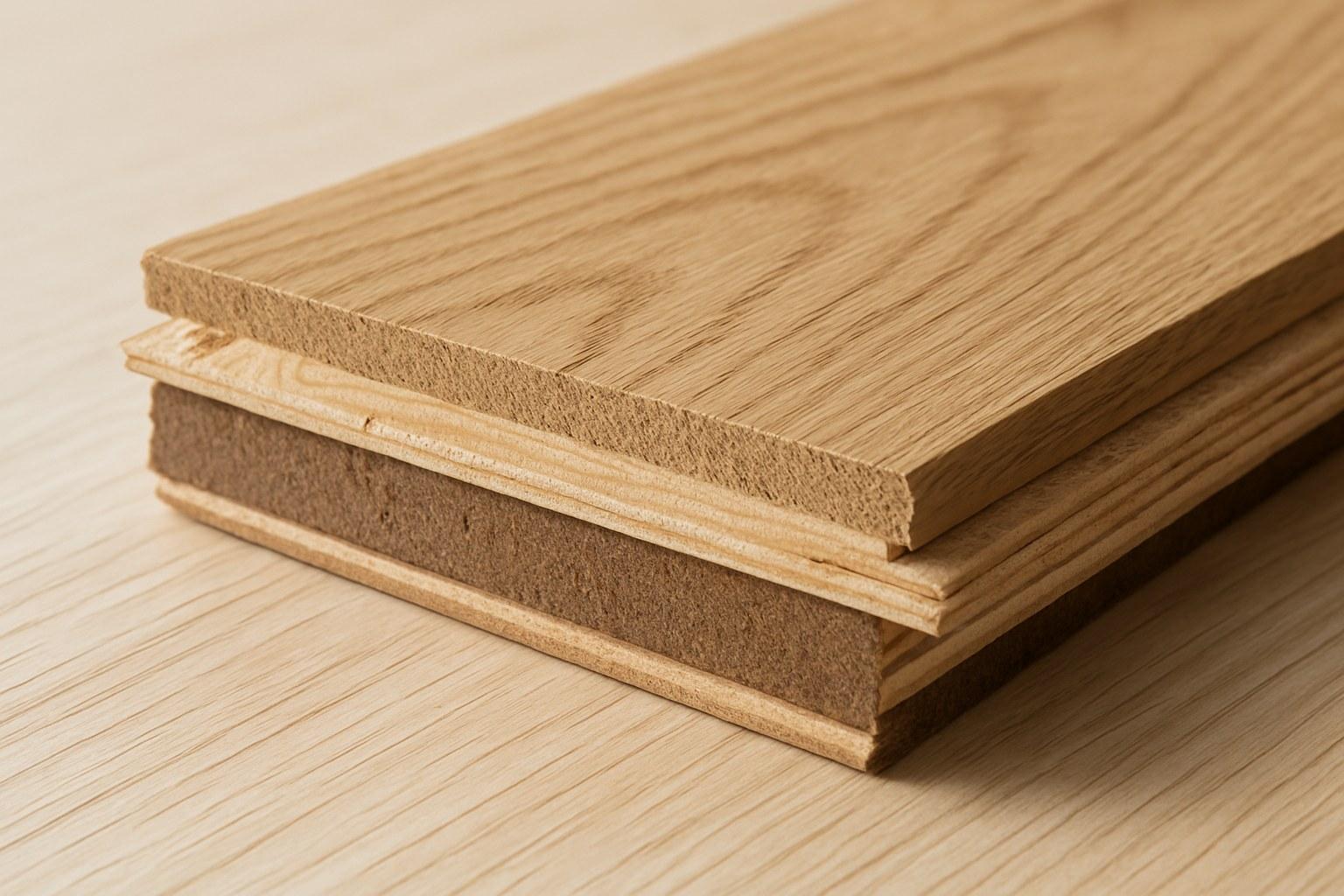
Engineered oak is a real oak veneer laid over a plywood-style core. That core is what keeps it stable when the air around it keeps changing temperature and humidity, which is exactly what happens on a slab.
How many times you can refinish it is a spec question, not a yes or no. Solid oak can commonly endure several sandings throughout its service life. An engineered floor is capped by the veneer thickness the maker publishes, so some can take a light sanding once or twice and some can't take any. Check that number before you buy if refinishing matters to you.
For the deeper breakdown of cores and veneer thickness, see the engineered hardwood guide.
Where Solid Oak Flooring Fits
Main floors, bedrooms, hallways, upstairs rooms. Anywhere it sits above grade and the humidity doesn't swing hard, solid oak earns its keep because you can refinish it again and again.
Oak Grades Explained: Clear, Select & Better, and the Commons
Grades describe how the wood looks, not how strong it is. Clear oak and the Common grades are the same hardness. The only difference is how many knots, streaks, and color swings you see across the floor.
The grade names come from two bodies. The National Wood Flooring Association (NWFA), the main trade group for wood floors, and the older oak grading rules kept under NOFMA (the former National Oak Flooring Manufacturers Association) set what each grade is allowed to show.
Walk the ladder from clean to rustic: Clear is nearly knot-free and uniform. Select & Better is mostly clean with small marks. Then #1, #2, and #3 Common (sometimes called Character) each show more knots, color streaks, and personality.
Don't overpay here. If you actually want a knotty, lived-in look, paying Clear-grade money is money burned, you'd buy a Common grade on purpose. My rustic hardwood flooring guide covers how to judge that look without getting talked into the wrong grade.
| Grade | What it looks like | Best for |
|---|---|---|
| Clear | Very uniform color, almost no knots or mineral streaks | Formal, consistent floors; highest price |
| Select & Better | Mostly clean with slight color variation and tiny knots | Clean look without top-grade cost |
| #1 Common | Noticeable knots, color streaks, some mineral marks | Lived-in, natural look |
| #2 Common | Heavy character, open knots, strong color swings | Rustic rooms, lower cost |
| #3 Common / Character | Most rustic; large knots, splits, big color range | Budget and heavy-character floors |
Source: NWFA/NOFMA oak flooring grading rules
What each oak grade shows on the floor, from cleanest to most rustic.
The Moisture Spec That Signals a Quality Oak Floor
Ask for or check the moisture content. Kiln-dried oak should land at 6 to 9 percent moisture content, with a 5 percent allowance across a batch, per the NWFA/NOFMA standard. That's a concrete number you can hold a seller to, not a feeling.
Why it matters: oak that comes in too wet or too dry for your home shrinks or swells after it's down. That's what shows up months later as gaps in winter and cupped edges in summer. The spec is the floor's insurance against both.
Before anyone lays a plank, the subfloor has to be flat and dry. A nailed or floating floor only lasts as long as the prep under it, and most makers quietly hinge the warranty on that prep. Flatness and a moisture check on the subfloor come first, every time.
I learned to look before I quote. A customer swore his subfloor was brand new, so don't worry about it. Once I removed the old vinyl, I discovered ridges of dried adhesive underneath that I hadn't priced for. Before I ever set a start date, I always examine a corner. One more thing: acclimation follows the box's own sheet, some oak wants days to adjust and some says it's not needed, so don't trust an online rule of thumb over the maker's instructions.
What Oak Hardwood Flooring Really Costs
Split the price into materials and labor and it stops being a mystery. Unfinished solid oak materials run about $4.27 to $6.29 per square foot, per lumberliquidators.com. Engineered oak materials run about $4.50 to $16 depending on veneer thickness and brand, per easiklip.com. Install labor runs about $3 to $10 per square foot, per hallmarkfloors.com.
Put together, bankrate.com and hallmarkfloors.com put installed solid oak at roughly $6 to $25 per square foot, that's a separately reported installed figure, not a simple add-up of the materials and labor numbers above, and easiklip.com puts installed engineered at about $9 to $20. Refinishing later, a sand and recoat, runs about $3 to $5 per square foot, per hallmarkfloors.com, thisoldhouse.com, and nerdwallet.com. Staining and finishing an unfinished floor on site adds about $2 to $4 per square foot, per fourgenerationsoneroof.com.
Two things push the number up. Basements and stairs cost more than an open room because they're slow, cut-heavy work. And nail-down solid oak eats more labor than a floating engineered floor.
| Item | Range per sq ft | Note |
|---|---|---|
| Solid oak, unfinished (materials) | $4.27-$6.29 | Select white oak listing |
| Engineered oak (materials) | $4.50-$16 | Varies by veneer thickness and brand |
| Install labor | $3-$10 | Nail-down higher; stairs and basements cost more |
| Total installed, solid | $6-$25 | Separately reported installed price, per bankrate.com and hallmarkfloors.com, not materials plus labor added together |
| Total installed, engineered | $9-$20 | Floating or glue-down |
| Refinishing later | $3-$5 | Sand and recoat, per job |
| Stain/finish if unfinished | $2-$4 | Done on site, per fourgenerationsoneroof.com |
Buying Oak Hardwood Flooring Unfinished
Unfinished oak costs less off the shelf, but you pay it back in site work: sanding, staining, and finishing run about $2 to $4 per square foot on top of the install. The payoff is a custom color on site and a floor you can match exactly later.
On the DIY question, be honest with yourself about the job. A click-lock or floating engineered oak floor is realistic for a confident DIYer with a level subfloor. Nail-down solid oak, stairs, and big open-plan floors that cross a moisture transition are where I'd hire a pro, because those are the jobs that come back to bite you when they're rushed.
If you want the grade and cut side of this broken down further, the oak flooring guide on grades, cuts, and cost is the natural next read before you lock in a species.