
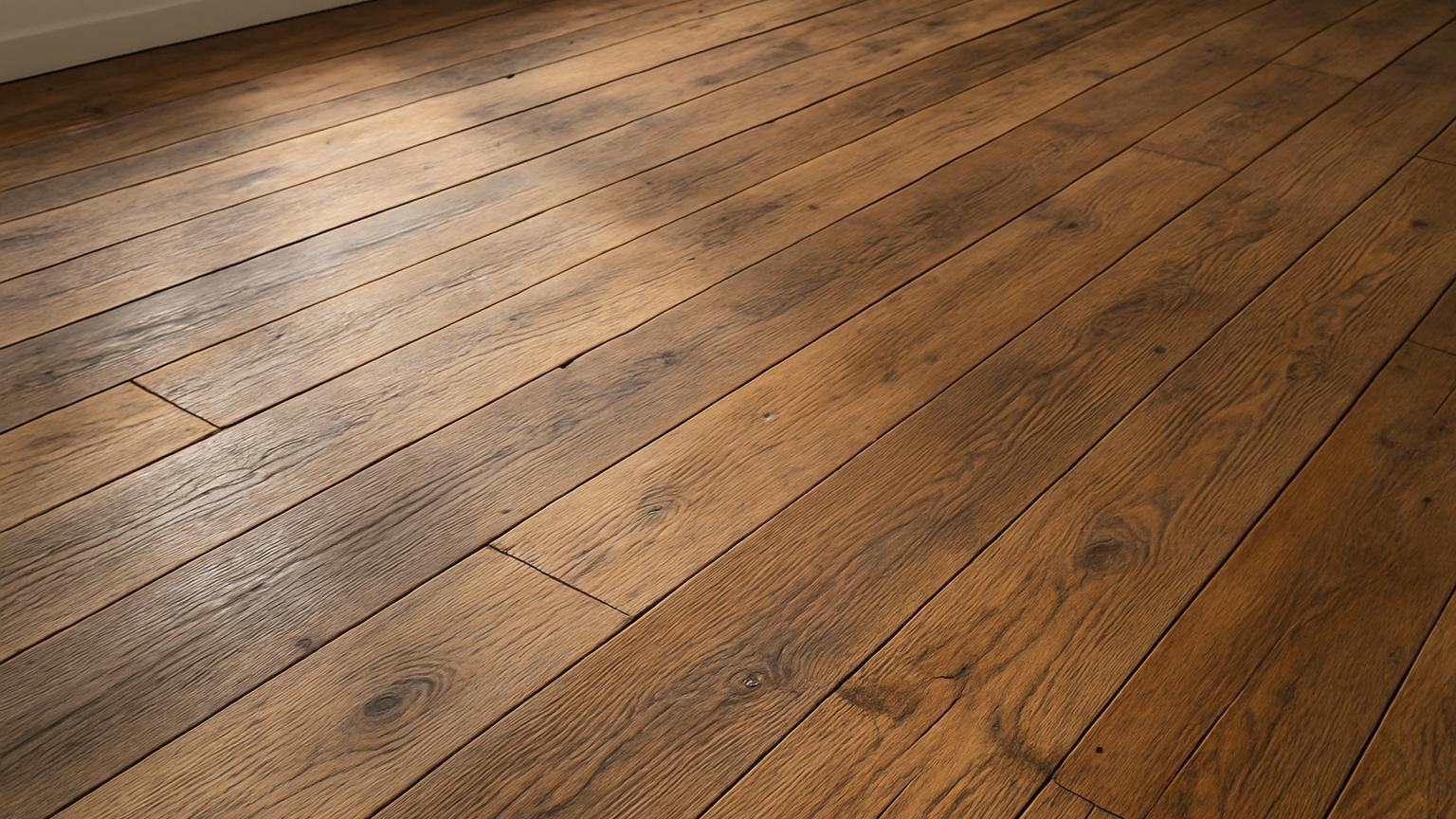
Rustic hardwood flooring is a look, not a grade or a strength rating. That confuses buyers, because the word says nothing about how hard the floor is or whether it can ever be refinished. Species, the real grade, and the finish decide all of that.
Key takeaways
- "Rustic" describes a look, not a grade or durability rating. Species, the real NWFA/NOFMA grade, and the finish decide how the floor holds up.
- Rustic or character grade maps to the NWFA/NOFMA Common grades: more knots and color swing, but the same hardness as a Clear floor of the same species.
- Hardness depends on species. On the Janka hardness scale pine runs about 650 and dents easily, red oak 1200, white oak 1350, and hickory about 1820.
- Material runs about $3 to $8 per square foot for standard oak or maple and $10 to $20 for reclaimed, per ReallyCheapFloors, with labor adding $3 to $6, per Bankrate.
- Whether a rustic floor refinishes depends on how much wood sits above the tongue, not the aged look. Solid sands several times; engineered is capped by its veneer.
What "Rustic" Really Means in Hardwood Flooring
Rustic is an appearance, not a quality level. It means knots, grain that swings from board to board, color variation, and often saw or scrape marks worked into the surface. It's the look of an old farmhouse floor, whether the wood is 100 years old or came off the truck last week.
Here's what the word doesn't tell you: how hard the floor is, how it wears, whether you can refinish it, or what it's worth. Two floors can both be called rustic and behave nothing alike.
Three things actually set that behavior. The wood species sets hardness and how easily it dents. The real grade under the marketing sets how much knot and color character you get. The finish on top sets how it wears and whether you can spot-fix a scuff.
So "rustic grade" is a loose sales label, not a spec. Judge any aged-look floor by those three factors, reclaimed or brand new. The rest of this guide walks each one.
Rustic Grade Under the Marketing: NWFA and NOFMA Grading Standards
The real quality system is a set of appearance grades from the National Wood Flooring Association (NWFA) and the older National Oak Flooring Manufacturers Association (NOFMA). They run from Clear at the top down through the Common grades.
"Rustic," "character," and "cabin" are marketing names. They line up with the Common grades, which allow more knots, mineral streak (dark mineral lines in the wood), and color variation. That's the look you're paying for.
Grade is about how much character shows, not strength. Swap a No. 2 Common board for a Clear board of the same species, and the hardness number doesn't change, grading sorts looks, never toughness. You're choosing how busy the floor looks, not how tough it is.
| Grade | Character allowed | Look |
|---|---|---|
| Clear | Minimal knots, mostly heartwood, little color change | Clean and uniform |
| Select | Small marks, slight color variation | Light character |
| No. 1 Common | Prominent knots, mineral streak, color variation | Moderate rustic |
| No. 2 Common (cabin/rustic) | Heavy knots, wide color swing, more flaws | Strong rustic |
Source: the NWFA's grading guidelines
What each oak appearance grade allows, from Clear down to No. 2 Common.
One warning from the job. A customer near Dayton picked her floor off a chip sample the size of a playing card. Once a whole room of No. 2 Common oak went down, she hated it and called it busier and yellower than she expected. That wide color swing is the whole point of a rustic grade, but it reads very differently across a room than it does on a tiny chip. I won't start a big rustic install off anything smaller than a full plank now. Ask your seller which NWFA or NOFMA grade the floor actually is, and look at a real plank before you commit.
Best Wood Species for a Rustic Floor: Pine, Red Oak, White Oak, Hickory
The rustic look works on all of them, but species sets how hard the floor is and how it holds up to traffic and dents. Pick the species for the room first, then let the grade and texture give you the aged look. Before locking in a species, it's worth deciding whether solid or engineered construction suits the room, since that choice affects which species and widths are even on the table, a question the hardwood floors solid vs engineered guide walks through.
Pine is soft and dents fast. For some people that's exactly the lived-in look they want in a bedroom or a study. In a busy kitchen it will show every chair leg and dog nail. If you're weighing pine for its warmth and affordability, a closer look at pine flooring options can help you decide where it fits best in the house.
Oak and hickory shrug off far more abuse. White oak runs a touch harder than red oak and has tighter grain that handles moisture a little better, which matters in kitchens and entries. For widths and tones, see the white oak hardwood flooring guide.
Hickory is the hardest of the common choices, and its wild grain hides scuffs on its own. That makes it a strong pick for a busy house that still wants character.
| Species | Janka | Rustic character | Note |
|---|---|---|---|
| Pine | 650 | Big knots, soft, authentic old-floor feel | Dents easily; best for low-traffic rooms |
| Red Oak | 1200 | Open grain, warm, takes stain well | Widely available all-rounder |
| White Oak | 1350 | Tighter grain, slightly harder | More water-tolerant; good for kitchens, entries |
| Hickory | 1820 | Wild grain, big color swing | Hardest common species; hides wear |
Texture and "Aged" Looks: Circle-Sawn, Wire-Brushed, Hand-Scraped, and Wide Plank
Texture is how the age gets put onto the wood. Circle-sawn leaves curved saw marks across the face. Wire-brushed pulls out the soft grain so the hard grain stands up. Hand-scraped carves gentle waves into each board. Smooth is the quiet option when you want character from knots and color alone.
You'll see "50-year" and "100-year" aged names on some lines. Those just describe how heavy the distressing is. They're a seller's description, not a grade or a standard, so don't read them as a durability rating.
Texture also hides real-life wear. A wire-brushed or hand-scraped floor swallows scratches that a smooth, glossy floor would put on display. That's a practical win in a house with kids or dogs, not just a style choice.
Wide Plank Rustic Floors
Wide planks show off rustic character better than narrow strips, because you see more of each board's knots and color. Most rustic lines run roughly 5 to 10 inches wide. Wide boards also move more with the seasons, so acclimation and the expansion gap around the room matter more, and both are set by the maker's own install sheet, not a rule of thumb. If you like the idea of wide and soft, the wide plank pine flooring guide walks through whether pine's softness is a problem or the point.
Rustic Flooring Design Ideas
A mid-tone natural oak with light wire-brushing is the safe starting point for most rooms. It reads rustic without going dark and heavy. If you want more drama, hickory's big color swing or a hand-scraped reclaimed oak brings it. Keep very busy floors in rooms with simple walls and cabinets, or the whole space fights itself.
Reclaimed vs Manufactured vs Engineered Rustic
There are three ways to get the look, and the box's label doesn't tell you which one lasts. True reclaimed is old wood pulled from barns and factories. Manufactured rustic is new wood distressed to look old. Engineered rustic is a real wood veneer over a plywood-style core.
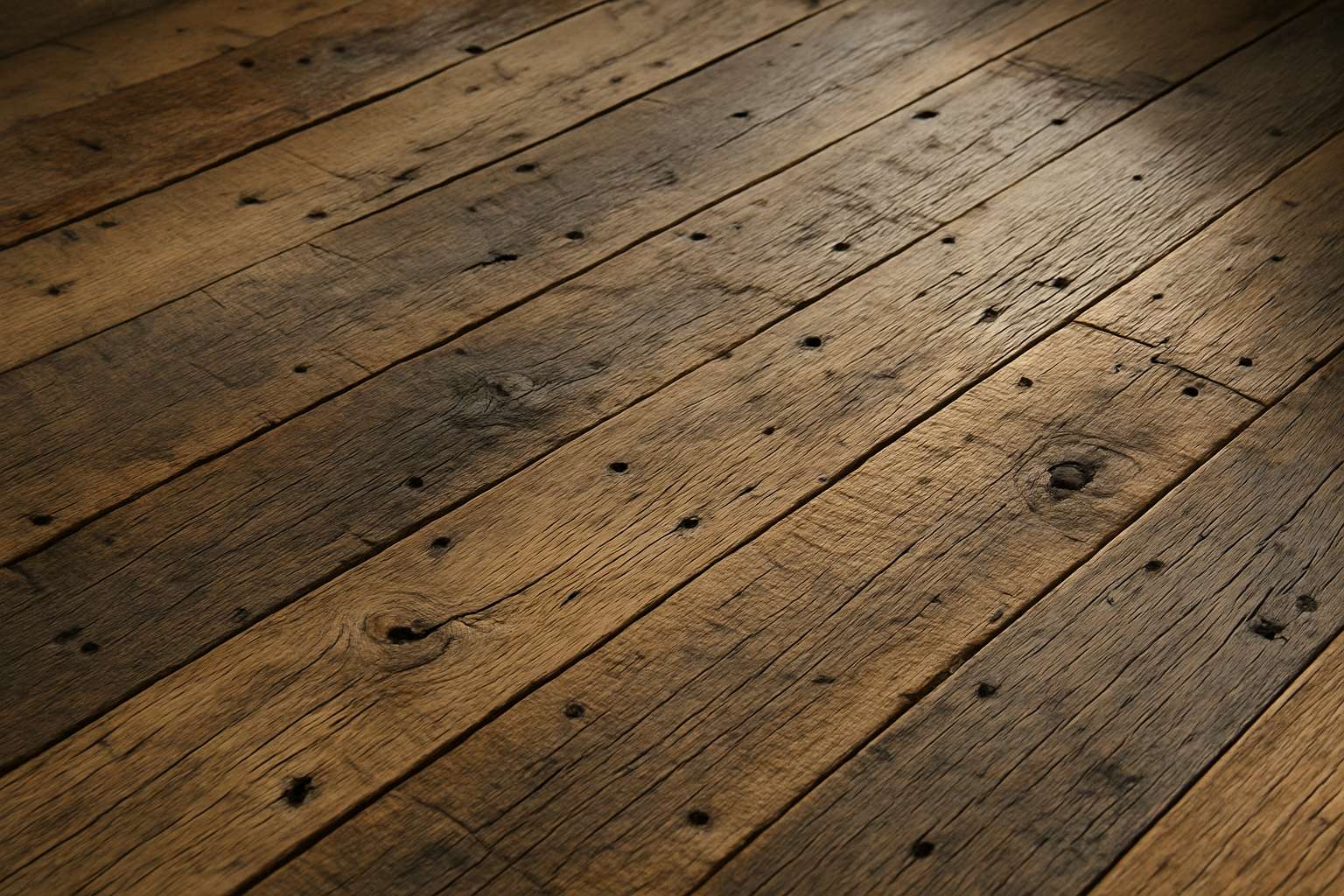
Reclaimed brings real nail holes and real history, but it varies a lot board to board, costs more, and has to be checked for buried metal and for moisture before it goes down. On any of these, check two things first: that the subfloor is flat within the maker's spec, and that moisture in the slab or subfloor reads inside the maker's limit. Those checks are what the warranty quietly hinges on, not the plank you chose.
Engineered rustic hardwood is the stable choice over concrete, below grade, or over radiant heat, where solid wood often isn't recommended. Its rustic veneer looks the same from the top, so no one walking in can tell it from solid.
None of the three is automatically tougher. What holds up is still species, grade, and finish. Reclaimed oak and new engineered oak of the same grade and finish wear about the same.
Oil-Finish vs Polyurethane, and Whether Rustic Floors Can Be Refinished
Finish decides repairability and feel. Hardwax oil soaks into the wood for a matte look you can spot-fix and re-oil in minutes. Polyurethane sits on top as a clear film that's harder, but when it fails you recoat the whole floor, not one board.
Oil needs more routine upkeep, a re-oil of high-traffic lanes every so often. The trade is that a single scuff wipes out fast. Aluminum-oxide polyurethane is very tough and low-maintenance, yet once it scratches through, you're looking at a full recoat to fix it cleanly.
Can a rustic floor be refinished? Yes, if there's enough wood above the tongue. Solid wood sands several times over its life. An engineered floor is capped by its veneer thickness, which the maker publishes, often one or two passes, sometimes none if the veneer is thin. So "can I refinish this later" is a spec question you answer off the data sheet, not off the rustic look.
There's a catch unique to rustic. A full sanding flattens hand-scraped or wire-brushed texture right off. A screen-and-recoat, which scuffs the old finish and adds a fresh coat without sanding to bare wood, refreshes the floor and keeps the character. For a rustic floor, that's usually the smarter refresh.
What Rustic Hardwood Flooring Costs
Price swings with species, grade, reclaimed versus new, and finish, so there's no single number. The honest way to plan is to split it into materials and labor and work from ranges.
Standard red oak or maple runs about $3 to $8 per square foot, with reclaimed closer to $10 to $20, per ReallyCheapFloors. Engineered rustic lands around $3 to $14, per Hallmark Floors. Labor adds about $3 to $6 per square foot, per Bankrate.
| Line item | Cost per sq ft |
|---|---|
| Standard oak/maple material | $3 - $8 |
| Reclaimed material | $10 - $20 |
| Engineered rustic material | $3 - $14 |
| Labor (install) | $3 - $6 |
Material and labor ranges for rustic hardwood, split out so you can price your own floor.
Work a quick example. Standard rustic oak at $3 to $8 material plus $3 to $6 labor comes to roughly $6 to $14 per square foot installed, before extras. Reclaimed starts higher on both the metal-checking prep and the board price. Stairs and basements cost more per square foot than an open room, because of the cuts, the prep, and the moisture work a slab needs.
On DIY versus hiring: a confident DIYer can nail down solid rustic planks over a flat, dry wood subfloor. Glue-down engineered over concrete, any stairs, and big open rooms that cross a moisture change are where hiring out usually pays off. If the installed number pushes past your budget, a barnwood-look vinyl plank gets a similar aged look for less. The LVP (luxury vinyl plank) versus hardwood guide weighs that trade room by room. Whichever route you choose, reviewing the full hardwood installation steps beforehand helps avoid costly mistakes.