
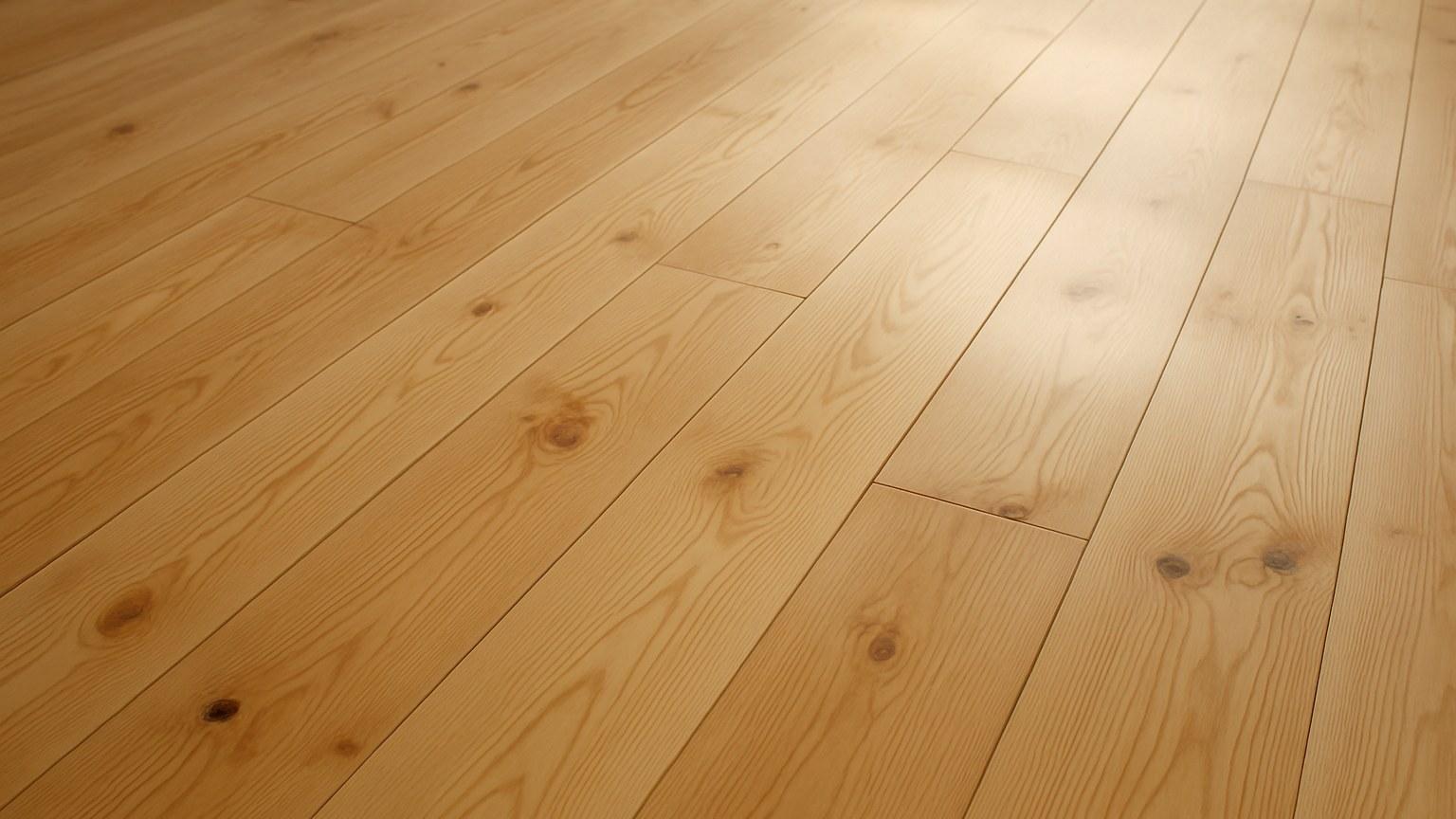
Pine flooring is real wood but a soft one, so the right type comes down to the room: knotty pine for budget bedrooms, denser heart or reclaimed pine for busy living spaces, and engineered pine over concrete. The confusion starts because "pine hardwood" sounds tougher than pine actually is. Match the type to your traffic and it lasts for decades; ignore the softness and you get dents you never planned for.
Key takeaways
- Pine is real wood flooring but a softwood; it rates about 650 on the Janka hardness scale, far below red oak, so it dents and scratches more easily than true hardwood.
- Installed pine runs about $6-$25 per square foot according to hallmarkfloors.com: roughly $3-$15 for materials and $3-$10 for labor, with stairs and basements costing more than open rooms.
- New knotty pine is the budget pick; heart pine and reclaimed pine cost more but wear harder and sit more stable.
- Pine suits bedrooms, offices, and low-traffic living rooms far better than bathrooms or basements, where moisture and humidity swings cause the real trouble.
- Click-lock engineered pine is realistic for most DIYers; nail-down solid pine, stairs, and glue-down jobs are usually worth hiring out.
What Pine Flooring Is (and Whether It's Really a Hardwood)
Pine is genuine wood flooring, but it's a softwood, not a hardwood like oak. By the National Wood Flooring Association's "Real Wood" definition, solid pine still counts as true wood flooring. So if a listing says "wood pine flooring" or "pine for flooring," you're buying the same real-wood product either way.
The softwood-versus-hardwood split confuses people, and it's why searches for "pine hardwood flooring" come back with answers that seem to argue with each other. The label is about how the tree grows, not how hard the board is. Softwoods are cone-bearing evergreens; hardwoods are leaf-shedding trees. Pine is a softwood by that botanical rule, even though plenty of pine floors outlive their owners.
Pine has floored US homes for generations, usually as solid boards nailed down over a wood subfloor. The catch is softness, and it's the one thing every decision below routes around. Pick the type that fits your room and traffic, and the softness stops being a problem. Solid oak flooring uses that same nail-down approach, just with a species that shrugs off dents pine can't.
The Types of Pine, Matched to Your Household
New knotty pine, whether yellow pine or eastern white, is the cheapest and most rustic option. It's full of knots, and those knots help, because a busy floor full of character hides a new dent far better than a clean one shows it off. It's a solid pick for bedrooms, cabins, and any budget room.
Heart pine is denser old-growth wood that wears harder than standard new pine. Reclaimed pine, pulled from old barns and buildings, adds an aged look and a sustainability angle. Reclaimed and reused wood sold in the US falls under the Lacey Act, a federal law that bars illegally harvested wood from the market.
Engineered vs Solid Pine: Where Each One Belongs
Solid pine is the standard 3/4-inch board. It refinishes several times over its life, which is its big edge. The limit is where it goes: solid pine, like most solid wood, is not recommended over concrete or below grade, because it moves too much with moisture. The same solid-versus-engineered calculus plays out across every species, and the solid vs. engineered hardwood guide breaks down how to choose between them room by room.
Engineered pine puts a thin pine veneer over a plywood-style core. That core makes it more stable over concrete slabs, in basements, and over radiant heat. If you want the pine look downstairs, engineered is the honest answer. The same stability trade-off runs across all wood, and the full engineered hardwood guide walks through where the plywood core earns its keep.
One more distinction belongs here, because it trips up a lot of searches: laminate pine flooring is not pine at all. It's a printed photo of pine grain fused to a composite core, with no real wood in the board. It costs less than solid or engineered pine and handles moisture differently, but it isn't a third tier of real pine, it's a separate product, and if you want actual wood underfoot, laminate won't give you that. Hardwood parquet flooring runs into that same solid-versus-laminate split, sold in both real wood and printed versions that look alike at a glance.
Heart Pine and Reclaimed Pine: The Premium Picks
These cost more. Heart pine's tight, dense grain wears harder than loose new-growth pine, so it holds up better underfoot. Reclaimed boards bring nail holes, color swings, and a patina no factory finish copies. If you own a period home or want a floor with a story, this is the tier to look at.
| Type | Look | Cost tier | Best for |
|---|---|---|---|
| New knotty pine (yellow/eastern white) | Rustic, many knots, ambers to gold over time | Lowest | Budget rooms, bedrooms, cabins, rustic look |
| Clear / select pine | Few knots, cleaner grain | Low-mid | Cleaner, more traditional rooms |
| Heart pine (new or reclaimed) | Tight grain, rich amber, dense | High | Harder-wearing living spaces, character floors |
| Reclaimed pine | Aged patina, nail holes, color variation | Mid-high | Period homes, sustainability-minded buyers |
| Engineered pine | Pine veneer over plywood core | Mid | Concrete slabs, basements, radiant heat |
Each pine type matched to its look, rough cost tier, and the household it fits best.
Is Pine Flooring Durable? The Janka Number and What Dents It
Pine is durable enough for the right room, but it is soft. The Janka hardness scale measures how well a wood resists denting, and pine's rating varies by species and growth, eastern white pine tests on the softer end, southern yellow pine harder, but both sit well below red oak. That's why chair legs, high heels, and a dropped pan leave their mark more readily than they would on true hardwood. Red oak hardwood flooring is the usual benchmark for that harder end of the scale.
Janka hardness measures the force it takes to dent a wood, and the exact pounds-force figure shifts by test, growth conditions, and even moisture content at the time of testing. Rather than pin one number on each species, here's how pine stacks up against the woods people compare it to most:
| Wood | Relative hardness |
|---|---|
| Eastern white pine | Softest of this group |
| Southern yellow pine | Harder than eastern white pine, still softer than any hardwood listed here |
| Cherry | Harder than pine, softer than oak |
| Birch | At or above oak |
| Red oak | The hardwood benchmark pine usually gets measured against |
Order reflects typical Janka rankings for these species; exact pounds-force figures vary by test source, growing conditions, and lumber grade.
Soft doesn't mean short-lived, though. A pine floor can last decades, and a lot of owners come to want those dings. They read the marks as patina, not damage.
Pine struggles with standing moisture and heavy rolling or scraping traffic. The finish on top does a lot for wear too. A good polyurethane coating, or an aluminum-oxide topcoat, a hard mineral layer baked into some factory finishes to resist scratches, takes the daily abrasion so the soft wood underneath doesn't.
On engineered pine, the published wear layer, which runs anywhere from about 1mm to 6mm or more depending on the product, caps how hard you can use the floor and how many times you can refinish it. Always check the figure for the exact product, not the category. For the species-by-species hardness numbers, the wide plank pine breakdown lays pine against oak in detail. Renting a floor sander for a weekend refinish often costs far less than paying a crew for a full strip-and-recoat.
What dents a pine floor: stiletto heels and furniture legs with no felt pads, dog and cat claws over time, dropped pots and cans and tools, grit dragged in on shoes that grinds like sandpaper, and rolling loads such as office chairs, dollies, and appliance moves.
Pine Boards: Widths, Grades, and the Look They Give
You can buy pine as narrow strips or as very wide planks, and the width you pick drives both the look and the price per square foot. Narrow strips read traditional; wide planks read rustic and farmhouse.
Grade matters just as much. Select or prime grade is clear, with few knots and a cleaner, calmer look. Character or rustic grade is loaded with knots, color swings, and more movement in the wood. In a house with kids and dogs, character grade is the smart call, because it hides dents and scuffs in plain sight.
Select vs Character Grade
Select pine suits a formal room where you want the grain to sit quiet. Character grade suits a busy floor where you want the marks of life to disappear into the pattern. Neither is "better", they just do different jobs.
How Wide Plank Pine Changes the Look
Price climbs steadily as boards get wider. Unfinished pine runs from about $1.27 per square foot for a 1x4 up to $5.50 for a 1x20, per per-board pricing from wrrobinsonlumber.com. A prefinished 1x6 runs about $4.69 according to loghomeshoppe.com, since the coating is already cured on.
One warning from my own work. I once had to match new boards to an existing pine floor in a Dayton home, and even the same species off a different lot came out lighter against the old, ambered wood. Pine keeps darkening for years, so fresh planks almost never match an aged floor out of the box. Plan for a seam, a threshold, or a color you'll let catch up over time. The way width changes the whole feel of a room is worth seeing before you commit.
| Board | Price per sq ft |
|---|---|
| 1x4 | $1.27 |
| 1x5 | $1.60 |
| 1x6 | $1.95 |
| 1x8 | $2.53 |
| 1x10 | $3.17 |
| 1x12 | $4.10 |
| 1x14 | $5.20 |
| 1x16 | $5.40 |
| 1x18 | $5.40 |
| 1x20 | $5.50 |
Source: per-board pricing published by wrrobinsonlumber.com
Prefinished pine ships with its coating already cured on, so you can walk on it sooner and skip the dust. Site-finished pine lets you stain and seal to match an existing floor exactly, but it adds dust in the house and days of dry time.
Best and Worst Rooms for Pine Flooring
The best rooms for pine are bedrooms, home offices, and low-traffic living and dining rooms. In those spaces the softness rarely shows, and the warmth and character pay off every day.
The worst rooms are bathrooms and basements. Splashes, standing water, and humidity swings swell and cup pine, and no finish stops that from the seams and board edges inward. If you want wood-looking floors in a wet room, weigh a waterproof-core product against real wood using the LVP (luxury vinyl plank) versus hardwood trade-off before you commit.
Radiant heat is handled better by engineered pine. Wide solid boards can gap as the heat cycles the wood through the seasons.
With pets and kids, expect dings no matter what. Lean toward character grade that hides them, keep claws trimmed, and put felt pads under every furniture leg.
Pine's verdict by room: good in dry, low-traffic spaces, avoid where water lives.
What Pine Flooring Costs Installed
Installed pine runs roughly $6 to $25 per square foot, according to hallmarkfloors.com. That breaks down to about $3 to $15 for materials and $3 to $10 for labor. The wide spread is real, because a budget knotty floor in an open bedroom and a reclaimed heart pine floor with stairs are not the same job.
A couple of rules hold across every quote. Stairs cost more than open rooms, because each tread and riser is cut, fit, and nosed by hand. Basements cost more too, once you add moisture barriers and the prep a slab needs.
| Cost part | Range per sq ft |
|---|---|
| Materials | $3-$15 |
| Labor | $3-$10 |
| Installed total | $6-$25 |
Source: cost figures from hallmarkfloors.com
Installed pine cost split into materials and labor, per hallmarkfloors.com.
To price your own room, the math is simple: square footage times materials cost, plus square footage times labor cost. For a 200 square foot bedroom in mid-range knotty pine at $5 materials and $4 labor, that's $1,000 plus $800, or about $1,800 installed. Swap in reclaimed heart pine and a staircase and you move toward the top of the range fast.
DIY or Hire a Pro?
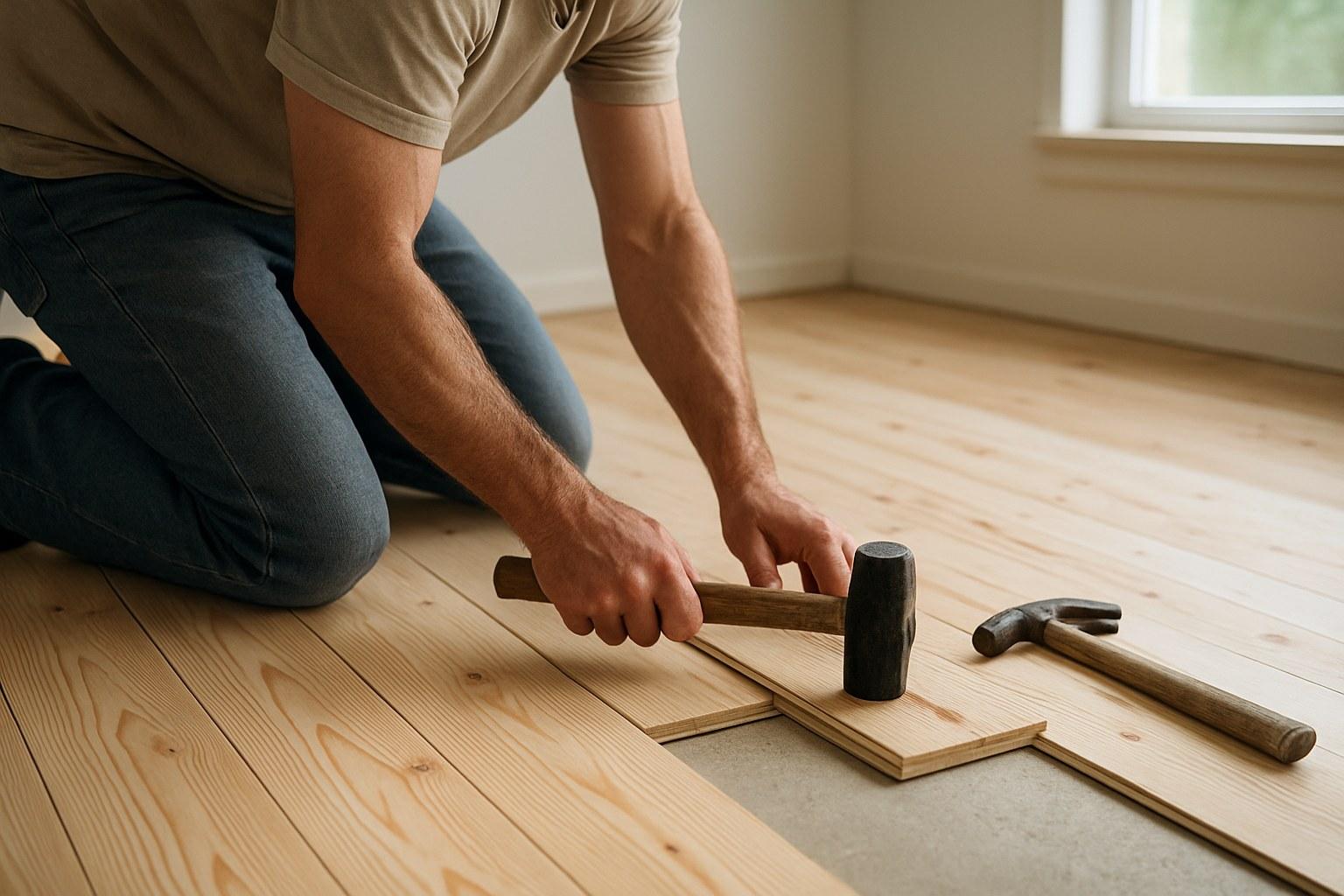
Click-lock engineered pine is realistic for most handy DIYers. The planks snap together and float over the subfloor, so there's no nailing and no glue to rush. Nail-down solid pine, stairs, and any glue-down job are usually worth hiring out, because the tools, the layout, and the fit on stairs punish mistakes.
Before a single board goes down, two checks decide whether the floor lasts. First, flatness: a floating floor over a wavy subfloor flexes and the seams work loose, so the subfloor has to be flat within the plank maker's spec. Second, moisture: pine over a damp slab or a wet crawlspace will cup, so test the subfloor and fix the source before you start.
Most floating floors also need an expansion gap around the whole perimeter, and the exact size comes from that product's own instructions, not a number someone repeats online. Acclimation is the same story: some pine products want it, some say it's not needed, so read the box sheet and follow it.
One more thing I learned the expensive way. I quoted a job off a customer's own measurements once to save a drive, and came up two boxes short on install day with the floor half laid. Now I measure every room myself before I order, because a crew standing around waiting on backorder costs more than any trip ever would. If you DIY, measure twice and add waste for cuts. For the full step-by-step, the guide to installing hardwood floors covers the nail-down process pine follows.
Sources
- NWFA Installation Guidelines
- NWFA's Real Wood Definition
- NWFA Solid Wood Flooring Environmental Product Declaration
- NWFA Homeowner's Handbook to Real Wood Floors
- NWFA's Official Definition of Real Wood Flooring Announcement
- Cost figures from hallmarkfloors.com
- Per-board pricing published by wrrobinsonlumber.com