
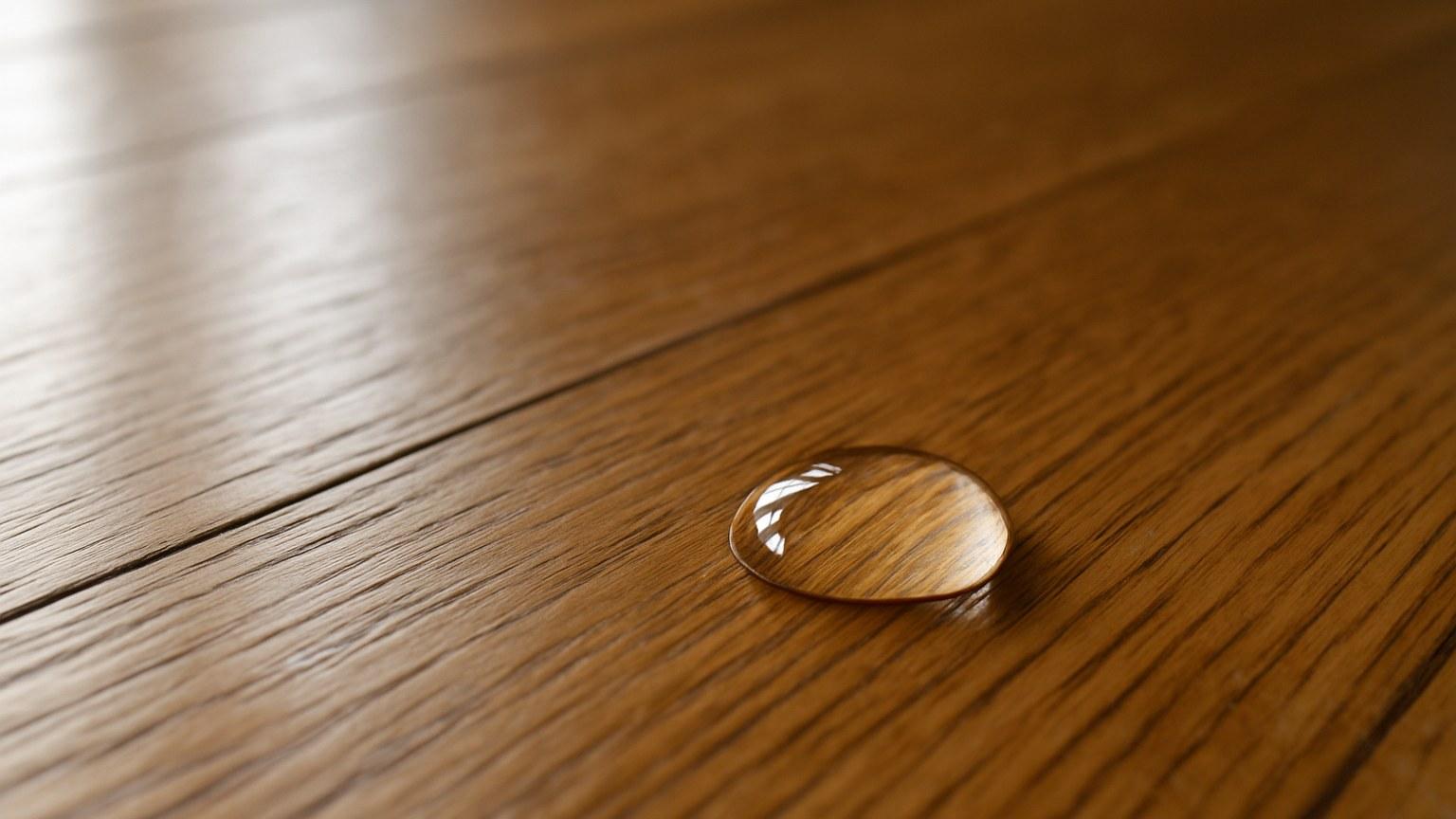
Hardwood floor cleaning comes down to one 60-second test: drip water on a worn spot and watch what it does. That answer picks your cleaner, how damp your mop can be, and whether the floor ever needs a recoat. Get it wrong and you can dull or swell the very floor you meant to protect.
Key takeaways
- The water-drop test decides everything: water that beads and sits means a surface finish (usually polyurethane); water that soaks in and darkens the wood means a penetrating wax or oil finish.
- Grit, not water, does most of the scratching, so dust-mop daily and vacuum with the beater bar (the rotating brush) switched off.
- On sealed polyurethane, a pH-neutral cleaner or an EPA-registered cleaner at 1/4 cup per gallon of water is safe; keep vinegar and water-based cleaners off wax/oil floors.
- Keep every mop barely damp and never leave standing water at the seams; wax/oil floors get the least liquid of all.
- Professional cleaning runs roughly a $90-$160 minimum fee (Airtasker) up to a $298-$663 national average (Thumbtack), so routine cleaning is cheaper to do yourself.
The Water-Drop Test Decides How You Clean
Hardwood floor cleaning is really two routines, and a quick water-drop test tells you which one is yours before you touch a mop.
To run the test, drip a few drops of water on a worn, high-traffic spot and wait a minute. If the water beads up and sits on top, you have a surface finish, almost always polyurethane. If it soaks in and darkens the wood, you have a penetrating wax or oil finish.
That result drives everything after it: which cleaner is safe, how wet your mop can get, and whether the floor gets a recoat or a re-oil years down the line.
The National Wood Flooring Association toolkit notes that nearly 70% of homeowners rate attractiveness as a top floor quality, and guarding the finish is how you keep that look.
Factory-finished boards almost always carry a surface polyurethane, so if you have a prefinished floor it will usually test as a surface finish.
Everyday Habits: Sweep, Vacuum, Mats, and Humidity
Grit does most of the scratching, not water. The daily job is getting sand and dust off the floor before shoes grind it in.
Dust-mop or run a microfiber pad over the busy spots every day. Vacuum weekly with the beater bar (the rotating brush on the vacuum head) switched off or set to bare-floor mode. A HEPA (high-efficiency particulate air) filter helps trap the fine dust a broom just stirs around.
Wipe spills the moment they happen. The NWFA Homeowner's Handbook advises wiping spills immediately so they never sit at a seam.
Protect the floor between cleanings. Stick felt pads under furniture legs, put entrance mats at every door to catch grit, and keep indoor humidity around 35-55% so boards don't gap in winter or cup in summer.
Mopping and Machines Without Soaking the Wood
A barely-damp microfiber mop is the safe tool. Standing water is the enemy, and it's worst on wax and oil floors where you keep liquid to a minimum.
The moisture rule is simple: the mop should feel just damp to your hand, and the floor should dry in a minute or two. Never pour water across the boards or leave puddles at the seams. Seams are where water sneaks under the planks and lifts them.
Steam Mops and Floor Cleaning Machines
Skip steam mops on hardwood, whatever the finish. They force heat and moisture straight into the seams and the finish, which wood can't take.
A hard-floor cleaning machine is only okay if it meters out a little water and vacuums it right back up. If it leaves the floor wet, it's the wrong tool.
Robot Vacuums and Mops on Hardwood
A robot vacuum is fine for daily dust and takes the chore off your hands. A robot that also mops should use very little water through a pad, not spray the floor. Keep any mopping robot off wax and oil floors entirely.
The Right Cleaner for Your Finish
On sealed polyurethane, use a pH-neutral hardwood cleaner. pH-neutral just means it's not acidic or harsh. On wax or oil, use the product made for that finish and keep water-based cleaners off it.
Now the vinegar question. Diluted vinegar is a mild acid. Used sparingly on well-sealed polyurethane it won't hurt much, and hallmarkfloors.com allows diluted vinegar in small amounts. But acid dulls finish over time, which is why Stanley Steemer advises avoiding acids. That caution matters more on wax and oil floors, where vinegar has no business at all.
For dilution on finished wood, the EPA (Environmental Protection Agency)-registered Mr. Clean label lists 1/4 cup per gallon of water. Most dedicated hardwood cleaners, by contrast, come ready to use with no mixing.
Dawn dish soap can cut grease on a sealed floor, but it tends to leave a dulling film, so it's not a first choice. A pH-neutral cleaner covers most floors; wax and oil need their own finish-specific product.
Oil-finished floors, which are common on rustic hardwood, need a cleaner made for oil rather than a standard hardwood cleaner.
| Cleaner | Safe on | How to use |
|---|---|---|
| pH-neutral hardwood cleaner (e.g., Bona) | Sealed polyurethane | Use as sold, no mixing |
| EPA-registered Mr. Clean | Finished wood floors | 1/4 cup per gallon of water |
| Diluted white vinegar | Well-sealed polyurethane only | Sparingly; skip on wax/oil |
| Dawn dish soap | Sealed floors (not ideal) | Leaves a dulling film; avoid |
| Oil/wax-specific cleaner | Wax/oil finishes | Per product; keep water minimal |
Cleaner choices matched to the finish type you found with the water-drop test.
Is Bona a Good Hardwood Floor Cleaner?
Yes, for sealed polyurethane floors. Bona is a pH-neutral cleaner sold ready to use, so there's no mixing and no acid to worry about. It's a simple safe choice for a surface-finished floor. It is not the pick for a wax or oil floor, which needs its own finish-specific product.
Removing Stains and Making Floors Look New Again
A deep clean followed by a buff or a recoat is what makes a tired floor look new. Cleaning alone won't fix a finish that's worn through. At that point some homeowners start weighing LVP (luxury vinyl plank) vs hardwood flooring options instead of committing to another refinish.
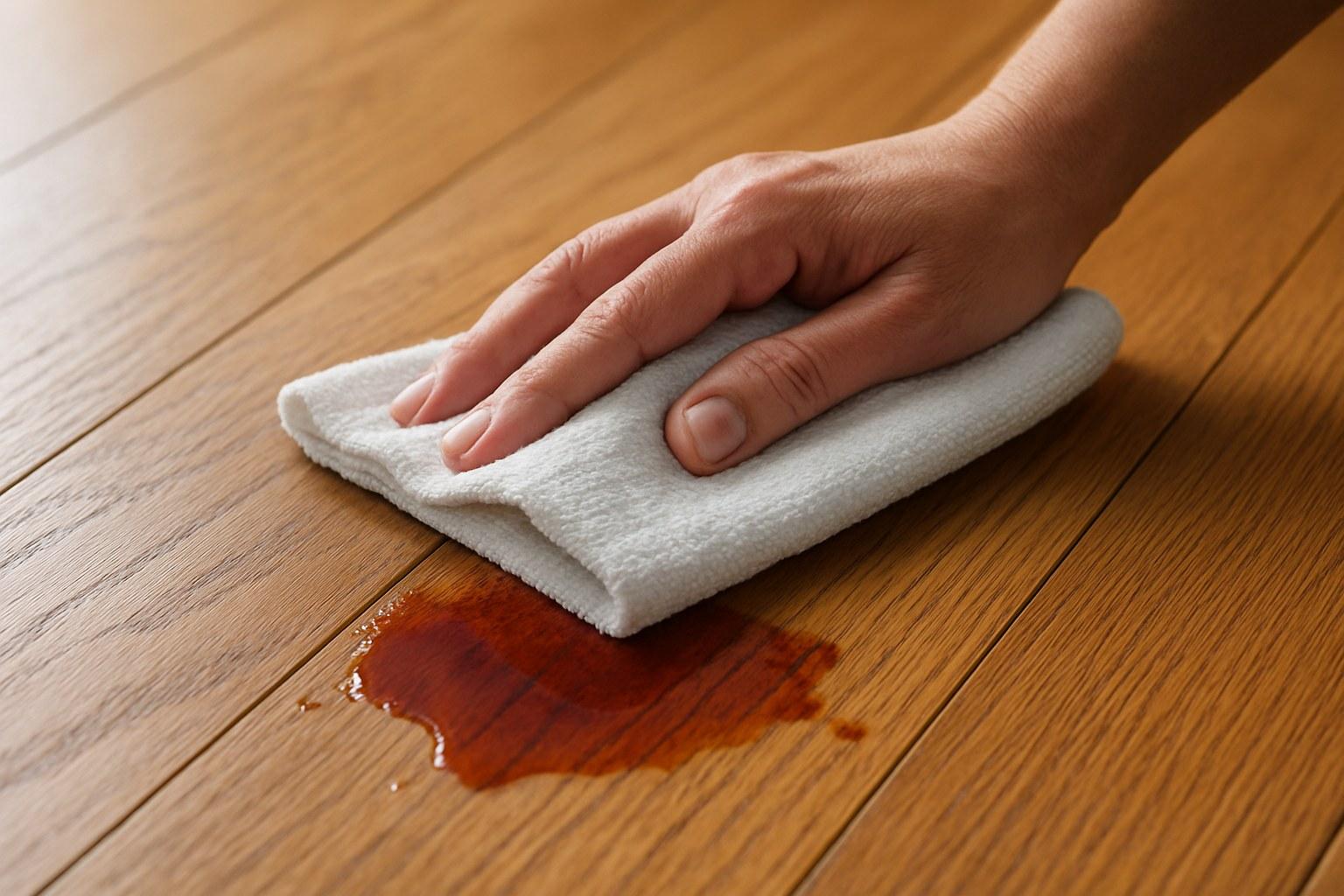
For fresh spills, blot right away. For pet accidents, reach for an enzymatic cleaner that breaks down the mess instead of just spreading it. You can try hydrogen-peroxide spot treatment on dark water stains, but test it beforehand in an inconspicuous area.
Bringing Back Shine Without Wax Buildup
Lost shine usually means a worn finish, not dirt. A good cleaning won't bring back gloss the finish no longer has.
Use a hardwood refresher made for your finish type. Keep oil soaps and wax off polyurethane. They build a haze that you then have to strip before you can recoat, which turns a simple refresh into a real job.
Recoat vs Refinish: How Often, by Finish Type
Two different jobs get confused here. bona.com's "every 7-10 years" describes a screen-and-recoat, where you buff off the top layer and add a fresh coat. hallmarkfloors.com's "10-20 years" describes a full sand-and-refinish down to bare wood. They're two separate things on two different clocks.
On surface or poly floors, recoat when the finish looks worn but the wood underneath isn't bare. Save the full sand-and-refinish for when you've actually reached bare or damaged wood. Whether a scuffed patch can be touched up on its own or forces that full recoat really depends on which finish you're working with, a distinction this rundown of hardwood floor finishes ranked by spot-fixability lays out in detail.
Wax and oil floors skip the sanding cycle completely. You re-oil or re-wax worn spots as they show up, which is a big reason finish type changes the whole schedule.
Engineered floors have a limit. The veneer thickness the maker publishes will determine your possible re-sanding allowance, or possibly prevent it altogether, so a recoat is often the smarter long-term play. If you're still deciding between floor types, it helps to understand how solid vs. engineered hardwood compare before you commit to one for a given room.
One thing from my own work: a recoat is just fresh finish over a clean, buffed surface, and it needs the house empty of other trades while it cures. I found that out on a job where a trim crew was spraying nearby as my coat went down. Overspray had gotten into my wet finish, and I needed to buff and recoat the whole floor over again. A full day, gone. Now the finish doesn't go down until everyone else is out. That same need to clear the job site of other trades applies during the original hardwood floor installation, not just later recoats.
What Professional Cleaning Costs and When to Hire
Minimum service fees run about $90-$160 according to Airtasker and around $150 according to Thumbtack. A small 200 sq ft job runs roughly $100 by The Cleaning Standard's figures. For a whole job, Thumbtack puts the national average at $298-$663.
Services that do hard-surface and hardwood cleaning are best treated as a periodic deep clean, not a swap for your weekly routine.
Hire out when you've got a haze or film you can't mop off, when you're prepping a floor before a recoat, or when you want a whole-house deep clean done without giving up a weekend.
Everything else is DIY. Your daily dust-mopping and weekly damp mop cost you almost nothing but time, and they're what actually keep the floor out of the repair column. Paying someone for routine cleaning you can do in ten minutes rarely pencils out.