
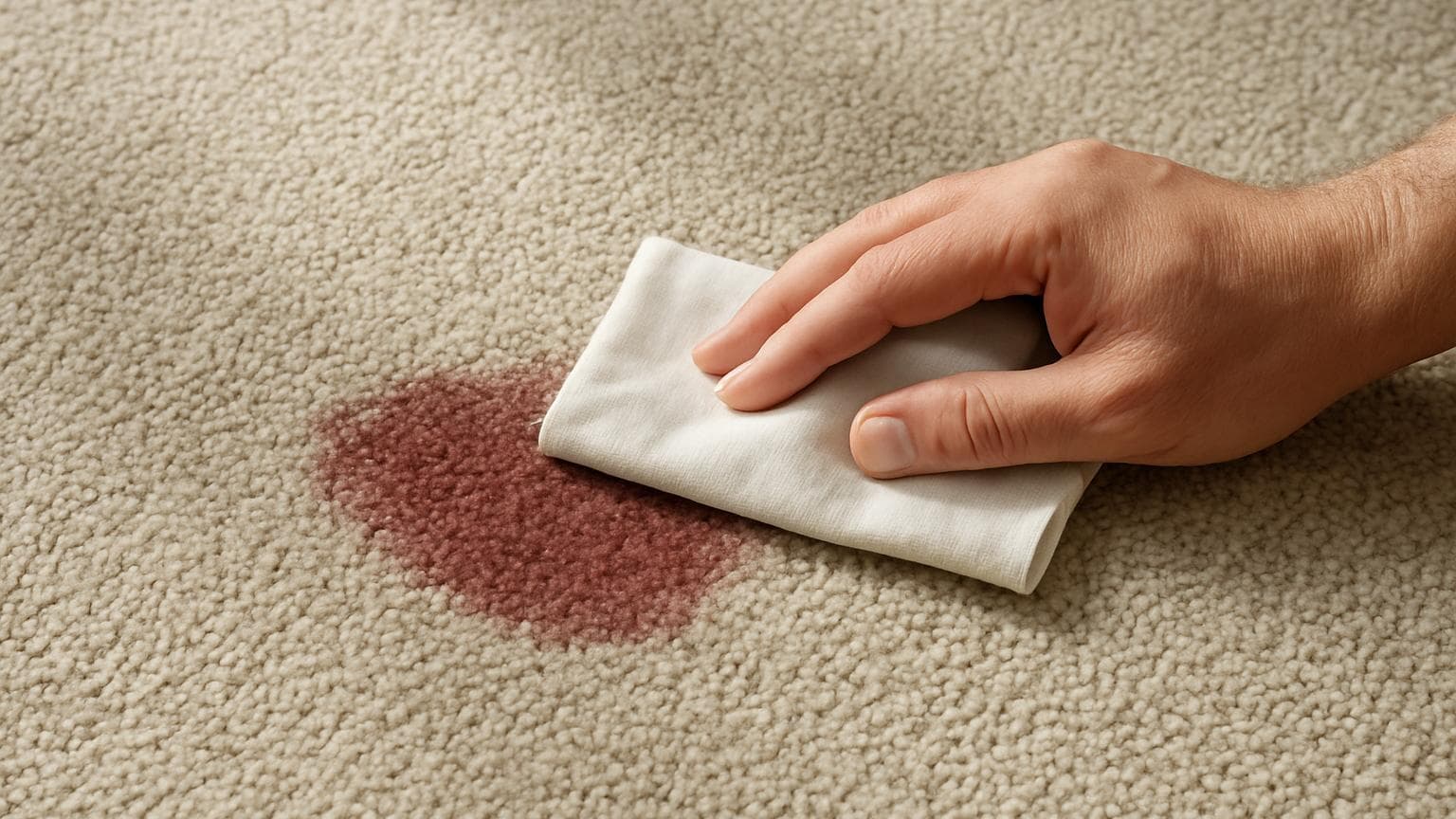
Carpet stain removal is decided in the first 30 seconds: scoop the solids, then blot straight down with a clean white cloth instead of rubbing. Rub it, and you drive the stain down into the backing for good. Most of the wrecked spots I pull up were scrubbed, not spilled.
Key takeaways
- Blot straight down and work from the edge in; rubbing drives the stain into the backing and frays the fiber tips so the spot stays dull even after it's clean.
- Match the water temperature to the stain: cold for protein (blood, pet, vomit), warm for most food and drink, and never hot on protein because heat sets it permanently.
- Rinse out every wet DIY mix with plain water. Leftover soap, vinegar, or baking soda is sticky and alkaline, and it pulls in new dirt so the spot looks worse in a few weeks.
- Vinegar and baking soda lift surface residue and odor, but they won't break a true dye or old protein bond; an enzyme cleaner does far more on set-in pet and food stains.
- The Carpet and Rug Institute recommends professional hot-water extraction every 12 to 18 months, and that cadence is often what a stain-resistance warranty quietly requires.
First, Stop the Spill from Setting: A 30-Second Blot Sequence
A fresh spill still sits on top of the fiber, so you have a short window to lift it before it bonds to the yarn and the backing underneath. Move fast and in the right order.
Scoop first, blot second, pick your cleaner last. The second you reach for a bottle before you've lifted the mess, you're just thinning the stain and spreading it wider.
Use a clean white cloth or plain white paper towels. A dyed rag or a printed towel can bleed its own color into light carpet while it's wet, and now you're fixing two stains instead of one.
| Window | Move | What to do |
|---|---|---|
| 0-5 sec | Scoop solids | Lift chunks with a spoon edge; don't press them in |
| 5-15 sec | Blot the liquid | Press a dry white cloth straight down, lift, repeat on a clean spot |
| 15-25 sec | Work edge to center | Blot from the outside in so the stain doesn't spread wider |
| 25-30 sec | Pick the solution | Choose the right cleaner for that stain before adding anything wet |
The first-aid order for a fresh spill, timed from the moment it lands.
Why Rubbing and Hot Water Wreck a Stain
Blotting pulls liquid up and out of the pile. Rubbing does the opposite: it pushes the stain down into the backing and splays the fiber tips, so even after the color is gone, you're left with a dull, fuzzy patch that catches the light differently from the carpet around it. That worn look is permanent. Low-pile carpets tend to hide that kind of crushed, fuzzy patch better than high-pile styles do, which is one more factor worth weighing in my low pile vs high pile guide.
Water temperature matters just as much, and the rule is simple. Cold water for protein stains like blood, pet accidents, and vomit. Warm water for most food and drink. Never hot water on a protein stain, because heat cooks the protein and sets it for good.
Test your solution on a hidden spot first, like inside a closet doorway. Give it a few minutes and check for color change or fiber damage before you touch the real stain. On a wool or jute rug this isn't optional. Those natural fibers hate soaking and harsh cleaners, so a spot-test in a corner is the difference between a clean rug and a warped, bleached one.
DIY Carpet Stain Remover Recipes (and Which to Rinse Out)
Four mixes handle most of what lands on a carpet, and you probably have all of them already. The trick isn't the recipe, it's rinsing the wet ones out afterward so they don't cause a bigger problem down the road.
- Dish soap solution: 1 cup warm water plus a few drops of clear (not creamy or colored) dish soap. Good for most food and drink.
- Vinegar rinse: 1 part white vinegar to 1 part water. Lifts light residue and knocks down odor. Let it fizz 5 to 10 minutes.
- Baking soda: sprinkle it on dry, leave it at least 15 minutes, then vacuum it all up. It soaks up moisture and smell.
- Hydrogen peroxide: a small dab, on light-colored carpet only, after a spot-test. It can bleach dark or patterned carpet, so be careful.
| Mix | Recipe | Best for | Rinse? |
|---|---|---|---|
| Dish soap solution | 1 cup warm water + a few drops clear dish soap | Food and drink spills | Yes, rinse and blot dry |
| Vinegar rinse | 1 part white vinegar to 1 part water | Light residue and odor; fizz 5-10 min | Yes, rinse out |
| Baking soda | Sprinkle dry, leave at least 15 min, vacuum | Odor and soaking up moisture | Vacuum up fully |
| Hydrogen peroxide | Dab small amount, spot-test first | Blood/organic on LIGHT carpet only | Yes, rinse and blot |
Ratios are approximate, always spot-test on a hidden area first.
Four household stain mixes with the ratio, the wait time, and whether you have to rinse each one out.
After any wet mix, rinse the spot with plain water and blot it dry with a clean towel. Leftover soap, vinegar, or baking soda is sticky, and it pulls new dirt straight back to the spot you just cleaned.
Homemade Heavy-Duty Mixes vs. Store-Bought
People love the idea of a "heavy-duty" homemade mix for the stubborn stuff. Mixing dish soap with a splash of peroxide and a pinch of baking soda does more than plain soap, but it still can't break a true dye bond or an old, set protein stain. There's a ceiling to what a kitchen mix can do.
Once you're past that ceiling, a targeted product is worth the few dollars. For the stains that laugh at soap and water, see which store-bought picks actually earn it in my carpet stain remover roundup before you keep scrubbing.
The Stain-by-Stain Decision Table: Water Temp + Solution for Each
There's no one cleaner for everything, but the logic is short. Protein stains want cold. Food and drink want warm water and dish soap. Grease wants a solvent spotter, a cleaner built to dissolve oil and grease instead of just lifting water-based stains. Gum wants cold to harden it so you can scrape it off. Pet and vomit want an enzyme cleaner, not just soap, because an enzyme breaks down the stuff a detergent only smears around.
| Stain | Water | Solution | Watch for |
|---|---|---|---|
| Pet urine | Cold | Blot, then enzyme cleaner | Skip hot water; it sets the protein. Rinse residue so pets aren't drawn back |
| Red wine / juice | Cold | Blot, splash of club soda, then warm water + dish soap | Never hot; rinse the soap out |
| Coffee / tea | Warm | Dish soap mix + a splash of white vinegar | Rinse fully or the residue browns and resoils |
| Grease / oil | Warm | Dry solvent spotter or a dab of dish soap | WD-40 can break it down, but you must rinse with dish soap after |
| Gum / wax | Cold (ice) | Harden with ice, scrape, then dry solvent | Don't pull; scrape so you don't tear the pile |
| Blood | Cold only | Blot, then hydrogen peroxide on light carpet | Hot water sets blood permanently |
| Ink | Cold | Rubbing alcohol on a cloth, dabbed not poured | Blot only; rubbing spreads the dye |
| Vomit | Cold | Scrape solids, 1:1 vinegar and water, then enzyme for odor | Rinse out and treat the smell, not just the mark |
| Dirt / mud | Warm | Let dry, vacuum, then dish soap mix on what's left | Working it wet grinds it deeper |
The right water temperature, cleaner, and the one catch to watch for, by stain type.
A couple of these trip people up every time. Mud is the big one: the instinct is to attack it while it's wet, but that grinds it into the pile. Let it dry fully, vacuum the loose dirt, then treat whatever shadow is left. Ink is the other one. Dab rubbing alcohol onto a cloth and press, never pour it on and scrub, or you'll spread the dye into a cloud.
The Alkaline Residue Trap: Why Some DIY Mixes Make Carpets Resoil
Stain guides don't agree on this one. The Carpet and Rug Institute (CRI) warns that many cleaners, DIY or store-bought, are too alkaline and leave a sticky film behind. Other guides cheerfully tell you to pour on soap and vinegar and never mention rinsing. Both are half right.
The mixes do work. The problem is what they leave behind when you walk away without rinsing. Soap film and baking-soda residue are sticky and they hold onto dirt, so the clean spot acts like a magnet for every bit of grit that gets tracked over it.
That's why a spot can look worse a month after you cleaned it. It usually isn't a new stain. It's dirt sticking to the cleaner you never rinsed out, and no amount of re-cleaning fixes it until you flush the residue.
So the step nobody writes down: after any cleaner, go back over the spot with plain water on a cloth, then blot hard with a dry towel until it comes up nearly dry. Weigh a folded towel down with a book for an hour if you want it bone dry. That rinse is the whole difference between a spot that stays gone and one that grays up.
How to Get Old, Set-In Stains Out (and Whether Baking Soda Really Works)
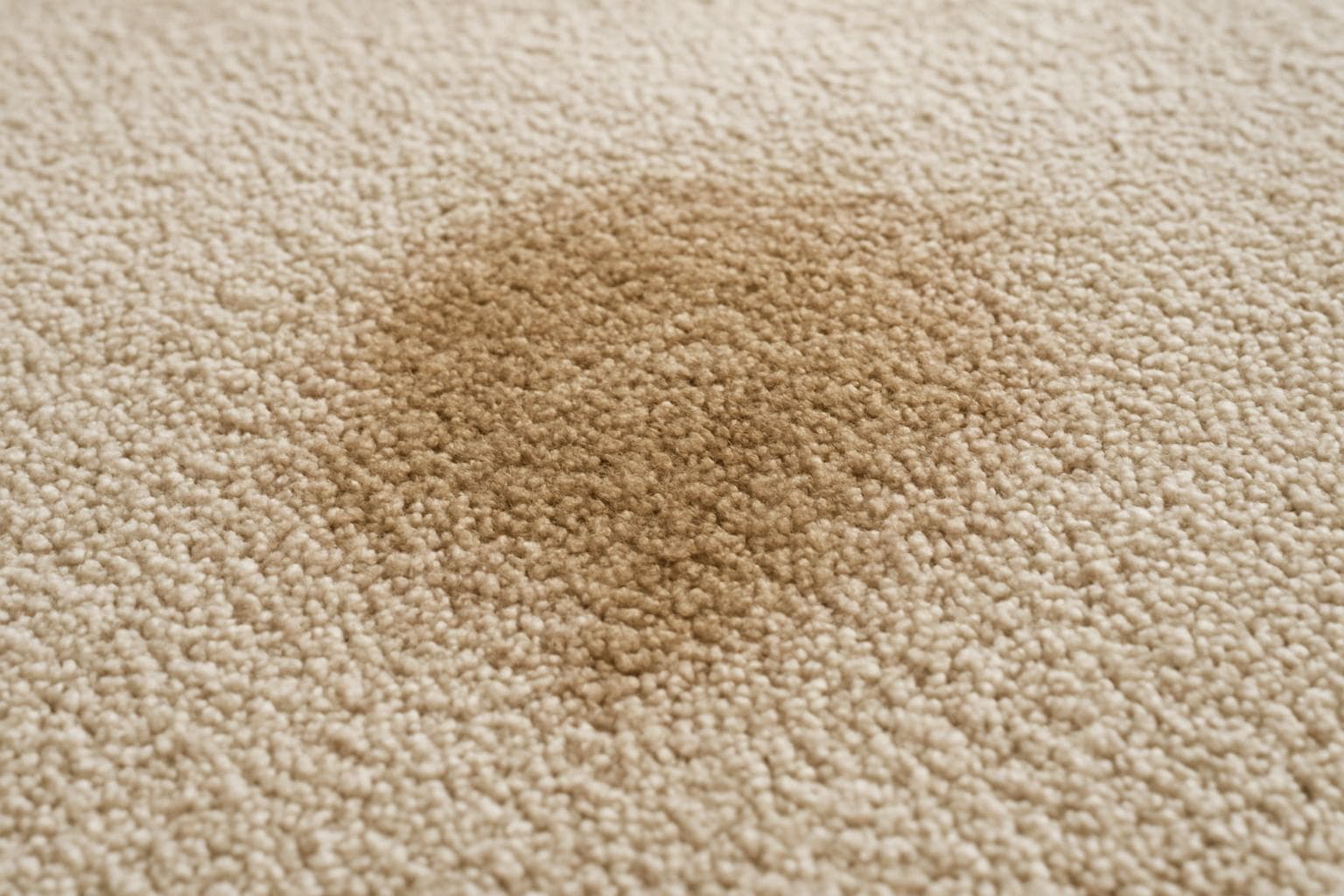
An old stain is a different animal because it has already bonded to the fiber. You won't lift it in one pass, so plan on patience and repeats instead of brute force. Work the right solution for that stain type, blot, rinse, let it dry, and come back and do it again. Each round pulls a little more out.
Does baking soda really get old stains out? Mostly no. Baking soda is great at absorbing moisture and soaking up smell, and it'll lift loose surface residue. But it can't break a true dye bond or an old protein bond. For a set-in pet or food stain, an enzyme cleaner does more, because it digests the stain instead of just masking it.
If a stain has been there for months and three honest rounds haven't moved it, it may be dyed into the fiber permanently. At that point you're deciding between living with it, cutting in a patch from a closet, or replacing the carpet. If it's getting close to replacement anyway, my breakdown of what new carpet actually costs will tell you whether one bad spot is worth a whole new floor. If you do decide to start over, my guide to the best carpet options walks through which materials actually hide spots and wear the longest.
Pet, Vomit, and Protein Stains: When an Enzyme Cleaner Earns Its Keep
Pet accidents and vomit are protein stains, and they come with a second problem soap can't touch: smell. An enzyme cleaner is the tool here. It breaks down the proteins and the odor compounds, where dish soap just rearranges them and leaves a scent your dog can still smell, which invites a repeat visit to the same spot. If accidents are a recurring pattern rather than a one-off, starting with one of the best carpets for pets that pee can cut down on how often you're doing this in the first place.
The move is cold water first. Blot up as much as you can, scrape off any solids, then saturate the spot with an enzyme cleaner and let it sit the full time on the label, often 10 minutes or more. Don't rush it. Then blot, rinse with plain water, and blot dry. Hot water on these is a mistake, because heat sets the protein and locks in the odor.
Smell is a separate battle from the mark, and vomit is the worst of it. If the stain is gone but the room still turns your stomach, work through the odor steps in my guide on getting vomit smell out of carpet, which deals with the padding and subfloor underneath where the smell hides.
If accidents are a regular thing in your house, the carpet itself is part of the fight. A carpet built for pets with a tighter, sealed construction keeps liquid from soaking through to the backing, and that's half the battle on cleanup.
Store-Bought Spot Removers vs. a DIY Mix
For a fresh coffee or juice spill, a DIY dish-soap mix does the job for pennies, and I'd never tell someone to run to the store for that. Where store-bought earns its price is set-in stains, pet messes, and anything you've already failed to lift once. An enzyme-based or oxidizing spot remover, one that uses oxygen to break the stain's color apart instead of just lifting it, does chemistry a kitchen mix can't.
The thing to check before you buy is fiber safety. Read the label for your carpet type, because a product fine on nylon can bleach or dull wool and some polyesters. Spot-test it in a hidden corner just like a DIY mix. One thing most buyers skip: store-bought cleaners leave residue too, just like the homemade kind. Rinse the spot with plain water after, same as everything else. If you're still picking a fiber for a room, matching the carpet to how that space gets used makes stains easier to manage from day one, which is the whole point of my room-by-room carpet guide.
My pick between the two: keep a dish-soap spray and white vinegar on hand for daily spills, and keep one good enzyme spot remover in the closet for the messes that need real muscle. Running down which products actually work is a longer conversation, and I sorted the ones worth owning in my carpet stain remover guide.
When to Rent a Machine or Call a Pro
Spot cleaning handles single spills. When the traffic lanes have grayed out or odor has soaked in across a whole room, you need extraction, defined in CRI's residential carpet maintenance standard (CRI 205) as flushing water through the carpet and pulling it back out along with the dirt.
Renting a machine for a weekend is the middle path, and it does real work if you pull slow and make a dry pass to lift the water back out. Over-wet carpet that never fully dries smells worse than it started, so the dry pass matters. I walk through when a rental is worth it and what to watch for in my carpet cleaner rental guide.
For a deep reset, the Carpet and Rug Institute (CRI), the industry's trade group, recommends professional hot-water extraction roughly every 12 to 18 months as part of routine residential carpet maintenance. Some stain-resistance warranties also call for periodic professional cleaning, so it's worth checking yours before you skip a cycle. Call a pro when the whole floor is dull, when odor won't lift, or when your warranty calls for a documented cleaning.