Search "best carpet for stairs" and five different fibers all get crowned the winner. They disagree because stair carpet fails at one spot the flat treads never show, and the right pick hangs on what climbs those steps every day. Get it wrong and the edge goes bald inside a year.
Key takeaways
- For most busy family stairs, solution-dyed nylon (color baked into the fiber, so it won't fade or bleach out) is the safe pick; wool if the budget stretches; polypropylene only for low-traffic or basement stairs.
- Aim for a face weight around 40-50 oz per square yard on busy stairs; much below 35 oz and the step edge wears bald fast.
- Use a thinner, firmer pad on stairs than you'd use in a bedroom. A thick, soft pad flexes over the step edge and the carpet splits right at the nose.
- Skip plush and saxony. A low-pile cut pile or a tight loop grips underfoot and holds the edge of the step.
- Installed carpet on a standard 13-step flight usually runs about $400-$1,000, materials plus labor, with French-cap wrapping and curved stairs costing more.
The Short Answer: Which Carpet Wins for Stairs
For most busy family stairs, solution-dyed nylon is the safe pick. Solution-dyed just means the color is baked into the fiber while it's made, not painted on after, so it won't fade or bleach out even when you scrub it. If the budget stretches and you want the best look and spring-back, go wool. For a basement flight or stairs nobody uses much, cheap polypropylene is fine.
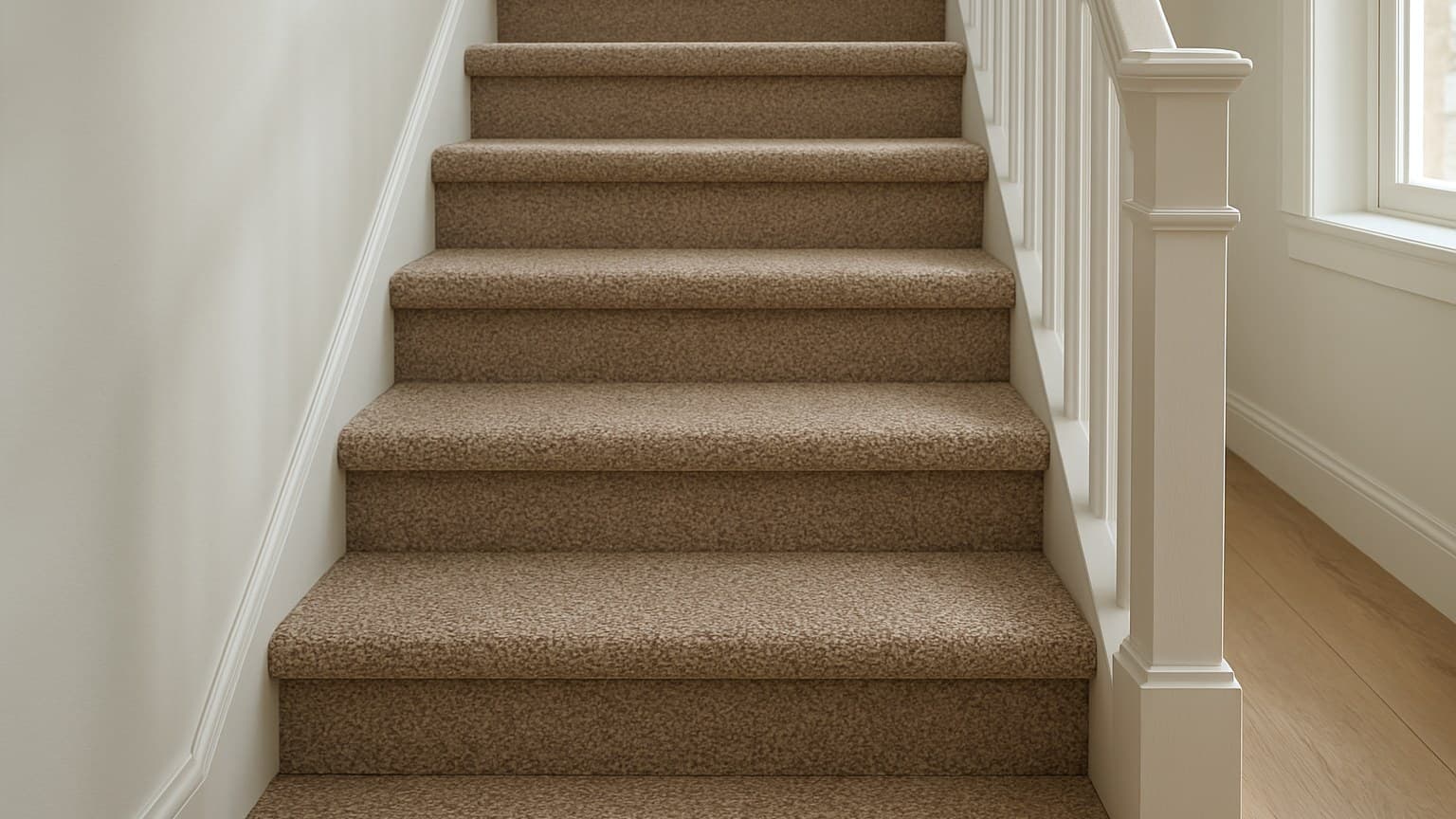
Here's the thing every showroom skips: the real job of stair carpet isn't looking good on the tread. It's gripping underfoot so nobody slips, and staying anchored at the nose, the front lip of each step where your whole weight lands. On a flight I redid last spring, the treads still looked showroom-fresh while the noses had already gone thin and fuzzy after six months of feet bending the pile back and forth in the same spot.
So there's no single "best" fiber. The right one falls out of three questions: how much traffic, how much budget, and whether kids or pets are in the mix. The rest of this piece answers those. For the actual install method, waterfall versus French cap, tackless strips, and cutting, my main guide to carpet for stairs walks through it step by step so I can keep this one on picking the carpet.
Match the Fiber to Your Stairs: A Traffic, Budget, and Pets Matrix
The reason guides disagree is they're each picking a winner without knowing your house. Skip the flat ranking and read across the row that matches your stairs.
Nylon is the all-rounder: it cleans well, springs back after a boot heel, and takes daily pounding. Wool looks and feels the best and bounces back beautifully, but it costs the most and hates harsh cleaners. Triexta is soft with strong built-in stain resistance, though it has a shorter track record on stair-edge wear than nylon. Polyester is cheap and shrugs off stains but crushes flat under traffic. Polypropylene, also called olefin, is cheap and handles moisture, but it mats down fast on a busy flight.
If you've got pets or kids, lean toward solution-dyed fibers. They take aggressive, bleach-type cleaning without losing color, which matters the day a puppy has an accident on step four. One caution: tight loop styles can snag a claw, so in a pet-friendly setup I steer people to cut pile.
| Fiber | Best for | Budget | Pets & kids | Watch out for |
|---|---|---|---|---|
| Solution-dyed nylon | Busy family stairs, high traffic | Mid to high | Excellent, cleans aggressively | Costs more than builder-grade nylon |
| Wool | Best look and bounce-back | High | Good, but gentle cleaning only | Price; harsh cleaners damage it |
| Triexta | Soft feel with stain resistance | Mid | Very good on stains | Shorter track record on edge wear |
| Polyester | Tight budget, lighter-use stairs | Low | Good on stains, poor on crush | Mats down at the nose under traffic |
| Polypropylene (olefin) | Basement or low-traffic stairs | Low | Moisture-tolerant | Flattens fast on busy stairs |
Source: Trade knowledge, checked against my own installs and callbacks
Stair fiber picker by traffic, budget, and household, from my own installs and callbacks.
If you're choosing carpet for the whole upstairs, not just the flight, my step-by-step guide to picking carpet room by room runs the same logic across bedrooms and halls.
Face Weight and Density: The Numbers That Actually Predict Wear
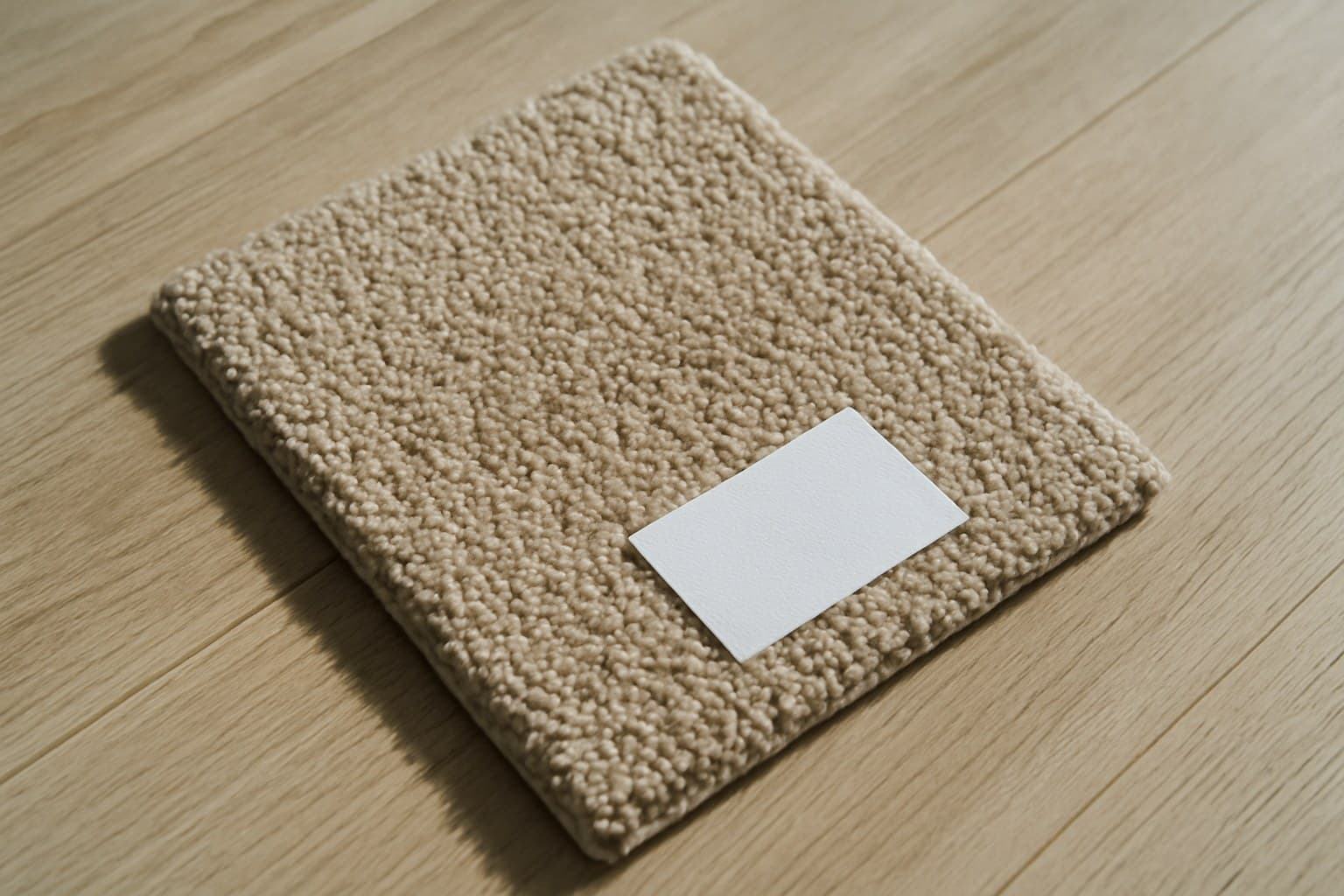
Face weight is the ounces of fiber packed into a square yard of carpet. More fiber usually means it holds up longer on stairs, so it's the first number I check on a sample.
For busy stairs, aim for roughly 40 to 50 oz per square yard. Treat anything under about 35 oz as light-duty, fine for a guest-room floor, not for a main flight that gets hit a hundred times a day. Wool stair carpet often runs a touch heavier.
But density matters more than height, and it's the test nobody does in the store. Bend a sample backward over your finger. If you see a lot of backing grinning through the tufts, called a "grin" in the trade, it's too loose and the nose will wear open. A dense sample barely shows any backing when you fold it.
One trap: face weight only counts within the same fiber. A heavy 50 oz polyester still crushes faster than a lighter, denser nylon, because polyester fiber gives up under compression. Read the number alongside the fiber matrix above, never on its own.
| Stair use | Face weight (oz/sq yd) |
|---|---|
| Light / basement stairs (minimum) | 30-35 |
| Busy family stairs (target) | 40-50 |
| Premium wool stair carpet | 45-60 |
Face weight targets by stair use, in ounces per square yard.
Pile Height and Style: Why Plush Fails on the Step Edge
Low pile wins on stairs. The one style to avoid is plush or saxony, a tall, soft, single-height cut pile, because it crushes and mats right at the nose faster than anything else on the rack.
The workable choices split three ways. A short, dense cut pile grips underfoot and cleans easily, my default for family stairs. A tight level loop or low Berber (loop carpet where the yarn stays in little uncut loops) wears like iron, but those loops can catch a pet's claw. Cut-and-loop, a mix of the two, hides footprints and dirt well and is forgiving on a flight that's hard to keep clean.
The physics is simple. A tall pile has to fold over the sharp step edge every time you plant a foot. Those tufts fatigue and lie flat at the nose long before the flat treads show a mark. A short pile has less length to bend, so it stays upright and keeps its grip. If you want the full rundown on why shorter wears better, I dig into it in my low-pile carpet breakdown.
There's a safety payoff too. A low, firm surface gives your sock foot something solid to push against. A squishy tall pile shifts under you on the way down, which is exactly when you don't want a surprise.
How three pile styles behave at the stair nose. Not drawn to scale.
The Pad Under Stair Carpet: Thinner and Firmer, Not Thicker
Use a thinner, firmer pad on stairs than you'd put in a bedroom. This is the mistake I fix most: someone buys plush half-inch living-room cushion and runs it up the stairs, and it's exactly backward.
Here's why it bites. A thick, soft pad lets the carpet flex and stretch over the step edge every time you step down. That constant tug works the carpet loose right at the nose, and over a season it splits open there. On the way down, a spongy pad can also feel unstable, like the tread is moving under you.
According to CRI 105, the Carpet and Rug Institute's standard for residential carpet installation, stairs and other high-traffic areas call for a firmer, lower-profile cushion than bedrooms. The exact thickness and density are set by the carpet maker's own install sheet, so match the pad to that document, not to whatever's left over from the bedroom job. If you want the fuller pad rundown, I cover density and rebond (pad made from bonded foam scraps) in my carpet padding guide.
The safety payoff is real. A firm pad, plus the carpet properly hooked onto the tackless strip (the thin wood strip with angled pins that grips the carpet's backing), keeps the covering from creeping or shifting. That's what actually stops a slip, not thickness underfoot.
What "Stair-Rated" Really Means (and How to Check It)
"Stair-rated" isn't an official seal anybody polices. It's a marketing shorthand for a carpet built dense and low enough to survive edge wear, and you can verify that yourself instead of trusting the label.
Do three checks in the store. First, read the warranty fine print: some carpet warranties specifically exclude stairs or reduce coverage there, and if the maker won't stand behind it on a flight, that tells you something. Second, run the bend test from earlier, fold the sample and look for backing grinning through; a stair-worthy carpet stays tight. Third, on any loop style, tug a loop gently to feel the tuft bind, which is how firmly the yarn is anchored to the backing; loose loops pull and run on stairs.
Then line it up against the fiber and face-weight guidance above. A carpet that's solution-dyed nylon or wool, lands around 40 to 50 oz, folds tight with no grin, and carries a warranty that doesn't dodge stairs is genuinely stair-rated, whatever the tag says.
Many people recarpet the stairs at the same time as the rest of the house, so if you're pricing the whole job, my carpet replacement cost breakdown splits real numbers by room and by fiber, which is the useful next read before you sign a quote.