
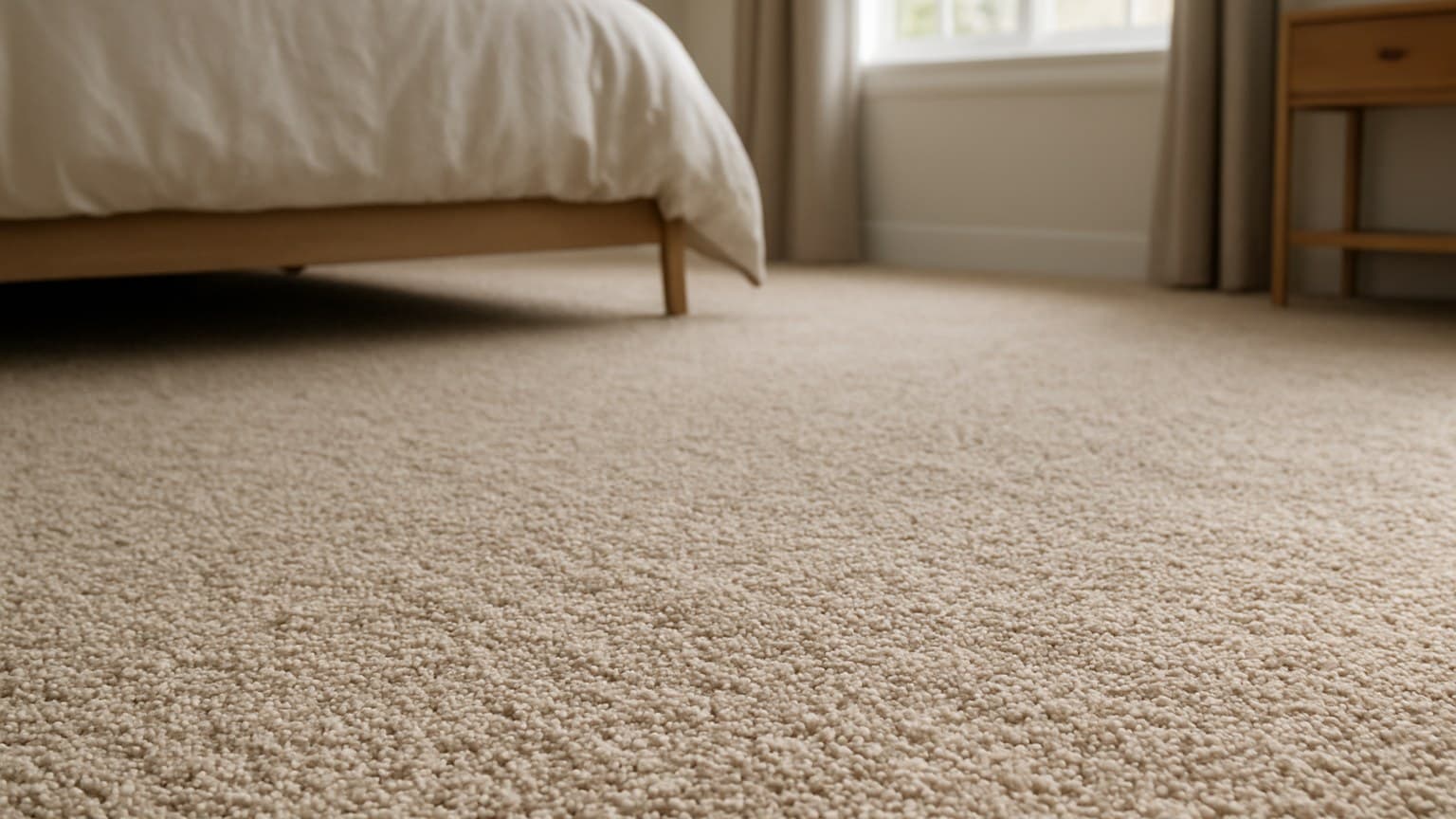
Picking carpet comes down to six choices, fiber, pile, padding, room use, moisture, and budget, and the order you make them in decides whether the floor still looks right two years from now. Start at color and pile in a showroom and you're guessing. Start at how the room gets used, and the right carpet almost picks itself.
Key takeaways
- Pick fiber by traffic and moisture first: nylon for stairs and busy rooms, polyester for soft low-traffic bedrooms, polypropylene (olefin) for basements because it shrugs off damp better than it holds up to foot traffic.
- Match pile to use: dense low-pile or textured for stairs and halls, plush or soft for bedrooms, level-loop or Berber for basements and playrooms.
- Padding is not an upgrade to skip. Stairs need a firm 6-8 lb pad no thicker than about 3/8 inch; bedrooms can take a thicker, softer pad.
- Budget materials plus labor and padding separately. A 12x12 room runs roughly $250-$900 installed; a 20x20 runs roughly $700-$2,500, and stairs cost more per foot than any open room.
- Check subfloor flatness and moisture before you buy anything, especially over a slab or in a basement, or the nicest carpet still fails.
The order I actually ask the questions
On a job I run the questions in a fixed order: room use and traffic first, then moisture risk, then fiber, then pile style, then padding, then budget. Color comes dead last, because a shade you love does nothing for a carpet that mats flat in the walk path by next winter.
People flip that order in the store. They fall for a soft plush, pick the color, and only later find out it belongs in a bedroom, not on the stairs they bought it for. Traffic and moisture decide what survives; comfort and looks decide between the survivors.
One thing before any of it: the subfloor gets checked for flat and for moisture. A carpet maker's warranty quietly leans on both, and a slab that feels bone dry to your palm can still read wet on a meter. I learned to trust the meter after eating the cost of a job I should have tested first.
There's no single "best carpet." The right pick changes room to room, which is the whole reason for the steps below.
Step 1: Match the fiber to traffic and moisture
Pick fiber by how hard the room gets walked and whether damp is in play. That one call rules out most of the aisle before you ever touch a sample. According to Wikipedia's overview of carpet, the fibers most commonly used in carpet manufacturing are nylon, polyester, olefin (polypropylene), and wool, each with its own trade-offs in durability, cost, and care, which is why matching fiber to room matters as much as anything below.
Nylon is the toughest of the common fibers. It springs back from crushing better than the rest, which is why it belongs on stairs, in halls, and in busy family rooms. It costs more, and it's worth it where feet never stop.
Polyester (PET) is soft and shrugs off most spills, though no fiber is truly spill-proof and how you get a stain out of carpet matters as much as the label. Its weakness is traffic: it mats down under heavy use. Keep it in bedrooms and quiet rooms.
Polypropylene (olefin) is cheap and handles damp, which is why you see it in loop and Berber styles and in basements. It wears and crushes fast, so keep it out of high-traffic paths.
Wool is the natural option, durable and good-looking, but it's the priciest and wants gentler cleaning. Treat it as a splurge for a low-traffic formal room. Over a slab or in a basement, lean synthetic and skip wool entirely.
Step 2: Pick the pile style for how the room gets used
Pile is the shape of the yarn, and it decides how well the carpet hides wear. Here's the short version: plush for bedrooms, textured or frieze for living rooms, dense textured or pattern for stairs and halls, level loop or Berber for basements and playrooms. When a room calls for something shorter and tougher than any of those, picking a low pile that actually holds up under years of foot traffic deserves its own closer look, covered in choosing a low pile carpet that holds up.
Plush and saxony (saxony is a plush pile with yarn ends twisted and heat-set so it stands up straighter) are smooth and formal but show every footprint and vacuum line. Fine in a bedroom, poor on stairs.
Textured cut pile is the do-everything choice. It hides tracks and works in most living rooms.
Frieze, a tightly twisted yarn, resists matting and holds up in busy rooms.
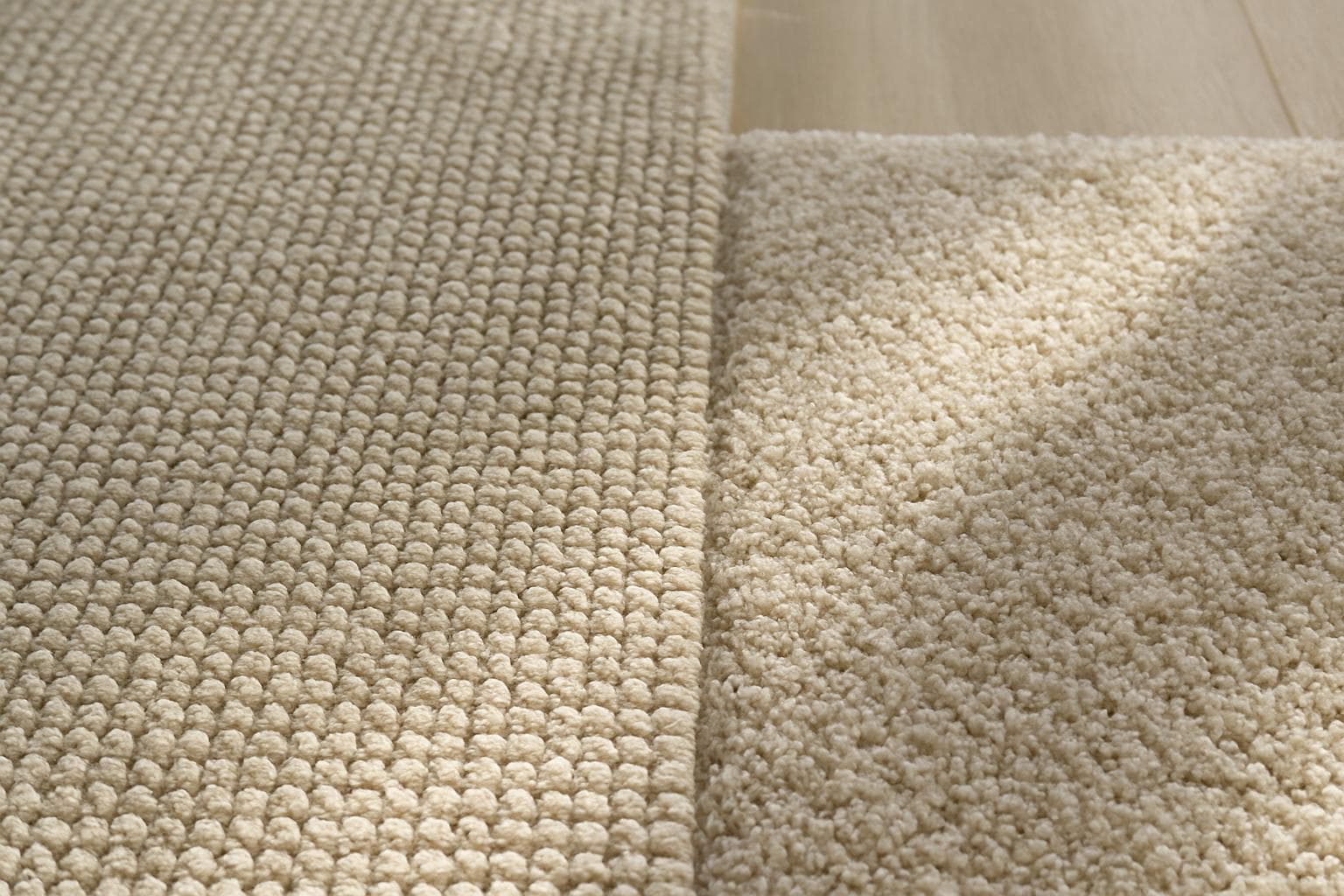
Level loop and Berber use uncut loops instead of cut ends. They're tough and stain-friendly for basements and playrooms, but a pet's claws can snag a loop, so weigh that with animals in the house.
Pattern and cut-and-loop hide soil and traffic well, which makes them a smart move on a hallway or a stair run.
To judge density without a spec sheet, press your thumb into the sample. If you feel the backing fast, it'll crush fast.
Step 3: Choose padding by room, don't skip it
Padding is what the carpet lies on, and the wrong pad wears the carpet from underneath and can void the warranty. It's not the place to save twenty dollars.
Stairs need a firm, thin pad, around 6-8 lb density and no more than roughly 3/8 inch thick, so the carpet doesn't flex and crack over the nose of each step.
Bedrooms can take a thicker, softer pad, since light traffic won't punish it and the comfort is nice underfoot.
Basements need a pad rated for moisture or built with a moisture barrier. Over a slab, this matters more than anywhere else in the house.
Ignore the "thicker is always better" line. In a busy room, too-thick pad lets the carpet move, and once it moves, seams start to open.
Room-by-room quick picks
Pull the three steps together and the four rooms people ask about most fall out fast.
Bedroom: soft polyester or nylon plush over a thicker comfort pad. Moisture is rarely a worry here, so comfort wins.
Stairs: dense nylon textured or a pattern over a firm, thin pad. This is the highest-wear job in the house, and the one most worth hiring out, a stair wrap done loose looks bad and wears through at the nose. If you want the fiber, pile, and installation details specific to this spot, the guide to choosing carpet for stairs walks through it step by step.
Basement: olefin or solution-dyed nylon (nylon that's colored all the way through the fiber instead of just on the surface, so it resists fading and stains better) in a loop or Berber, over a moisture-barrier pad, and only after the slab checks dry. If carpet still feels like a gamble on a damp slab, the vinyl flooring buyer's guide walks through what actually holds up down there.
Living room: nylon frieze or textured over a medium pad, balancing comfort against wear.
Stairs and basements both cost more and run harder than an open room, and if you want the full breakdown of what drives that stair number up, our stair carpet cost breakdown below is worth checking before you fall for a number on a roll.
What carpet actually costs, by room
Carpet is three line items, not one price: the carpet material, the padding, and the install labor. Quote them separately or a cheap roll can hide an expensive pad and a bigger labor bill. The ranges below are general national ballparks, not a quote, actual per-square-foot pricing varies by region, brand, and retailer, so use them to compare quotes rather than to budget to the dollar. For a deeper breakdown with real numbers, the carpet replacement cost guide lays out how those three pieces stack up.
| Line item | Cost per sq ft |
|---|---|
| Carpet material | $1 - $7 |
| Padding | $0.30 - $0.90 |
| Install labor (open room) | $0.50 - $1.50 |
Cost per square foot for the three parts of a carpet job, in an open room. Stairs and basements run higher.
Put those together on real rooms. A 12x12 bedroom is 144 square feet, so mid-range choices land it around $250 to $900 installed. A 20x20 living room is 400 square feet, roughly $700 to $2,500 installed, with wool and thick pad pushing the top end higher. Treat these as rough planning figures rather than a firm quote.
Stairs price on their own logic. They're often quoted per step, and labor can range widely, commonly from a few dollars up to roughly $15 or more per step, depending on whether it's a boxed or waterfall wrap, the installer, and your region. A full flight costs more per foot than any flat room its size. Basements add moisture prep on top. Before you sign anything, it helps to know which stair quote line items are fair, since padding, tack strip, and wrap style can all get padded on paper.
I used to quote flat by the square foot until a room full of closets, doorways, and a bay window ate an extra day. Now I count the cut-heavy spots separately, because the open middle of a room is never where the hours go.
You can buy carpet from big-box stores like Home Depot and Lowe's, from a specialty chain such as Carpet One, from in-stock rolls at a local dealer, or through an online marketplace like Amazon. Whichever you pick, get the pad and labor quoted, not just the carpet, since tack strip, seam tape, and cushion normally ride inside the install price and that's where surprises hide.
If you're weighing carpet against hard flooring in a basement or rental, the vinyl plank flooring installation cost guide breaks down what LVP runs installed so you can compare the two on the same slab.
Sources
- Carpet, Wikipedia
- Home Depot: Carpet Flooring Selection
- Carpet One Floor & Home: Carpet
- Lowe's: Carpet & Carpet Tile Selection
- Amazon: Carpet Listings