
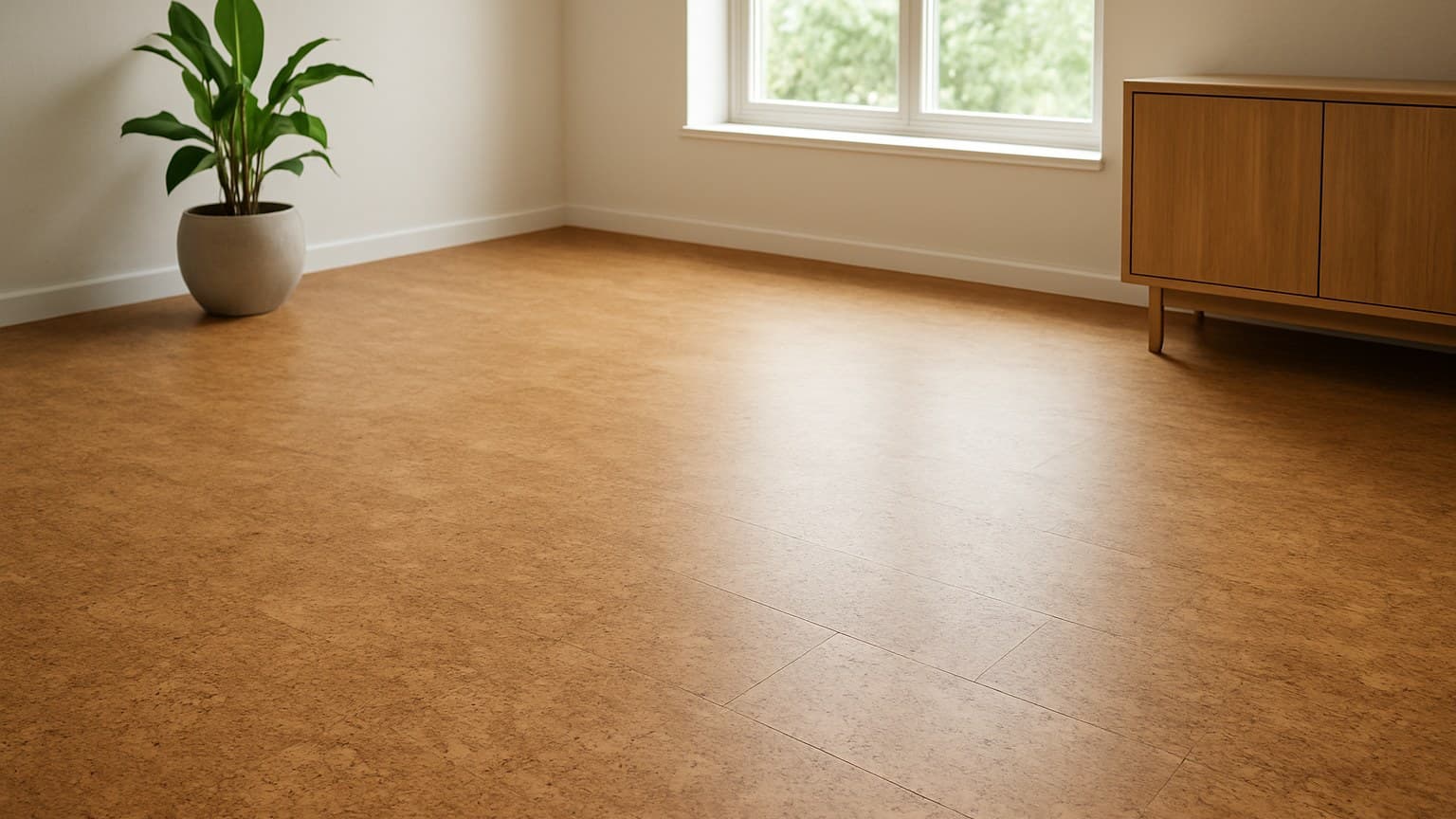
Most advice on how to clean cork flooring skips the one thing that actually decides it: what's sealed on top. Use a wet mop on the wrong finish and you swell the seams or strip the wax, and no amount of scrubbing brings it back. So test the floor before you touch a cleaner.
Key takeaways
- Do the water-bead test first: water that beads means a sealed urethane or acrylic finish; water that soaks in and darkens the spot means wax or worn cork that can't take a wet mop.
- Sweep or vacuum daily, then damp-mop weekly with a well-wrung microfiber mop and a pH-neutral cleaner, never a soaking-wet mop.
- A safe DIY mix is 1/4 cup white vinegar per 1 litre of warm water; skip ammonia, bleach, and abrasive pads on any cork.
- Never steam clean cork. The heat and forced moisture push past the seams and swell the core.
- Well-maintained sealed cork typically needs a screen-and-recoat every 5-7 years (per wecork), sooner in a busy kitchen.
Which Cork Finish Do You Have? Do This Test First
Cleaning advice online contradicts itself because nobody asks the first question: what finish is on top. The cork itself doesn't decide how much water it can take, the coating does. Two floors that look identical can need opposite cleaning.
Run the water-bead test. Drip a few drops of water in a low-traffic corner and watch for 30 seconds. If it beads up and sits on the surface, you have a sealed urethane or acrylic finish that can handle a damp mop. If the water soaks in and darkens the spot, you've got wax or worn, unsealed cork that can't take a wet mop at all.
Read the texture and the install method too. A smooth, slightly plasticky top on a click-lock plank is often a printed cork-look veneer over a vinyl wear layer, not real cork on the surface. Glue-down tiles are usually solid cork all the way through, which is the porous stuff that drinks up water. Those same solid cork tiles are also what most cork board walls are built from, and the cork board wall guide walks through picking and mounting them.
It is genuinely porous. WeCork cites more than 200 million air cells per cubic inch, so an unsealed or waxed floor soaks up spills that a sealed floor just shrugs off. If your bead test points to that plasticky vinyl-topped type, it cleans like vinyl, not like raw cork, and the waterproof cork flooring guide covers that one.
Match Your Cleaning Method to the Finish
Once you know your finish, the whole routine falls out of it. Here's each finish paired with the method, the safe product, and how often it needs resealing.
| Finish | Water-bead test | Cleaning method | Safe product | Reseal cadence |
|---|---|---|---|---|
| Urethane / acrylic (sealed) | Water beads up | Damp microfiber mop, wrung out | pH-neutral hardwood cleaner (e.g. Bona) or diluted vinegar | Screen-and-recoat (light buff, then a fresh clear coat) every 5-7 years when well maintained |
| Wax | Water soaks in slowly | Sweep/vacuum, barely-damp cloth only | Wax-safe cleaner only, no vinegar or all-purpose sprays | Re-wax/buff more often; no standing water ever |
| Unsealed solid cork | Water soaks in fast, darkens | Dry methods; spot-clean, dry immediately | Water sparingly; seal it before wet cleaning | Seal as soon as possible, then follow sealed schedule |
| Printed veneer + vinyl wear layer | Water beads (plasticky top) | Damp or wet mop, like LVP (luxury vinyl plank) | pH-neutral floor cleaner | None; no cork surface to reseal |
Cork finish matched to its cleaning method, safe cleaner, and how often it needs resealing.
If you're not sure which row fits your floor, run the bead test in two or three spots, not just one. Finish wears unevenly near sinks, doorways, and sunny windows, so a corner can test sealed while the rest of the room is closer to bare. When the spots disagree, clean the whole floor like the pickier finish until a full recoat brings it back to one standard, and check the bead test again after any big spill so you catch worn spots before they turn into stains.
Your Daily and Weekly Cork Cleaning Routine
Daily, sweep or vacuum on the hard-floor setting with the beater bar (that spinning brush roll) switched off. Grit is what scratches a cork finish, so lifting it before it gets ground underfoot does more for the floor than any cleaner.
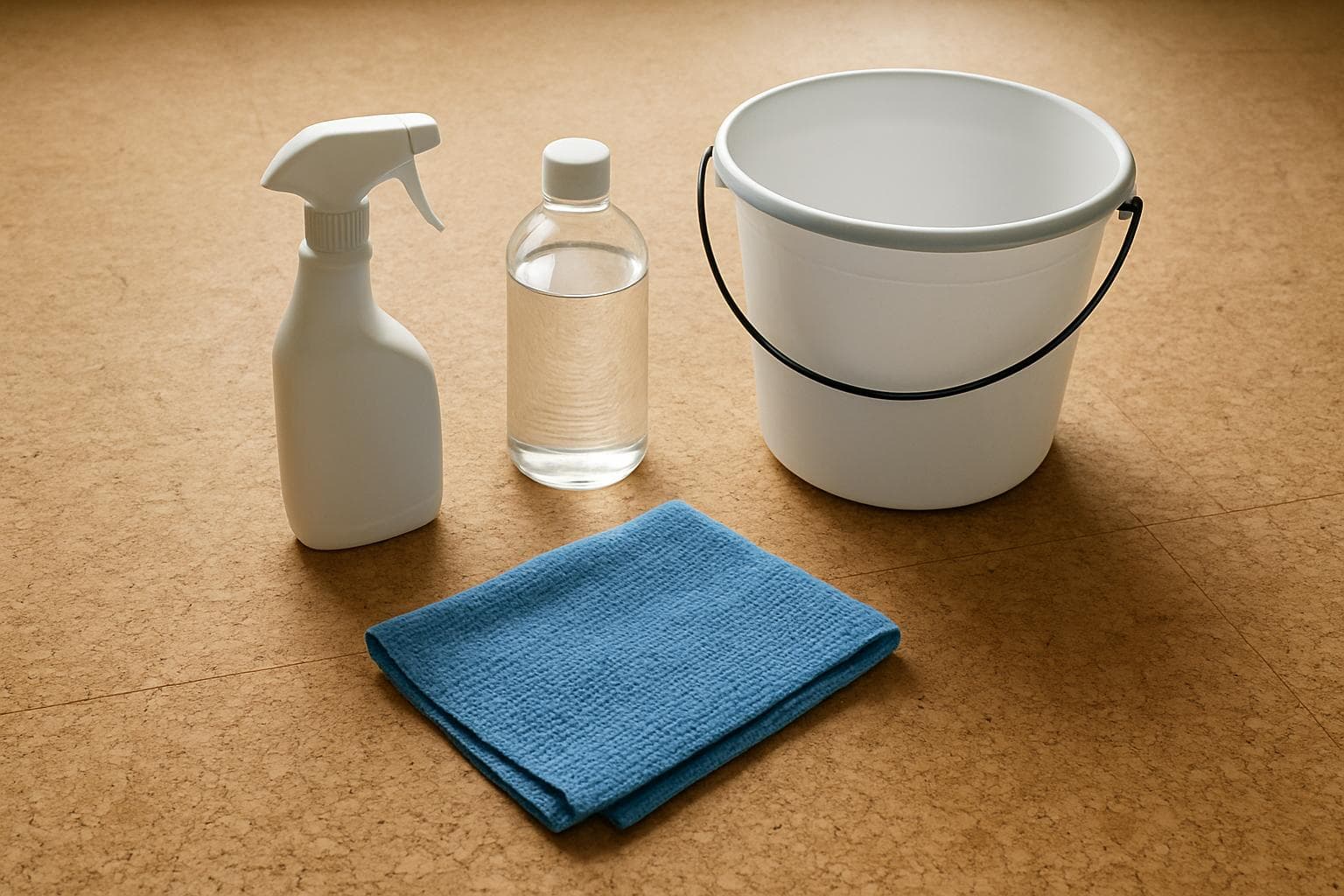
Weekly, reach for a microfiber mop and wring it out until it's barely damp, not dripping. Work with the direction of the planks and dry any puddle the second you see one. For sealed cork, a safe DIY mix is 1/4 cup white vinegar per 1 litre of warm water, per portuguesetreasures.com. Wipe it on, don't flood it.
One hard rule holds for every cork floor: never steam clean it. The heat and forced moisture drive past the seams and swell the core from below, and on cork the seams fail long before the plank face does. A steam mop is a fast way to ruin a floor someone was trying to be careful with.
Safe Cleaners vs What to Avoid (DIY vs Branded)
There is no single "safe cork cleaner," and that's why the internet can't agree on one. The right pick depends on your finish. Sort that out first and the cleaner choice gets easy.
Sealed urethane or acrylic cork takes either the diluted-vinegar mix above or a pH-neutral branded cleaner like Bona. Both are fine, so use whichever you already own.
Wax finishes are the exception. Vinegar and all-purpose sprays can eat through wax and leave dull patches, so a wax finish gets a wax-safe product only.
On any cork, avoid ammonia, bleach, abrasive pads or scouring powders, and oil soaps that leave a dull film you'll be fighting for months. None of those belong on a cork floor, sealed or not.
When to Reseal or Refinish Cork
Let the bead test tell you when. Once water stops beading and starts darkening the spot instead, the finish has worn thin and it's time to recoat, before bare cork starts drinking up every spill.
Most well-maintained sealed cork gets a screen-and-recoat every 5-7 years, per WeCork, and sooner in kitchens and entryways that see grit and spills daily. Screen-and-recoat means lightly buffing the old finish and rolling on a fresh coat, not sanding the floor down to bare cork. Solid cork can take that a few times over its life. Thin veneer floors usually can't, since there's barely any surface to work with. That gap between solid and veneer is exactly the kind of thing covered in a rundown of common cork flooring failures and what actually holds up long-term.
Whether that upkeep is worth it over the years is a fair question, and the cork flooring pros and cons guide weighs the cost and maintenance against what you get.
Prevent the Damage You Can't Clean Out
The best cork cleaning is the mess that never lands. Put walk-off mats at every entry to catch grit before it grinds into the finish, but skip rubber-backed or taped mats, which can stain the surface or pull it up when you move them.
Add felt pads under furniture legs, and lift heavy pieces to move them instead of dragging. Cork dents easier than most floors, and a dragged sofa leg leaves a track you can't buff out.
Sunlight fades it, too. A rug or heavy piece of furniture left in the same spot for months can shield that patch while the exposed floor around it gradually lightens or darkens, leaving a visible outline once the item is moved. Rotate rugs and shade strong windows so the whole floor ages evenly.
Wipe spills fast, especially on wax or unsealed cork. Once a stain soaks into porous cork, no mop pulls it back out. That's the damage you're really cleaning around. Kitchens push that risk hardest, so anyone weighing cork there should read up on what to settle before kitchen cork flooring first.
Sources
- EPA report on floor cleaning and maintenance practices
- NWFA Homeowners Handbook to Real Wood Floors
- CRI-204 Commercial Carpet Maintenance Standard
- Carpet and Rug Institute cleaning and maintenance guide
- NWFA Installation Guidelines