
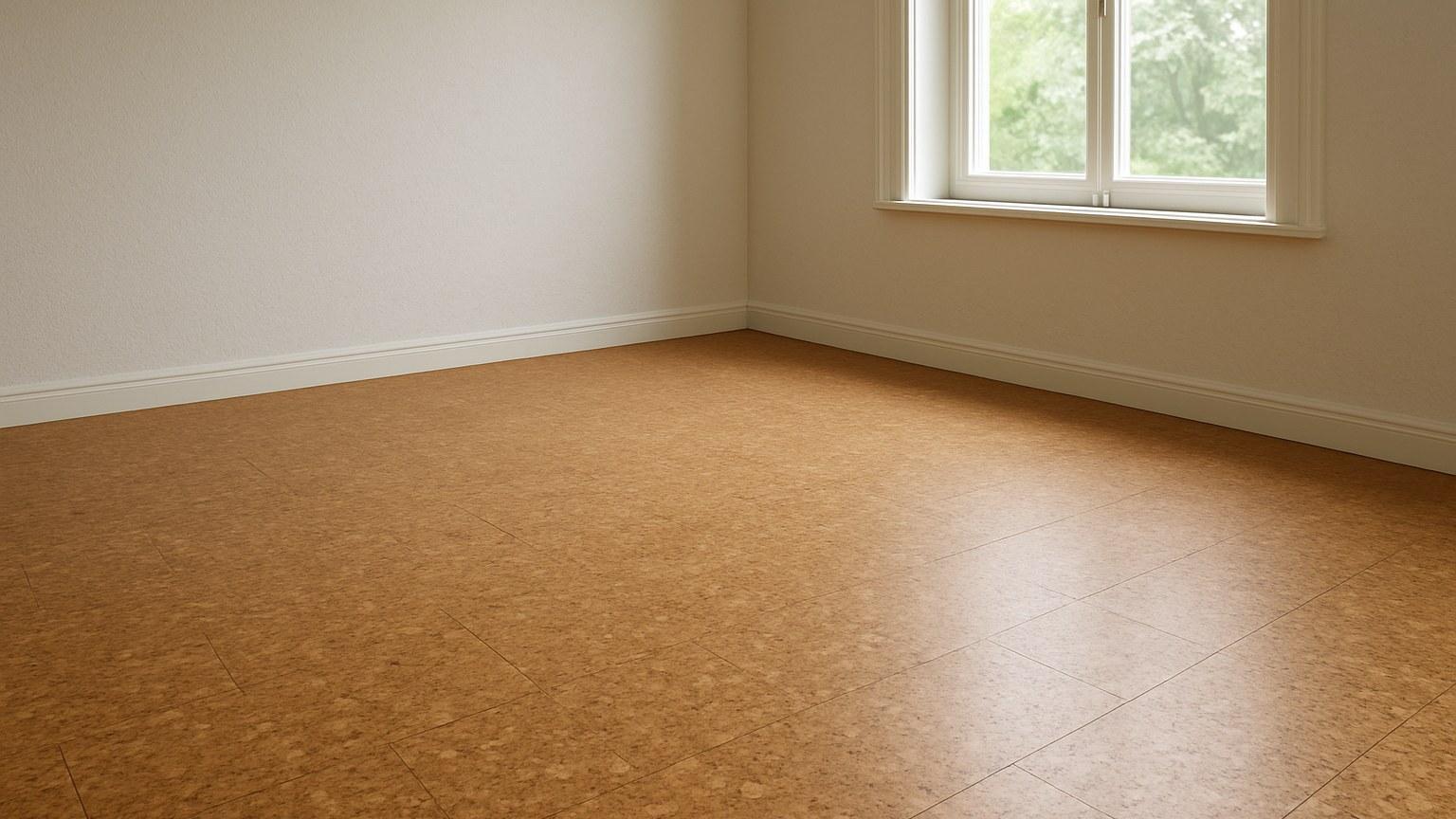
Cork flooring's strongest pros are warmth underfoot, quiet, and a genuinely renewable source; its real cons are denting under furniture, scratching from pet claws, fading in sun, and the fact that it's water-resistant, not waterproof. The confusing part is cost: published guides on cork flooring pros and cons quote anywhere from $5 to $20 a square foot. Below I put a number and a source on each point, then settle that price gap.
Key takeaways
- Cork is warm, quiet, hypoallergenic, and renewable, but it dents under furniture legs, scratches from pet claws, and fades in direct sun.
- Published material prices run about $5-8 per square foot for basic-to-mid cork (Sustainable Flooring EPA research) and up to $20 for premium finished tiles (americasfloorsource.com); labor adds on top and varies by install method.
- Cork is water-resistant, not waterproof; water wins at the seams and edges before the plank surface, so it is risky in full baths and below grade.
- A well-finished, resealed cork floor lasts decades, but that is separate from the cork oak tree, which lives 100-120 years and is harvested every 9-11 years (Sustainable Flooring EPA research).
- A DIY two-coat finish upgrade runs about $0.60 per square foot and can cut scratching sharply, mimicking $12-15/sf premium finishes (icorkfloor.com).
What Cork Flooring Is and How It's Made
Cork is the bark stripped off the cork oak tree, ground up, pressed, and bonded into tiles or planks. The bark is harvested roughly every 9-11 years (Sustainable Flooring EPA research), or about every 9-12 years per woodandbeyond.com, without cutting the tree down. That same pressed cork material also shows up in cork board wall panels and tiles for home offices and kids' rooms.
What makes cork behave the way it does is a natural waxy compound in the bark called suberin. It helps cork shrug off water and resist microbes.
A plank is built in layers: a sealed finish on top, the visible cork veneer you walk on, a core of either high-density fiberboard (HDF) or cork that gives the plank its stiffness, and a cork backing underneath for warmth and quiet. Total thickness runs from about 3/16 inch up to around 1 inch depending on the product.
Pro: Warm, Soft, and Quiet Underfoot
Cork's spongy cell structure cushions your joints and holds heat. americasfloorsource.com puts its R-value at 1.125, which means modest insulation and a floor that stays warm to bare feet instead of cold like tile.
It also deadens footstep noise. That's why cork earns its keep in bedrooms, over finished basements, and on upstairs floors where you don't want every step echoing below.
Standing on a cork floor at the end of a long day feels different than tile or laminate. Cork gives a little instead of acting like a slab.
Pro: Naturally Hypoallergenic and Antimicrobial
The suberin in cork helps it resist mold, mildew, and dust mites, which allergy households tend to notice fast. It won't sterilize a room, but it doesn't feed the stuff that sets people off.
It also doesn't trap dust and dander the way carpet does. A quick sweep or a damp microfiber pass pulls up what settles, which makes it easier to keep clean around kids and pets.
Pro: One of the Few Truly Renewable Floors
The bark grows back and the tree keeps living, so harvesting cork doesn't fell the oak. The cycle runs roughly every 9-11 years (Sustainable Flooring EPA research), about 9-12 years per woodandbeyond.com.
Here's a stat worth knowing: a cork oak lives 100-120 years and keeps producing bark that whole time (Sustainable Flooring EPA research). That's why cork gets called eco-friendly. It is not a claim about how long your floor lasts, which is a different number entirely.
Con: It Dents and Scratches More Than Hard Floors
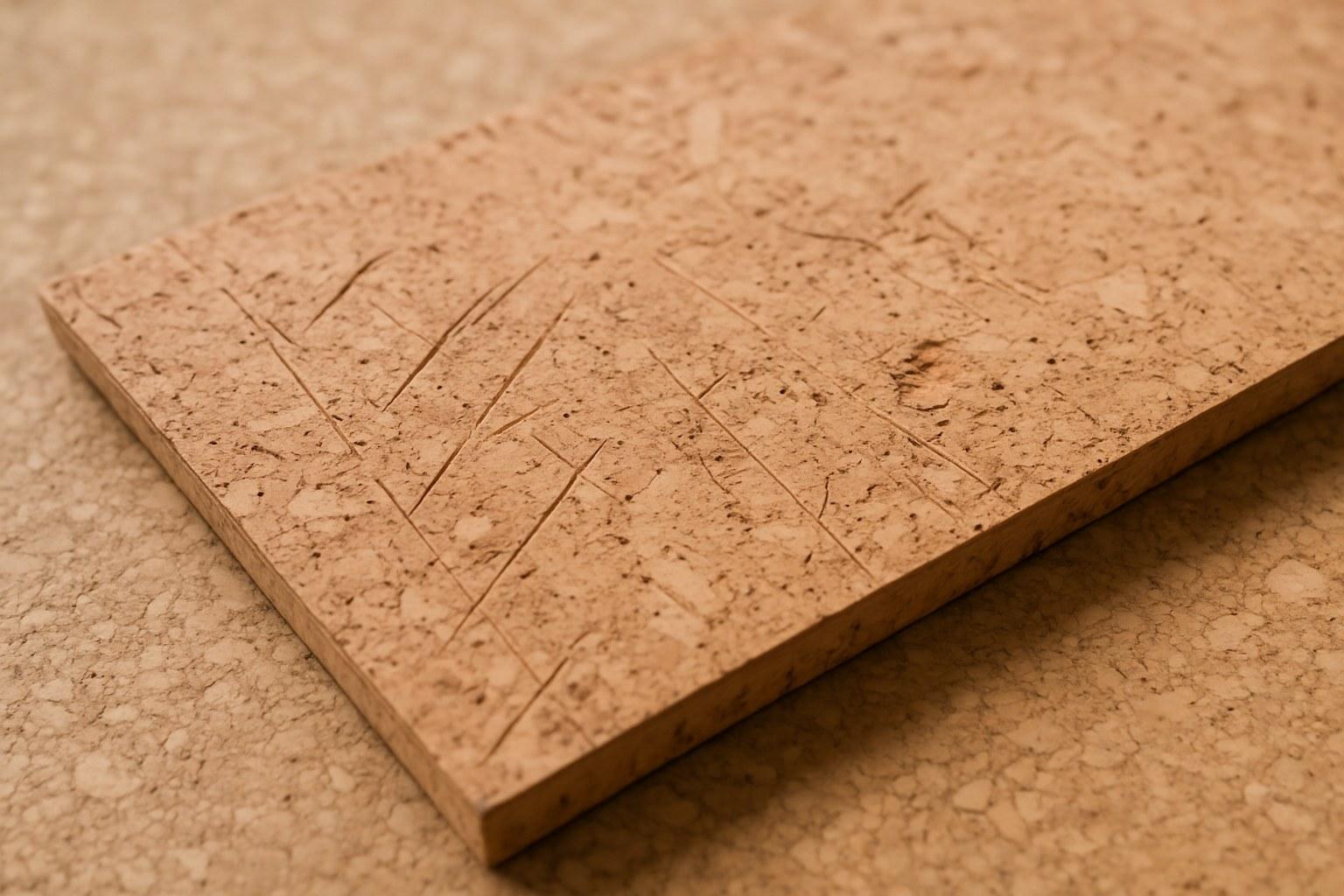
Soft and springy cuts both ways. Furniture legs leave dents and pet claws leave marks. Use wide floor protectors under heavy pieces, put area rugs in traffic paths, and lift furniture instead of dragging it.
The finish does most of the protecting. A DIY two-coat finish upgrade runs about $0.60 per square foot and can cut scratching sharply, mimicking the look and wear of $12-15 per square foot premium finished cork (icorkfloor.com).
The surface damage people deal with usually traces back to a finish that wore thin and never got redone. Keep the finish up and most of it never happens. Keeping cork clean the right way for its finish is a big part of making that finish last.
Con: Water-Resistant, Not Waterproof
This is the one that trips people up. Suberin lets the plank surface shrug off a splash, but the seams and edges are where water gets in. Swelling and cupping start at those joints, not on the plank face.
Standing water and big humidity swings are the real enemy. Damp slabs and high-humidity rooms raise the risk, which is why full baths and below-grade basements are worth avoiding unless the product is built for it. Whether a product marketed as waterproof cork actually holds up comes down to a handful of construction details worth checking first.
When a box says "waterproof cork," that usually means cork bonded to a vinyl or rigid core made from SPC (stone-plastic composite, a dense rigid-core material), not raw cork. Read what the core actually is before you trust it near water. In a kitchen, glue-down cork with a solid finish makes more sense, because glue-down handles the odd dropped-glass spill better than a bare floating tile. If that's your room, go through the things to settle before putting cork in a kitchen first.
Con: It Fades in Direct Sunlight
Natural cork lightens and fades under strong UV over time. In a sunny room, a floor with no rug cover will show a clear line where furniture sat once you move it.
Rotate rugs a couple times a year and use blinds on south-facing rooms. Color and pattern choices vary by product, and a busier pattern hides the change better than a flat, even tone.
What Cork Flooring Costs: $5-8 or $5-20 a Square Foot?
Both numbers are right. Sustainable Flooring (EPA research) puts material at $5-8 per square foot for basic-to-mid cork, while americasfloorsource.com lists $5-20 per square foot because its range spans basic tiles all the way up to thick premium glue-down. The spread is finish quality and format, not one source being wrong.
| Source | Price range (per sq ft) | What it reflects |
|---|---|---|
| Sustainable Flooring (EPA research) | $5-8 | Basic to mid cork, standard factory finish |
| americasfloorsource.com | $5-20 | Basic tiles up to premium thick, glue-down cork |
| icorkfloor.com | $12-15 | Premium finished cork; a DIY 2-coat finish mimics it for about $0.60/sf |
Published per-square-foot material prices for cork flooring, by source.
Those are product prices. Labor sits on top and shifts with the install method. Floating click-lock costs less to install because it goes faster, glue-down costs more because it's slower and needs careful full adhesive coverage, and running stairs or a basement adds even more work on top of either method. No source breaks out one flat per-square-foot labor number for cork, so plan on paying more for glue-down and for stairs or basements than for a simple click-lock room in the open, and get a couple of local quotes before you commit.
So is cork expensive? More than most laminate and basic vinyl, but less than a lot of hardwood. The $0.60-per-square-foot DIY finish from icorkfloor.com is the cheapest way to buy real durability.
How Long Does Cork Last? Standards and the Durability Debate
A maintained, resealed cork floor lasts decades. The ratings genuinely conflict, though: woodandbeyond.com files cork's durability as only "Moderate," the same tier it gives laminate, while greatmats.com and americasfloorsource.com frame it as a decades-long floor. The gap is finish upkeep and traffic, not a disagreement about the material.
There's a standard most guides skip. ASTM International, a group that writes material test standards, publishes ASTM F3008, the quality standard for cork floor tiles. Buying tiles made to it gives you a baseline for performance instead of guessing.
Keep two lifespans straight. The cork oak lives 100-120 years. Your floor's lifespan is about the finish, not the tree.
The mixed reviews people find in roundups and forum threads mostly come from one thing: floors with a worn or never-resealed finish. The disappointed owners rarely kept the top coat up. I've documented common failure patterns I see on cork jobs, and nearly all of them trace back to that same neglected finish.
Floating vs Glue-Down, and Can You DIY It?
Before any of this, two checks decide whether the floor holds: the subfloor has to be flat, and it has to be dry. Check flatness with a long straightedge and fill or sand the high and low spots, and run a moisture check on concrete slabs before you lay a thing. The maker's warranty hinges on both of those more than on the plank you picked.
Floating click-lock cork is realistic for a handy homeowner. The planks snap together over an underlayment, you leave the expansion gap the product's own sheet calls for, and you can lift and redo a bad row.
Glue-down cork is a different job. It's less forgiving, the adhesive window is unforgiving, and stairs or large open rooms with moisture transitions are better left to a hired crew. One more tip from experience: measure the room yourself before you order. I once quoted a whole house off a customer's numbers and landed two boxes short on install day, and a stranded crew waiting on a backorder costs more than any trip. Getting that glue-down job right often comes down to keeping the edges from lifting once the adhesive cures.