
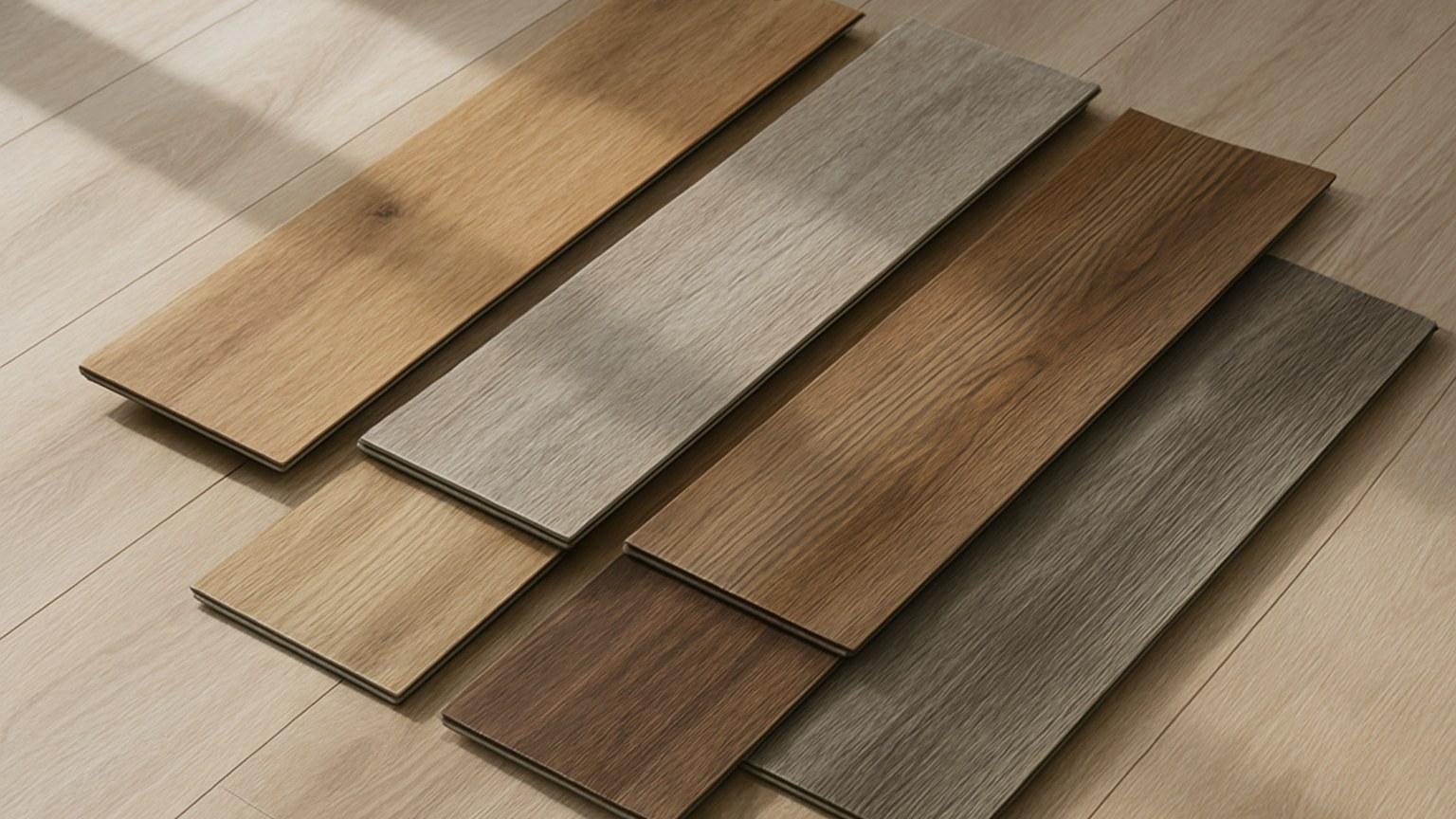
The LVP flooring meaning is simple: it stands for Luxury Vinyl Plank, a vinyl floor printed to look like wood and sealed under a clear top coat. What trips people up isn't that word, it's the alphabet soup around it: SPC (stone plastic composite), WPC (wood plastic composite), EVP (engineered vinyl plank), mil, AC. This guide puts each tag in plain words so you can read any sample on the rack.
Key takeaways
- LVP stands for Luxury Vinyl Plank: a plank of vinyl with a printed photo layer made to look like wood, sealed under a clear wear layer.
- The acronyms map to real build choices: SPC is a denser stone-based rigid core, WPC is a softer wood-based core, EVP is a marketing name for rigid-core LVP, and LVT (luxury vinyl tile) is the same vinyl cut as tiles.
- "Waterproof" on the box describes the plank face and core, not the seams or the room; water can still slip past the edges and sit on the subfloor at the perimeter.
- Wear layer, measured in mils, is the spec that separates a light-traffic plank from a kitchen-grade one; always read the specific product's own number.
- For wet, busy rooms pick a rigid SPC core; bedrooms and quiet rooms can take a softer, warmer WPC.
What Does LVP Stand For? (Luxury Vinyl Plank, Defined)
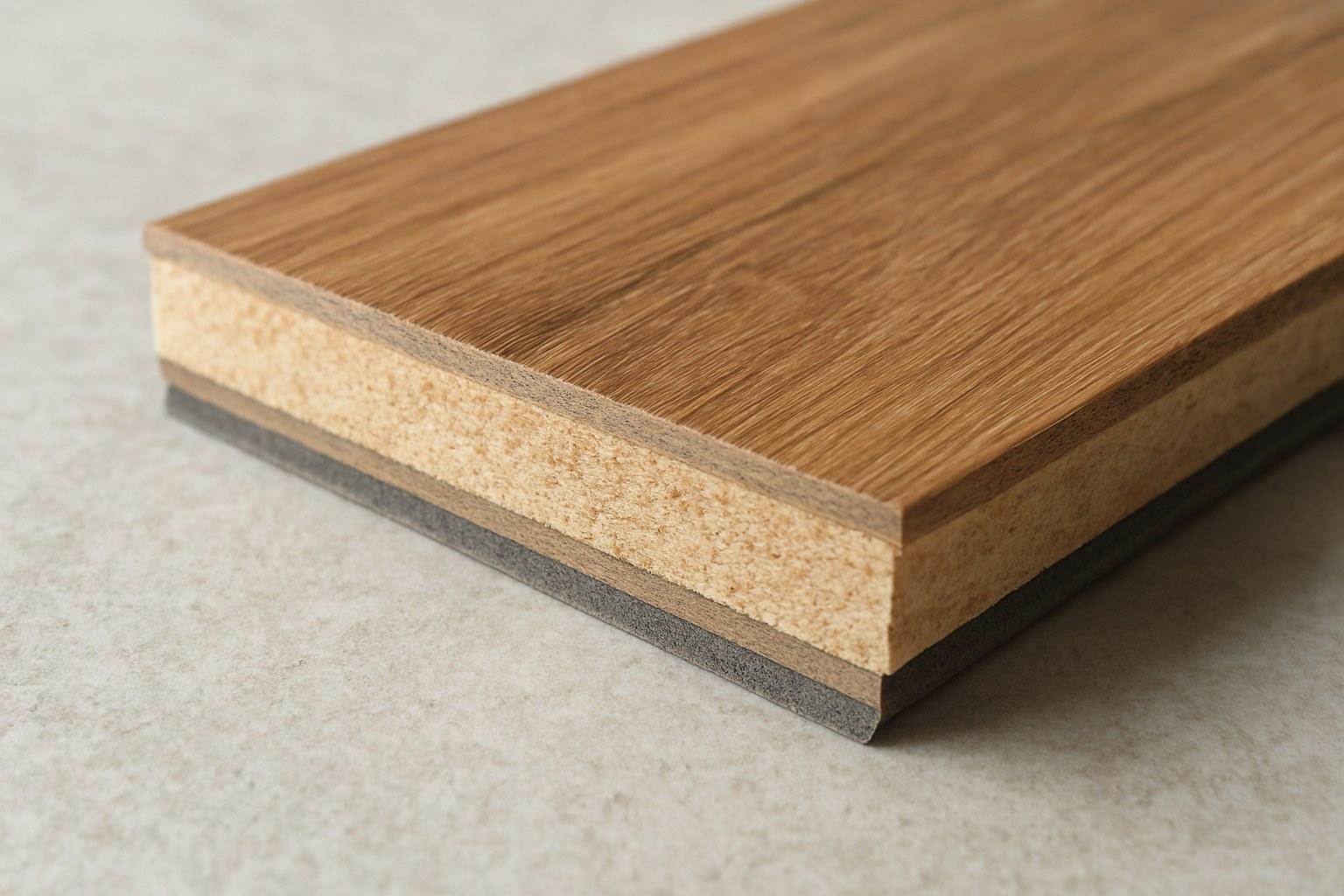
LVP stands for Luxury Vinyl Plank. It's a floor built in layers: a clear wear layer on top that takes the scratches, a printed photo layer under it that shows the grain you see, a rigid or flexible core that gives the plank its body, and a backing or attached pad underneath.
The print is the part to understand. You're looking at a photograph of wood, not wood. That means you can't sand and refinish an LVP floor the way you can a solid oak board. The flip side is water. A real wood board swells and cups when it stays wet; LVP shrugs off a spill that would ruin hardwood.
So the usual gut check: isn't this just fancy vinyl? Yes, it's vinyl. What moves it from cheap peel-and-stick sheet goods to a floor that lasts is the core and the wear layer. Those two decide whether it reads as real underfoot and whether it survives your kitchen. For how convincing the wood look actually gets, read 9 Things to Check Before You Buy Wood-Look Vinyl Flooring.
The Showroom Decoder: Every LVP Tag in One Table
Most tags fall into three buckets: how it's built, how it looks, and how tough it is. Two numbers do most of the heavy lifting. Mil is the thickness of the clear top coat, measured in thousandths of an inch, so a higher mil takes more scuffing. AC rating, short for Abrasion Class, is a scratch-and-wear scale borrowed from laminate, where AC3 is normal home use and AC4 handles heavier or light commercial traffic.
| Tag | Means | What it maps to |
|---|---|---|
| LVP | Luxury Vinyl Plank | Vinyl floor shaped like long wood planks |
| LVT | Luxury Vinyl Tile | Same vinyl, cut as square or stone tile shapes |
| EVP | Engineered Vinyl Plank | Marketing name for rigid-core LVP; no separate standard |
| RCB | Rigid Core Board | Umbrella term for stiff SPC/WPC planks |
| SPC | Stone Plastic Composite core | Denser, more rigid, thinner; hides subfloor flaws |
| WPC | Wood Plastic Composite core | Softer, thicker, warmer and quieter underfoot |
| Wear layer (mil) | Clear top-coat thickness, in thousandths of an inch | More mil means more scratch and traffic resistance |
| AC rating | Abrasion Class (a laminate scale) | AC3 is home use; AC4 is heavier or light commercial |
| NB | Natural Bevel | Micro-grooved edge that mimics a real-wood seam |
| HD | High-Definition printing | Sharper, more realistic printed grain |
| EIR | Embossed in Register | Surface texture lined up with the grain you can feel |
| IXPE | Attached foam pad | Built-in underlayment; don't add a second pad under it |
| PVC | Polyvinyl chloride | The plastic the plank is made from |
| FloorScore | Indoor-air certification | Shows the product meets a low-VOC (volatile organic compound) emissions limit |
What each common LVP showroom tag means and the real build choice or spec it points to.
Watch which tags are standards-backed and which are sales talk. SPC and WPC describe actual core material. EVP is a store label on rigid-core LVP, so don't pay extra just because the tag says "engineered."
LVP vs LVT vs EVP: What's Actually Different
LVP is plank-shaped, LVT (luxury vinyl tile) is tile-shaped, and both are the same vinyl material under the hood. That's the whole difference between the first two.
LVT is the version that fakes stone, marble, and ceramic. It comes in squares and rectangles with tighter edges, so you can even run grout between the pieces for a true tile look.
EVP is the one not to overthink. It's a marketing name for rigid-core LVP with no separate spec behind it. Read the core type and the wear layer number instead of the "engineered" badge.
Inside the Core: WPC vs SPC
For a wet or busy room, reach for SPC. For a bedroom or a quiet room where comfort matters, WPC wins. That's the short version.
SPC is stone-based, denser, and more rigid. It's also thinner, which makes it more forgiving over a slightly uneven or hard subfloor. That's why I'd recommend it for kitchens and basements, where the slab is rarely as flat as people assume. If you're specifically weighing vinyl for a basement or bedroom, 9 things that decide if vinyl flooring lasts 5 or 20 years walks through the other factors that matter beyond the core.
WPC is wood-based, softer, and thicker. It feels better to stand on and runs a touch quieter, so it suits bedrooms and rooms where you're on your feet less.
Both cores get measured against a rigid-core vinyl standard called ASTM F3261, set by ASTM (the American Society for Testing and Materials, a group that writes shared testing rules for building products), cited by ultradt.com. But the core name on the box isn't what makes the floor last. Subfloor flatness and moisture are. A floating floor over a dished or damp subfloor fails no matter which core you bought.
Is LVP Really Waterproof? Waterproof vs Water-Resistant
The real split works like this: "waterproof" on the box describes the plank face and core, not the seams, and not the room. One maker (cavalieriflooring.com) calls LVP "100% waterproof." Another (flooringamerica.com) says true waterproofing depends on the backing, seam sealing, and install quality. The second framing matches what I see go wrong.
The plank itself can sit in a puddle and be fine. The weak point is where planks meet and where the floor stops at the wall. Water creeps past the seams or down the perimeter expansion gap, the small space every floating floor needs around the edges, and lands on the subfloor. Once it's under there, a floating floor can't dry it out.
I pulled up a laundry-room floor near Dayton once, the planks were fine on the surface, but the subfloor beneath had gone soft and dark. The washer hose had wept slowly for months, and the water had wicked under the baseboard and sat. The floor was "waterproof." The house wasn't.
The water path under a floating LVP floor: the wear layer sheds a spill, but seams and the perimeter gap can still route water down to the subfloor. Not to scale.
The practical rule: in a full bathroom or a laundry that can flood, the plank surviving doesn't help if the subfloor rots. In those big wet zones, seal the perimeter or glue the floor down so water has nowhere to hide.
Does Pergo Make Luxury Vinyl Plank Flooring?
Pergo doesn't sell rigid-core LVP the way flooring-aisle regulars think of it; Pergo built its name on laminate, and its vinyl plank lines sit under the same brand umbrella rather than the stone-based or wood-based cores covered above. If a tag on a Pergo product says vinyl plank, the same questions still apply: what's the core material, what's the mil rating on the wear layer, and is it a floating click-lock plank or a glue-down.
The mix-up happens because Pergo's laminate and its vinyl products get shelved side by side, and both are printed to look like wood. Laminate uses a wood-based core and resists water only at the surface, not standing water over time; vinyl plank uses a plastic-based core built to handle a wet mop or a spill without swelling. Picking between a Pergo-branded product and any other brand's LVP comes down to the same core and wear-layer numbers that decide any plank, not the name on the box.
So treat "Pergo" as a brand name, not a flooring category. The LVP meaning doesn't change based on who makes it. Whatever brand is on the sample, pull the spec sheet and check the core type and wear layer thickness before assuming it fits the room the way a true SPC or WPC product would.
Which LVP Belongs in Your Room
Match the build to the room, not the sales tag. Here's how I'd steer it.
Kitchens, basements, mudrooms, and laundry: go SPC. The rigid stone-based core forgives a hard or slightly uneven subfloor, and in a wet room glue-down or a sealed perimeter beats a plain floating floor.
Bedrooms, offices, and quiet living rooms: WPC is worth it for the softer, warmer feel underfoot.
Want a stone or marble look: that's LVT, the tile-cut vinyl with grout-line edges.
Then match the wear layer to traffic. Thicker mil for a busy kitchen or a house with dogs; a lighter one is fine for a guest room.
On install, size up your own skills before you buy. Most people who get the subfloor flat and dry can snap LVP's click-lock planks together themselves without much trouble. Glue-down, stairs, and big open-plan floors that cross from a dry room into a wet one are where hiring a pro usually pays off. For what the material and labor actually run, see the LVP Flooring Cost: Material, Labor, and Total Installed Price per Square Foot breakdown, and if you've landed on a core but not a product, the 5 Best LVP Floors, Matched to the Room You're Buying For guide pairs picks to rooms.
Sources
- ASTM's active work item to revise the rigid-core vinyl flooring standard
- Tile Council of North America's 2025 industry report on natural tile
- National Wood Flooring Association's consumer guide to real vs. engineered flooring