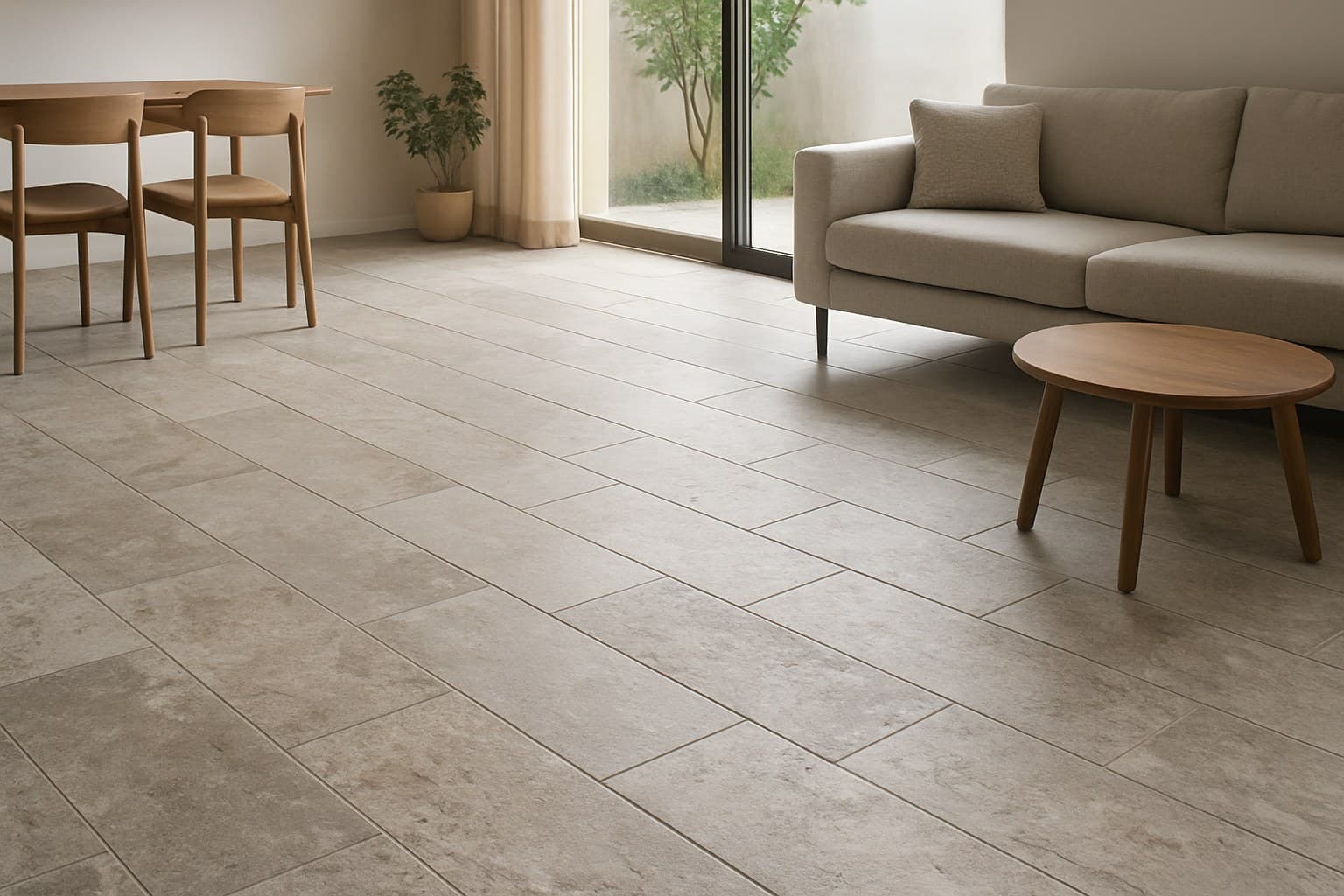
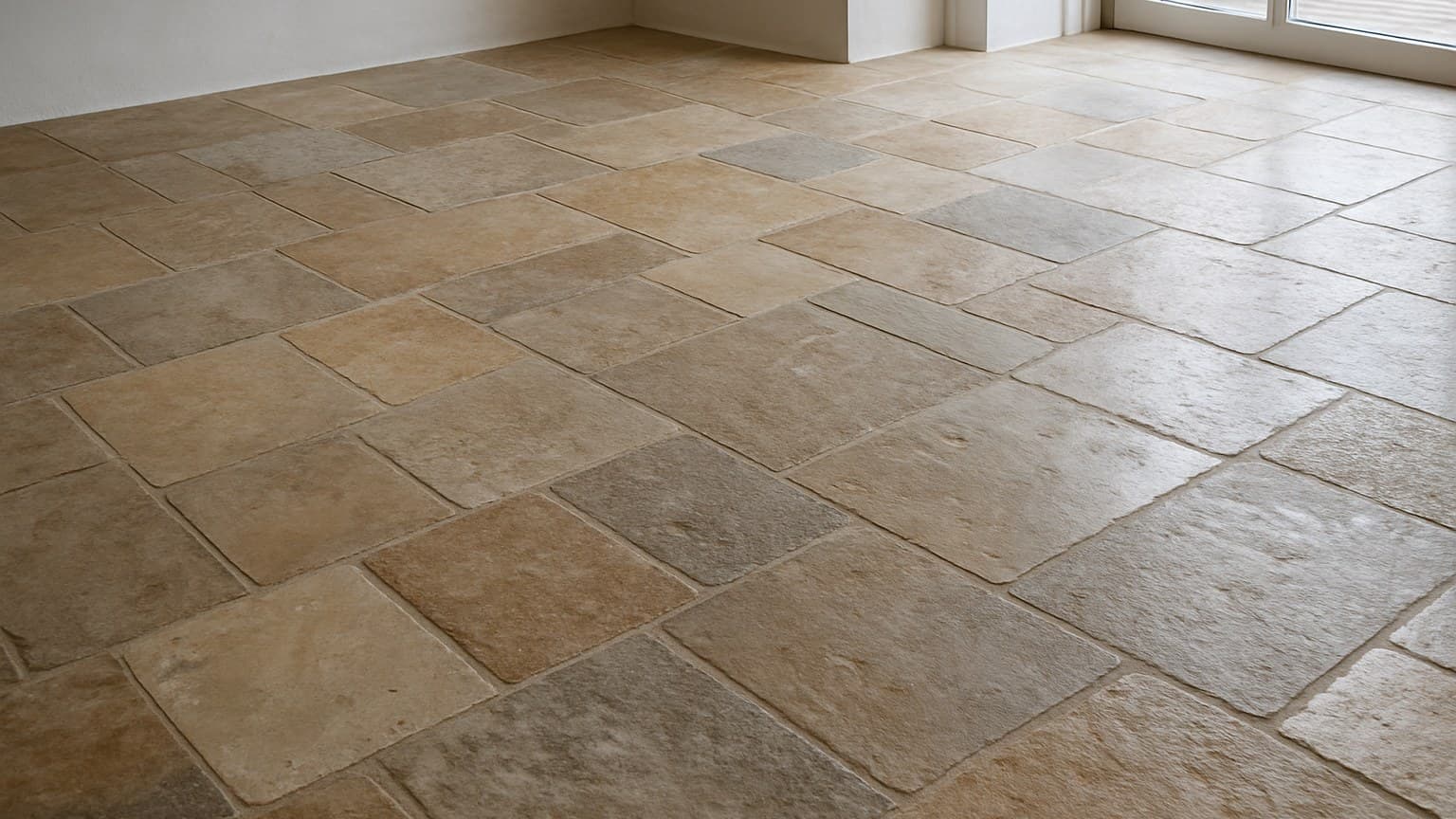
Stone flooring gets sold on how it looks in the showroom, but the bill that actually stings shows up years later in sealing, etching, and slips nobody warned you about. Two slabs that look almost identical can hand you wildly different upkeep, and if you want the bigger picture, this rundown of factors that decide whether your stone floor lasts covers the eight things that matter most before you buy. Here is how the seven common stones really compare once the floor is down and living gets messy.
Key takeaways
- Quartzite and granite hand you the least upkeep: they are dense, resist acid etching, and often need re-sealing only every 2-4 years.
- Marble and limestone are the high-maintenance end: both etch from anything acidic and want re-sealing every 6-12 months.
- Installed stone runs roughly $8-30 per sq ft as material plus labor, and basements, stairs, and cut-heavy rooms cost more than open floors.
- Polished stone is slick when wet; honed, tumbled, or brushed finishes grip far better for bathrooms and pool decks.
- Porcelain and LVP 'stone-look' floors skip sealing entirely, but the real weak spot is the grout or seams, not the surface you see.
How I Rank the Seven Stones by the Burden They Hand You
These seven stones are ranked by real upkeep after install, not by looks. Nobody calls me back because the stone looked bad in the showroom. They call because a coffee ring won't buff out of the entryway tile, or because someone's mother slid off the shower floor reaching for a towel.
Three things decide how much work a stone floor hands you.
Sealing cadence is how often you re-seal, meaning re-apply the liquid that soaks in and blocks stains. Some stones want it every few years, some twice a year.
Etching risk is whether acid dulls the surface. Here is the plain version: calcium-based stones like marble, limestone, and travertine react with anything acidic, so wine, juice, coffee, and most cleaners leave a dull mark where they sat. Silica-based stones like granite, quartzite, sandstone, and slate shrug that off. Etching isn't a stain you can scrub out. It's a chemical burn in the stone itself.
Slip behavior is how the floor acts when it gets wet. Polished, glossy stone turns slick fast. Honed (ground flat to a matte finish), tumbled (softened with grit), and naturally rough surfaces grip far better.
The table below is the fast answer. The deep dives after it explain the why, room by room.
| Stone | Durability | Etch risk | Slip when wet (polished) | Re-seal cadence | Installed cost / sq ft |
|---|---|---|---|---|---|
| Quartzite | Very high | Very low | Moderate | Every 2-3 yrs | $13-30 |
| Granite | Very high | Very low | High (polished) | Every 2-4 yrs | $12-30 |
| Slate | High | Low | Low (textured) | Every 2 yrs | $10-22 |
| Sandstone | Medium | Low | Low-moderate | Every 1 yr | $8-17 |
| Travertine | Medium | High | Low (tumbled) | Every 12-18 mo | $8-20 |
| Limestone | Medium | High | Moderate | Every 6-12 mo | $10-22 |
| Marble | Medium | Very high | High (polished) | Every 6-9 mo | $12-30 |
Installed cost combines material and labor per square foot, based on the stone jobs I've quoted and finished over the past few years, not a single supplier's price sheet.
1. Quartzite: The Lowest-Maintenance Natural Stone
Real quartzite is the densest of these seven, so it resists etching, scratching, and staining better than anything else here and needs the least babysitting. If you want a natural stone floor you can mostly forget about, this is it.
There is one big trap: the name. A lot of slabs sold as "quartzite" are actually soft calcite-based stone, or they are man-made quartz, which is a different product entirely. Before you pay, ask the yard to do a quick acid test or scratch test on a sample. True quartzite will not etch from a drop of vinegar and will scratch glass, not the other way around. If the seller will not test it, walk.
On finish, honed quartzite grips well underfoot. Polished quartzite still gets slick when wet, so keep the polished version out of showers and off pool decks.
I've only had one real callback on this stone, and it turned out the crew had skipped a self-leveling pour under a sunken slab near a patio door. Get the subfloor flat first and this stone will outlast the house.
2. Granite: Dense, Hard, and Nearly Etch-Proof
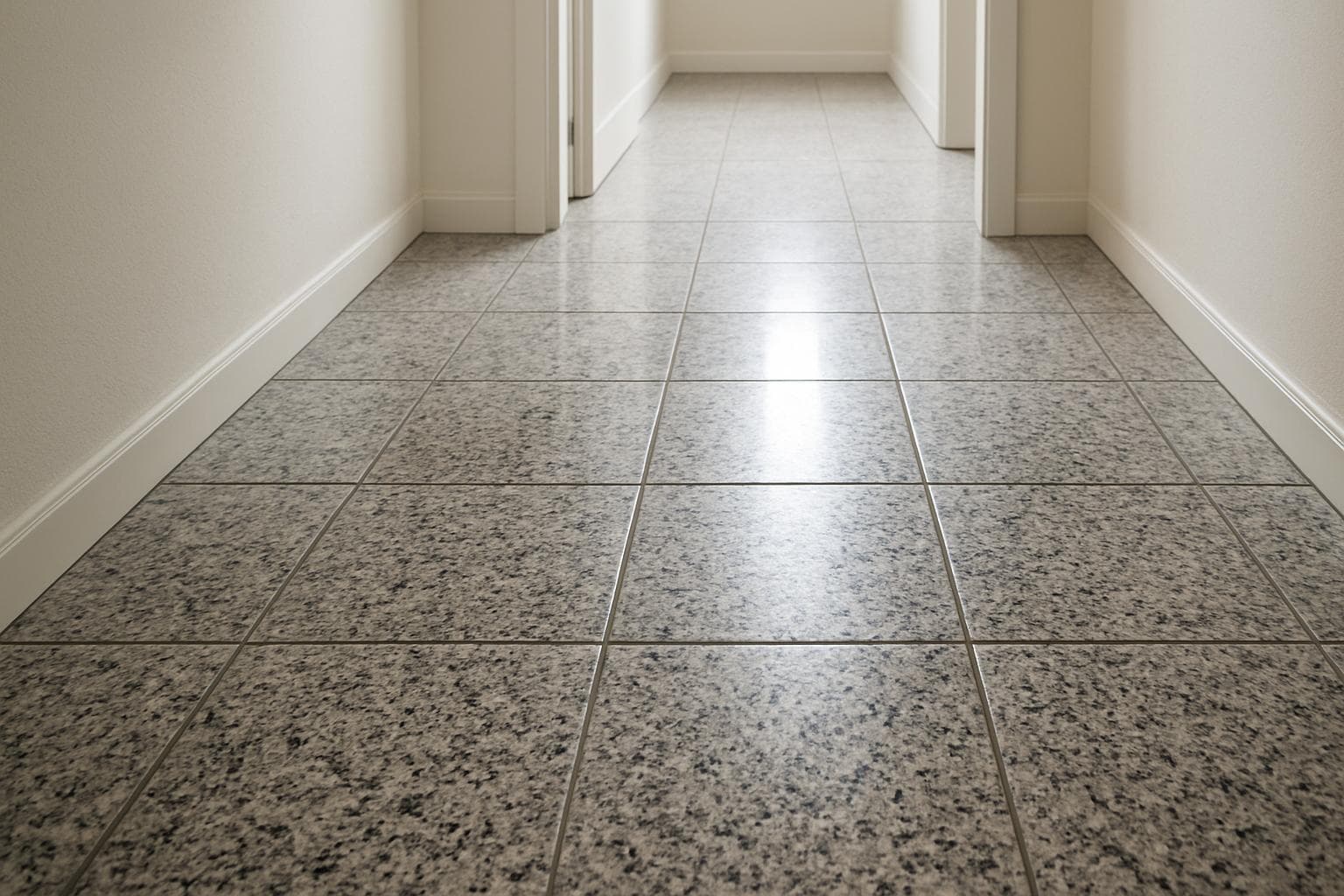
Granite is silica-based, so acids do not etch it, and it takes heavy foot traffic, dog claws, and dropped pans without complaint. For a busy kitchen or a mudroom, it is one of the safest picks on this list.
The honest downside is slip. Polished granite is genuinely slippery when wet, and a big glossy floor shows every water spot and shoe scuff. A honed or flamed (heat-textured) finish fixes both problems at once, giving you grip and hiding smudges. I steer people toward honed granite for floors.
Sealing is light. Because granite is low-porosity, meaning it does not soak up much, you are looking at roughly every 2 to 4 years, and a water-drop test tells you when: if a drop beads up, you are still sealed, if it soaks in and darkens the stone, it is time.
Best rooms are kitchens, entryways, and mudrooms. Just skip the high-gloss polish anywhere the floor gets wet.
3. Slate: Grippy Underfoot, Great for Wet Rooms
Slate's natural cleft surface, meaning it is split along its layers leaving a rough, textured face, makes it a strong grip choice when wet. That is why it earns its keep in bathrooms, mudrooms, and pool surrounds where a slick floor is a real hazard.
The trade-off is that same texture is harder to mop clean, since dirt settles into the ridges. And softer slates can spall, meaning they shed thin flakes off the surface over time. Cheap imported slate is a known culprit here, so buy from a known quarry and ask about the grade.
Plan to seal about every 2 years. If you like a richer, darker look, an enhancing sealer deepens the color while it protects.
One install warning: cleft slate tiles vary in thickness tile to tile, which creates lippage, meaning one tile's edge sits higher than its neighbor's. That is a trip hazard and an ugly floor. It needs an installer who back-butters each tile (spreads mortar on the tile back) and checks the height as they go. This isn't a great first-timer's floor.
4. Sandstone: Warm Look, Thirsty Surface
Sandstone is softer and more porous than granite or quartzite, so it drinks up spills and needs diligent sealing. The upside is it will not etch from acid the way marble does, so the maintenance is about stains, not burns.
It shines in covered patios, garden rooms, and low-traffic indoor spaces where that warm, earthy look pays off. It's not the stone for a high-traffic kitchen.
Watch the climate if any of it goes outdoors. Very porous stone soaks up water, and in a hard freeze-thaw region that trapped water can freeze, expand, and crack the stone. Only use sandstone rated for outdoor use in cold climates, and keep it sealed.
Indoors, seal about once a year. Outdoors or in a wet spot, seal about twice as often.
5. Travertine: Beautiful, but It Etches and Has Holes
Travertine is calcium-based, so acidic spills like wine, citrus, and most all-purpose cleaners will etch and dull it. It also has natural pits and holes, which are either filled at the factory or need filling later as they open back up.
The slip news is good. Tumbled travertine has a soft, matte grip that works well around pools and in bathrooms, which is where a lot of it ends up.
The maintenance is real. Seal every 12 to 18 months, use only a pH-neutral cleaner (not vinegar, not a typical bathroom spray), and expect to re-fill pits every few years as the filler wears out. The travertine callbacks I get are almost always the same photo texted to me: a cloudy ring by the kitchen sink where someone sprayed a lemon-scented all-purpose cleaner straight onto the tile.
6. Limestone: Soft, Porous, and High-Upkeep
Limestone is soft and very porous, so it scratches, stains, and etches easily, and it asks for frequent sealing. It is a gorgeous floor, but it is a commitment, not a set-and-forget one.
Keep it in low-traffic, dry rooms. A busy kitchen with kids and dogs will chew it up fast, and every acidic spill leaves a mark.
Seal every 6 to 12 months and clean with a pH-neutral product only. An acidic cleaner will burn the surface, and once limestone is etched you are looking at re-honing to fix it, which means grinding the top layer off. Go in with eyes open and this stone rewards you, but do not expect it to forgive neglect.
7. Marble: The Showpiece That Hands You the Most Work
Marble is the highest-burden stone here. It etches from almost any acid, it scratches, it stains, and polished marble is slick when wet. There's a reason it looks incredible in magazines and gives installers gray hair in real homes.
Where it makes sense is formal, low-traffic spaces, and a honed (matte) finish rather than polished. Honed marble hides etch marks better and grips your feet more, so it's the smarter choice for a floor even though polished looks flashier at first.
The upkeep is genuine work: re-seal every 6 to 9 months, pH-neutral cleaner only, and blot spills the second they happen. Here's the part to make peace with before you buy: a lived-in marble floor slowly earns a soft, etched patina, a faint cloudy sheen from years of contact. Some people love that aged look. If it will bother you every time you spot a new mark, choose quartzite instead and get most of the beauty with a fraction of the worry.
What Stone Flooring Costs: Material vs. Labor by Type
Installed stone runs roughly $8 to $30 per square foot, and the reason there's no single number is that material and labor are two very different bills. Stone is heavy, brittle, and slow to set, so labor is a big share of the total, often as much as the material or more.
Here is how the material-to-labor split broke down on a 400-square-foot great room I quoted this spring, plus the range I see across similar jobs.
| Stone | Material / sq ft | Labor / sq ft | Installed / sq ft |
|---|---|---|---|
| Sandstone | $3-9 | $5-10 | $8-17 |
| Travertine | $3-11 | $5-11 | $8-20 |
| Slate | $4-11 | $6-12 | $10-22 |
| Limestone | $4-11 | $6-12 | $10-22 |
| Granite | $5-16 | $7-14 | $12-30 |
| Quartzite | $6-16 | $7-14 | $13-30 |
| Marble | $6-16 | $7-14 | $12-30 |
Material and labor ranges reflect actual quotes I've written for stone floors this size, not a single supplier's price list.
A few things move that labor number more than the stone you picked. Cut-heavy rooms cost more than the open middle of a floor. I learned to stop quoting flat rate the hard way, on a job full of closets, doorways, and a bay window that ate an entire extra day of cutting. The open center of a room is never where the hours go.
Basements and stairs cost more too. A basement adds moisture testing and often a subfloor prep step, and a slab that feels dry to your hand can still read wet on a meter (a tool that measures moisture inside the concrete). Stairs are slow, precise, dangerous work with heavy stone, so expect a real premium per step over a flat floor.
And before any of it goes down, the subfloor has to be flat and dry. Stone is rigid and unforgiving, so a hump or a dip that a softer floor would hide will crack tile or telegraph a lippage line straight through your finished floor. That prep is not where you save money.
Stone-Look Alternatives: Porcelain Tile and LVP
If the upkeep on this list is scaring you off, porcelain tile and stone-look LVP (luxury vinyl plank) skip sealing and etching entirely, and they cost less installed than most real stone. For a lot of homeowners, one of these is the smarter buy. Marble-look vinyl alone comes in several distinct formats, and picking the right one often comes down to which room it's going in and how much moisture it'll face, a decision this breakdown of marble vinyl flooring formats by room walks through format by format.
Porcelain tile is fired clay, dense and hard, and a good one mimics marble or slate convincingly. It never needs sealing and does not etch. Its weak spot isn't the tile face, it's the grout, which stains and traps dirt unless you seal the grout and keep it clean. Match the grout color close to the tile and the illusion holds up well. Picking the right look and finish for each space gets easier with this room-by-room walkthrough of choosing stone look porcelain tile.
Stone-look LVP is a printed vinyl plank, and many lines now market a waterproof SPC core (stone plastic composite, a rigid vinyl core), meaning the plank body itself is designed not to swell if water sits on top. That can be a real advantage in a bathroom or basement, though it's worth confirming the specific product's rating before you buy. Either way, read that claim carefully: a waterproof core is not the same as waterproof seams. Water that works into the edges and the subfloor is what causes failures, not the plank surface. Click-lock LVP is also the most DIY-friendly floor here, where real stone almost always calls for a pro. Marble is the pattern that gives fake vinyl away fastest, since sloppy veining or too much sheen reads as plastic from across the room, so this breakdown of choosing marble LVT that looks authentic is worth a look before you settle on a plank.
The honest trade-off is underfoot feel and value. LVP is warmer, softer, and quieter than stone, but it doesn't carry the cool, solid, timeless feel of the real thing, and it won't add the same resale weight. Porcelain splits the difference, hard and cool like stone but without the sealing chores.