
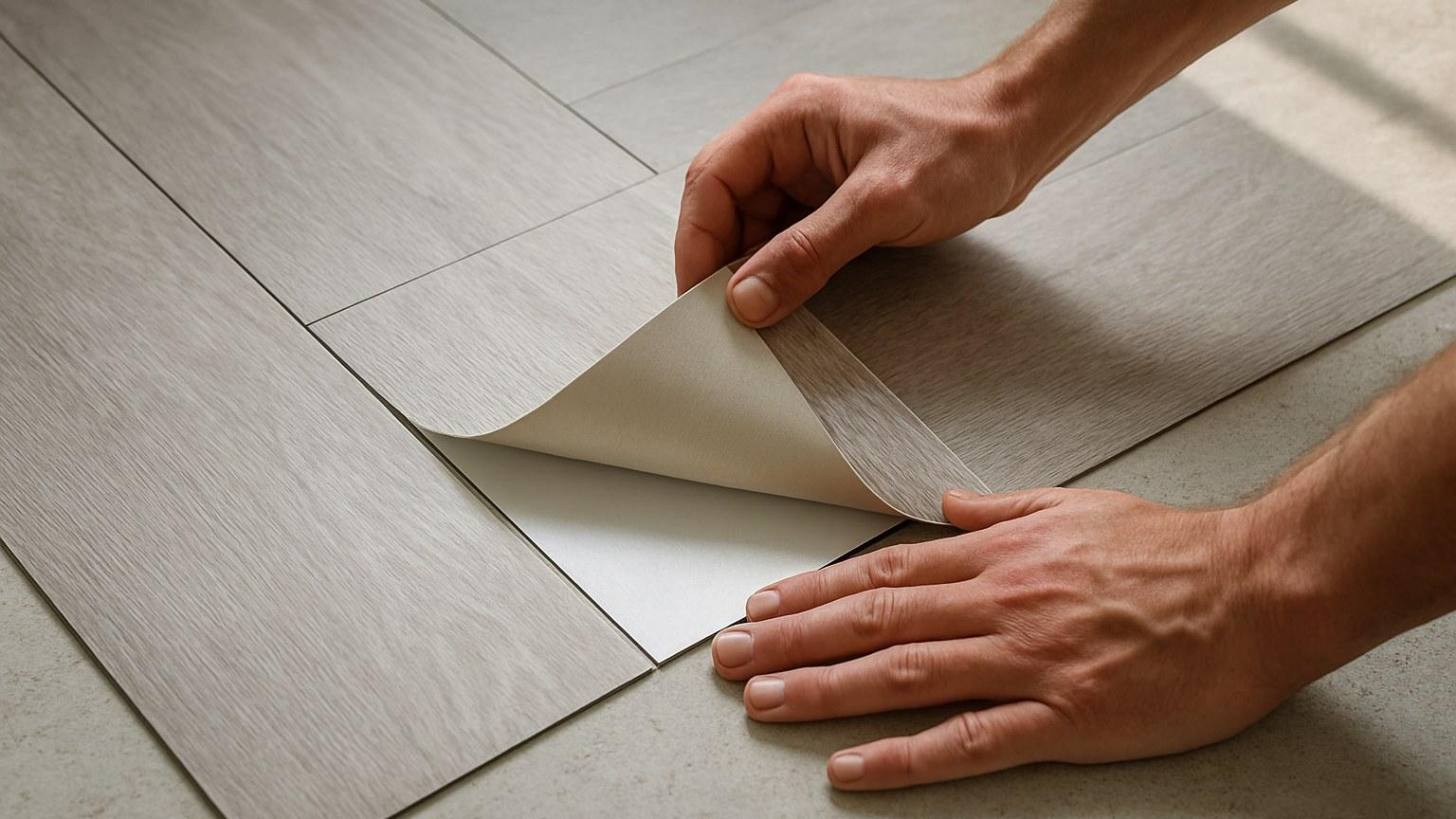
Yes, Lowe's sells peel-and-stick flooring, and most of it is vinyl plank and tile under its Style Selections house brand, not the roll of sheet vinyl a lot of searchers are picturing. It works fine in a dry, low-traffic room, but it fails fast in the three places people most want to use it. The plank itself rarely fails, so folks blame the product when the real problem is the joints between pieces and the floor underneath them.
Key takeaways
- Lowe's sells peel-and-stick as vinyl planks and tiles under its Style Selections house brand, plus decorative tiles; the 'roll' many searchers want is sheet vinyl, a different product.
- Peel-and-stick almost never fails on the plank face. It lifts, curls, and gaps at the seams and over a bad subfloor, where heat, water, and movement break the adhesive bond.
- Skip it in full bathrooms, kitchens, and basements. Standing water at seams, heat near appliances, and concrete moisture are what pull the tiles loose.
- Peel-and-stick vinyl runs about $0.80-$2 per square foot for materials, per engineerhardwoodflooring.com; it is the cheapest DIY floor mostly because you skip paid labor.
- It only bonds to a clean, dry, smooth, flat surface. Textured old vinyl, dusty or damp concrete, and grout lines will telegraph through or reject the glue.
Does Lowe's Carry Peel-and-Stick Flooring? What's on the Shelf
Yes. Lowe's stocks peel-and-stick vinyl in both plank and square-tile form, mostly under its Style Selections house brand, plus a run of decorative patterned tiles for accent areas.
What you'll actually see on the shelf or online breaks down into three looks: wood-look planks, stone- and tile-look squares, and bold printed patterns for a small accent floor. All of it is self-adhesive, the glue is already on the back and you pull a paper liner off before you press it down.
Planks, Tiles, and the Wood-Look Styles
One label trips people up. Peel-and-stick "tile" at Lowe's almost always means a square-shaped piece of vinyl, not real ceramic or porcelain. It cuts with a utility knife and sticks down like the planks do. If you want true ceramic tile set in mortar, that's a different aisle and a different job.
Clearance and discontinued lots are the cheapest way in. Just check the box codes before you buy. Vinyl from two different production runs can print slightly different in color or pattern, and once it's down on the floor that mismatch shows. Other big-box retailers run the same house-brand strategy with laminate, like Sam's Club's version, and the Select Surfaces laminate verdict is worth a look if you're weighing store brands generally.
The 'Roll' You're Picturing Is Sheet Vinyl
A lot of people search for peel-and-stick and really want a single wide roll that covers the whole room. That product is sheet vinyl, and it's sold and installed differently. The plank-and-tile peel-and-stick and the roll aren't the same thing, they don't go down the same way or cost the same.
Where It Holds Up, and Where It Lifts
The plank face isn't what fails on peel-and-stick. It's the joints where pieces meet and the surface underneath, the same weak point that takes down click-lock floors.
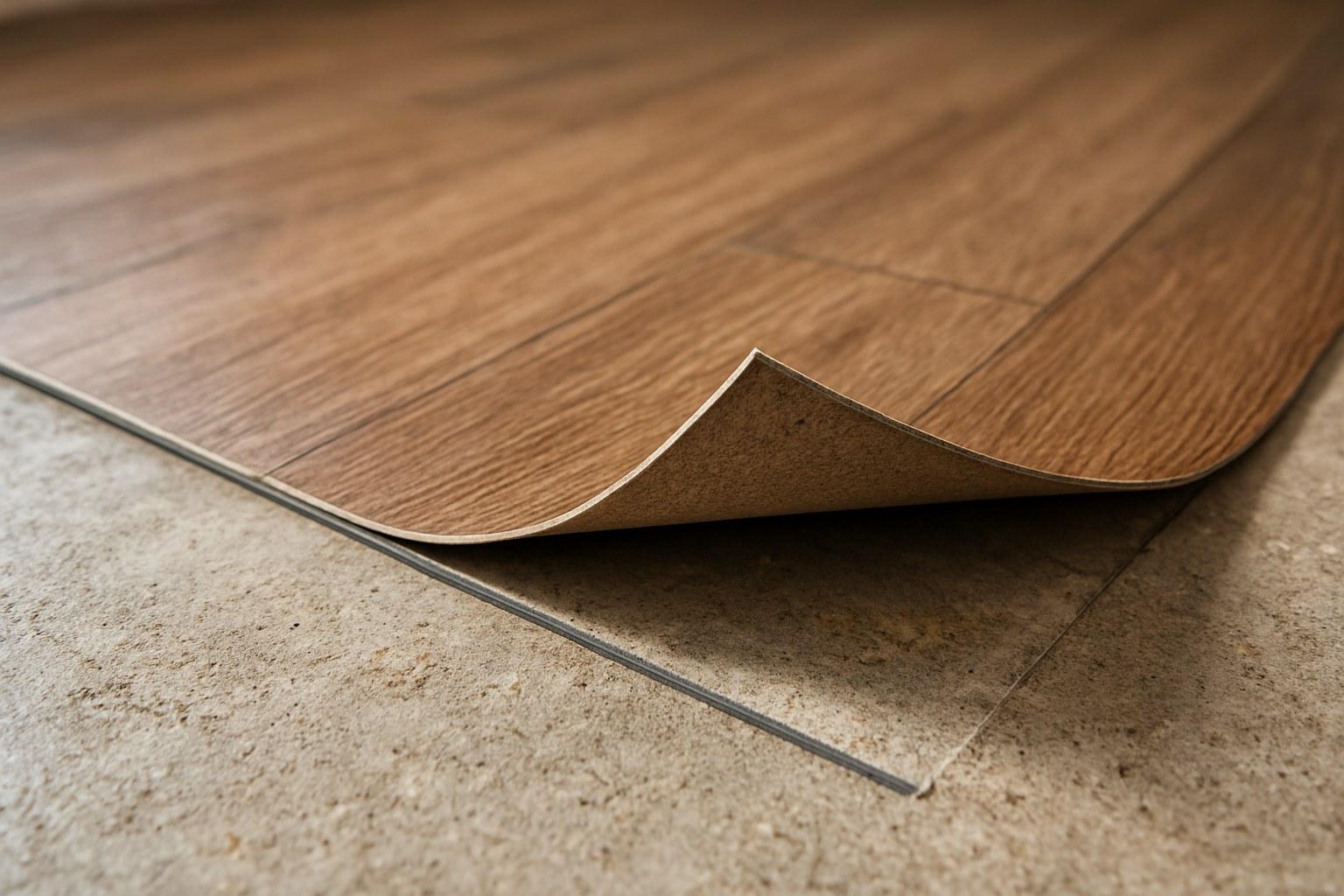
The failure follows a simple chain. The adhesive on the back needs a firm, steady grip. Heat softens it, trapped moisture breaks it, and any movement in the floor works the edges. So the first thing you see is a corner curling up or a seam opening into a thin gap. Once a seam lifts, dirt gets under it and the whole tile starts to shift.
That mirrors the bigger picture across floating floors. LVP (luxury vinyl plank) and laminate both fail at the seams, not the surface, too, it isn't a peel-and-stick quirk, it's physics.
Where does it genuinely hold up? Dry, low-traffic rooms with a steady temperature. A bedroom, a bedroom closet, a home-office corner, or a dry entry landing that stays out of the weather. Lay it on a flat, clean, bonded surface in one of those spots and it can look good for years. Laminate faces a similar room-by-room calculus, and it's worth checking which rooms laminate flooring actually works in before ruling it out for a given space.
The Three Rooms I'd Never Put It In
Full bathrooms, kitchens, and basements. I'd keep peel-and-stick out of all three, each for its own reason, and every reason traces back to the joints between tiles and what's underneath them.
Full Bathrooms: Shower Water Finds Every Seam
A shower or tub throws water sideways and lets it sit. Water doesn't have to soak through the vinyl to cause trouble. It wicks into the tiny seam line, reaches the adhesive, and lifts the edge. A powder room with just a sink is a maybe if you wipe spills fast. A full bath is a no.
Kitchens: Heat and Spills Work the Glue Loose
Kitchens hit the glue from two sides. The warm zone in front of a dishwasher or oven softens the adhesive, and spills that sit at a seam creep under. Add the foot traffic a kitchen gets and the edges give up first. I've pulled lifted kitchen tiles that looked perfect across the face and had failed completely at every joint.
Basements: Concrete Moisture Pushes It Up
Concrete slabs push moisture up from the ground, year-round, even when the surface feels dry. That vapor reaches the adhesive from below and breaks the bond, and basement temperature swings make it worse. Peel-and-stick has no good answer for slab moisture, so it lifts.
A fast room-by-room read:
Room-by-room call on where peel-and-stick vinyl stays stuck and where it lifts.
What 'Waterproof' Peel-and-Stick Really Covers
A "waterproof" peel-and-stick tile means the vinyl body itself won't soak up water. It does not mean the glued seam between tiles is sealed. That gap is the weak line, and that's where water in a wet room goes.
Think of it this way: the plank can sit in a puddle all day and not swell, but the water doesn't need to go through the plank. It runs along the surface, finds the seam, slips down to the adhesive, and lifts the edge from below. The waterproof label is describing the piece of vinyl, not the joint.
So treat any "waterproof" peel-and-stick as spill-tolerant if you wipe it up fast, not as something you can flood or set in a shower splash zone. A quick-wiped splash near a sink is one thing. Standing water and a shower are another.
And read the one product's own wording, not the big word on the display. One maker's "waterproof" claim and its warranty conditions can be very different from another's, so the spec sheet for that exact tile is what counts.
Subfloor and Moisture Check Before You Stick It Down
Peel-and-stick only bonds to a surface that is clean, dry, smooth, and flat. Skip that step and the floor fails no matter how good the product is. On a floating or glued floor, the finished job only lasts as long as the prep under it, and the manufacturer's warranty quietly leans on that same prep.
The glue simply won't hold to certain surfaces: dusty or painted concrete, old vinyl with a texture or embossed pattern, anything loose or flaking, and grout lines that push up through the thin tile. Any high spot or dip telegraphs through and puts stress right on the seams.
A reader named Ted up near Huber Heights learned this the slow way. He stuck a box of planks straight over an old textured sheet floor in a spare room, no prep. The texture printed through within weeks, and the seams started walking apart by the time the heat came on that fall. The planks were fine. The surface under them was the problem.
Run this check before you pull a single backing sheet:
- Sweep and damp-mop, then let it fully dry, because dust kills the bond
- Check flatness with a straightedge, then fill the dips and grind down high spots
- Test the concrete for moisture before you cover it
- Scuff or skim-coat glossy or textured surfaces so the glue can grip
- Fill or level grout lines and seams so they don't telegraph through
- Confirm the existing floor is bonded tight, not cushioned or loose
Prep steps that decide whether peel-and-stick vinyl stays bonded.
Smooth sheet vinyl or sealed plywood can be a fine base. Cushioned, textured, or damp surfaces are not, and no amount of pressing down fixes a surface the glue was never going to hold.
What It Costs vs. Click-Lock LVP and Laminate
Peel-and-stick is the cheapest floor you can buy, mostly because you do the labor yourself. On the materials alone, peel-and-stick vinyl plank runs about $0.80 to $2 per square foot, per engineerhardwoodflooring.com. Peel-and-stick tile runs more, $1 to $5, per pebbletileshop.com. Entry-level click-lock LVP is $1.50 to $3, per nedesestimating.com, and laminate is $1 to $4, per thisoldhouse.com. If laminate is in the running, it helps to know the three kinds of laminate flooring stores and what each one is actually best for.
| Flooring (materials only) | Cost per sq ft |
|---|---|
| Peel-and-stick vinyl plank | $0.80-$2 |
| Peel-and-stick vinyl tile | $1-$5 |
| Click-lock LVP (entry) | $1.50-$3 |
| Laminate | $1-$4 |
Now the labor side, because that's where peel-and-stick earns its spot. Hiring a pro to install flooring still runs $1.50 to $8 per square foot, per goflooring.com, and click-lock LVP labor alone is $1.50 to $4 per square foot, per nedesestimating.com. Peel-and-stick skips all of that if you do it yourself.
So the DIY-vs-hire call is simple. Peel-and-stick is genuinely DIY-friendly in a small, dry room, and that's its real edge over click-lock. The tradeoff is a shorter life and the seam failures above. In a bedroom closet, that's a smart cheap floor. In a kitchen, you'll pay twice.
If you're chasing the lowest cost per foot, laminate can be the better long-run value, and it's worth seeing what a pallet of laminate really costs per square foot before you decide. For a big-box read, Costco's laminate pricing, carton sticker versus the full installed project, shows how fast the installed number climbs once labor is in.