
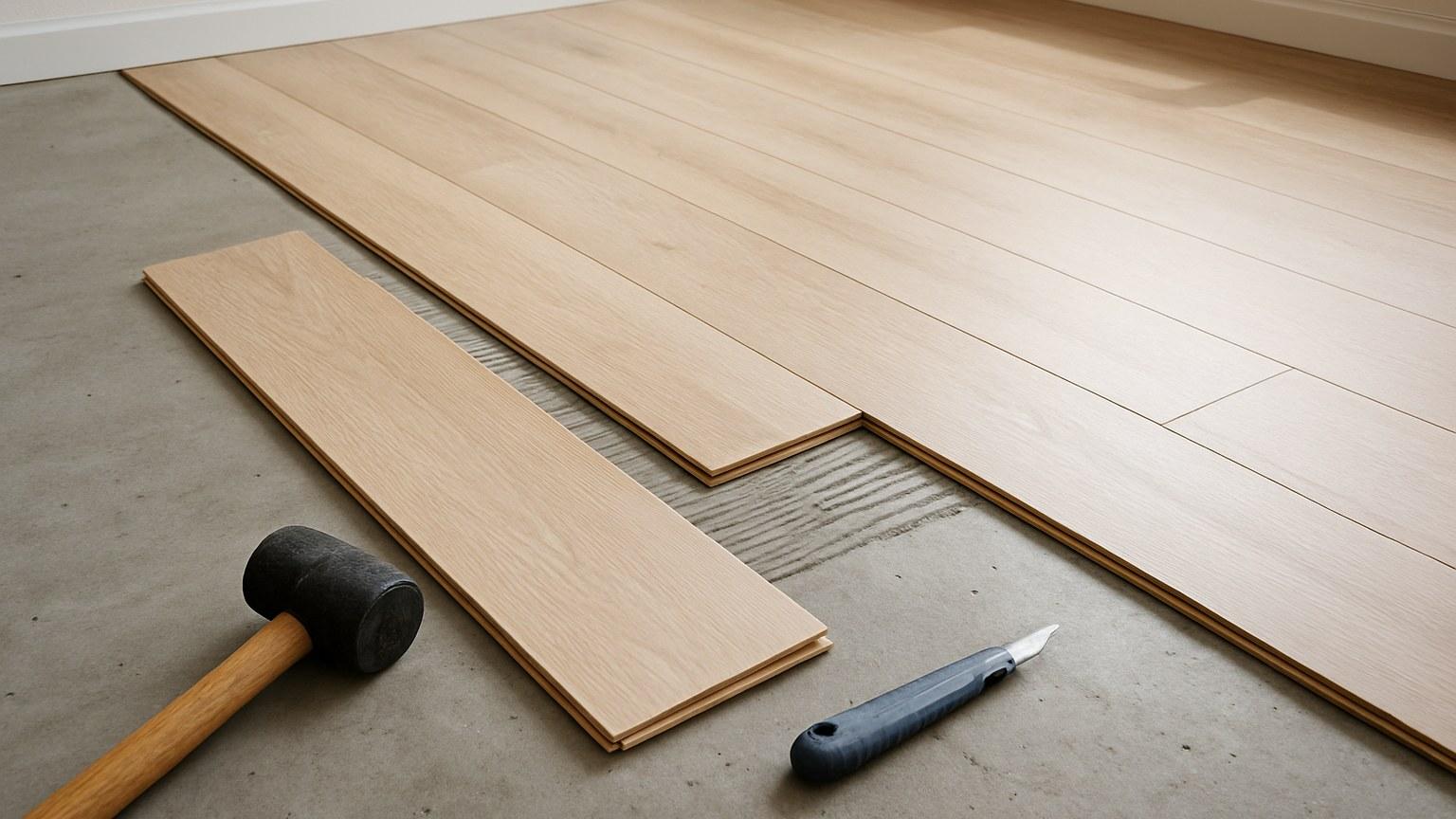
Select Surfaces laminate flooring is Sam's Club's house-brand floor, and it's a solid budget pick for dry, low-traffic rooms, held back by its seams and edges rather than its surface. The confusing part is the lineup of color names and the "Spill Defense" label, which sounds waterproof but only shields the plank's top surface, the seams underneath still let water in. Get the prep and the water rules right and it holds up; skip them and the seams gap before the year is out.
Key takeaways
- Select Surfaces is Sam's Club's house-brand laminate, built on the SelectLOC click-lock system, so most of it floats together without glue.
- Materials run roughly $1.40-$2.60 per square foot by line (per hip2save.com, dgfloors.com and flooringclarity.com); pro install adds about $2-$5 per square foot (manasotaonline.com).
- The Spill Defense lines are water-resistant at the surface, not a waterproof core; nearly every laminate failure I pull up started at the seams and edges, not the plank face.
- Because it's a warehouse house brand, matching replacement planks can vanish when a line is dropped, so buy an extra box or two up front.
- Click-lock makes open rooms a realistic DIY job; stairs and big open-plan floors with moisture transitions are where hiring a pro pays off.
What Select Surfaces Laminate Flooring Is (and Who Makes It)
Select Surfaces is a house brand sold through Sam's Club. You won't find it at a dedicated flooring store under that name, because it's made to sell in the warehouse, not through a retail flooring chain. If you want to see how dedicated flooring stores, warehouse clubs, and big-box retailers actually differ, the guide to laminate flooring stores breaks down what each is best for.
Most of it runs on a click-lock system the brand calls SelectLOC. Planks snap together edge to edge and "float" over your subfloor, with no glue and no nails. The whole floor holds together as one piece and moves as a unit. If you'd rather skip locking planks altogether, retailers like Lowe's also sell adhesive-backed options, such as Lowe's peel-and-stick flooring.
You buy it two ways: boxes off the warehouse floor and online through Sam's Club. Loose planks and odd boxes also turn up on resale marketplaces when someone has leftovers. Warehouse house-brand stock comes and goes. A color you see today can be gone in a few months. Costco runs a similar warehouse-club model with its own laminate lineup, and the Costco laminate flooring cost breakdown covers how that sticker price compares once installation gets added in.
It's contract-manufactured for the warehouse, which is normal for a house brand. The box and spec sheet govern the install and any claim printed on them, so I'll stick to what's documented and won't guess at a specific factory.
Is Select Surfaces Laminate Flooring Any Good?
For the money, yes. It's decent budget laminate for bedrooms, living rooms, and hallways. What holds it back is the seams and edges, not the printed surface on top. For a broader look at which rooms laminate suits and which ones it doesn't, see the guide to where laminate flooring actually works.
Here's what you're actually buying, top to bottom. A clear aluminum oxide wear layer takes the scratches and scuffs. Under that sits the decor paper, which is a printed photo of wood that gives the plank its look. The body is a high-density fiberboard (HDF) core, dense wood fiber pressed into a board, and that's the part that locks together and the part that swells if water sits in it. A backing layer underneath keeps the plank flat and blocks some moisture from below.
You'll also see an AC rating on some laminate. In plain terms, that's a scale for how hard a floor shrugs off scratches and foot traffic, with higher numbers made for busier rooms. Tie any AC number only to the exact Select Surfaces line it's printed on, not to the brand as a whole, because lines differ. Armstrong's laminate flooring lines carry that same kind of line-by-line AC variation, so it's worth checking rating by rating there too.
Warranty coverage isn't one blanket term across every line, either. Like the AC rating, what's actually covered, fading, staining, surface wear, or structural issues like the core swelling, differs line to line. Check the warranty card that ships with your specific box before you assume any one of those is covered, because the fine print on a Barnwood box can read differently than the fine print on the Waterproof core line.
Now the part people miss: a tough wear layer does nothing for a seam. I've pulled up good-looking laminate where the surface was spotless and the edges were swollen like a sponge, because water got into the joints and sat there. The core and the seams decide whether this floor lasts, and the surface is almost never the thing that fails.
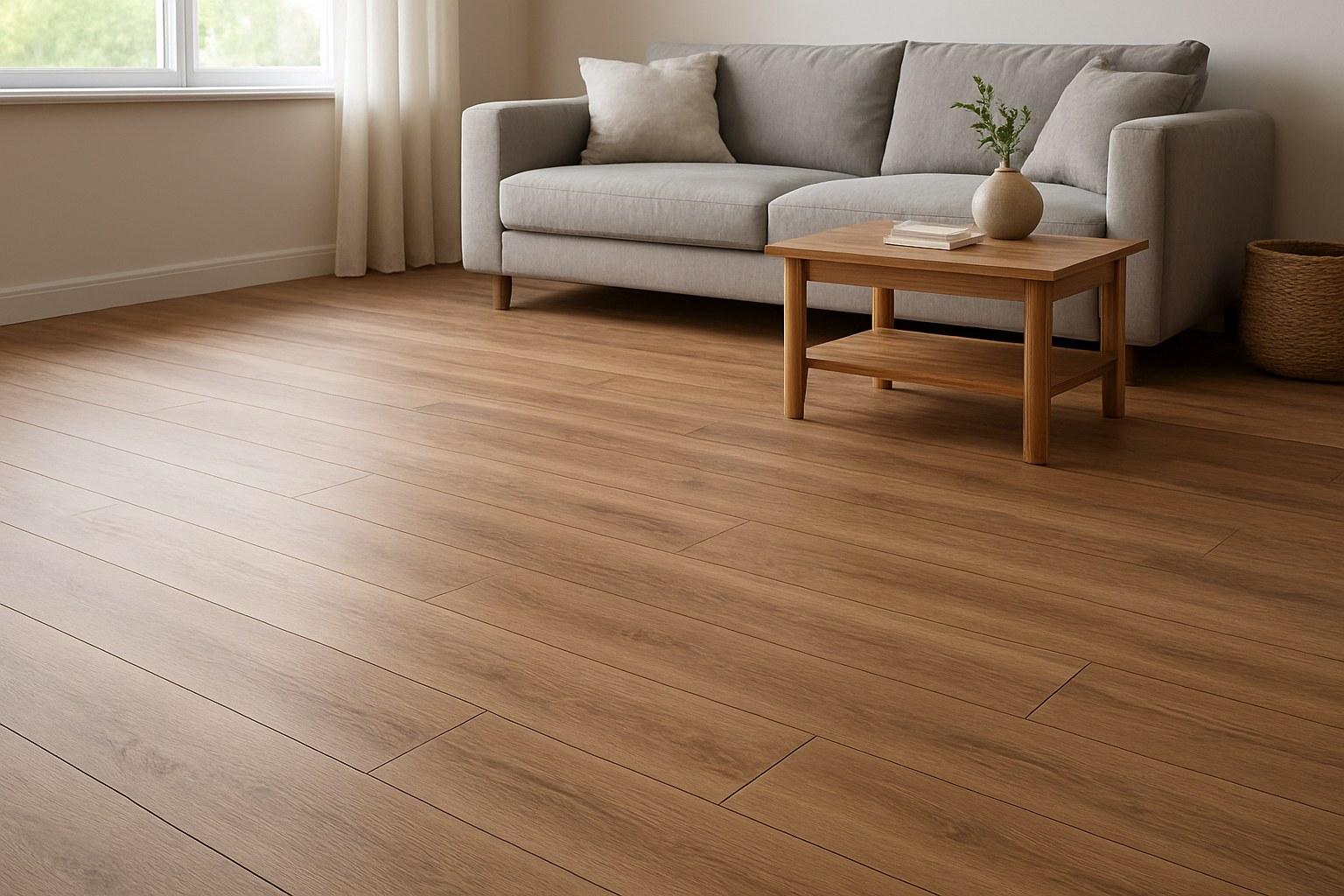
The Lines Buyers Search: Barnwood, Silver Spring, Heritage Oak and More
The lines aren't one product with different stickers. Color and texture change where a floor hides wear and where it shows every speck, so pick for your room and traffic.
Barnwood
Warm, rustic plank with knots and color shifts, in a textured finish. The heavy graining hides dust and everyday scuffs in a busy hallway or living room. The flip side is that deep gouges stand out against all that character.
Silver Spring and Silver Oak
Cool light-gray oak with a light texture. It looks clean in a bedroom or a low-traffic room, but gray shows dust and fine scratches fast. In a house with kids and a dog, you'll be sweeping it more often than a mid-brown.
Heritage Oak and Southern Gray
Heritage Oak is a mid-brown traditional oak with a woodgrain texture, and it's a forgiving color for open living areas. Southern Gray is a muted greige, good for a modern look in lower-traffic rooms. With either, match your dye lots across boxes before you start, or you'll see the shift where one box ends and the next begins.
Pearl Gray and the Premium Spill Defense Lines
Pearl Gray is a light cool gray with the Spill Defense surface treatment. If you want deeper, more realistic texture, the Woodgrain Textured and Handscraped lines give you heavier embossing for a little more per square foot, and what the extra dollar buys is a surface that feels closer to real sawn wood under your feet.
Read the Spill Defense label for what it is: a water-resistant top, not a waterproof core. It buys you time to wipe a spill. It does not let you wet-mop or let water sit in the seams.
| Line | Look | Finish | Best fit | Watch out |
|---|---|---|---|---|
| Barnwood | Warm rustic plank with knots and color variation | Textured/embossed | Living rooms, hallways where scuffs blend in | Heavy graining hides dust but shows deep gouges |
| Silver Spring / Silver Oak | Cool light-gray oak | Lightly textured | Bedrooms, low-traffic rooms | Gray tones show dust and fine scratches fast |
| Heritage Oak | Mid-brown traditional oak | Woodgrain texture | Open living areas, a forgiving color | Match dye lots across boxes |
| Southern Gray | Muted greige oak | Lightly textured | Modern rooms, lower traffic | Like all grays, dust is obvious |
| Pearl Gray Spill Defense | Light cool gray | Water-resistant Spill Defense surface | Kitchens/baths only if seams stay dry | Surface treatment is not a waterproof core |
Select Surfaces lines compared by look, finish, and the room each one suits.
What Select Surfaces Costs, and How It Compares to Pergo
According to hip2save.com and dgfloors.com, materials for Select Surfaces run roughly $1.40 to $2.50 per square foot depending on the line, before anyone lays a plank. Keep the material price and the labor price apart in your head, blending them into one number is how people get surprised at the end of a job.
Price Per Square Foot by Line
The cheaper lines sit around $1.40 to $1.75 per square foot with the warehouse's instant savings. Select Surfaces' Waterproof core line, its newer line built around a waterproof core instead of standard HDF, runs $2.00 to $2.50 per square foot.
| Line | Materials per sq ft | Note |
|---|---|---|
| Pearl Gray Spill Defense | $1.40 | Lowest with instant savings |
| Standard 12mm plank | $1.40-$1.80 | Entry woodgrain |
| Barnwood Spill Defense | $1.64 | With instant savings |
| Silver Spring Spill Defense | $1.64 | With instant savings |
| Rustic Gray Spill Defense | $1.75 | With instant savings |
| Waterproof core line | $2.00-$2.50 | Newer premium line |
Materials only, per square foot, by Select Surfaces line (figures per hip2save.com and dgfloors.com).
Labor, DIY vs Hiring, and Where to Buy
Professional install adds about $2 to $5 per square foot, per manasotaonline.com, on top of the material price above. So a mid-brown line at $1.64 materials plus that labor range lands you somewhere around $3.64 to $6.64 a square foot installed, before anything out of the ordinary.
Basements and stairs cost more than an open room. A basement needs moisture checks and often a moisture barrier, and stairs are slow, fussy cuts that eat labor hours.
On DIY versus hiring, be honest with yourself. Click-lock in a plain rectangular room is a realistic weekend job for most handy homeowners. Stairs, and big open-plan floors where you cross from a dry living room into a kitchen or bath, are where I'd tell you to pay a pro, because the transitions and the moisture detail are where a floating floor goes wrong.
You buy Select Surfaces through Sam's Club itself, in-warehouse or online. If you spot loose boxes on a resale site, check the line name and lot number before you pay, since a house brand that's been discontinued may never be matched again.
Two costs the estimate above leaves out: tearing out what's on the floor now, and ordering enough material to actually finish the job. Pulling up old carpet, vinyl, or tile and hauling it off adds its own line item on top of the laminate numbers, what you pay depends on what's coming up and whether your trash service or a rented dumpster handles the haul-off.
On top of that, don't order to the exact square footage of the room. Build in extra for cuts, waste, and mistakes, plus a little more to keep on hand for a future repair. How much extra depends on how many corners, closets, and doorways you're cutting around, so look at the room's layout, not just its square footage, before you place the order.
Select Surfaces vs Pergo and Other Big-Box Laminate
Against Pergo, you're trading a bit of water tolerance and a slightly more convincing wood look for a lower warehouse price. Pergo's water-resistant lines carry their own tested claims on the specific product, while Select Surfaces relies on its Spill Defense surface treatment, which protects the plank's face but doesn't change what happens at the seams if water sits there. Pergo Outlast laminate line is the one most often named in that comparison, built specifically around scratch and spill resistance.
Mohawk's laminate sits in the same conversation. If you're weighing the tiers, the RevWood tier-by-tier comparison lays out where Mohawk's water tolerance actually changes line to line, and the rundown of whether Mohawk laminate is worth buying covers how those lines look and hold up. The warehouse price saves you real money on materials, but it doesn't buy you a waterproof core, so spend accordingly for a wet room.
The Three Things That Decide If It Lasts
Three things, and the sticker price isn't one of them. How long your floor lasts depends on the prep underneath it and your water discipline.
Seam gapping is almost always prep, not the plank. Floating floors move with the seasons, and if you skip the box's own acclimation step or forget the expansion gap around the edges, the planks fight each other and the seams pull apart. Every box sets its own rule for acclimation and for how big that gap needs to be, so read that sheet and follow it instead of guessing. Before any of that, check the subfloor is flat and dry, because a high spot or a damp slab will telegraph through and open joints no matter how carefully you snap the planks.
I had a job in a Dayton split-level where the homeowner wanted to lay the floor the same afternoon the boxes came off the truck. We held off and let them sit as the sheet asked, and that floor stayed tight through the first winter. The one down the street that got rushed had gaps you could catch a fingernail in by February.
Edge moisture is the killer. The Spill Defense surface shrugs off a spill you wipe up quick. The HDF core does not: once water reaches the joints and sits, the fiberboard swells and the edges lift, and no surface coating stops that. Wipe spills fast, and never wet-mop a laminate floor.
Replacement planks disappear. This is a warehouse house brand, so a line can be dropped and leave you with no matching stock for a future repair. Buy an extra box or two up front, label them, and stash them in a closet. A spare box now is cheaper than a mismatched patch or a whole re-floor later. If budget is why you landed on a house brand in the first place, it's worth seeing what a pallet runs before you commit, which the breakdown in what wholesale laminate really costs per square foot spells out line by line.