
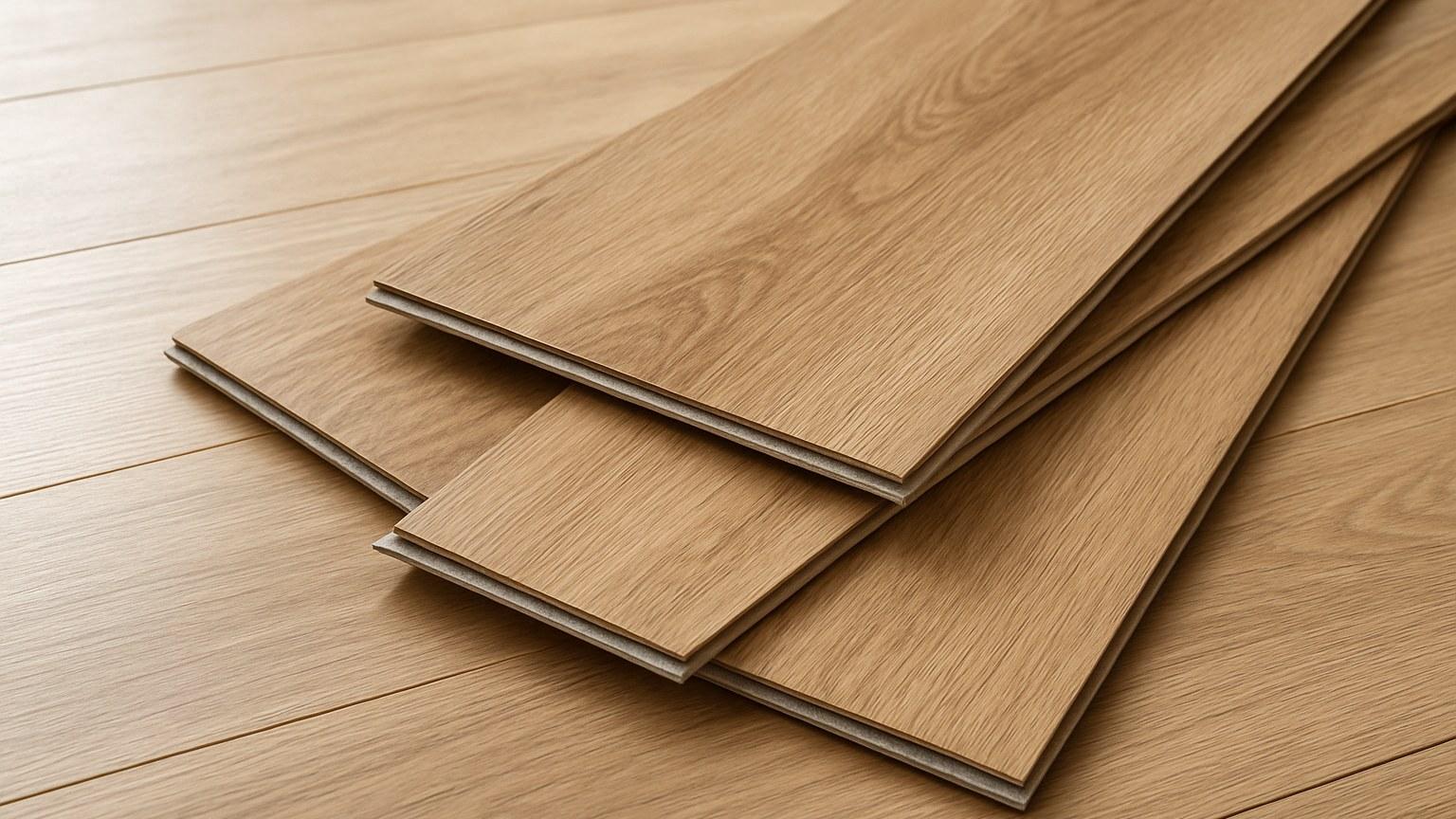
RevWood is Mohawk's wood-look laminate, sold in three tiers: base RevWood for dry rooms, RevWood Plus for kitchens and mudrooms, and RevWood Select for a tight budget. None of them is fully waterproof. The confusion starts because Mohawk markets RevWood like vinyl, even though it's built on a wood-fiber core that behaves nothing like plastic.
Key takeaways
- RevWood is Mohawk's wood-look laminate, not vinyl and not real wood: a high-density fiberboard core under a printed, embossed picture of wood.
- Three tiers: base RevWood for dry rooms, RevWood Plus with HydroSeal and All Pet Plus for kitchens and mudrooms, RevWood Select as the budget line.
- No RevWood line is fully waterproof. The core is wood fiber, so it swells if water sits in the seams, even on water-resistant Plus and Select.
- Materials run about $1.99-$4.99 per sq ft for RevWood (floorcity.com), $2.50-$4 for RevWood Plus (todayshomeowner.com), and $2.25-$3 for RevWood Select (remodelingcalculator.org).
- Professional install labor runs about $2-$5 per sq ft (manasotaonline.com); the click-lock system is DIY-friendly in open rooms, but stairs are worth hiring out.
Is RevWood Real Wood, Vinyl, or Laminate?
RevWood is laminate. It is not vinyl, and it is not solid or engineered hardwood, the National Wood Flooring Association (NWFA) defines real wood flooring as solid or engineered wood products, a category that laminate's printed, wood-look surface doesn't fall into. Under the surface sits a high-density fiberboard core, pressed wood fiber, topped with a printed and embossed layer made to look like real planks.
If you've been searching "revwood mohawk" and wondering how it relates to Mohawk laminate, they're the same thing. RevWood is the brand name Mohawk put on its laminate line. When someone says Mohawk laminate, they mean RevWood.
How is it different from real wood? There's no wood veneer on top to sand, so you can't refinish RevWood the way you can refinish hardwood. That's the trade you make for a lower price up front.
People mix it up with luxury vinyl plank (LVP) because Mohawk sells it as water-resistant and it copies the LVP look. But a wood-fiber core and a plastic core are two different animals around water. The plastic core doesn't care if water sits on it. The wood-fiber core does. Learning what the letters in LVP actually stand for and how to spot a plank that'll fail makes that plastic-core difference easier to catch before you buy.
RevWood vs RevWood Plus vs RevWood Select: Tier-by-Tier
The table below breaks down the three Mohawk RevWood laminate tiers by core, edge seal, water claim, best room, pet fit, and material price per square foot, with the per-tier prices credited to floorcity.com, todayshomeowner.com, and remodelingcalculator.org.
| Tier | Core | Edge seal | Water claim | Best room | Pet fit | Price/sq ft (materials) |
|---|---|---|---|---|---|---|
| RevWood | HDF (wood-fiber) | Standard edges, no water treatment | Not water-resistant | Dry living rooms, bedrooms | Basic; wipe accidents fast | $1.99-$4.99 (floorcity.com) |
| RevWood Plus | HDF (wood-fiber) | HydroSeal surface and edge treatment | Water-resistant, not waterproof | Kitchens, mudrooms, baths with quick cleanup | All Pet Plus warranty coverage | $2.50-$4 (todayshomeowner.com) |
| RevWood Select | HDF (wood-fiber) | Water-resistant build, budget spec | Water-resistant, not waterproof | Everyday rooms on a budget | OK; wipe spills promptly | $2.25-$3 (remodelingcalculator.org) |
Material-only prices per square foot for each RevWood tier, before labor and underlayment.
Base RevWood is standard laminate. No special edge seal, no water-resistance claim. It belongs in dry living rooms and bedrooms where spills get wiped up and nobody tracks in slush. That same room-by-room logic is what we walk through in our guide covering which rooms laminate flooring works in, including kitchens, bathrooms, and basements.
RevWood Plus adds Mohawk's HydroSeal treatment on the surface and edges, plus the All Pet Plus warranty. That's the line for kitchens and mudrooms, where splashes happen but you're on top of them.
RevWood Select is the budget line. It's water-resistant, but built to hit a lower price. What you trade off is usually the thickness, the range of looks, and some of the warranty backing. It's a fine everyday floor for a tight budget, as long as you know you're not getting the top spec.
A note on naming: some older listings and third-party retailers reference a "RevWood Premier" line. Mohawk's current RevWood catalog, as reflected in the pricing and specs above, lists three tiers, RevWood, RevWood Plus, and RevWood Select. If you spot "Premier" on a box or a retailer site, treat it as a discontinued or regional name rather than a fourth tier, and confirm the actual spec sheet before you buy, since naming on laminate lines shifts over time.
Is RevWood Waterproof? What HydroSeal and All Pet Plus Actually Cover
No RevWood line is fully waterproof. RevWood Plus and Select are water-resistant through Mohawk's HydroSeal treatment, but the core underneath is still wood fiber, and wood fiber swells when water gets into it.
This is the part the marketing blurs, so keep two things separate in your head. HydroSeal helps a spill sit on the plank face long enough for you to wipe it. That's a surface claim. It does not seal the seam between planks.
Where laminate actually fails is at the seams and edges. If water runs into a click-lock joint and sits there, it reaches the HDF (high-density fiberboard) core edge, and that's when you get swelling and lifted joints. A waterproof top coat doesn't help once water is already down in the seam.
All Pet Plus is Mohawk's warranty covering pet accidents on qualifying RevWood lines. Read it as a coverage promise tied to that specific product, not proof the plank shrugs off every puddle. A warranty pays out under its own conditions; it doesn't change what wood fiber does when it gets wet.
So if the room gets real standing water, a basement that can flood or a full bath where the tub overflows, don't force RevWood into it. That's a job for a plastic-core floor, a different material entirely. If you're comparing those, our AquaGuard flooring breakdown walks through how a water-resistant laminate holds up against wetter rooms.
How RevWood Is Built: HDF Core, Wear Layer, and Uniclic Locking
Top to bottom, a RevWood plank has four layers. A clear aluminum-oxide wear layer on top for scratch resistance. A printed, embossed decorative layer that makes it look like wood grain. The HDF core in the middle. And a backing layer on the bottom that keeps the plank from cupping.
The AC rating tells you how well the surface resists wear. It's an abrasion score: AC3 suits a normal home, AC4 handles busier floors and light commercial traffic. Which number a given RevWood floor carries is printed on that product's spec sheet, so check the box rather than assuming a rating for the whole line.
Uniclic is Mohawk's glueless click-lock system. The planks angle in and tap together to make a floating floor, so it isn't nailed or glued to the subfloor. That's what makes RevWood realistic to install yourself in an open room.
If you're coming from hardwood, there's one catch worth knowing: the wear layer is a thin top coat, not a layer of real wood, so you can't sand and refinish RevWood. When the surface wears out, you replace planks instead of resurfacing them.
What RevWood Costs, and Whether to DIY It
RevWood material runs about $1.99-$4.99 per square foot (floorcity.com). Professional install labor adds roughly $2-$5 per square foot (manasotaonline.com), though homewyse puts 2026 basic install labor higher, at $6.91-$11.81 per square foot, depending on the room. So price the floor and price the labor on their own, never as one flat number.
Underlayment runs about $0.25-$1 per square foot (thebestlaminateflooring.com). Some RevWood comes with the pad already attached. If yours does, don't add a second layer. Using two layers of underlayment voids your warranty, so follow the instructions on the box.
| Cost component | Range ($ per sq ft) |
|---|---|
| Underlayment | $0.25 - $1.00 |
| RevWood materials | $1.99 - $4.99 |
| Install labor | $2.00 - $5.00 |
Then there are the extras most quotes don't show on the first page: tearing out and hauling away the old floor, leveling the subfloor if it's wavy, stairs, transition pieces at doorways, and extra material for cuts and waste, installers commonly pad the order by a rough percentage to cover this. Those add up fast on a real job.
Before any of that, check the subfloor. On a floating floor like RevWood, the finished installation quality ultimately depends on the prep work beneath. The subfloor has to be flat within the tolerance Mohawk's install guide spells out, and you need to confirm the slab or wood below isn't holding moisture. A floor laid over a high spot or a damp slab fails no matter how good the plank is.
Can you DIY it? For most people, yes, in an open room. The Uniclic click-lock is forgiving, and a bedroom or living room is a reasonable weekend job. Stairs are the exception. On stairs I stopped trusting the click edge years ago after a tread worked loose, so now I glue the planks and fit proper stair nosing on every step. Big open-plan runs with transitions across kitchens and halls are also worth hiring out, because a long run moving in and out of wetter zones is where a floating floor goes wrong.
If you're shopping to keep the material cost down, it's worth comparing bulk and wholesale laminate pricing, like what you'd find at a trade-only supplier such as ProSource Wholesale, before you commit to a single store's shelf price.
Is RevWood a Good Laminate? Reviews and the Best-Brand Question
RevWood is a solid mid-market laminate, and for a dry living room or bedroom it's an easy floor to recommend. The grain embossing looks convincing, the Uniclic locking goes down clean, and Mohawk backs it with real dealer support. Where it earns complaints is the same place every laminate does: water in the seams, usually in a kitchen or entry where somebody let a spill sit. If you're weighing where to actually shop for it, our breakdown of laminate flooring stores sorts out which retailers tend to stock the higher-end tiers versus the bargain-bin stuff.
So is it the best laminate flooring? There isn't one best brand for every room. The honest answer is that the best laminate is the one whose spec matches your room's traffic and moisture, not the one with the biggest marketing push. Mohawk, Pergo, Quick-Step, and Shaw all make good floors at this tier, and they differ more in look and warranty than in raw durability. Warehouse-club brands muddy that comparison even further, which is why we went through Sam's Club's Select Surfaces line plank by plank in our Select Surfaces laminate flooring verdict.
If you want the full picture on where RevWood sits against Mohawk's other lines and whether the brand's laminate is worth it, our deeper Mohawk laminate flooring review covers the lineup and the samples worth ordering first.