
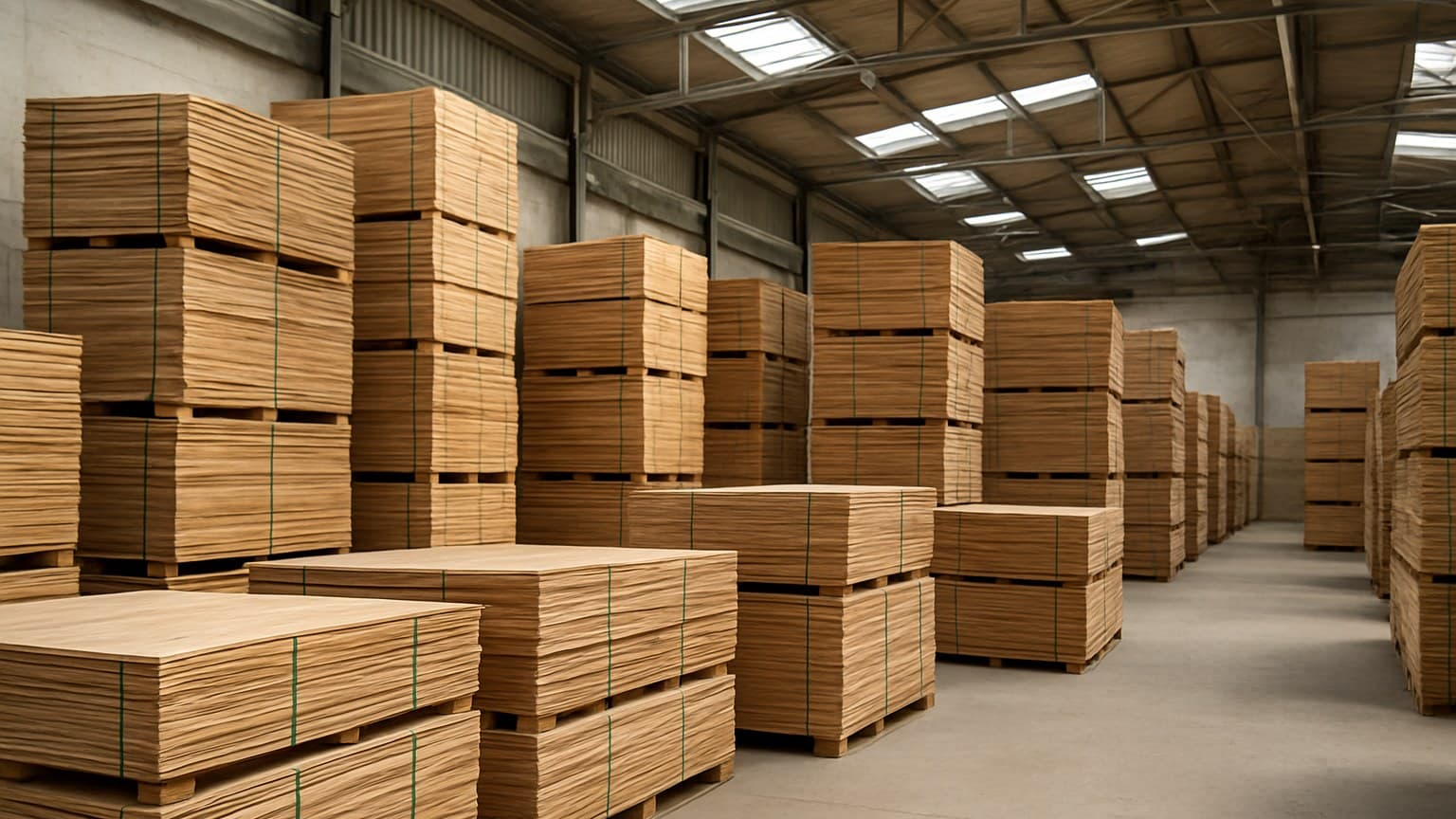
Frank in Denver bought discount plank one box short, and by the time we caught it, no matching batch existed anywhere. With clearance flooring, the word printed on the tag, not the price, is what sets you up for that day. Learn to read it before you pay.
That single word decides whether you can order more, match the color, or make a warranty claim stick. Two piles at the same clearance flooring outlet can be priced the same and behave completely differently once your floor is down. Here is how the labels actually work, and how I check a lot before a customer commits.
Key takeaways
- 'Clearance' just means a store is clearing stock and often keeps the full warranty, but 'closeout' and 'discontinued' usually can't be reordered and are frequently final sale, so the word on the tag decides whether you can dye-lot match later.
- Buy roughly 10% extra for a straight-lay room and up to 15-20% for diagonal or herringbone layouts, and get every box from the same dye lot or batch number since you likely can't reorder.
- Clearance markdowns typically run about 20-60% off retail, deepest on discontinued lines, but that discount is on materials only, not on labor.
- Before you commit, read the tile box for its TCNA grade and shade/caliber code, check carpet backing and fiber, and confirm the full quantity is on hand.
- For salvaged or secondhand flooring, follow CPSC resale safety guidance and watch for old finishes and outdated materials before you install.
What 'Clearance' Really Means (vs Closeout, Overstock, Remnant, Discontinued)
The tags on a discount rack are not interchangeable. Each one tells you a different story about whether that exact color and dye lot can ever be ordered again.
Here is the plain version of each word. Clearance means a store is clearing current stock to free up floor space, and the maker may still produce that line. Closeout means the line is being dropped, either by the store or the manufacturer. Overstock is extra inventory a store simply over-ordered. Remnant is a leftover piece, most common with carpet, sold as a single cut. Discontinued means the maker stopped producing it for good.
The reason this matters comes down to the dye lot. A dye lot (sometimes printed as a batch or run number) is a single production run of the same color. Two runs of the "same" color rarely match exactly, so if you run short and buy a different lot, you can see the seam. Clearance and overstock goods often keep the full manufacturer warranty and can sometimes be reordered while stock lasts. Closeout, remnant, and discontinued goods frequently cannot be reordered at all, and they are often sold final sale with limited or no warranty.
| Tag | What it means | Reorder? | Warranty |
|---|---|---|---|
| Clearance | Store clearing current stock to free floor space | Sometimes, while stock lasts | Often full manufacturer warranty |
| Closeout | Line being dropped by the store or maker | Rarely | Limited or none, often final sale |
| Overstock | Extra inventory a store over-ordered | Often yes | Usually full warranty |
| Remnant | Leftover piece, common with carpet | No, one piece only | Usually none |
| Discontinued | Maker stopped producing it | No | May be void or unsupportable |
The table compares five common discount tags by whether you can reorder the same lot and whether a warranty typically survives.
Why the Word on the Tag Decides Everything
The label controls three things: whether you can reorder, whether the next batch will match, and whether a warranty claim gets honored. Miss on any one of those and a cheap floor turns expensive fast.
Picture the common failure. You measure a room, buy just enough discontinued plank, and come up one box short during install. There is no more of that lot at that store, none at the other branches, and none online. Now you are either mixing a mismatched lot into a visible spot or ripping out what you laid and starting over with a different product. The material was never the problem. The problem was buying a quantity you can never top up.
On clearance jobs, the paperwork trips people up as often as the material does. A dye lot you can't extend causes just as much trouble as a bad seam or a skipped inspection. So ask one question at the counter, out loud, before you pay: "If I need more, can I get the same lot?" While you are there, also confirm whether it is final sale so you know if leftover boxes can go back, and whether the manufacturer warranty still applies to the discounted stock. Those three answers tell you what you are really buying.
National Outlets vs Local Clearance Stores
National chains and local shops both run clearance, but they fail and win in opposite ways. A national outlet usually has enough of one lot to floor a whole room; a local shop often has a single, un-repeatable piece.
Big rotating clearance sections show up at chains like Floor & Decor, LL Flooring, Home Depot, and Lowe's. Because there is more stock behind the rack, your odds of matching or reordering a lot are better, and there is often enough of one run to cover an open living room. A local store is more luck of the draw. The pieces are fewer, but an odd remnant can be priced deeper than anything a chain will mark down, which works for a closet, a landing, or a small bath where you only need one lot anyway.
Where to actually look: in-store clearance racks, the retailer's online clearance and overstock pages (these refresh often), and the remnant bins in the back. If you are eyeing vinyl plank on the discount rack, read up on how the wear layers and cores really differ first in this LVP flooring breakdown, because a cheap price on a thin-wear-layer plank is not a deal in a busy room.
| Factor | National outlet | Local store |
|---|---|---|
| Selection | Large, rotating clearance sections | Small, luck of the draw |
| Dye lot quantity | Often enough for a full room | Often one lot, limited pieces |
| Reorder odds | Better, larger stock behind it | Poor once it's gone |
| Price | Roughly 20-50% off retail | Can go deeper on odd lots |
| Install service | Usually available, extra cost | Often available |
The table weighs a national clearance outlet against a local store on selection, lot quantity, reorder odds, price, and install service.
The Pre-Purchase Inspection Checklist
On final-sale clearance goods, you inspect before you pay, because there is no return. The store is not going to take back a stack you opened at home and decided you did not like. So do the checking on the sales floor.
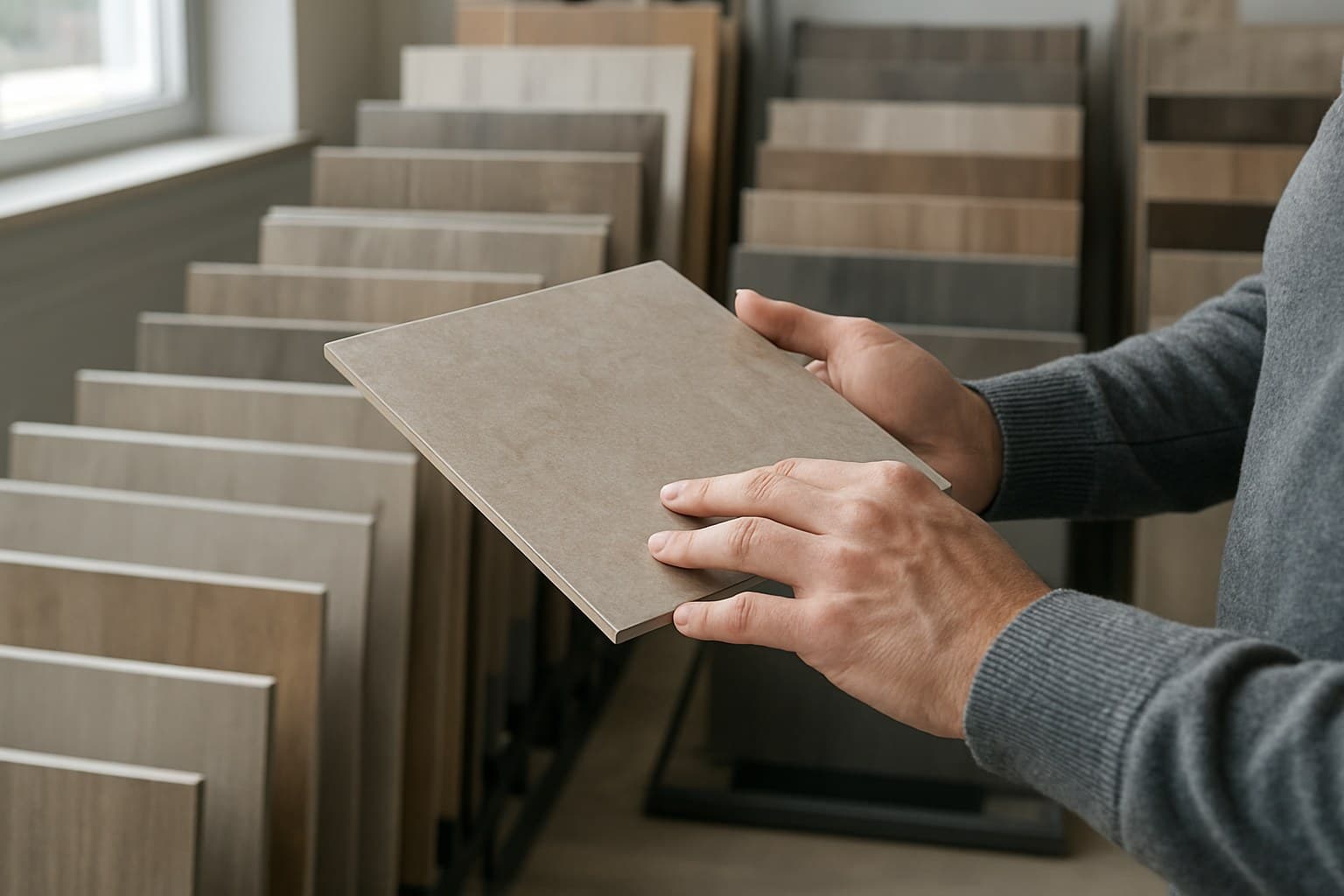
Tile: Reading the TCNA Grade and Caliber
Find two things printed on the tile box: the TCNA grade and the shade and caliber code. According to the Tile Council of North America (TCNA), whose member-outlet classifications are used by major clearance retailers such as Floor & Decor, a tile's grade indicates the traffic and use it's rated for. Caliber is the size code. Tile is not cut perfectly to size, so the maker sorts it into caliber groups that are all the same actual dimension. Mix two calibers on one floor and your grout lines wander and pieces sit uneven. Buy one shade and one caliber, and check the box for both. On the carton itself this typically prints as a short string like "Grade 1, Shade V2, Caliber 3": the grade tells you the wear class, and the shade-and-caliber pair together identify the exact production run, so every box carrying that same string came off the same run and will lay flush. If a box on the rack is missing that string, or it's been hand-relabeled, ask the associate to pull the master carton it shipped in before you buy. Hardwood clearance runs on an entirely separate grading vocabulary that has nothing to do with tile calibers, and it's worth understanding on its own before you shop a discount rack of plank, which is exactly what this look at how hardwood flooring grades work breaks down.
Carpet: Backing and Fiber
On carpet and remnants, confirm the backing is still intact and flat, not cracked or peeling, and that the fiber type is labeled: nylon, polyester, or olefin. According to the Carpet and Rug Institute (CRI), which certifies carpet products against fiber and backing performance standards, these are the specs that determine how a carpet wears and cleans over time. A remnant with no label and a stiff, folded backing is a gamble I'd pass on.
Planks and Boards: Finding the Dye Lot Code
For plank and board products, record the dye lot or batch/run number and buy every box from that one number. Then open several boxes right there, not just the top one, and check for warped, chipped, or water-stained pieces. Clearance stacks sometimes sit in a warehouse corner where a leak found them, and the damage hides two boxes down. If the boxes on the rack are stamped Pergo, it's worth confirming whether you're actually looking at real wood or a laminate look-alike before you commit to that dye lot, a distinction this guide to Pergo hardwood flooring walks through in detail.
Waterproof planks land on these same clearance racks now too, WPC (wood-plastic composite) and SPC (stone-plastic composite) vinyl, along with laminate built on a waterproof core instead of standard MDF. The dye lot rule still applies to all of them, but add one more check before you buy: snap a couple of boards from different boxes together at the click-lock edge and look for gaps, or a core that feels chalky or crumbly rather than dense, since a compromised waterproof core is exactly the kind of damage a warehouse corner would cause first. Also ask directly whether the water-related warranty carries over on the discounted lot, some retailers pull the moisture warranty on final-sale stock even when nothing looks wrong with the boards themselves. Engineered hardwood increasingly ships with that same locking profile instead of a glued or nailed edge, so if that's actually what you're weighing, it's worth reading up on whether click hardwood flooring holds up before you commit to a locking system on a final-sale box you can't return.
Run through this before you commit:
- Tile: find the TCNA grade and the shade/caliber code on the box, and buy one shade and one caliber
- Tile: match the caliber (size) number so pieces lay flat and even
- Carpet/remnant: check the backing is intact and the fiber type is labeled
- Planks/boards: record the dye lot or batch/run number and buy all from one
- Open several boxes and check for warped, chipped, or water-stained pieces
- Confirm the full quantity plus your waste factor is on hand before you commit
- Ask if it's final sale and whether the manufacturer warranty still applies
Keep this list handy at the store, most items take just a minute or two per box to check, and it's your only chance before a final-sale purchase is locked in.
On quantity, buy extra. Plan for roughly 10% over your room's square footage for a straight, side-by-side layout, and 15-20% for diagonal or herringbone patterns, which waste more at the cuts. On clearance you usually cannot come back for one more box, so the waste factor is not optional.
Is Secondhand or Salvaged Flooring Safe?
Salvaged flooring can be a genuine deal, especially for wide old-growth boards you cannot buy new, but it carries risks that fresh clearance stock does not. The straight answer: sometimes yes, with more homework. If you're weighing those salvaged boards against buying new instead, our guide to solid vs. engineered hardwood floors can help you figure out which construction and species actually fits your room.
According to the U.S. Consumer Product Safety Commission's Resale/Thrift Store Information Center, resale guidance runs both ways: sellers should not pass on recalled or hazardous goods, and buyers should check a product's condition and origin before putting it back into use. So ask where the flooring came from and how old it is, and if it's a branded product, look up whether that product has an open recall.
The bigger concern with old material is what is on it and in it. Boards from a home built decades ago may carry unknown finishes and adhesives, and very old flooring products can contain materials that are not used anymore. When in doubt, test or bring in a pro before you disturb or sand old flooring, because the dust is where the trouble is. If reclaimed boards are on your list mainly to avoid modern chemicals, read what the labels actually do and do not tell you in this guide to non-toxic hardwood flooring before you assume old means clean. Also inspect for cracked, delaminating, or water-damaged pieces, and budget extra waste, because salvage yields far fewer usable boards than a fresh pallet.
Typical Savings by Material Type
Clearance markdowns run roughly 20-60% off retail, and the discount is deepest on discontinued lines and carpet remnants. There is no single national number, because the deal depends on why the item hit the rack and how much is left, and these figures are general market ranges rather than a fixed rate you can count on at any one store. Hardwood in particular gets marked as being "on sale" often enough that the discount itself deserves a second look, and this guide on telling a real hardwood flooring sale from a fake one walks through how to check.
The discount is on materials only. Installation labor typically falls somewhere in the rough range of $2 to $5 a square foot for most flooring types (actual rates vary widely by region and installer), whether the plank came off the clearance rack or the full-price shelf, a discounted box doesn't make the prep, layout, or cutting go faster. Basements and stairs generally cost more to install than an open room, often landing in the rough range of $4 to $8 a square foot, because the moisture prep, cuts, and transitions take longer, no matter what you paid for the material. That basement moisture prep usually comes down to which underlayment or vapor barrier goes down first, a decision covered in this guide to what goes under hardwood flooring.
| Material | Typical clearance discount (materials only) |
|---|---|
| Carpet remnants | About 30-60% off |
| Discontinued LVP or laminate | About 25-50% off |
| Tile closeouts | About 20-50% off |
| Hardwood clearance | About 20-40% off |
Discount ranges apply to materials only; installation labor is unchanged and basement or stair jobs still cost more than open rooms.
So the math on a real job looks like this: material price times your square footage plus waste, then labor added on top at the same rate as any other floor. A 40% markdown on a $3 per square foot plank saves you about $1.20 a foot on materials and nothing on the install. That's still real money on a big room, but it's not the whole floor.
For a deeper look at buying discounted solid and engineered boards, including how to read cabin and utility grades, this companion piece on clearance hardwood flooring is the useful next read, because wood grading is where clearance buyers get surprised.
Sources
- Tile Council of North America (TCNA), Floor & Decor Outlets Directory Listing
- National Wood Flooring Association (NWFA), Events & Education
- North American Laminate Flooring Association (NALFA)
- Carpet and Rug Institute (CRI), Green Label Plus Certified Products
- U.S. CPSC, Resale/Thrift Store Information Center