
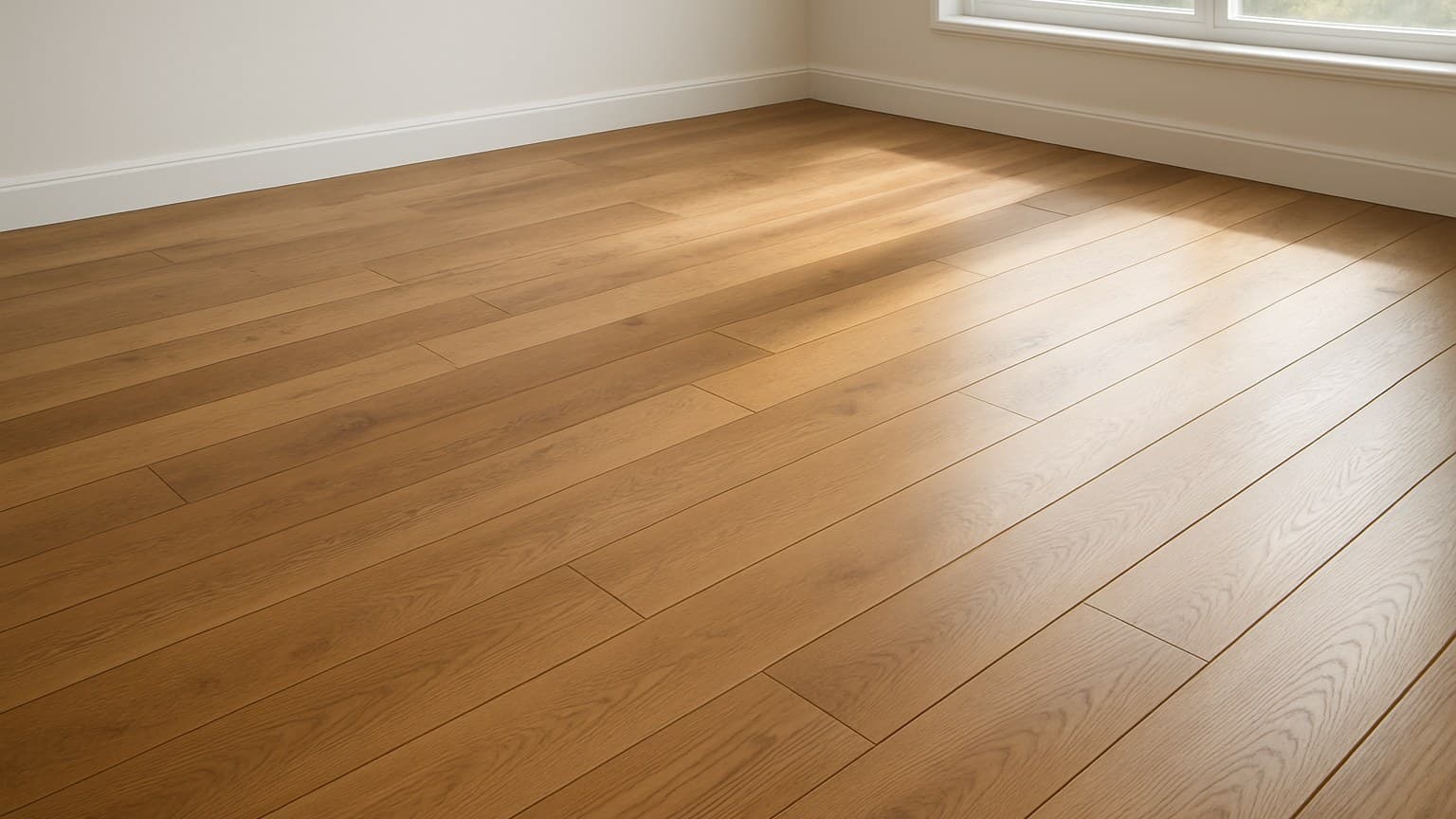
When Denise in Tulsa called about a red oak lot marked down at her local flooring outlet, she almost walked away because the price looked too good to be true. Clearance hardwood gets that reputation, but the trap isn't junk wood, it's a one-time lot you can't reorder if you run short. Here's how to read the label before you buy.
Key takeaways
- Most clearance lots are one-time and won't restock, so the real risk is running short mid-job, not the wood being junk.
- On a limited clearance lot, order 10-15% over your room size, not the 5% waste NWFA sets as a floor for normal jobs.
- "Cabin grade" and "utility" aren't official NOFMA grades; they're mill labels that usually land around #2 Common or below, meaning knots and color swing, not structural failure.
- A lot of "waterproof hardwood" on clearance is engineered or rigid-core plank, not solid wood, so read the spec sheet, not the banner.
- Clearance discounts usually run 15-30% off and are sold by the square foot and carton, with most lots final sale.
What "Clearance" Really Means for Hardwood
Stores dump three very different things under one word, and only one of them is about looks. Overstock is extra of a line they still sell. Discontinued is a color or line being retired. Cabin or utility grade is priced down for cosmetic character. None of the three means broken wood. Buying through one of these overstock or discontinued runs also ranks among the more sustainable hardwood flooring choices you can make, since it keeps usable material out of the landfill.
The real risk with clearance hardwood isn't a bad board. It's running short mid-room on a one-time lot you can't reorder to match. That's what turns a good deal into a stalled job.
Set your expectations on price early: discounts usually run 15-30% off, sold by the square foot and by the carton, and most outlets will hand you a free sample. On Denise's job in Tulsa, the red oak lot itself was fine, solid, straight boards. What turned it risky was guessing the quantity and coming up two boxes short of a match she couldn't reorder.
The Overage Math: Buying Enough From a One-Time Lot
The formula is simple: room square footage times a waste factor equals how much to order. Room square footage is the floor area you measured. The waste factor is the extra you add for cuts, mistakes, and culled boards, written as a decimal (10% extra means multiply by 1.10).
According to NWFA's Homeowners Handbook to Real Wood Floors, installation guidance calls for building in a waste-factor allowance, and installers commonly treat roughly 5% as a floor for a normal job. On a clearance lot I push that to 10-15%, because there is no reorder to match if you're short. A 300 sq ft room laid straight wants about 330 sq ft. Lay that same room on a diagonal and you cut more corners, so I'd order closer to 345. And when the leftover lot sits close to your number anyway, just buy the whole thing.
Stairs, closets, and choppy angled rooms eat more waste than a clean open rectangle, so bump the factor up, not down. Basement runs with jogs and posts fall in the same bucket.
| Room size | Order +10% | Order +15% |
|---|---|---|
| 100 sq ft | 110 sq ft | 115 sq ft |
| 300 sq ft | 330 sq ft | 345 sq ft |
| 500 sq ft | 550 sq ft | 575 sq ft |
| 800 sq ft | 880 sq ft | 920 sq ft |
Source: the waste allowance NWFA's installation guidelines set as a minimum, with the extra cushion I add on clearance jobs where there's no matching reorder
What to order for common room sizes, using the 10-15% cushion I add on clearance lots that can't be matched later.
Decoding Clearance Grades: Cabin, Utility, and Common
Here's the part that scares people for the wrong reason. According to the NWFA/NOFMA Unfinished Wood Flooring Standard, oak grading runs Clear, Select, #1 Common, and #2 Common. "Cabin" and "utility" are not certified grades at all; they're mill labels, and they usually land around #2 Common or below. If you want to see how every species and grade level stacks up side by side, this hardwood flooring grades chart breaks each tier down.
What the lower grades actually hold is character, not weakness: knots, mineral streak (dark grain lines left by minerals in the tree), stronger color and shade swing, and shorter boards. That's cosmetic.
The stuff worth worrying about is different: warped or cupped boards, milling defects, and off-spec moisture. When I open a cabin-grade bundle, I rack it out on the floor, lay loose boards from a few boxes side by side so you can see the real mix before anything gets nailed down, and most of it is perfectly good. I cull the handful that are twisted or milled wrong and lay the rest. Don't fear the knots. Fear the wood that won't sit flat.
| Vendor label | NOFMA grade | What you see | The real issue |
|---|---|---|---|
| 1st Quality / Select | Select or better | Long boards, few knots, even color | Usually a discontinued color, not a flaw |
| #1 Common | #1 Common | Some knots, light color variation | Character, structurally sound |
| Cabin / Utility | ~#2 Common or below (mill label) | Knots, mineral streak, big shade swing, shorter boards | Cosmetic; cull any warped or milling-defect boards |
| Tavern / Short boards | Below #2 Common | Short lengths, heavy character | Best for closets, blending, or a rustic look |
Source: the NOFMA oak grading rules, checked against the mill bundles I've opened on install day
How common clearance labels map onto the NOFMA grade underneath, based on the mill bundles I open on install day.
Solid vs Engineered vs "Waterproof": What's Actually on the Rack
Read the spec sheet, not the banner over the pile. Stores lump engineered planks, and even rigid-core "waterproof" boards, under one "hardwood clearance" sign, and those are not the same product. Even the well-known Pergo name turns up on these same clearance racks, so it pays to check whether Pergo hardwood is real wood before you assume it behaves like the solid boards next to it.
Solid is all wood and can be sanded several times over its life. Engineered is a real wood veneer over a plywood-style core, and it does better over concrete or below grade where solid isn't recommended, including click-lock engineered floors that float instead of nail down. Most "waterproof hardwood" on a clearance rack isn't solid wood at all, these branded lines typically put a real wood veneer over a rigid waterproof core, but that waterproof claim usually covers the core only. The seams and edges are still where water gets in, so check the spec sheet before you assume every board on the pile works the same way. If you're still weighing which build fits a given room, this breakdown of picking solid vs. engineered hardwood floors walks through where each holds up best.
Whatever grade you grab, the maker's warranty hinges on prep. Subfloor flatness and a moisture check come first, clearance or not. On a job for a customer in Broken Arrow, the slab felt dry to my hand but read high on the meter (the tool that measures moisture in concrete). Finding that out before the boards went down saved the whole install.
What Clearance Hardwood Costs, and Where to Find It
Clearance prices vary by grade, and the number below is materials only. Installation labor is a separate line, usually $2-5 per square foot depending on your area and whether it's nailed, glued, or floated. Basement and stair jobs run higher than an open room.
| Grade | Price ($/sq ft, materials only) |
|---|---|
| Cabin/Utility grade | $0.99 - $2.49 |
| #1 Common | $1.99 - $3.49 |
| Discontinued 1st quality | $2.99 - $4.49 |
| Exotic species closeout | $3.49 - $5.99 |
Clearance price ranges per square foot by grade, materials only, before install labor.
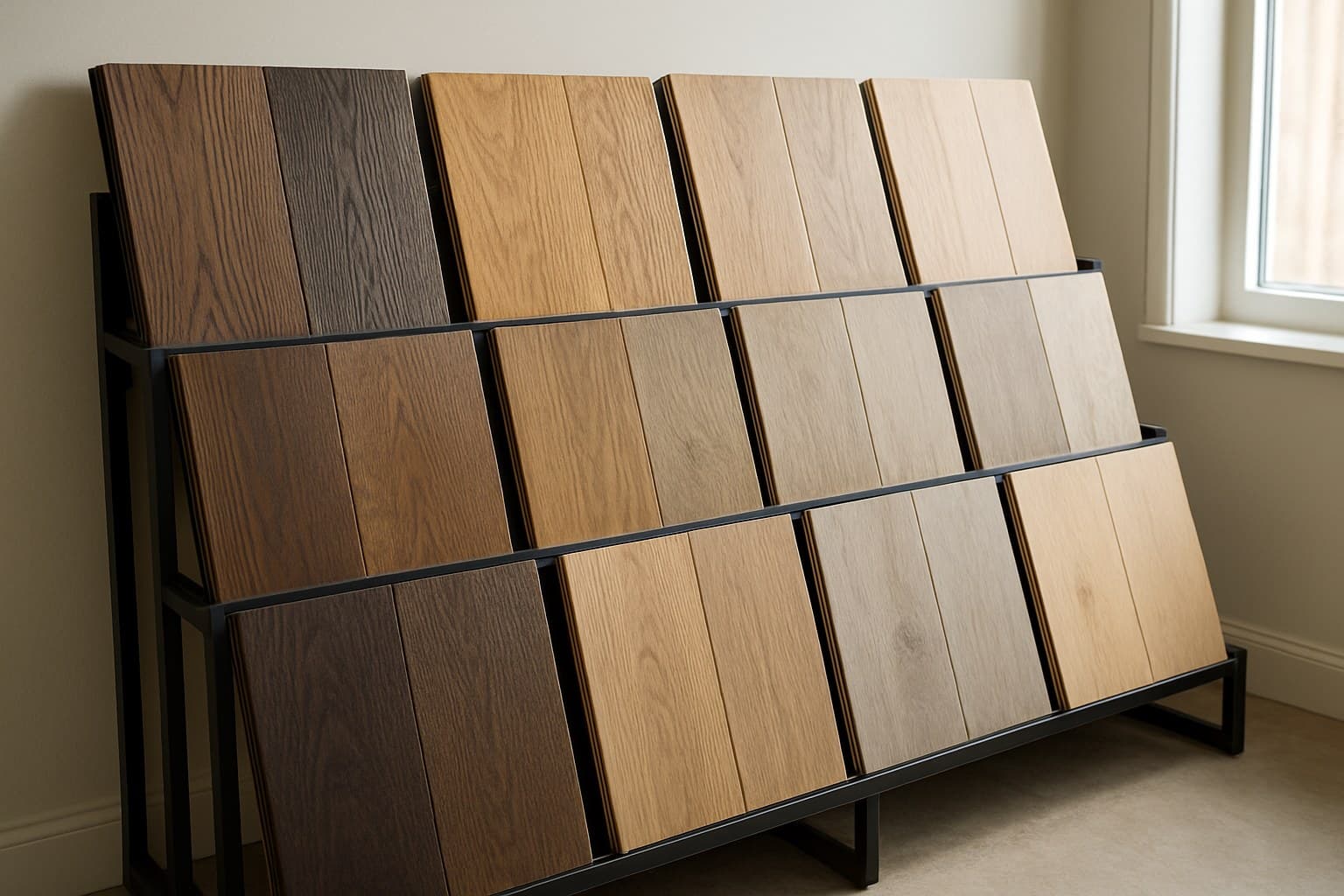
Clearance lives in a few places. Local flooring outlets run closeout racks and contractor "take all" lots. Big-box stores keep a clearance section. Online closeout sellers list the rest, and that mix is what a "clearance closeout near me" search really turns up. A single-box clearance buy suits a small bathroom or closet; a whole-floor buyer should hunt bulk take-all lots so the whole run matches. The species you'll genuinely see are red and white oak, hickory, and maple, plus the occasional exotic like walnut, which carries a higher closeout floor.
Red Flags and the Final-Sale Checklist
Shade banding is the flaw people cause themselves. Pull planks from one box at a time and you get visible stripes of color across the floor. Open several boxes and rack from all of them at once to scatter the tone; the difference shows up fast.
Watch the board lengths. A short-board lot is fine for closets or for blending into a bigger run, but it's a headache when short boards are all you've got for a long open room.
Discontinued colors have no future match, so overage matters double. Buy the cushion up front, not after you're short.
Clearance is usually final sale. Confirm the return window before you pay, grab the free samples first, and check whether the warranty still applies to a closeout lot before you count on it.
Sources
- NWFA/NOFMA Factory-Finished Wood Flooring Grading Standards (PDF)
- NWFA/NOFMA Unfinished Wood Flooring Grading Standard (PDF)
- NWFA Homeowners' Handbook to Real Wood Floors (PDF)
- NWFA Solid Wood Flooring Environmental Product Declaration (PDF)
- NWFA Engineered Wood Flooring Environmental Product Declaration (PDF)