
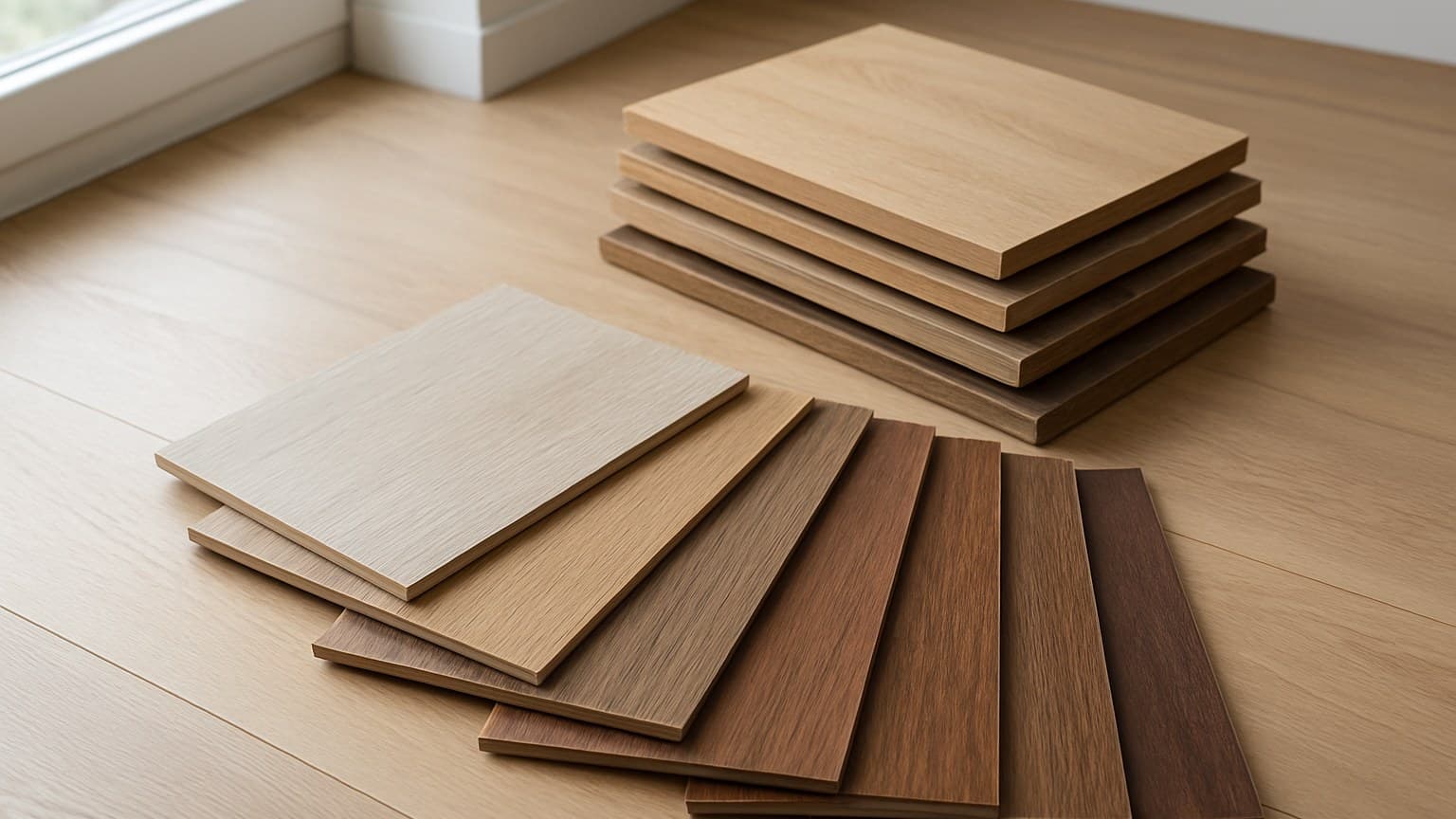
When Dana Whitfield in Aurora, Colorado called me back six months after I replaced her kitchen laminate, water had swollen every seam along the sink wall. The real engineered-hardwood-vs-laminate choice isn't about which one looks better in the showroom - it comes down to the core, the water rule, and what each floor actually costs per year. Get it wrong and you either overpay or lay a floor that cups in the wrong room, so here's the honest math from both sides of that tear-out.
Key takeaways
- Laminate usually runs $3-8/sq ft installed ($1-4 material, $2-4 labor); engineered runs $7-14 installed ($4-9 material, $3-5 labor). Basement and stair jobs cost more than open rooms.
- Over its life, engineered often works out to about $0.18-0.56 per sq ft per year (25-40 year lifespan); laminate about $0.15-0.80 (10-20 years). Close, but engineered can be refinished and laminate cannot.
- AC rating is laminate's scratch/wear scale: most homes want AC3 or higher. Engineered has no AC number; its durability comes from veneer hardness and finish.
- Water rule: standard laminate stays out of moist rooms, waterproof-rated laminate tolerates spills but fails at the seams first, and engineered handles humidity swings best below grade if the slab moisture test passes.
- Only engineered with a thick enough veneer can be refinished. Laminate scratches mean you replace the plank, not sand it.
Engineered Wood Flooring vs Laminate: The Quick Comparison
Short version: engineered gives you real wood you can sometimes refinish and better stability when humidity swings. Laminate costs less and scores higher on scratch resistance but is weak where its seams meet water. Neither one is universally better. The room and the budget decide, the same way that rule works for LVP against laminate.
| Engineered Hardwood vs Laminate at a Glance | Engineered | Laminate |
|---|---|---|
| Installed cost/sq ft (material + labor) | $7-14 | $3-8 |
| Typical lifespan | 25-40 yrs | 10-20 yrs |
| Wear rating | Veneer mm + finish | AC1-AC5 |
| Refinish? | Sometimes (veneer permitting) | No |
| Best rooms | Below grade, whole home | Budget rooms, high-scratch traffic |
Source: I built this from product spec sheets I check against the install, cross-checked with my own residential labor quotes
Side-by-side ranges for the two floors on cost, lifespan, wear rating, and where each fits.
The rest of this article is the detail behind that table, so you can read your own case off it.
What's Actually Inside Each Floor
The core, not the surface, is what decides how a floor holds up. Both look like wood from standing height. Underneath they're built completely differently. Even within engineered's veneer layer, the wood species you choose changes both the look and the price tag, and there's a full checklist for buying brazilian cherry engineered hardwood before you settle on that one.
Engineered Hardwood: Real Wood Over a Stable Core
Engineered hardwood is a thin layer of real wood, called the veneer, glued on top of a plywood or fiberboard core, with a backing layer beneath. That plywood-style core is cross-layered, so it expands and shrinks less than a solid plank when the air gets damp or dry. Whether that stability is worth trading for the thicker wear layer of solid wood depends on the room and species, which is exactly what I break down in solid vs. engineered hardwood floors.
That stability is why engineered beats solid wood over concrete and below grade. In a basement, what actually decides the outcome is whether the concrete slab tests dry before you commit to a plank, a question I dig into in the engineered hardwood vs LVP breakdown.
Laminate: A Photo Layer Over Fiberboard
Laminate has no real wood in it at all. It's a clear, tough wear layer sitting over a printed photo of wood grain, all pressed onto an HDF core. HDF is high-density fiberboard, basically wood fibers ground up and compressed into a dense board.
That printed photo is why the National Wood Flooring Association (NWFA) publishes an official definition of "real wood" flooring, distinguishing genuine wood products from laminate's printed surface layer. Laminate can look convincing, but it's a picture, not a plank.
Formaldehyde and the EPA's TSCA Title VI Rule
Here's the safety piece most flooring comparisons skip entirely: both of these floors have a composite wood core, laminate's HDF and engineered's plywood or fiberboard, and both are held together with adhesives that can off-gas formaldehyde. That's exactly what the EPA's TSCA Title VI rule governs, and it's the one differentiator none of the other buying guides actually explain.
TSCA Title VI is the EPA's formaldehyde emission standard for composite wood products, hardwood plywood, particleboard, and medium-density fiberboard, sold, supplied, or manufactured for use in the U.S. In 2023, EPA finalized updates that tightened enforcement, adding an import certification requirement that took effect in 2024 and aligning the federal ceiling with California's CARB Phase 2 rule, which had already been the strictest formaldehyde limit in the country. In practice, that means any composite wood core sold today, whether it ends up under a laminate wear layer or under an engineered hardwood veneer, has to meet the same emission limit and carry third-party certification to prove it.
What that means for your purchase: look for "TSCA Title VI compliant" or "CARB Phase 2 compliant" language on the product label or spec sheet before you buy either floor type. It won't be printed on the plank itself; it's on the box or in the manufacturer's documentation, and a legitimate big-box or specialty retailer should be able to produce it on request. Compliant product from a mainstream brand isn't a gamble, but a pallet sourced outside that paper trail, especially cheap imported laminate with no certification listed, is exactly where formaldehyde complaints tend to start. The EPA's own Q&A on laminate flooring and formaldehyde, linked in the sources below, walks through how the rule applies and what documentation you're entitled to ask for.
The Real Cost, Split by Materials and Labor
Laminate runs about $3-8 per square foot installed, split roughly $1-4 in material and $2-4 in labor. Engineered runs about $7-14 installed, split $4-9 material and $3-5 labor. Basement and stair jobs cost more per square foot than an open room, because of the extra prep, the cuts, and every transition and nosing that has to be fit by hand. Before you sign off on any quote, it pays to check the same line items I flag in numbers to verify on an engineered hardwood quote.
Here's the part the buying guides skip. Divide the installed cost by how long the floor really lasts, and the yearly cost gets close.
| Floor | Installed cost/sq ft | Lifespan | Cost per year/sq ft |
|---|---|---|---|
| Engineered hardwood | $7-14 | 25-40 yrs | ~$0.18-0.56 |
| Laminate | $3-8 | 10-20 yrs | ~$0.15-0.80 |
Installed cost divided by realistic lifespan for each floor.
Worked example: engineered at $10 installed over 30 years is about $0.33 a year per square foot. Laminate at $5 installed over 15 years is also about $0.33. Nearly a tie, except engineered can sometimes be refinished and laminate never can, so the wood can outlast the number.
Here is the material-and-labor split as bars, so you can see where each dollar goes.
| Cost piece | Share of installed cost |
|---|---|
| Laminate material | Roughly a third to half |
| Laminate labor | Roughly half to two-thirds |
| Engineered material | Roughly half to two-thirds |
| Engineered labor | Roughly a third to half |
Cost ranges in dollars per square foot, split by material and labor.
One caution: import tariffs and the wood species can swing the material figure, so treat any number here as a starting range to confirm with two local quotes. If you're weighing specific product lines, my ranked engineered hardwood brand comparison is where I sort the good ones from the marketing.
Durability and the AC1-AC5 Scale, Explained
AC rating is laminate's scratch-and-wear scale, running from AC1 up to AC5, set by the EN 13329 laminate standard. For a house with kids and pets, want AC3 or higher. Below that and the printed layer wears through faster than you'd like.
| Rating | Use | Example |
|---|---|---|
| AC1 | Light residential | Closets, bedrooms |
| AC2 | General residential | Living, dining |
| AC3 | Heavy residential / light commercial | Whole home, kids and pets |
| AC4 | General commercial | Busy homes, small offices |
| AC5 | Heavy commercial | Stores, overkill at home |
Source: The AC scale is defined by the EN 13329 laminate wear standard
What each AC rating is built for, from light rooms up to store traffic.
Engineered has no AC number. Its toughness comes from the hardness of the veneer wood and the factory finish on top. A scratch shows as real wood, which some people actually prefer, and on a floor with enough veneer it sands out.
That's the hard tradeoff. Laminate cannot be refinished at all, so a deep gouge means pulling that plank and dropping in a new one. Whether engineered can be sanded depends on veneer thickness: thicker veneers (roughly 2mm or more) can typically be sanded once or twice by a pro, while thinner veneers (under 1mm, sometimes as little as 0.6mm on budget lines) should be treated as no-refinish. Always check that one spec on the exact line you're buying, never the category.
Water and Humidity: Room-by-Room Rules
Here's the rule that clears up the contradiction. Standard laminate stays out of moist rooms. Waterproof-rated laminate lines tolerate spills, but the seams and edges give out first. Engineered handles humidity swings best below grade, but only if the slab moisture test passes.
A "waterproof core" is not a waterproof floor. The failures I get called back for happen at the seams where planks meet, not on the plank face. Water wicks into the edge, the fiberboard swells, and the joint lifts. The core can be bone dry and the seam still fails. For rooms where you genuinely need that seam-level protection, I cover which products actually deliver it in my waterproof engineered hardwood guide.
So test first, every time. Before any install I check the subfloor is flat and run a moisture test on the slab. I skipped that once because a customer wanted the afternoon saved, and the floor cupped before the season was out. I relaid it on my own dime. The test is not optional anymore.
The room-by-room verdict for standard vs waterproof-rated wood-look floors.
If most of your question is which rooms laminate can handle, I go deeper in which rooms laminate flooring actually works in.
Installation and Refinishing: DIY or Hire?
Both floors come in click-lock versions, and click-lock is a realistic weekend job for most handy homeowners. Where I'd tell you to hire out: glue-down or nail-down engineered, anything on stairs, and large open-plan runs with a moisture transition between rooms. That's where a small mistake becomes an expensive one.
Whichever you lay, do these three things first. Per NWFA installation guidelines, check that the subfloor is flat, run a moisture test on it, and put down the underlayment the manufacturer's instructions call for. Leave the expansion gap around the edges that the box specifies too, because a floating floor needs room to move.
Refinishing splits them for good. Only engineered with a thick enough veneer can be sanded, and even then usually once or twice, not the many passes a solid floor takes. Laminate gets replaced plank by plank, never sanded.
So who's it for? Pick laminate if budget leads and you want the toughest scratch surface for a busy, dry room. Pick engineered if you want real wood, plan to keep the floor 25 years or more, or you're going below grade over a slab that tests dry. If you're torn between engineered and vinyl for a basement, read 9 facts that settle engineered hardwood vs LVP next, since a moisture reading on that concrete will tell you more than either brand name will.