
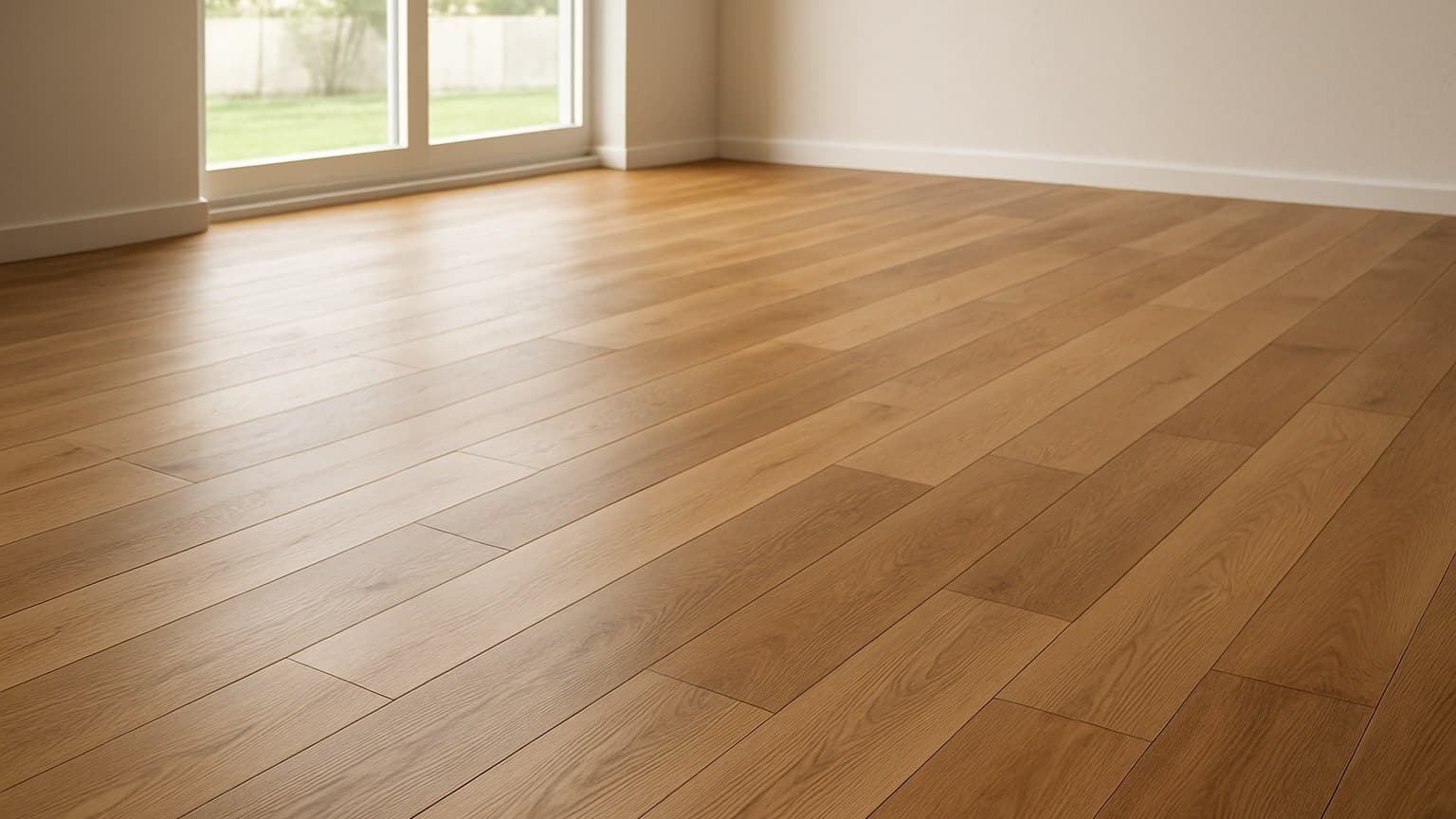
In a 1948 bungalow in Rockford, Illinois, my client Diane wanted real wood floors but almost skipped engineered hardwood because a big-box salesman called it "fake wood." It's not fake, it's a real wood veneer bonded to a stable core, and the one spec that decides how long that floor lasts is buried on the box. Here's what's actually under the surface.
Key takeaways
- Engineered hardwood is a real sawn-wood veneer bonded to a cross-layered core. The surface you walk on and refinish is genuine wood, not a printed photo like laminate or LVP.
- Materials run roughly $4.50-16 per square foot; install labor adds about $2-5 per square foot. Basement and stair jobs cost more than open rooms.
- Refinishing depends on veneer thickness: under about 2mm usually can't be sanded, while 3mm-plus veneers take one or two passes. Check the NWFA Refinishable Program.
- It's more moisture-stable than solid wood, so it can go over concrete and in basements where solid boards usually shouldn't.
- Before any install, check subfloor flatness and moisture with a meter, and follow the box's own acclimation sheet.
What Engineered Hardwood Actually Is (Real Wood, Straight Up)
Engineered hardwood is a real sawn-wood veneer bonded on top of a cross-layered core. According to the National Wood Flooring Association (NWFA), which issued an official definition of real wood flooring, engineered hardwood counts as genuine wood flooring, not an imitation like laminate or luxury vinyl plank (LVP), which use a printed photo of wood under a clear layer. That same real veneer is what lets manufacturers hand-scrape a genuine texture into the surface instead of printing one on, and I cover what to verify before buying it in Hand-Scraped Engineered Hardwood: 13 Things to Check Before You Buy.
Here's what it's made of. The top is a real species you pick, oak, maple, or walnut. The core underneath is plywood or high-density fiberboard (HDF, a dense pressed-wood board). Birch is another species worth a look if you want something between oak's cost and maple's hardness, and I break down what to check before buying it in 8 Birch Engineered Hardwood Flooring Facts to Check Before You Buy.
So drop the "fake wood" worry. The surface you walk on, stain, and sand is the same wood as a solid board, just thinner and glued to a more stable base. If you want the full breakdown against vinyl, I laid it out in 9 Facts That Settle Engineered Hardwood vs LVP.
One name mix-up to clear up: "engineered wood" can also mean structural lumber like LVL (laminated veneer lumber, thin sheets of wood glued together) or OSB (oriented strand board, wood chips pressed and glued into a panel) used in house framing. That's a completely different product from engineered hardwood flooring.
How It's Built: Veneer, Core, and Cross-Ply Layers
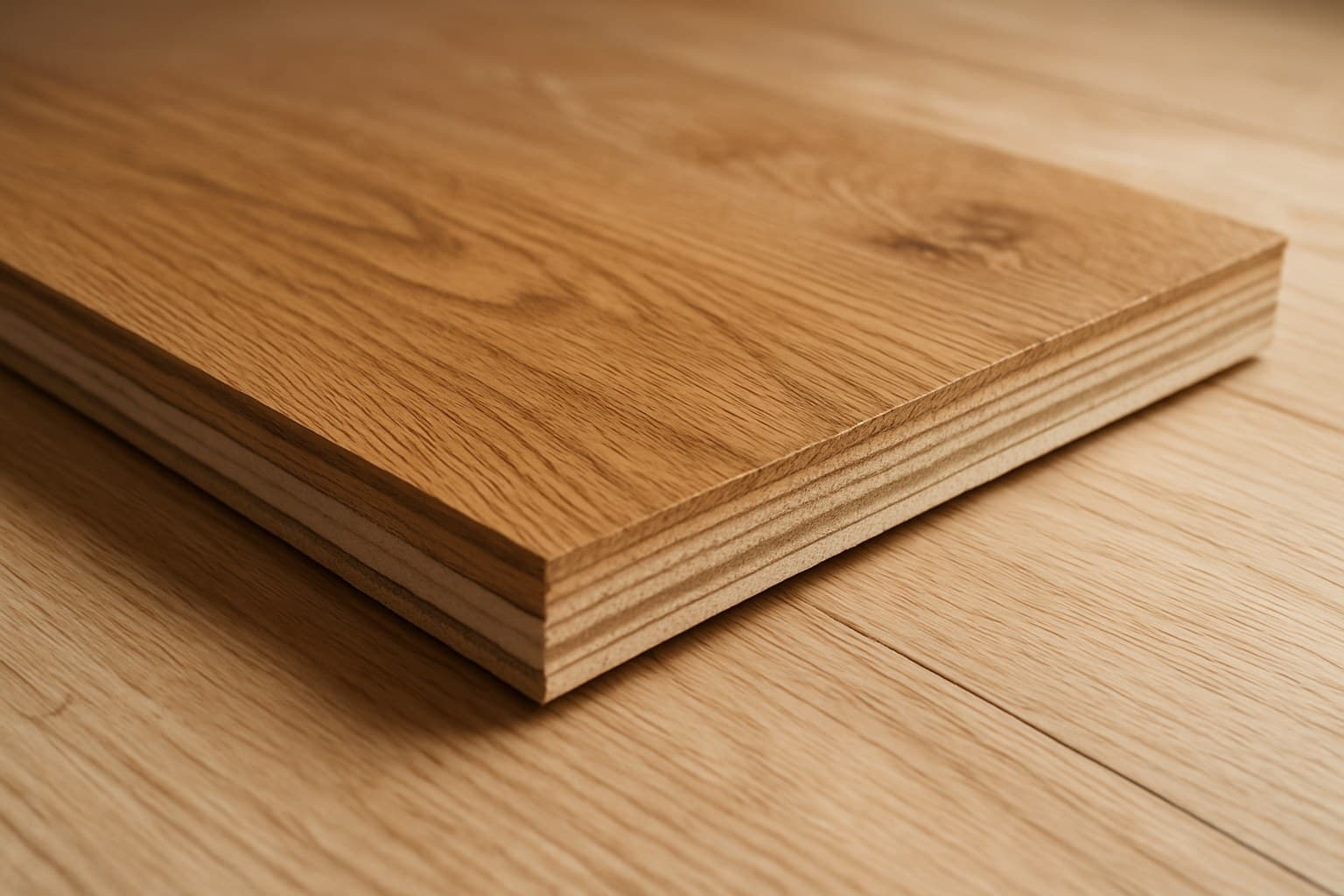
The stack runs top to bottom in four parts. A finish and wear layer on top, then the real hardwood veneer, then a cross-ply or HDF core, and a backing layer on the bottom. Veneer thickness swings a lot by product: a budget line like Bruce American Vintage runs about 0.6mm, while a thick-veneer line like Mirage Engineered Red Oak can run up to 6mm.
Those cross-grain core layers are the whole point. Each layer runs at right angles to the one above it, so the plank barely swells or shrinks when humidity changes. That stability is why engineered can go over concrete where solid wood usually can't.
The core comes with a trade-off. An HDF core is denser and harder underfoot, while a plywood core holds nails and staples better if you plan to nail the floor down.
But the number that matters most is veneer thickness. It decides how many times, if ever, you can refinish the floor later, so ask for that spec before you buy anything.
One more thing from a job in Tulsa, Oklahoma: my client Ray picked Brazilian cherry off a showroom photo without knowing how it ages. It shifts color a lot in sunlight, and when I pulled the area rug off his floor, I found a bright patch underneath that no refinish evened out. If that species is on your list, read 8 Things to Settle Before You Buy Brazilian Cherry Engineered Hardwood first.
Engineered vs. Solid Hardwood, Head to Head
Quick verdict: solid is thicker and can be sanded many times, but it hates moisture and generally shouldn't go over concrete or below ground level. Engineered is more moisture-stable and can go in basements and over radiant heat, but most lines give you fewer refinishes. If you're still weighing the two, this breakdown of choosing solid vs. engineered hardwood walks through matching the right type and species to each room.
That reconciles the lifespan claims you'll see online. A thick-veneer engineered floor can last as long as solid, while a thin-veneer one wears out sooner. The veneer, not the label on the box, sets the ceiling.
Both are real wood. The choice comes down to where the floor is going as much as looks or budget.
| Factor | Solid | Engineered |
|---|---|---|
| Total thickness | ~18-20 mm (e.g., Bruce America's Best Choice solid oak) | ~10-20 mm (e.g., Shaw Reflections engineered oak) |
| Refinishing | Several sandings over its life | 0-2, depending on veneer thickness |
| Moisture stability | Low; swells and cups with humidity | Higher; cross-ply core resists movement |
| Over concrete / below grade | Generally not recommended | Yes, with a moisture check first |
| Typical lifespan | Decades with refinishing | Varies; thick veneer rivals solid |
| Materials cost | Often higher per square foot | See the materials-vs-labor breakdown below |
Solid and engineered hardwood compared across the factors that actually change the buying decision.
What Engineered Hardwood Costs (Materials vs. Labor)
Split the cost in two. Materials run roughly $4.50-16 per square foot depending on species, veneer thickness, and brand. Install labor typically adds about $2-5 per square foot on top.
Basement and stair jobs cost more than open rooms. More cuts, more transitions, and extra moisture prep on a slab all add to the labor line.
On the material side, three things move the price: veneer thickness, wood species, and core quality. A thick-veneer white oak plank costs far more than a thin-veneer builder-grade box off the same rack.
DIY changes the math. A click-lock floating floor lets most homeowners skip the labor line entirely. Glue-down over concrete and anything on stairs are where hiring a pro usually pays off.
| Cost piece | Low | High |
|---|---|---|
| Install labor | $2.00 | $5.00 |
| Materials | $4.50 | $16.00 |
Install labor typically runs higher on basement and stair jobs than in an open room, because of extra cuts, transitions, and moisture prep on a slab.
Refinishing: How Many Times, and How to Check
The direct answer is veneer thickness in millimeters, not a vague "it depends." Ask for that spec before you buy, because it's the real lifespan lever.
Under about 2mm, most floors can't be sanded at all. You can only screen-and-recoat, meaning a light scuff and a fresh top coat, never down to bare wood. At 3mm and up, you usually get one or two real sandings.
Check whether the product is listed in the NWFA's Refinishable Program, a certification that groups engineered floors by wear-layer thickness so you know upfront how many sandings a plank can realistically take. That listing takes the guesswork out. A thick veneer is what lets an engineered floor last as long as solid wood.
| Veneer | Refinishes | Method |
|---|---|---|
| 0.6 mm (Bruce American Vintage) | 0 | Screen-and-recoat only, no sanding |
| 1-2 mm (Armstrong Prime Harvest) | 0 to 1 light pass | Mostly recoat; sanding risks cutting through |
| 2-3 mm (Shaw Reflections) | 1 | One careful full sanding |
| 3-4 mm (Mullican Ridgemont) | 1-2 | Standard sand-and-refinish |
| 4-6 mm (Mirage Engineered Red Oak) | 2-3 | Refinishes closer to a solid board |
Source: the NWFA Refinishable Program wear-layer thresholds
How veneer thickness maps to the number of real sandings you can expect over a floor's life.
Where It Belongs, Room by Room
Engineered hardwood is a strong pick for living rooms, bedrooms, hallways, over radiant heat, and basements, as long as you test the slab for moisture first. Those are the rooms where its stable core does the most good.
Kitchens are fine with normal care. Full-wet bathrooms are a stretch unless you use a waterproof line like HydroGuard, and even then the seams and edges are the weak point, not the plank face. A waterproof core does not mean waterproof joints, and water almost always finds the joints first. For a closer look at how these products actually perform, this waterproof engineered hardwood guide covers what separates a truly waterproof floor from one that just resists spills.
Before you lay a single plank, do the two checks that decide whether the floor survives. First, check subfloor flatness with a long straightedge and shim or grind out the high and low spots. Second, read the slab or wood subfloor with a moisture meter, a handheld tool that tells you how wet the surface is. Then follow the box's own acclimation sheet: per NWFA installation guidelines, acclimation needs vary by product, so some lines require a rest period before installation and others don't. Skip either check and even a premium plank can cup, gap, or crack within the first year.