
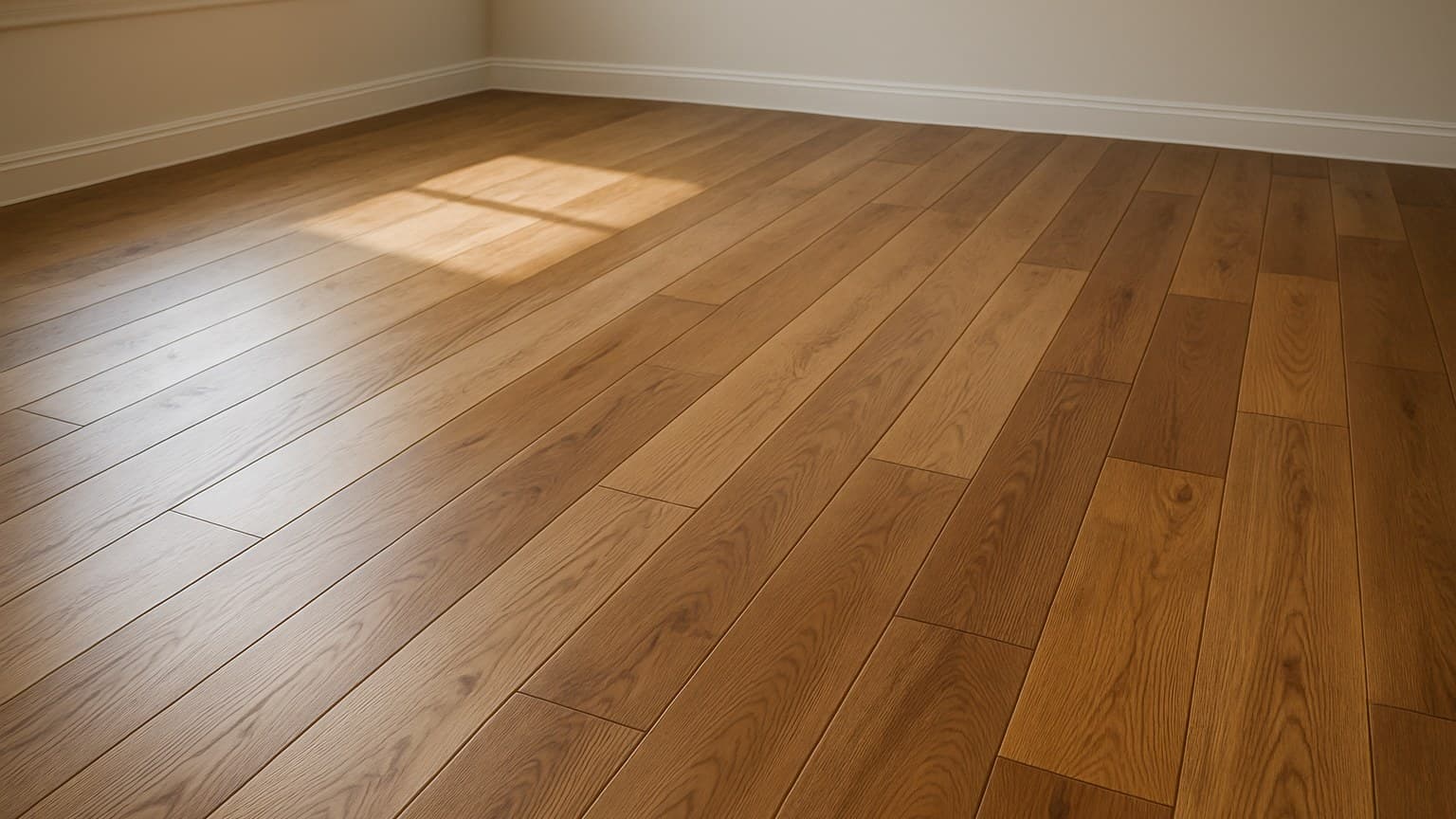
When I bid a red oak job for the Hendersons in Tulsa, they'd already paid Clear-grade prices for flooring that graded out two steps lower, the store never put the real grade name on the box. That gap between the marketing name and the actual grade sheet is where most buyers get burned, not the wood species itself. Here is how to read past the marketing name to what is actually stacked in the carton. That same read-past-the-label habit matters just as much on the eco side of the aisle, where a sustainable hardwood flooring label can tell you almost nothing about how the tree was actually sourced.
Key takeaways
- Grade is about looks, not strength. Every grade of the same species has the same hardness and thickness; you are paying for fewer knots, streaks, and color swings, plus longer boards.
- Retailer names are not standard. Prime usually maps to Clear, Builder or Blue Label to #1 Common, and Cabin, Tavern, or Mill Run to #2 Common and below.
- NWFA rules allow up to 5% of the boards in a box to fall outside the stated grade, which is why an installed floor can look busier than the store sample.
- Grade moves material cost, not labor. On oak, material runs roughly $2-4 per sq ft at Tavern grade up to $6-9 at Clear, while install labor stays about the same per square foot.
- A dark stain or hand-scraped finish hides character marks, so you can drop a grade and save without the floor looking cheap.
What "Grade" Actually Means (and the One Thing It Never Tells You)
Grade rates how a board looks, not how strong it is. It measures the amount of knots, streaks, and color change on the surface, plus how long the boards run. It says nothing about hardness, thickness, or how long the floor lasts.
That is the part the box never spells out. A #2 Common oak board and a Clear oak board come off the same log, mill to the same thickness, and carry the same Janka hardness number, that's the industry scale that measures how hard a wood surface is and how well it resists dents, and grade doesn't change it. Walk on them in ten years and they wear the same. You pay more for a higher grade because it has fewer character marks and longer planks, not because it is built better. If you're weighing that same hardness number against a completely different material, the bamboo flooring vs hardwood breakdown shows how those Janka figures actually compare.
So when someone tells me the "top grade" is the "best quality," I stop them. The choice that actually drives durability is solid versus engineered and where the floor is going, which I cover in the solid vs. engineered hardwood guide. Grade is a looks-and-budget decision sitting on top of that. And if engineered turns out to be the right fit, click hardwood flooring changes that installation math again, since click-lock seams handle moisture and subfloor prep differently than glue-down or nail-down engineered boards.
The Official NWFA/NOFMA Grades, Top to Bottom
According to the grade standards published by the NWFA/NOFMA, the National Wood Flooring Association's standards arm, formerly the National Oak Flooring Manufacturers Association, there are five official grades, and every retailer name is a repaint of one of them. From cleanest to busiest:
- Clear (Prime): almost no character marks, even color, the longest boards, and the priciest look.
- Select & Better: mostly clean with light, occasional small knots and slight color change.
- #1 Common: noticeable knots, streaks, and color variation. This is the middle-ground look most people picture as "real wood."
- #2 Common (Rustic): heavy character, more knots, and shorter boards. This is the rustic look on purpose, not a defect.
- #3 Common / Tavern / Utility: maximum marks and the shortest boards, and the cheapest.
NWFA publishes reference photos for each grade, worth a look before you argue with a mill rep about what "Select" is supposed to look like.
One naming note that confuses people: NOFMA, short for the National Oak Flooring Manufacturers Association, is now folded into the NWFA (the National Wood Flooring Association) as its manufacturing and grading standards body. So when you see NWFA grades and NOFMA grades quoted, they point to the same rulebook, just different eras of the same name.
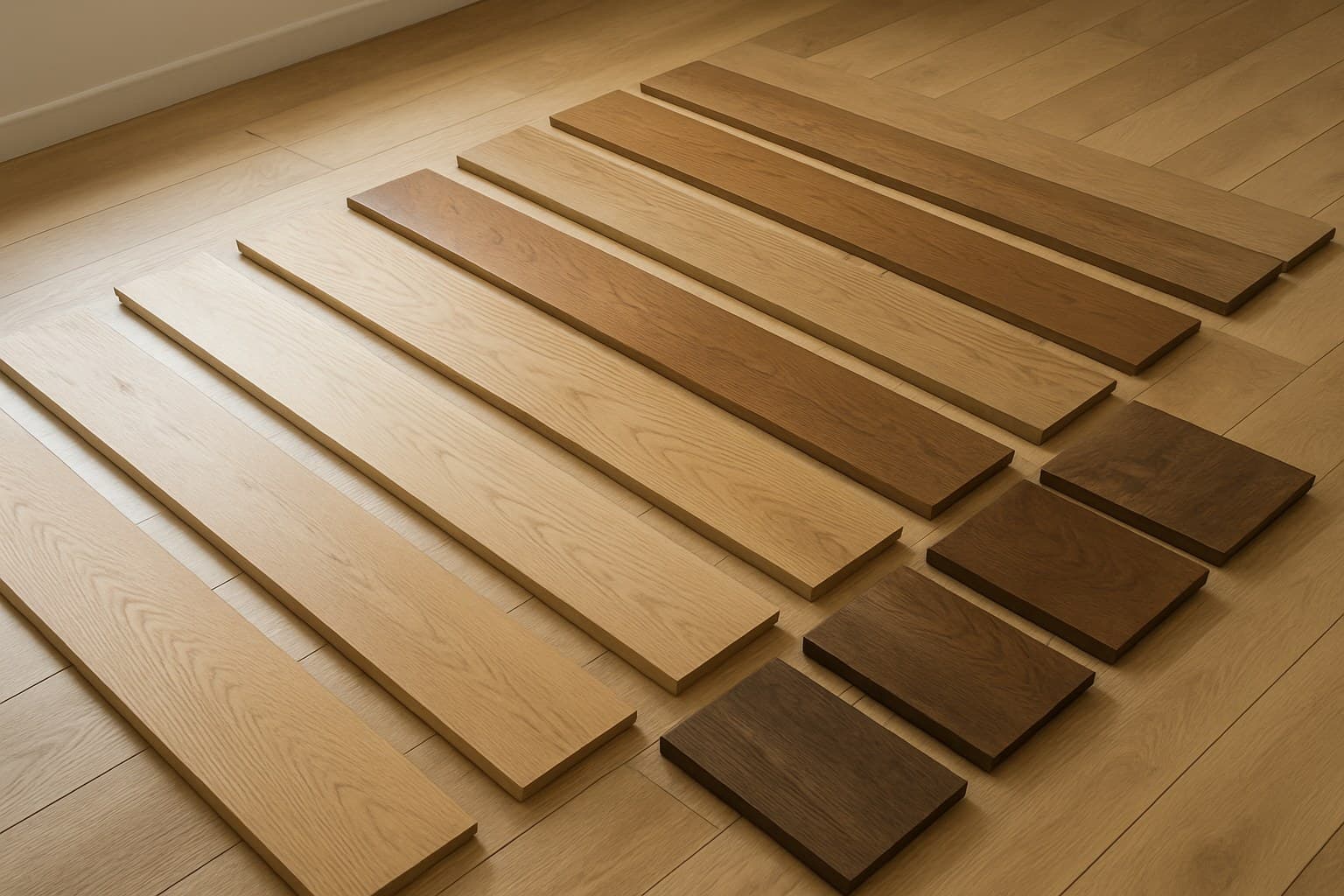
Retailer Grade Names Decoded: What "Prime," "Builder," "Cabin," and "Blue Label" Really Mean
Retailers rarely print "#1 Common" on a display. They print a friendlier name. The table below translates the common ones back to the official grade so you know what you are buying.
| Retailer name | Official grade | What you actually get |
|---|---|---|
| Prime / Premium | Clear | Minimal marks, uniform color, longest boards |
| Select & Better / Natural | Select | Light character, small knots, slight color change |
| Builder / Blue Label / Standard | #1 Common | Visible knots, streaks, and color variation |
| Cabin / Country | #2 Common | Heavy character, shorter boards, rustic look |
| Tavern / Utility | #3 Common | Maximum defects, shortest boards, lowest price |
| Mill Run | Mixed (Select through #2) | Unsorted blend of grades sold as one economical box |
Source: The NWFA grade definitions matched against the retailer box labels I've opened on jobs
Here is the trap: these names are not standardized. One brand's "Select" is another brand's "#1 Common." I have opened two boxes labeled "Natural" from different mills and found different amounts of knots. Read the character description on the spec sheet, not the label on the display.
Mill Run and Cabin Grade: the budget categories explained
Mill Run, sometimes called Run of the Mill, is a mix of grades sold unsorted in one box. You get some clean Select boards and some busy #2 Common boards in the same carton, and you sort them yourself as you lay the floor. It is an honest way to save money if you do not mind the variation.
Cabin grade is usually the cheapest sorted grade, mapping to #2 Common. It is heavy on character by design. If you are chasing a low price on leftover or odd lots, the pricing on those runs works differently again, which I break down in the clearance hardwood flooring guide.
The Defect Vocabulary: Knots, Streaks, Checks, and Machine Burn
Grade is really a list of which marks are allowed. Learn the words and you can look at a board and name what you see. Some marks are purely cosmetic. A couple can affect the surface, so I have flagged those.
| Term | What it plainly is | Shows up from |
|---|---|---|
| Knot | Round spot where a branch grew | Small ones in Select; larger in #1 Common and down |
| Mineral streak | Dark line from minerals the tree pulled up | #1 Common and down |
| Sapwood | Lighter wood from the outer part of the log | Select and down |
| Worm hole | Tiny hole left by insects | #2 Common and down |
| Check / shake | Small surface split (check) or grain separation (shake) | #2 Common and down |
| Machine burn | Scorch mark from milling | #3 / Tavern only |
Source: The NWFA hardwood grading rules for character marks
Mineral streaks and sapwood color are just looks. They do not weaken anything. A check is a small split in the surface of the board, and a shake is a separation that runs along the grain. Neither one means the board is weak once it is nailed down and glued at the seams, but an open check can catch dirt, so I fill or cull those on a cleaner floor. Machine burn is the one I watch for, since a scorch mark from the mill can telegraph through a thin finish.
Unfinished vs. Prefinished Grading and the 5% Rule Nobody Explains
According to the NWFA/NOFMA Unfinished Wood Flooring Standard, unfinished lumber is graded to rules that set a minimum Average Board Length (ABL) for each grade. That is why you can trust that a Clear floor will run in long boards and a Tavern floor will not. The rulebook is doing the sorting.
Prefinished and proprietary floors are a different story. The NWFA/NOFMA also publishes a separate Factory-Finished Flooring Standard, but grade naming underneath it is largely set by each manufacturer's own house names, which is why the labels drift between brands. There is no referee forcing "Select" to mean the same thing at two companies.
Now the rule almost nobody explains at the counter: the NWFA/NOFMA Unfinished Wood Flooring Standard itself builds in a tolerance provision for grading, trade shorthand calls it "fallout", that lets a percentage of the footage in a bundle fall outside the stated grade even when the bundle is correctly graded. The widely used trade figure for that allowance is up to 5% of the footage. I'm citing that as the number the trade consistently uses rather than retyping the standard's exact clause wording here, since I'm not going to paraphrase a legal document from memory, if you want the precise page and clause language, it's worth pulling your own copy of the standard (linked in Sources below) and reading the tolerance section directly before you argue a claim with a mill. On a Clear floor, that tolerance is why a stray knot shows up where you did not expect one.
This is why an installed floor almost always looks busier than the tidy little store sample. Open several boxes, dump them together, and dry-lay a few rows before you nail anything, a step the NWFA's own installation guidelines recommend for exactly this reason. That is also the moment to plan what goes beneath the boards, which the guide on what to put under hardwood walks through.
Hardwood Flooring Grades Chart: Price, Board Length, and Defect Allowance Side by Side
Here is board length, defect allowance, and the room each grade suits, lined up together for unfinished oak.
| Grade | Avg board length | Defect allowance | Best room |
|---|---|---|---|
| Clear (Prime) | ~3.75 ft | Very few marks | Formal rooms, whole-house uniform look |
| Select & Better | ~3.25 ft | Light character | Living and dining rooms |
| #1 Common (Builder) | ~2.75 ft | Knots and color variation | Everyday rooms, hallways |
| #2 Common (Cabin) | ~2.25 ft | Heavy character | Rustic looks, high-traffic areas |
| #3 Common (Tavern) | ~1.75 ft | Maximum defects | Closets, rentals, tight budgets |
Figures above are illustrative approximations for red oak; actual minimum Average Board Length varies by species and grade under the NWFA/NOFMA Unfinished Wood Flooring Standard, so confirm against the mill's spec sheet.
To say it plainly instead of just implying it: on the high-end and custom-build jobs I bid, the spec almost always calls out Clear (Prime), with Select & Better as the next acceptable step down. That's the grade builders and designers write into luxury specs when they want a gallery-clean, uniform look running unbroken through open floor plans, #1 Common and below get specified on purpose for rustic or budget-driven looks, not because anyone settled for them.
The key thing about cost: grade moves the material price, not the labor. Installing Tavern oak takes the same nailing, sanding, and finishing as installing Clear, so the labor per square foot stays about the same. In an open room, nail-down install labor runs roughly $3-6 per square foot at either grade. What changes is the wood itself.
For oak, here is how the material price per square foot climbs as the grade cleans up:
| Grade | Oak material, per sq ft |
|---|---|
| Tavern (#3) | $2-4 |
| Cabin (#2) | $3-5 |
| Builder (#1) | $4-6 |
| Select | $5-7 |
| Clear (Prime) | $6-9 |
Two things to flag. Species swings this whole chart. A pricier wood like walnut sits well above these oak numbers at every grade, which the walnut hardwood flooring cost breakdown lays out. And the room matters: basement jobs and stairs cost more than open rooms because of the extra cutting, transitions, and moisture prep, and solid hardwood is not the pick for a below-grade basement at any grade. For that basement scenario, buyers often turn to a laminate alternative instead, so it's worth knowing whether Pergo hardwood holds up as real wood before you swap species for a laminate product.