
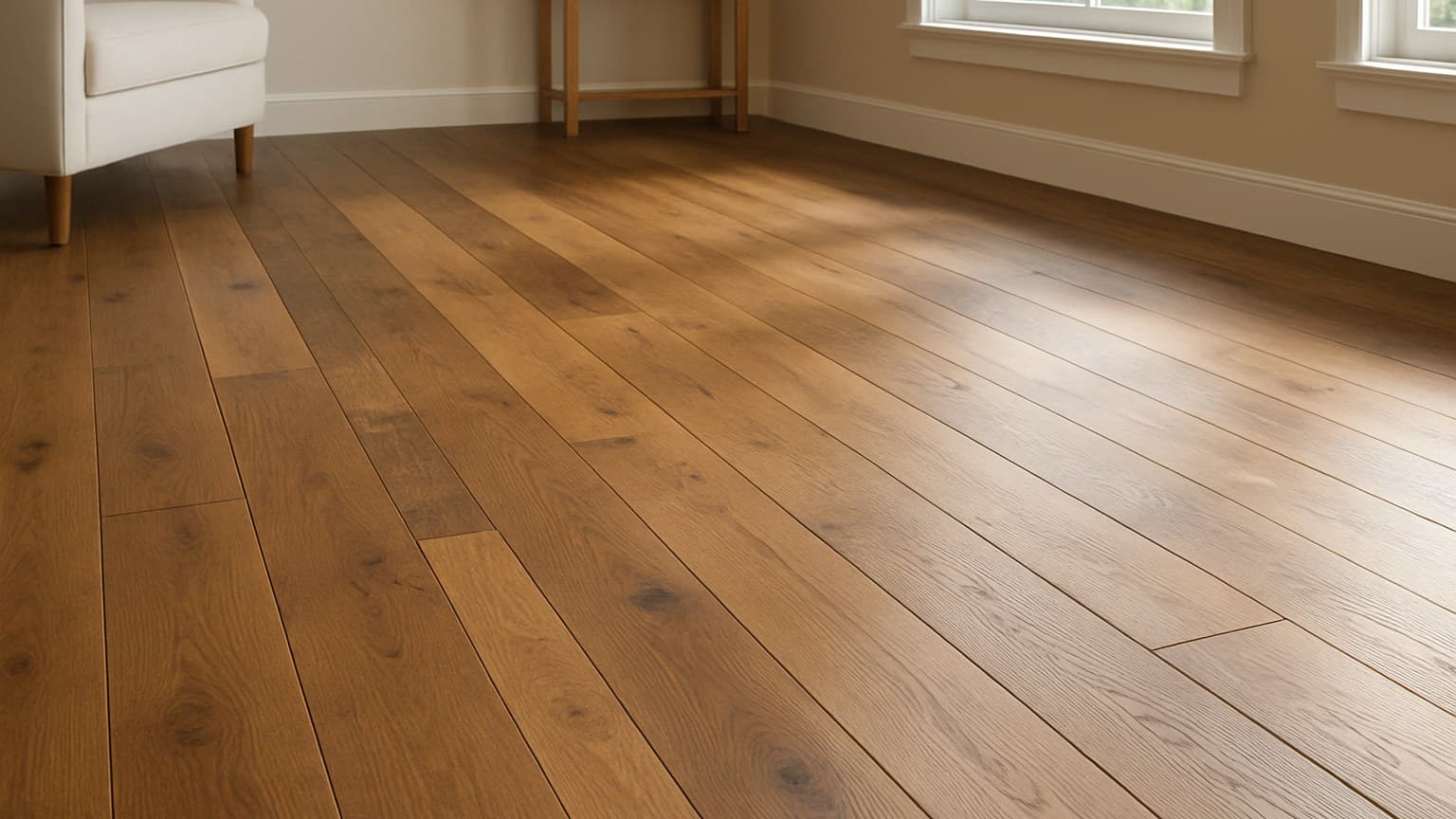
The word cabin does no standard work on a hardwood box. One mill's cabin grade is a clean, knotty floor; another's is whatever came off the saw sound enough to sell, and you find out which only after the pallet lands. Here's how to tell before you order.
Key takeaways
- "Cabin" is a proprietary label, not a standard grade. One brand's cabin maps to #2 Common, another's to Tavern, so you have to read the maker's own grade sheet before you trust the word.
- Grading is about looks, not strength. Cabin boards come off the same tree and finish line as first quality; they just carry more knots, mineral streaks, and short boards.
- Material runs roughly half of first-quality hardwood, but install labor costs the same per square foot no matter the grade, and stairs or a cabin loft cost more than an open room.
- Order more overage for cabin grade, around 15% for a straight room and more for diagonal or complex layouts, because you'll cull more boards for open knots and splits.
- Sound tight knots and mineral streaks are fine rustic character. Open or loose knots, through-cracks, and cupping are defects that fail, so inspect a real sample before committing.
Start Here: Will Cabin Grade Look Rustic or Just Cheap?
It can go either way. What decides it is the maker's own grade sheet plus your own eyes on a sample, not the word "cabin" printed on the box.
Here's the part that calms most people down: grading sorts boards by looks, not by strength. Cabin boards come off the same tree, the same mill, and the same finish line as the first-quality run. They just carry more knots, more mineral streaks (dark color lines with no crack in them), and more short pieces. A low grade is not a weak floor.
The difference between charming and cheap comes down to a few simple calls. Sound, tight knots and mineral streaks read as character. Open cracks, loose knots that could fall out, and any cupping or warp are defects that will fail. You only know which pile your order lands in if you inspect a real sample before you buy the big lot.
On cost, be honest with yourself about the split. Cabin-grade oak material typically runs roughly $2-$4 a square foot, against roughly $5-$8 for first-quality oak, actual pricing varies by mill and region, so treat these as ballpark figures, not a quote. Install labor is the same per square foot no matter the grade, usually around $3-$6 for a straightforward nail-down, and stairs, a cabin loft, or a basement all cost more per foot than an open room, stairs for the extra cuts, basements for the extra moisture prep before a board goes down. You save on the boards, not on the hands laying them. Walnut sits in a completely different price bracket than oak regardless of grade, so it's worth checking how much walnut hardwood flooring actually costs before you compare species on price alone.
If you actually want that beat-up, textured look on purpose, that's a design choice worth chasing, and it's a different question from grade. Read how to tell real hand scraped hardwood flooring from fake before you pay extra for texture that a router faked.
Step 1: Pull the Grade Sheet and Map "Cabin" to NWFA/NOFMA
Before you order, get the manufacturer's own grade or spec sheet in writing. "Cabin" is a marketing label with no single industry standard behind it, so the only way to know what's in the box is to read what that specific mill promises.
Then map that label onto the official appearance grades published by the NWFA (the National Wood Flooring Association) and its predecessor NOFMA (the National Oak Flooring Manufacturers Association). According to the NWFA/NOFMA Unfinished Standard, the official appearance grades, from cleanest to wildest, run Clear, Select, #1 Common, #2 Common, and Tavern, which some mills also market as Cabin or Utility.
One brand's "cabin" behaves like #2 Common, which is still fairly clean and knotty in a pleasant way. Another brand's "cabin" behaves like Tavern, where anything structurally sound goes in the box, filler and all. Same word, very different floor. The table below shows that spread so you know what you're actually buying.
| Retailer label | NWFA/NOFMA grade | Look | Typical shorts | Defects allowed |
|---|---|---|---|---|
| Select / Better | Select | Mostly clear, minimal character, uniform color | Fewest short boards | Small pin knots, light color variation |
| Standard / #1 Common | #1 Common | Natural, some knots and color change | Moderate | Sound knots, mild mineral streak, some sapwood |
| Cabin (cleaner end) | #2 Common | Rustic, heavy character, strong color contrast | More boards under 24" | Larger sound knots, wormholes, mineral streaks, heartwood/sapwood mix |
| Cabin / Tavern / Utility | Tavern (Cabin) | Most rustic, widest variation, some fill | Most shorts, shortest lengths | Open knots may be filled, splits trimmed at install, anything structurally sound |
Source: I cross-checked these against the NWFA unfinished solid oak grading rules
How common "cabin"-type store labels compare to the official NWFA/NOFMA appearance grade names for unfinished solid oak, per the NWFA/NOFMA Unfinished Standard.
Remember what the grade never tells you: it sorts by look and by board length, not by how strong the wood is. A Tavern board is as solid underfoot as a Select one. It just shows more, and comes shorter.
Step 2: Inspect a Real Sample Against This Defect Checklist
Never buy a big lot off a photo. Order or pick up a physical sample, then sort what you see into character you keep and defects that fail. The NWFA/NOFMA grade photos gallery is a useful side-by-side reference for what a sound knot or mineral streak looks like next to an actual defect, worth a look before you inspect your own sample.
Keep these: sound, tight knots that are grown in and filled solid; mineral streaks, which are dark color lines with no crack; color contrast between the pale sapwood and the darker heartwood. All of that is normal rustic character in a low grade.
Red-line these: open or loose knots, where there's a gap around the knot or it could drop out; through-checks, meaning a crack that runs across the width of the board; splits at the ends; and any cupping or warp, where the board is no longer flat. A few of these show up in any cabin bundle, and a good installer trims them off at install, but every foot you cut off is yield you paid for and lost.
While the sample is in your hands, count the short pieces. How many fall under 24 inches? Heavy shorts mean more end joints and a busier floor. That's fine for a rustic room, as long as you plan the overage for it.
One more from a job I'd rather forget: on a cabin remodel for Karen in Bend, Oregon, she talked me out of a moisture check to save an afternoon, and I let her. That floor cupped before the season turned, and I relaid it on my own dime. Check the box for the kiln-dried moisture spec, follow the maker's acclimation instructions if it gives any, and confirm the subfloor is flat and dry before a single board goes down. Cabin grade doesn't change that step. Getting that prep right often comes down to knowing what to put under hardwood flooring, since the wrong underlayment can undo all that moisture checking anyway.
If you're looking at engineered cabin grade instead of solid, know that per the NWFA/NOFMA Factory-Finished Standard, grading on engineered products describes only the thin wood veneer wear layer, not the plywood core underneath it. The buying math shifts on those, so weigh whether click hardwood flooring is worth it before you assume a floating click floor behaves like a nail-down. That same solid-versus-engineered fork shows up everywhere in hardwood shopping, not just in cabin grade, so it's worth understanding how to choose between solid and engineered hardwood before you commit to either construction type.
Cabin Grade by Species: Oak, Hickory, and Maple
The species you pick decides how forgiving cabin grade looks, because each wood hides or shows its flaws differently. That same decision gets more complicated once you widen it beyond solid wood species, since bamboo flooring vs hardwood comes with its own hardness and grading quirks to weigh.
Oak is the most forgiving. Its busy grain swallows knots and streaks, red or white both take a rustic look well, and cabin oak is the most available and usually the cheapest of the three. If you're not sure, start here.
Hickory is the wildest. Cabin hickory swings hard from pale sapwood to near-chocolate heartwood and carries heavy grain, so it reads as dramatic to some buyers and chaotic to others. Look at a large sample, not one board.
Maple is the riskiest bet for a low grade. Maple has a smooth, pale face, so every mineral streak and knot stands out, and a cabin grade can look dirty rather than rustic. If you love maple, price a cleaner grade before you commit to cabin. That same pale, revealing surface is exactly what makes light hardwood floors show every mark that a darker floor would simply hide.
| Species | Signature look | Worst defects | Availability | Material per sq ft |
|---|---|---|---|---|
| Oak (red/white) | Busy grain hides character well | Knots, mineral streak, sapwood | Widest, easiest to reorder | $2 - $4 |
| Hickory | Extreme light-to-dark color contrast | Heavy heartwood/sapwood swing, hard knots | Common | $3 - $5 |
| Maple | Smooth pale face shows every flaw | Mineral streaks stand out, can look dirty | Less common in cabin grade | $3 - $5 |
Source: These ranges come from the cabin-grade oak, hickory, and maple pallets I've sorted and culled for install
Material-only price ranges (not including labor) for cabin-grade oak, hickory, and maple, approximate figures that vary by region and retailer.
Step 3: Order More Overage Than You Think
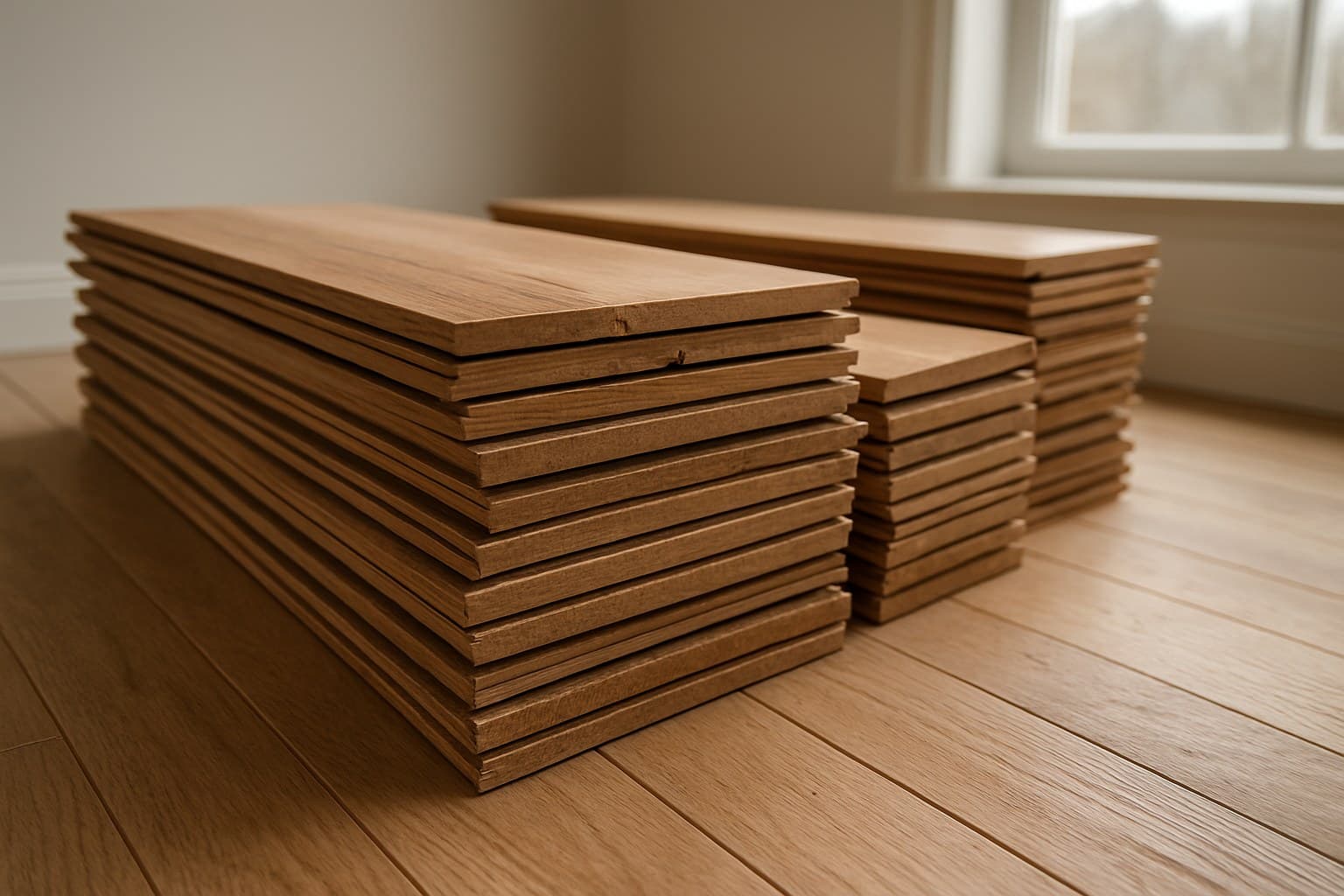
Buy extra, because cabin grade throws away more boards than a clean grade does. For a straight-lay room, order about 15% over your square footage instead of the usual 10%, and go higher for a diagonal or complex layout.
The reason is yield. Every open knot, split, or badly cupped board you pull out is a piece you cannot lay, and cabin bundles have more of them. On top of that, the pile of short boards means more careful sorting to keep the floor from looking like a checkerboard of stubs. That waste is normal for the grade, not a sign of a bad lot.
Buy the whole job in one shipment from one dye lot if you can. Cabin grade already carries wide color swing, and a reorder from a different run can push that swing past charming into mismatched. If you're shopping the deep discounts, know that the same short-lot problem drives clearance hardwood flooring deals too, so confirm you can get enough of one lot before you fall for the price.
Step 4: Read the Return Policy Before You Commit
Confirm in writing what you can send back, because cabin grade often ships as a "no returns" or "as-is" sale, and that changes the whole gamble. If you can't return the extra, over-ordering stops being a safety net and becomes money spent.
Ask three things before you pay. Can you return unopened boxes, and by when? Is there a restocking fee? And what counts as a defect the seller will replace, versus normal cabin character they won't? Get the answer that names open knots, splits, and cupping specifically, since those are the ones worth arguing over. A seller who won't put the defect line in writing is telling you which end of the grade their cabin really sits on.