
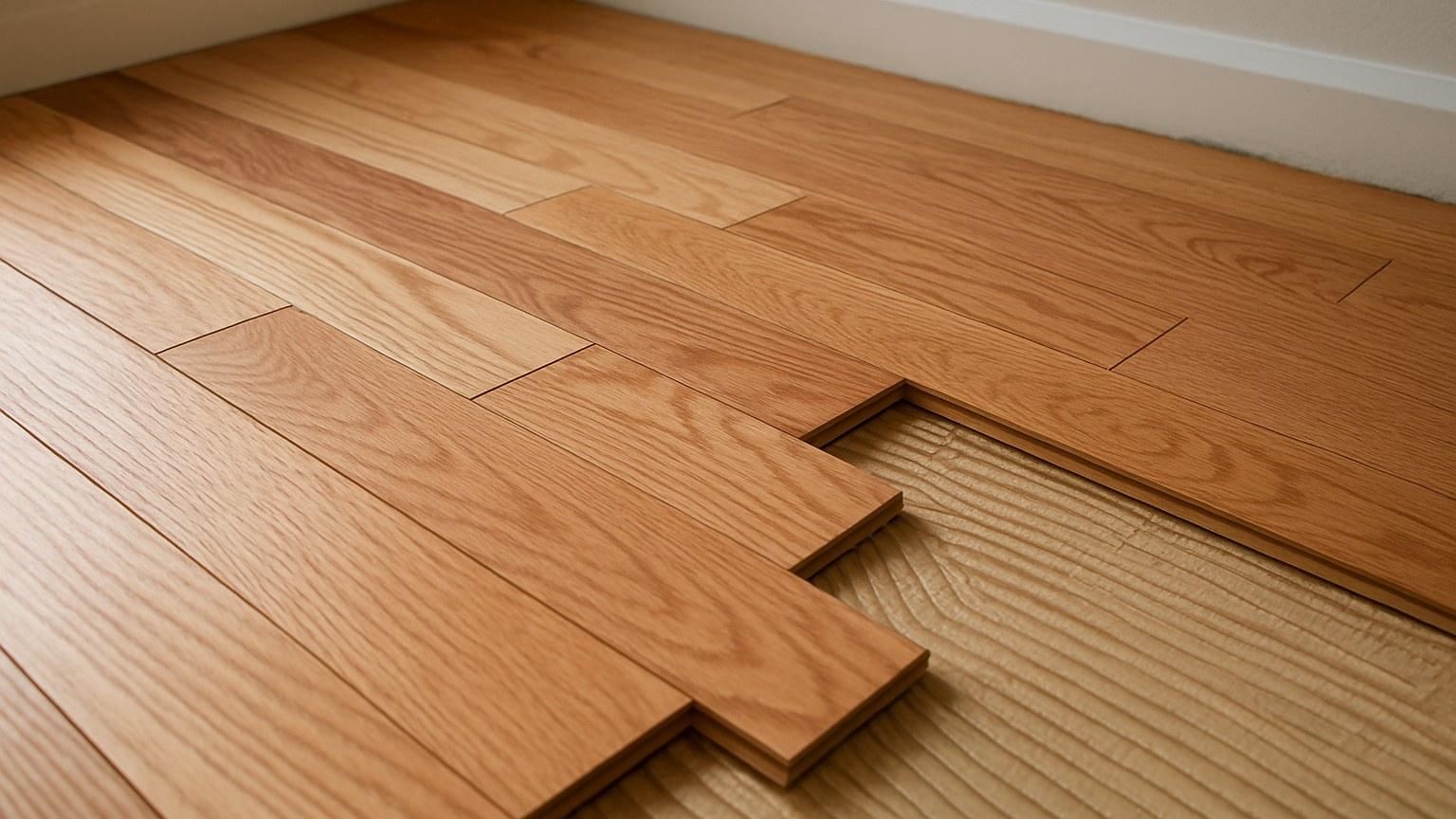
With unfinished red oak flooring, grade moves your per-square-foot price more than any other single choice, and six more decisions stack on top of it. Going unfinished trades a cheaper board for sanding and coating labor you take on at the house. Here are all seven choices, from grade down to the finish.
Key takeaways
- Grade is the biggest material-price lever: Select & Better reads clean with few knots and sits at the top, while #2 and #3 Common and Character grades cost less because they show more knots and color streaks.
- Going unfinished saves on the board itself, but you add sanding, staining, and coating labor on site, so the installed total often lands near a comparable prefinished floor.
- Basic red oak installs run about $2-7 per sq ft (reallycheapfloors.com), while solid red oak sanded and finished on site runs about $8-12 per sq ft (Angi); a 300 sq ft room at that rate is roughly $2,400-$3,600.
- Wider planks, rift and quartered cuts, long-length boards, and herringbone each push the price up from a standard 2 1/4-inch plain-sawn strip.
- Natural red oak reads warm with a pink-red cast; it's a classic look worth skipping only if you want a cool, gray-brown tone, where white oak fits better.
Is It Cheaper to Buy Unfinished Hardwood Floors?
The bare board is usually cheaper than a comparable prefinished one. But once you add sanding, an optional stain, and the coats on site, the installed total often lands close to a prefinished floor. So "cheaper" depends on whether you count the board or the finished floor.
Unfinished wins when you want something a factory finish can't give you: a custom stain color, a match to an existing floor, large open spans sanded dead flush, and smooth, flat transitions from room to room. You sand it all as one plane after it's down, so there's no micro-bevel, the tiny angled edge some factory-finished boards have along each side, which you can feel as a slight ridge, and no height jog at any seam.
If you'd rather skip the dust and the on-site coats altogether, the prefinished hardwood route is the alternative, where the wear finish is baked on at the factory.
Everything below prices the unfinished choice, one decision at a time.
1. The Grade: Your Biggest Price Lever
Grade is the single biggest lever on material price, and it rates appearance, not strength. A #3 Common board is just as hard as a Select board; it only shows more knots, splits, and color swing.
The grading language comes from the National Wood Flooring Association (NWFA), a trade group that writes the grading and install guidelines the industry follows. Retailer Hurst Hardwoods uses the phrase "NWFA certified or better" on its product listings to tell buyers the boards were sorted to that standard, that's Hurst's own wording, not a label every mill uses. Here's what each grade actually shows underfoot.
| Grade | What it looks like | Price |
|---|---|---|
| Select & Better | Clean, uniform color, very few small knots | Highest |
| #1 Common | Light color variation, small knots and streaks | Upper-mid |
| #2 Common | Noticeable knots, mineral streaks, color swing | Budget |
| #3 Common | Heavy knots, splits, strong color contrast | Lowest |
| Character | Rustic on purpose: knots, worm marks, wide color range | Sold as a look |
How red oak grades compare on appearance and price.
Cheap unfinished red oak is almost always #2 or #3 Common. The knots and the color jump from board to board are exactly what hold the price down.
Character grade is the odd one out. Mills sort and sell it as a rustic look on purpose, playing up knots, worm marks, and a wide color range instead of culling them out. If that's the floor you want, read up on what makes a rustic hardwood floor read right before you order, because the same features that cost less in a Common grade cost a premium when they're branded as "character."
2. Plank Width: From 2 1/4" Strip to 9" Plank
Narrow strips cost the least per square foot and move the least with the seasons. Wider planks cost more and demand a flatter, drier subfloor under them. Before buying any wide plank wood flooring, it's worth checking the handful of specs that determine how well it holds up over time.
The classic 2 1/4-inch strip is the most economical and the most widely stocked width you'll find. Step up to 3 1/4-inch and the price rises a little. Jump to 5-inch and up to 9-inch wide plank and you're paying a clear premium. That same width premium shows up in other species, like wide plank pine flooring, where the softer wood adds its own tradeoffs.
Three things drive that premium: there's more wood in each board, the mill throws away more as waste getting a clean wide face, and a wider board swells and shrinks more across its width, so it needs a flatter subfloor and tighter moisture control to stay down and gapped evenly. A mixed-width or wide-plank order usually carries a per-square-foot upcharge over a single narrow width. Hickory follows the same pattern, and wide plank hickory flooring adds its own cost questions around how much the wood moves.
3. The Cut: Plain Sawn vs Rift & Quartered
Plain sawn is the cheapest and most common cut, with wavy "cathedral" arches in the grain. Rift and quartered costs the most and gives tight, mostly straight grain that moves less across its width.
Those arches on a plain-sawn board are the loops and peaks you picture when you think of oak. Quartered boards show silvery ray flecks, a shimmer called figure, running across the face. Rift boards give clean, uniform straight lines with no flecking at all. Mills often sell rift and quartered mixed together.
Rift and quartered costs more for a simple reason: the mill gets fewer usable boards out of each log and has to cut them more slowly. You're paying for a look and for a board that stays flatter, as much as for the wood itself.
Drawing is not to scale; it shows how the grain reads on each cut, not real board sizes.
4. Solid 3/4" vs Engineered Red Oak
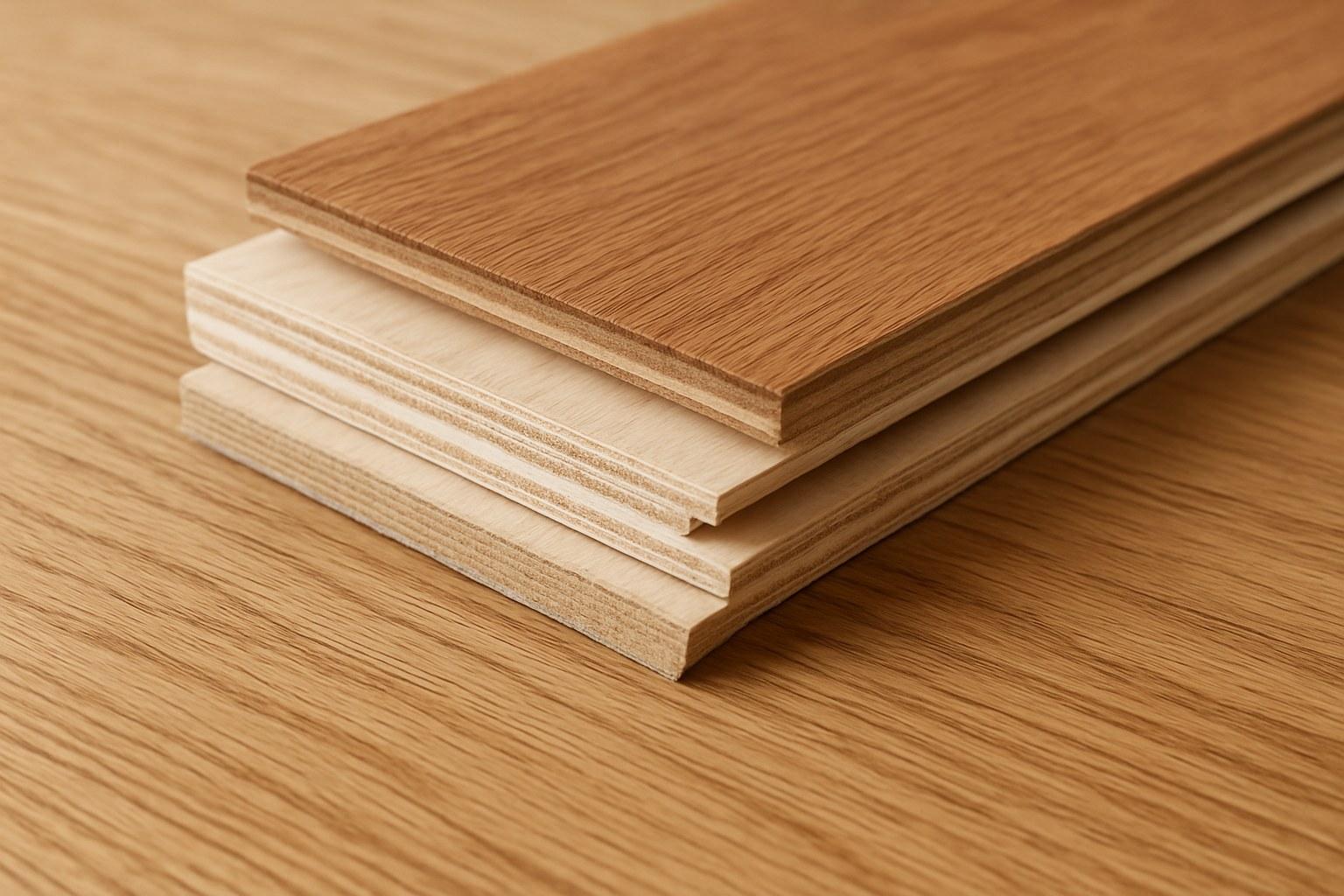
Solid 3/4-inch red oak can be sanded many times over its life. Engineered puts a real red oak veneer over a plywood-style core that stays flatter over concrete and below grade. This same solid-versus-engineered calculus applies no matter which species you're picking, so the guide to choosing solid vs. engineered hardwood is worth a look before you lock in red oak specifically.
Where you're installing drives the choice as much as looks do. A basement or any slab on grade leans engineered. Above grade over a wood subfloor can take either one.
On slab jobs I've seen solid strips start to cup across the board while an engineered floor laid over the same concrete held flat. The layered core fights the seasonal movement that a solid board shows when moisture pushes up through a slab, so over concrete I lean engineered.
Two things to know before you shop: unfinished engineered is harder to find on the shelf than solid, and the veneer thickness the maker publishes limits how often, if ever, you'll be able to sand and refinish it later. "Can I refinish this down the road" is a spec question on an engineered floor, not a given.
5. Board Length: Standard vs Long-Length
Standard random-length bundles are the cheapest. Long-length boards cost more because they cut down the number of end joints and give a cleaner, more open look.
Long boards are a premium pull from the mill run. Fewer of them come out of the same wood, so they carry a per-square-foot bump over a standard bundle.
On a small room the difference is mostly cosmetic; you won't notice the joint count much. On a big open floor it changes how busy everything reads. More short boards mean more end joints breaking up the surface, which makes the floor look choppier.
6. Herringbone and Other Patterns
A herringbone layout is the biggest pattern upcharge of the bunch. It uses shorter, precision-cut pieces and far more cutting and layout labor than a straight-lay floor.
Both lines go up at once. The material costs more because the pieces are cut to a set length, and the install labor costs more because every piece has to be fit at an angle to a tight layout line. A plain straight-lay floor is the baseline here. Patterns are where the labor cost jumps the most, so budget for the install, not just the wood.
7. The On-Site Finish
Finishing unfinished boards on site means sanding the whole floor flat, an optional stain, then two to three coats of finish. That's the labor you take on that a prefinished floor skips entirely.
Red oak's open, porous grain soaks up stain pretty evenly, which is part of why it's a forgiving floor to color on site. That's a real edge over tighter woods like maple, which can blotch.
A hard lesson from one of my own early jobs: I filled old board gaps with wood putty before finishing, and the stain wouldn't soak into the filled spots. Every repair came back as a pale patch once the stain went down. Now I warn people the filler and the stain rarely match, or I skip filling the gaps altogether.
According to hallmarkfloors.com, the on-site finishing steps break down like this per square foot.
| Task | Cost per sq ft |
|---|---|
| Recoating / buffing | $1.00-$2.00 |
| Sanding | $0.50-$3.00 |
| Staining | $1.00-$3.00 |
Before any of that sanding starts, the subfloor has to be flat and dry. A floor sanded over a humped or wet subfloor telegraphs every flaw, so check flatness with a straightedge and check moisture before the first board goes down.
This is where I'd think hard about DIY versus hiring. Nail-down solid strip plus running a drum sander yourself is a real skill, and a sander left sitting in one spot gouges the floor in a second.
What Unfinished Red Oak Costs Per Square Foot
Installed, basic red oak runs roughly $2-7 per square foot according to reallycheapfloors.com, and a site-finished solid strip runs about $8-12 per square foot according to Angi, depending on who's pricing it and how much prep the old floor needs.
Here's the plain arithmetic on a 300 square foot room. At the basic installed rate from reallycheapfloors.com, and the site-finished solid rate from Angi:
| Scope | Cost per sq ft | 300 sq ft room |
|---|---|---|
| Basic red oak, installed | $2-7 | $600-$2,100 |
| Solid red oak, sanded & finished on site | $8-12 | $2,400-$3,600 |
Installed red oak cost ranges and what they come to on a 300 square foot room.
So a 300 square foot room sanded and finished on site is roughly $2,400-$3,600 before extras like old carpet removal. Inside that $8-12 per square foot, the finishing labor alone, sanding, staining, and coats, runs about $2.50-$8.00 per square foot, per the hallmarkfloors.com breakdown above; the board itself and the crew's install labor make up what's left of that range. Material cost moves with every choice above, from grade to cut to width. Labor cost moves with room size, pattern, and how much prep the subfloor needs, which is why a basement or a staircase always costs more than an open, flat room.
If you're still deciding whether wood is even the right call for your room, the LVP (luxury vinyl plank) vs hardwood breakdown weighs water tolerance and cost against the real wood look. And if you've settled on red oak and want to see the full nail-down process, the installing hardwood flooring walkthrough covers the test that picks your install method and is the useful next read before you order a single board.