
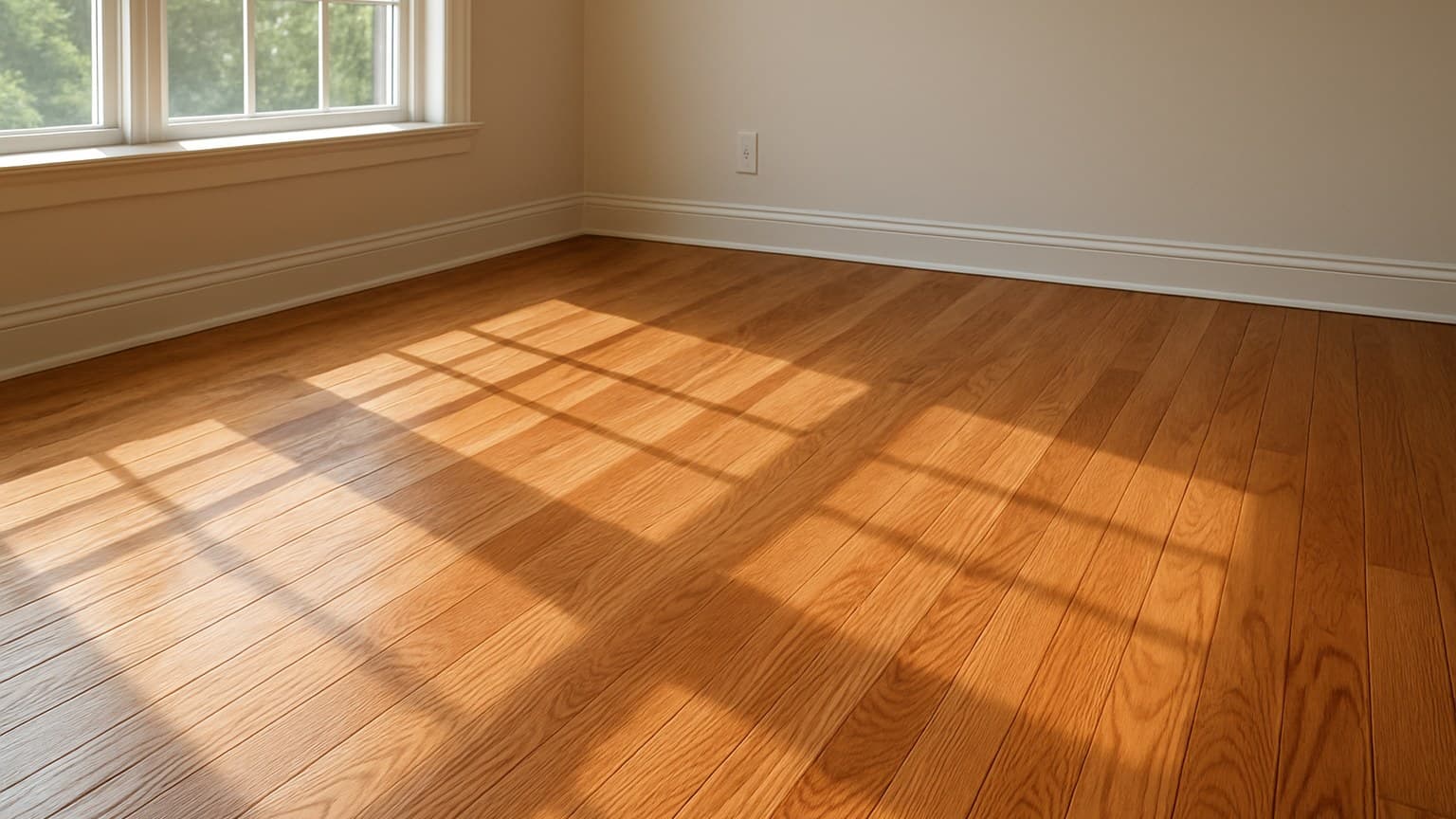
Pull three quotes for red oak flooring and you'll see numbers like $1.59, $9, and $22 a square foot, all for the same two words. The price hides grade, cut, finish, and who swings the nailer. Seven factors drive that spread, and once you know them, a quote stops looking random. If you want the bigger picture beyond red oak alone, covering species, colors, and even big-box options, wooden floor guide rounds it all up.
Key takeaways
- Wholesale red oak stock runs $1.59-$4.19 per square foot material only; a standard installed floor averages $6-$18; custom wide plank hits $12-$22 just for the wood.
- Grade is the biggest single swing at one mill: #3 Common at $1.59 versus Select & Better at $3.59 per square foot, same wood.
- Red oak's Janka hardness is about 1290, softer than white oak at about 1360 but hard enough for most homes.
- Finish-ready adds roughly $2 per square foot and prefinished about $6 per square foot over unfinished.
- Red oak is the value oak and still the most common domestic hardwood floor; it is not an expensive wood.
Reason 1: Who You're Buying From (Wholesale Stock vs. Custom Wide Plank)
The biggest reason quotes differ is the type of seller, not the wood. "Red oak" from a distributor's warehouse and "red oak" from a custom mill are priced in two different worlds.
There are three anchors to know. Wholesale distributor stock runs about $1.59 to $4.19 per square foot for the material only, which is the DIY starting point. A standard installed floor from a local pro lands around $6 to $18 all in. A custom wide-plank mill charges $12 to $22 for the wood alone before anyone installs it.
Splitting material from labor is the only way that one word stops meaning three different prices:
| Where you're buying | Material per sq ft | Labor per sq ft | All-in per sq ft |
|---|---|---|---|
| Wholesale distributor stock (DIY, material only) | $1.59-$4.19 | $0 (you install) | $1.59-$4.19 |
| Standard install, local pro | $3-$11 | $3-$7 | $6-$18 |
| Custom wide-plank mill, installed | $12-$22 | $5-$10 | $17-$32 |
Red oak priced three ways: raw material, a typical installed job, and a custom wide-plank floor, in dollars per square foot.
That same price spread, laid out as a chart:
| Where you buy | Price range plotted ($/sq ft) |
|---|---|
| Wholesale stock (material only) | $1.59-$4.19 |
| Installed, typical | $6-$18 |
| Custom wide plank (material only) | $12-$22 |
Dollars per square foot, floor material by where you buy.
At the same grade and tier, red oak material usually prices under white oak. If you're torn between the two, the white oak flooring guide runs them side by side.
Why 2 1/4" Strip and Wide Plank Aren't the Same Floor
A 2 1/4" strip floor and a 7" wide-plank floor are both red oak, but they aren't the same product. Wide boards cost more per square foot because wider cuts waste more of the log and move more with the seasons. Strip flooring is the budget workhorse; wide plank is a look you pay up for.
Reason 2: The Grade (Select & Better Down to #3 Common)
Grade is the biggest single swing at one mill. For plain-sawn unfinished solid red oak, the same tree and the same cut runs about $3.59 for Select & Better down to $1.59 for #3 Common.
Grade is set by the National Wood Flooring Association's NOFMA (National Oak Flooring Manufacturers Association) grading rules, which sort boards by how clean and long they are, not by how strong the wood is. Higher grades mean longer, clearer boards with even color. Lower grades allow more knots, streaks, mineral marks, and shorter average board lengths.
| Grade | What you get | Boards | Price per sq ft |
|---|---|---|---|
| Select & Better | Long, clear boards, few knots, even color | Longest average lengths | $3.59 |
| #1 Common | Some knots and color change, popular character look | Medium lengths | $2.79 |
| #2 Common | More knots, streaks, mineral marks | Shorter average lengths | $1.75 |
| #3 Common | Heavy character, splits, most rustic | Shortest boards | $1.59 |
Source: Hurst Hardwoods' unfinished solid price list
Red oak grades and their material cost, plain-sawn unfinished solid, in dollars per square foot. For the official visual definitions behind each grade name, NOFMA publishes reference grade photos.
A lot of homeowners land on #1 Common at $2.79. It gives a warm, lived-in character look without the top-grade price. A lower grade isn't defective wood, it just carries more knots and shorter boards, so you cut around more waste as you work. That same taste for knots, mineral streaks, and visible character is exactly what drives the rustic hardwood flooring look many homeowners chase on purpose.
Reason 3: The Cut (Plain-Sawn vs. Rift & Quartered)
Rift and quartered red oak costs more than plain-sawn at the same grade, usually about $0.20 to $0.30 more per square foot. At one mill that reads as roughly $3.79 versus $3.59 for Select & Better, and $3.09 versus $2.79 for #1 Common.
The difference is the grain. Plain-sawn shows wide cathedral or flame patterns, the arches most people picture in oak. Rift and quartered shows tight, straight lines that read calmer underfoot and move less with humidity.
You pay more because rift and quartered wastes more of the log to pull those straight boards out. Most homes get plain-sawn by default. The upcharge is a style and stability choice, not a quality one.
Reason 4: Unfinished, Finish-Ready, or Prefinished
Starting from the unfinished price, finish-ready adds roughly $2 per square foot and prefinished adds about $6 per square foot. That's the fastest way to read this line on a quote.
Each tier buys you something different. Unfinished is raw wood, sanded and finished in your house after it's down. Finish-ready saves a sanding step. Prefinished shows up with a tough factory UV-cured coat already on it, so there's no finishing on site at all.
Don't read prefinished as simply "more expensive." It costs more per board, but it cuts the finishing labor and the days your rooms are off-limits while coats dry.
One warning from my own jobs. A customer outside Dayton wanted site-finished red oak stained near-black, and that dark color showed every speck of dust and every swirl mark in the sanding. I recoated a section twice before she was happy. Red oak has open grain, so dark stains on it are a real commitment, not a quick change of mind.
Reason 5: Solid vs. Engineered Red Oak
Where the floor is going decides this one. Solid 3/4" red oak belongs in rooms on or above ground level. Engineered red oak handles concrete slabs and below-grade spots that solid isn't rated for. That same solid-versus-engineered trade-off, and how to match species and construction to each room, is laid out in more detail in this guide to picking solid vs. engineered hardwood floors.
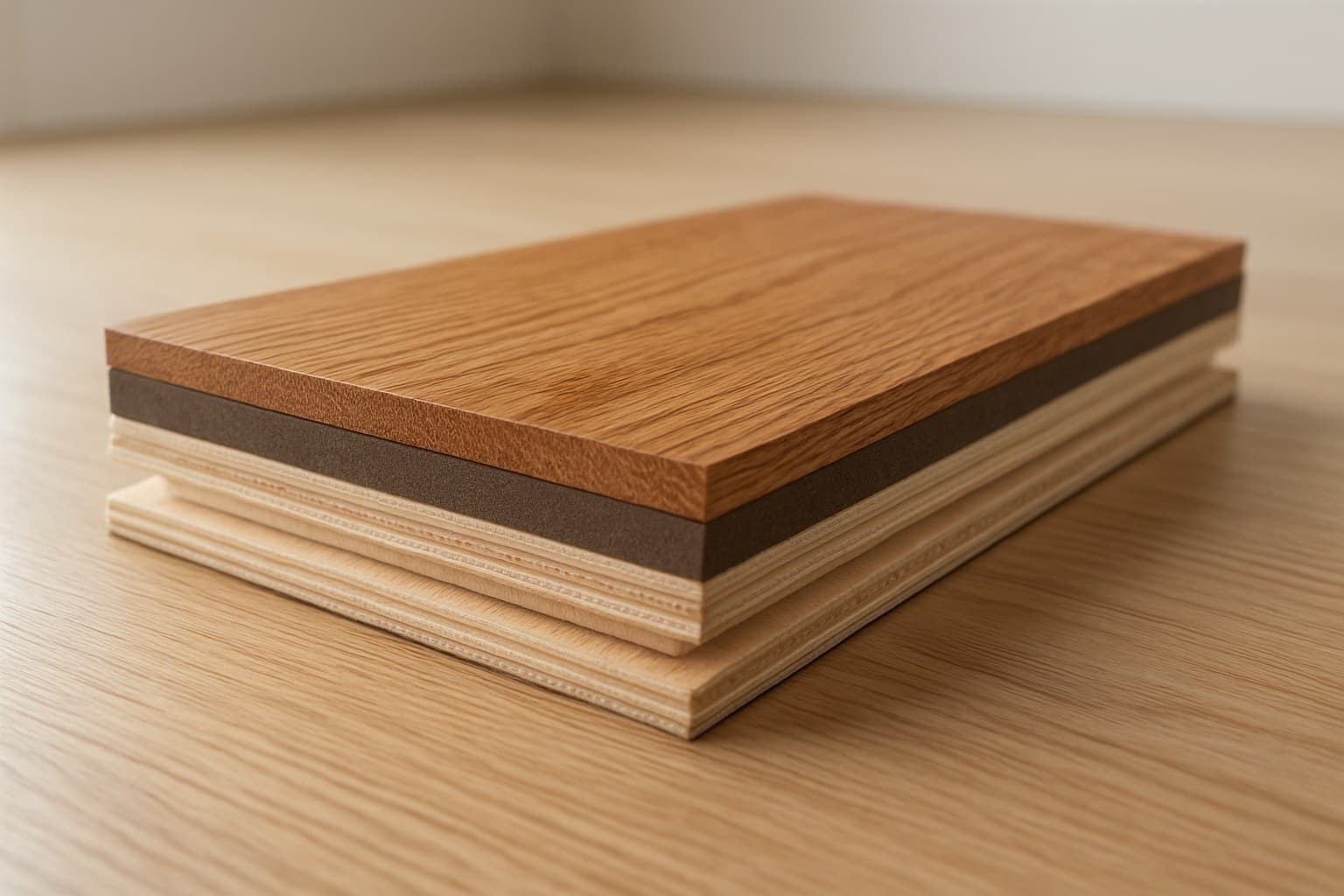
Engineered uses a real red oak veneer over a plywood-style core. That core moves less when moisture and humidity swing, which is why I'll put it over a basement slab where I won't put solid.
The top is the same wood, so the hardness and the look match. The price gap comes from the core and how thick the veneer is, not the species. Veneer thickness also sets how many times you can sand and refinish it later, which the engineered hardwood guide spells out.
Reason 6: Your Room and Subfloor Prep
Prep is the hidden line item that sets your final number. A flat, dry subfloor adds very little. A wavy or damp one adds real labor before a single board goes down.
Two checks run on every install. First, flatness: lay a straightedge across the subfloor and look for gaps under it. The National Wood Flooring Association's (NWFA) installation guidelines are the standard reference here, and flatness tolerance is commonly cited as about 3/16" over 10 feet. Second, moisture: take a reading on the wood subfloor and on any concrete below, because a slab that tests wet will wreck an oak floor laid too soon.
Basements and stairs cost more per square foot than an open room. More cuts, trickier layout, and tighter moisture control all add time. Before you price anything, size the job and the waste factor with the how much flooring do I need guide, and schedule your old-floor haul-off up front so it isn't sitting in the garage for a week.
Reason 7: DIY or Hire a Pro
Be honest with yourself here. Nail-down solid red oak is a tougher DIY than click-lock vinyl, and any unfinished floor needs sanding and finishing that most owners should hire out.
The realistic DIY job is prefinished boards in a flat, square, above-grade room, done by a handy owner who rents or buys a flooring nailer. That's doable over a weekend or two.
Hire out the rest: stairs, glue-down over concrete, big open-plan floors that cross a moisture transition, and all on-site sanding and finishing. Those are where a pro earns the labor side of the quote, and where DIY mistakes cost more than the install would have.