
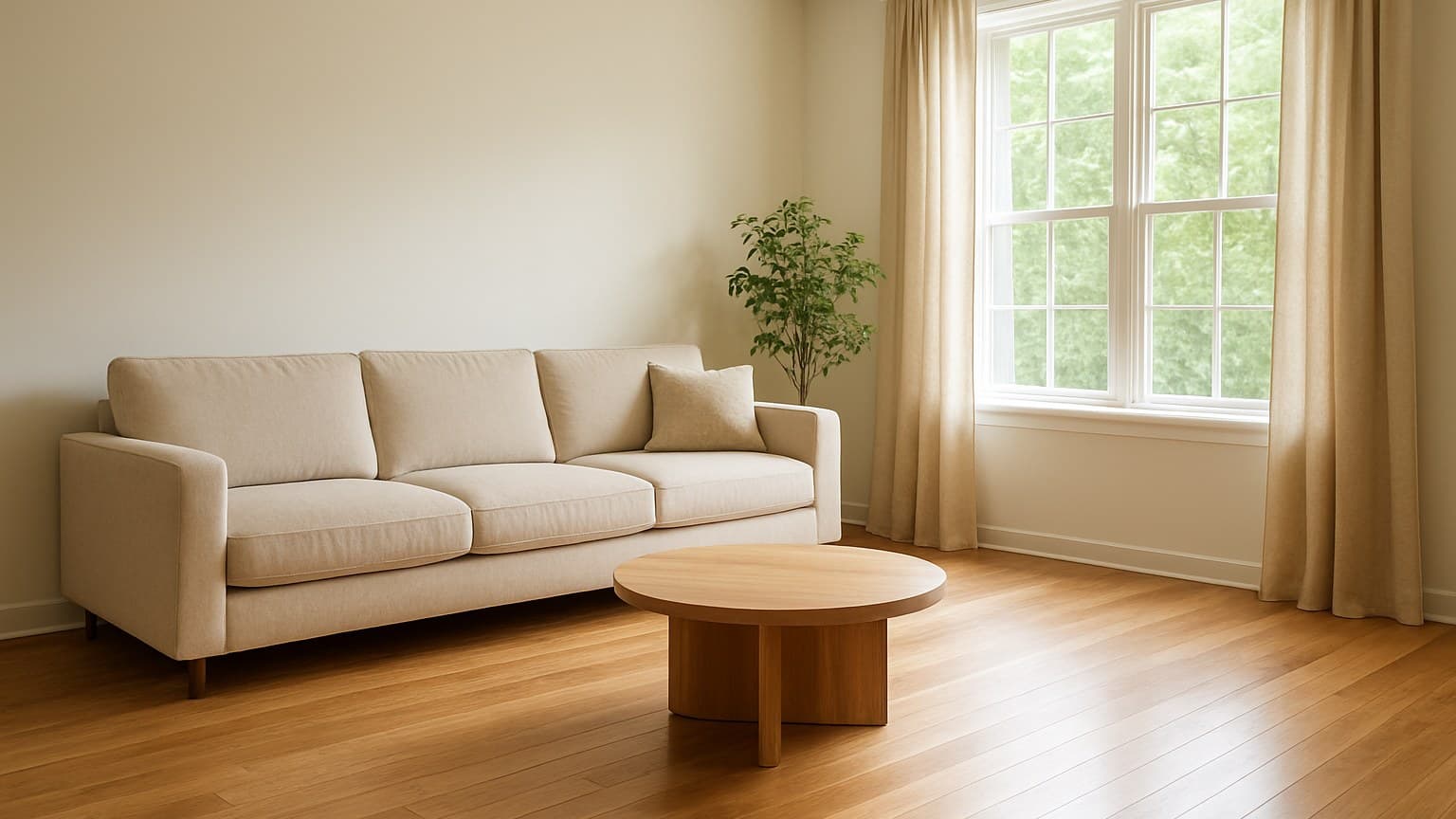
A homeowner in Denver, Mrs. Alvarez, called me in a panic after a big-box associate told her herringbone was a totally different "type" of hardwood from the engineered oak she'd already picked out. It isn't. Every hardwood floor you'll ever buy comes down to solid or engineered construction, everything else is a species, a pattern, or a wood-look material that isn't hardwood at all. Here's how a working installer sorts every board you'll actually see for sale.
Key takeaways
- There are only two real wood constructions: solid and engineered. Parquet, herringbone, and chevron are patterns, not separate types, and laminate, LVP, and porcelain aren't wood at all.
- Engineered handles concrete slabs and basements where solid usually can't; the pick is driven by your subfloor and moisture readings, not by looks.
- Janka hardness ranks dent resistance: hickory ~1820, hard maple ~1450, white oak ~1360, red oak ~1290, walnut ~1010, cherry ~950. Harder resists dents in high traffic.
- Installed cost splits into materials and labor: solid runs roughly $8-20/sq ft installed, engineered $6-18, with basements and stairs costing more than open rooms.
- Solid can be sanded and refinished several times; engineered's refinishes are capped by its veneer thickness, which varies by product; laminate and LVP don't refinish at all.
What Actually Counts as a "Type" of Hardwood Floor?
Real wood flooring is generally built as solid or engineered construction. Everything else people call a "type" is either a species (oak, hickory, walnut), a pattern (herringbone, parquet), or a wood-look lookalike that isn't wood at all.
This is where a lot of the buying guides go sideways. According to the National Wood Flooring Association's official definition of real wood flooring, parquet, herringbone, and chevron are forms and patterns, not a separate construction category. A list that stacks "parquet" next to "solid" and "engineered" is mixing up how a floor is laid with how it's built.
Here's the frame I use on every job, and the one the rest of this article follows. First you settle construction: solid or engineered. Then you pick a species, ranked by how hard it is. Then you pick a pattern, which is just a layout. Then, off to the side, sit the lookalikes that print a wood image but aren't lumber. Run through those four layers and every one of the different types of hardwood flooring you've been searching lands in a clear bucket.
Solid Hardwood Flooring
Solid hardwood is exactly what it sounds like: one species milled from a solid piece of lumber, usually around 3/4 inch thick, then nailed or stapled down over a wood subfloor.
Its big edge is the refinish. You can sand and recoat a solid floor several times across its life, so when the subfloor underneath is flat and dry, it outlives almost everything else in the house. That's why you still find century-old oak floors that just needed a sanding.
Its limit is water and movement. Solid wood swells and shrinks with humidity, and it generally isn't recommended over concrete or below grade. I've gone back on plenty of cupped solid floors, and almost every time the real problem was moisture in the slab or subfloor that a simple test would have caught before the first board went down.
You also choose how it gets finished. Site-finished means the boards go down raw and get sanded and coated in your home, which gives you a smooth, flush surface with tight seams that seal well against spills, at the cost of dust and a few days of cure time. Factory-finished (prefinished) boards show up already coated with a tough finish and go down fast, but the small beveled edges between boards leave more places for water to sneak in.
Installed, solid runs roughly $8 to $20 per square foot. Split that out and materials are often the $4 to $12 side and labor the rest, though it swings hard by species and region. For how those numbers move by square footage, our hardwood flooring cost guide breaks it down room by room. If those numbers are stretching the budget, it's worth browsing clearance flooring outlet options before writing solid wood off as unaffordable.
Engineered Hardwood Flooring
Engineered hardwood is a real hardwood veneer bonded over a cross-stacked, plywood-style core. That crossed core is the whole point: it fights the swelling and cupping that solid wood gets over concrete, which is why engineered can go in basements and over slabs where solid usually can't. Pergo is one of the most recognized names selling this construction, and our breakdown of whether Pergo hardwood is real wood gets into how its veneer and durability stack up against other engineered brands.
Refinishing here is a spec question, not a yes-or-no. What you can sand off is capped by the veneer thickness on top, and that number is published by the maker and varies a lot from product to product. A thick veneer might take a light sanding once or twice; a paper-thin one gets none. Always read the wear layer before you assume you can refinish it later.
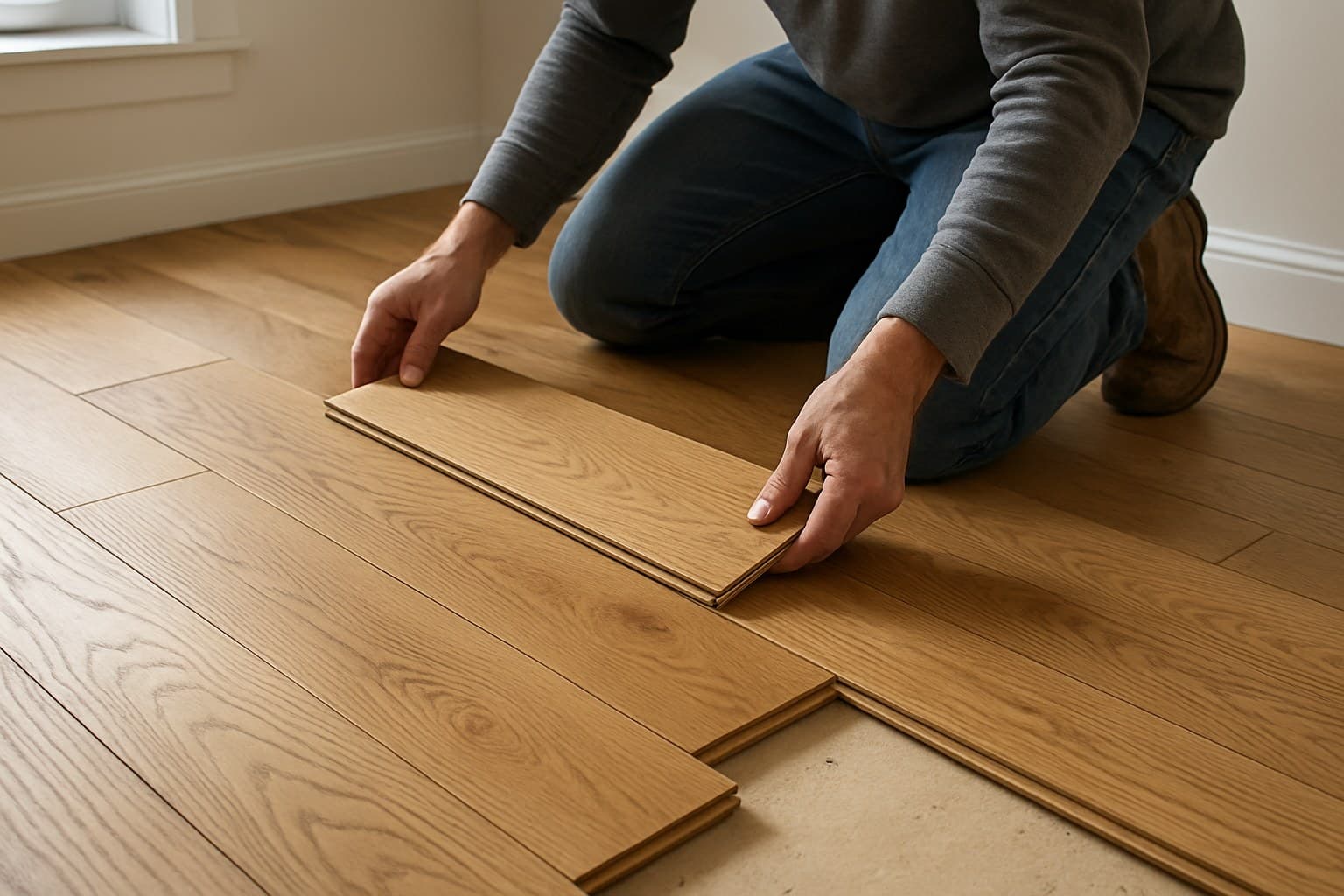
Installs come two ways. Click-lock planks snap together and float over the subfloor, which is realistic DIY for most handy homeowners. Glue-down over a slab is a different animal, and that's usually worth hiring out. If you're weighing the snap-together route, our click hardwood flooring guide covers what holds up and what doesn't, and the full solid vs engineered breakdown digs deeper than I can here.
One thing from years of basement jobs: down there, the choice rarely comes down to looks. It comes down to the slab's moisture reading. A moisture meter (a small tool that measures how much water is in the concrete or wood) settles the argument before I open a single box.
Installed, engineered typically runs $6 to $18 per square foot, materials often around $3 to $10 of that and labor the balance. Basements and stairs push the labor higher than an open room. Some of that material cost gap disappears if you're willing to shop clearance stock, though it pays to know why clearance hardwood flooring is priced so low before you commit to a pallet of it.
Parquet, Herringbone & Chevron: Pattern, Not Type
These are layouts, not constructions. The boards underneath are still solid or engineered, so a herringbone floor is engineered oak laid in a pattern, not some fourth type of wood.
The difference between the two everyone confuses is simple. Herringbone planks are plain rectangles that meet at a 90-degree L, so the ends look staggered. Chevron planks are cut at an angle on the ends so they join into one continuous V point running down the room. Parquet is the broader family of geometric wood tiles, and end-grain block is an old parquet form where the wood is turned so you walk on the cut ends of the grain, which you'll still spot in old workshops and lofts.
Here's the part that hits the wallet: pattern floors carry a real labor premium even when the material costs the same as straight planks. Setting and cutting all those angles takes far longer than running boards wall to wall, so you're paying for time, not fancier wood.
Beyond the Big Two: Bamboo, Reclaimed, and Wood-Look Lookalikes
A few things sit next to hardwood without quite being it, and it's worth knowing which is which before you buy.
Bamboo and Reclaimed Wood
Bamboo is a grass, not a hardwood, but strand-woven bamboo (shredded, glued, and pressed under heat) tests very hard, harder than a lot of oak. Don't let that fool you into treating it like a waterproof floor. It still swells with moisture, so you install and protect it like wood.
Reclaimed wood is real lumber pulled from old barns, factories, and mills, and the character is genuine. What drives the price is labor. Every board has to be checked for old nails, remilled to a usable thickness, and sorted, and widths and thicknesses still vary. You pay for the story and the work, not for cheaper wood.
Laminate, LVP, and Wood-Look Porcelain
These print a wood image on a surface that isn't wood. Laminate is a photo layer over a dense fiberboard core. Luxury vinyl plank (LVP) is a printed vinyl. Wood-look porcelain is a fired tile. None of them refinish, ever.
The honest LVP-versus-laminate tradeoff: LVP tolerates water far better, while laminate usually reads more like real wood underfoot and costs less. Pick by whether the room gets wet, not by which one sounds fancier.
One caution on LVP marketing. A "waterproof core" only means the plank body won't swell if water reaches it. It says nothing about the seams and edges, and that's where real failures start, when water works down between the planks. Waterproof core and water-resistant seams are two different promises.
Janka Hardness by Species: Which Woods Dent and Which Don't
Janka is a dent-resistance test. It measures the force needed to press a small steel ball halfway into the wood, and a higher number means the wood is harder to dent. According to the NWFA Homeowner's Handbook to Real Wood Floors, it's the real durability yardstick when you're comparing oak against walnut against hickory.
| Species | Janka rating (lbf) |
|---|---|
| Douglas fir | 660 |
| Cherry | 950 |
| American walnut | 1010 |
| Red oak | 1290 |
| White oak | 1360 |
| Hard maple | 1450 |
| Hickory | 1820 |
| Brazilian cherry (jatoba) | 2350 |
Janka hardness ratings for common flooring woods, in pounds-force (lbf); higher means harder to dent.
Harder isn't automatically better, though. Very hard species can be tougher to sand and refinish cleanly, and a softer wood can still be the right call. Walnut sits around 1010, on the softer side, and it's a beautiful floor for a low-traffic bedroom where dents aren't a worry. If that's your pick, our walnut hardwood flooring cost guide covers what that species runs.
Where hardness earns its keep is entries, halls, and kitchens, the spots that eat grit and dog nails all day. In a bedroom, it barely matters.
Which Type Fits Your Room? A Decision Table
The type that fits your room is settled by one check almost every list skips: subfloor flatness and a moisture reading, taken before anything gets laid, especially over a slab. Sort that first, then pick.
| Room or use | Best pick | Avoid | Why |
|---|---|---|---|
| Basement (below grade) | Engineered, glued or floated, only after a passing moisture test | Solid hardwood | Slab moisture cups solid wood; engineered's crossed core rides it out |
| Full bathroom | Tile or LVP, not wood | Solid and most engineered | Standing water and steam beat wood seams over time |
| Radiant / underfloor heat | Engineered rated for heat | Thick solid planks | Solid moves too much through heat cycles; engineered stays flatter |
| High-traffic entry or hall | Hard species (white oak, hickory), solid or engineered | Soft woods like cherry or pine | Dents show fast in soft wood right at the door |
Room-by-room pick, what to avoid, and the one-line reason for each.
That moisture check is not paperwork. I once let a customer talk me out of testing a slab to save an afternoon, and I laid engineered right over it. The floor cupped before the season was out, and I pulled it and relaid it on my own dime. Now the test happens every time, no matter who's in a hurry.