
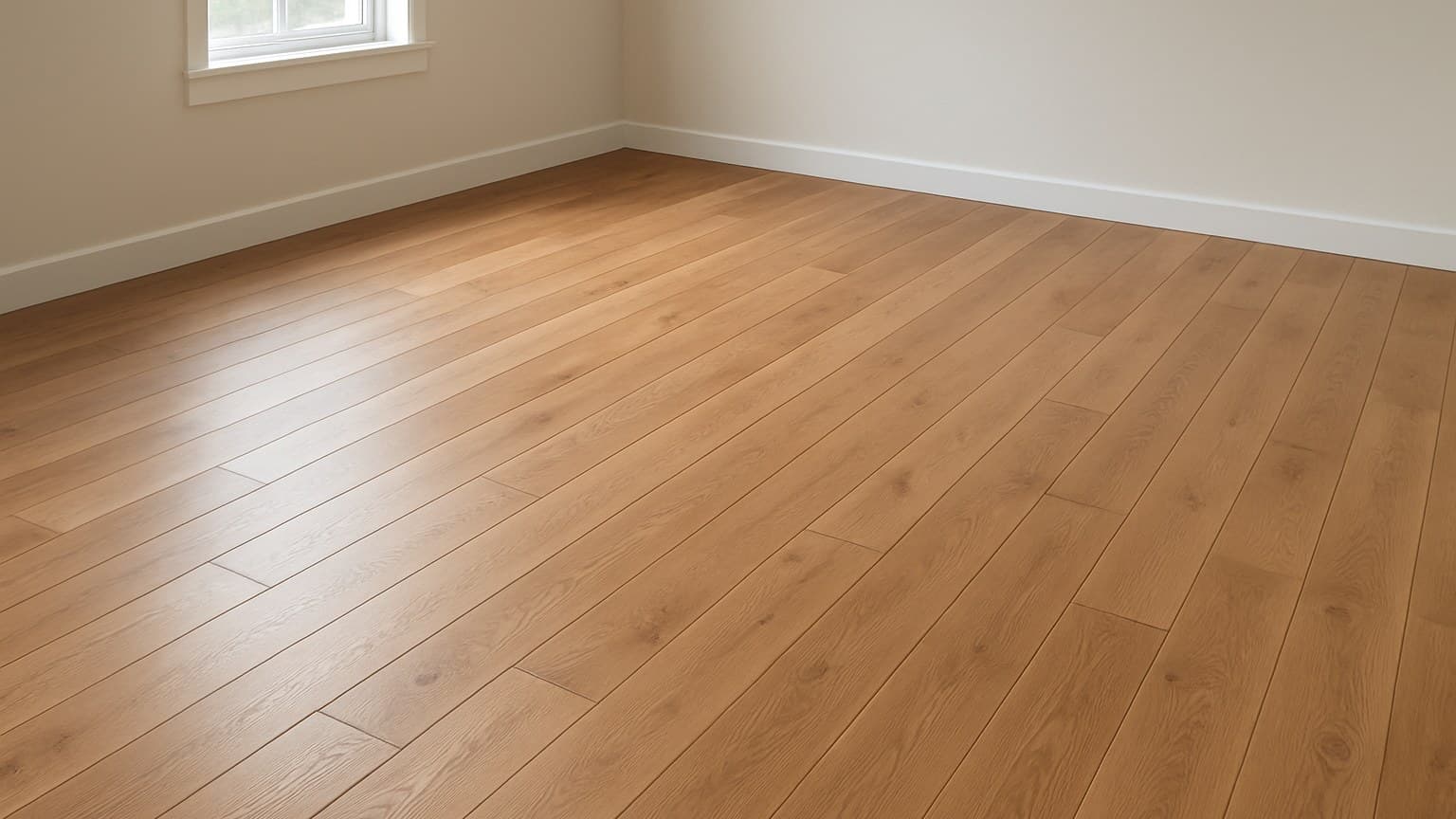
A customer in Fair Oaks, a suburb just east of Sacramento, called me back eight months after I installed her prefinished oak in the fall of 2019, worried the seams were opening up, the box never listed a moisture content, and the wood had shipped wetter than it should have. I've been running my own flooring crew in the Sacramento Valley for going on fourteen years now, and that callback is the real story behind the best prefinished hardwood flooring: it's not the sample in the showroom, it's the numbers printed on the box. Here's the one check I run first, plus four picks I actually stand behind.
Prefinished hardwood is wood that shows up already sanded, stained, and sealed at the factory, so there's no sanding dust or fumes in your house on install day. The catch is that "prefinished" tells you nothing about quality on its own. Two boxes can sit side by side, look the same, cost within a dollar of each other, and behave completely differently once they acclimate to a real home. What separates them is printed on paper, and most people never read it. If you want the full pre-purchase checklist before you even set foot in a store, I lay out what to settle before buying prefinished flooring in a companion guide.
Key takeaways
- The single test that sorts good prefinished from big-box junk: look for NWFA/NOFMA factory-finished certification (moisture content around 6%, with a small allowance) and published veneer or wear-layer numbers. No published specs, no buy.
- Solid 3/4-inch prefinished tongue-and-groove is best for above-grade rooms with a wood subfloor; engineered prefinished is the safer call over a concrete slab or below grade.
- My ranked picks: Mirage (best overall), Bruce solid oak (best budget), a wide-plank white oak line (best wide-plank), and a stable engineered white oak (best for concrete slab).
- Big-box is fine IF you stick to certified name brands like Bruce; the certification on the box, not the store you bought it from, is what actually protects you.
- Expect materials and labor to run as two separate numbers, and count on slab, basement, and stair jobs costing more than an open room.
The One Spec-Sheet Check That Sorts Good From Junk
Before you look at color, width, or price, look for three things on the spec sheet: NWFA or NOFMA factory-finished certification, a stated moisture content near 6% with a small allowance, and a published veneer or wear-layer number. If those three are missing, put the box down.
NWFA stands for the National Wood Flooring Association. NOFMA is its older hardwood-grading arm, once the National Oak Flooring Manufacturers Association, and it still sets the factory-finish grading standard the trade leans on. When a line is certified to that standard, it means the wood was milled and graded to real rules, not to whatever a factory felt like that day.
Those "real rules" break down into grade tiers, and it's worth knowing what they mean before you shop. Select or Prime is the clear-grain top tier, boards with the fewest knots, mineral streaks, or color variation, milled mostly from the clearest heartwood. Character or Rustic grades sit lower on the same scale and allow more knots, mineral streaks, and color variation board to board, which is exactly why they cost less even when they carry the same certification. Neither grade is "wrong", a rustic grade on a farmhouse floor can look intentional, but you want to know which tier you're paying for, since a Select box and a Character box from the same certified line can look and price noticeably different.
Moisture content matters more than most homeowners realize. Wood milled too wet shrinks as it dries down to normal indoor conditions, and that shrinking is what opens gaps between boards and cups the edges. According to the NWFA/NOFMA Factory-Finished Flooring Standards, factory-finished wood should be milled to a moisture content of about 6%, with an allowance of up to 5%. A floor milled to that standard comes into your home close to where it's going to live, so it moves less after it's down. I've pulled up gapped floors that were fine on install day and failed only because they came in soaked.
The wear layer, or veneer thickness on an engineered board, is the number that tells you whether you can ever sand and refinish the floor later. No published number means you're guessing, and guessing usually means you can't refinish it at all.
Here's the part I say plainly: an unnamed, no-name product with nothing on the sheet is the exact floor that comes back warped. If a store can't hand you specs for what's in the box, the store doesn't know either.
| Check | Why it matters |
|---|---|
| NWFA/NOFMA factory-finished certification named | Ties the floor to a real grading standard, not marketing |
| Moisture content stated (around 6%, small allowance) | Milled-dry wood won't gap or cup after it settles in |
| Veneer or wear-layer thickness published as a number | Tells you if and how often it can be refinished later |
| Finish named (e.g. UV-cured aluminum oxide) | A hardened, cured top coat is what fights scratches and dents |
Source: This is the NWFA/NOFMA factory-finished standard I hold every spec sheet up against before I'll install a floor
Bring this list with you to the store, and don't let a salesperson wave you off when you ask to see it.
That last line, UV-cured aluminum oxide, is worth a plain-word explanation. It's a finish hardened with ultraviolet light and mixed with aluminum oxide, a naturally hard mineral commonly used in industrial abrasives. That's the coating doing the work when your dog's nails skate across the floor and it doesn't leave a mark.
Prefinished Solid vs Engineered: Which One You Actually Need
The short answer: use solid 3/4-inch prefinished tongue-and-groove for above-grade rooms sitting on a wood subfloor, and use engineered prefinished any time you're over a concrete slab or below grade. The room decides this more than your taste does.
Solid is exactly what it sounds like, one piece of wood top to bottom. Engineered is a real wood top layer, called the veneer, glued over a plywood-style core of cross-stacked layers. That cross-stacking is what fights the swelling and shrinking that moisture causes, which is why engineered holds flatter over concrete where solid tends to move.
There's a real tradeoff in refinishing. Solid can be sanded several times across its life because there's thick wood under the finish. Engineered can only be sanded down to its veneer, so a thin veneer might get one light refinish, and a very thin one gets none. That's why the published veneer number from the last section matters so much here. Some manufacturers now build to NWFA's Engineered Refinishable Program, which recognizes engineered lines with a wear layer thick enough to be sanded and refinished more like solid wood, worth asking about if you want an engineered floor with a longer refinishing life.
If you're still torn between buying a floor that's finished at the factory versus raw wood you finish on site, I break that decision down in my guide on prefinished hardwood versus unfinished. And if your project is a basement or slab and you're eyeing something that claims to shrug off moisture, read up on waterproof engineered hardwood before you trust the label, because "waterproof core" and "water-resistant seams" are not the same promise.
| Factor | Prefinished Solid | Prefinished Engineered |
|---|---|---|
| Best location | Above grade, over wood subfloor | Over concrete slab, below grade, or above grade |
| Typical build | 3/4-inch one-piece tongue-and-groove | Wood veneer over plywood-style core |
| Refinishing | Several sandings over its life | Capped by published veneer thickness |
| Stability with moisture | Moves more with humidity | More dimensionally stable |
Source: This is how I split the two once I've read a moisture meter on the customer's slab
If that reading comes in high, I steer the job toward engineered almost every time, no matter what the homeowner had their heart set on. For the fuller breakdown of when solid still makes sense and when engineered wins by species and room, I walk through it in my guide to picking solid vs. engineered hardwood floors.
Top Prefinished Hardwood Picks by Category
There's no single best floor, only the best floor for your room and budget. Here are four picks I've installed and would install again, sorted by the job they win. Confirm the exact specs on each line's own sheet, since makers run several tiers and the numbers change by product.
Best Overall and Best Budget
Best overall: Mirage. If money isn't the tightest constraint, Mirage is what I reach for. The factory milling is tight, which means boards seat together cleanly with fewer height differences between them, and the cured finish holds up. It comes in both solid and engineered, so you can match it to your room. On the floors I've laid, it's the line that gives me the fewest callbacks, and that's the whole game with prefinished.
Best budget: Bruce solid oak. Bruce is the safe budget pick because it's a certified name brand you can actually find stocked and verify on the box. Red and white oak in 3/4-inch solid, sitting on shelves at big-box stores, with real specs printed on it. You're not paying for the tightest milling in the world, but you're also not gambling on a mystery product. For a bedroom or hallway above grade, it does the job. If red oak specifically is the look you're after, I go deeper on prefinished red oak flooring options in its own guide.
Best Wide-Plank and Best for Concrete Slab
Best wide-plank: an engineered white oak wide-plank line. Wide boards look great, but wide solid boards move more, cup more, and gap more, because there's simply more wood across each plank to swell and shrink. In engineered form, that same wide board stays flatter. Brands like Kentwood and DuChateau build wide white oak and French oak in engineered construction for exactly this reason. If you want a 7-inch or 8-inch board, go engineered and check the veneer thickness on the sheet. I get into board-width tradeoffs in more depth in my wide plank hardwood flooring guide.
Best for concrete slab: Shaw Floors' Repel engineered white oak. Over a slab, the core matters more than the brand name on the front, but you still want a name you can verify instead of a mystery core. Shaw's Repel line pairs a plywood-style engineered core with water-resistant milled edges, which rides the small moisture swings a slab throws off far better than solid wood, which has no business going straight over concrete. White oak is the workhorse species here, and for good reason, it's hard and it's stable.
White oak and French oak dominate these picks because they earn it, hard, stable, and they take stain well. If your room is tight or you want a more traditional look, a narrower board still has its place, and I cover where a 2-inch wide hardwood strip makes the most sense. For a warmer, reddish alternative to oak's neutral tones, I dig into what cherry hardwood flooring offers in a separate species guide.
| Category | Pick | Type | Species | Why it wins |
|---|---|---|---|---|
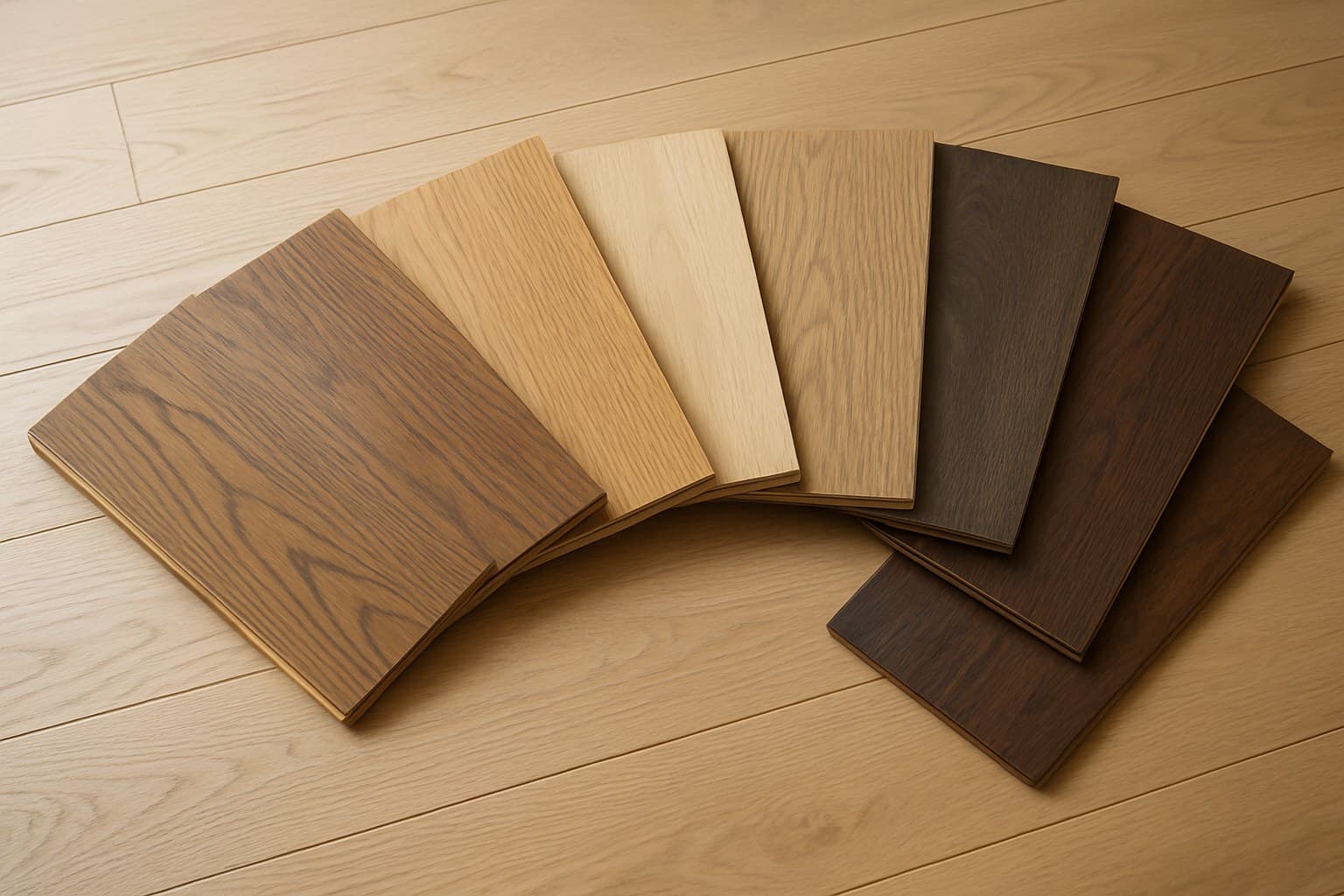
| Best overall | Mirage | Solid and engineered | White oak, maple | Tight factory milling and a hard cured finish that installs clean |
| Best budget | Bruce solid oak | Solid 3/4-inch | Red and white oak | Name-brand safety you can find stocked and verify on the box |
| Best wide-plank | Engineered white oak line | Engineered | White oak, French oak | Wide boards stay flatter in engineered form than in solid |
| Best for concrete slab | Shaw Floors' Repel engineered white oak | Engineered | White oak | Water-resistant milled edges and a plywood-style core ride slab moisture swings better than solid |
Source: Ranked from the prefinished lines I've installed most
Confirm the exact species, grade, and tier on each brand's own sheet, since makers shift specs between product lines. If Johnson Hardwood is one of the brands on your list, I break down what to check in 9 things to know before buying Johnson Hardwood.
Big-Box vs Contractor Supply vs Online Wholesale: Which Is Safe
Let me settle the forum argument: it isn't the store that burns you, it's an uncertified product. The certification criteria decide, not the parking lot you bought it in. A certified Bruce box is a certified Bruce box whether it came from a big-box aisle or a supply house.
Big-box stores are fine as long as you stick to certified name brands. The risk there isn't the store, it's the unnamed house-brand bundle sitting next to the name brands with nothing on the sheet. That's the product that looks like a deal and shows up wet.
Contractor supply houses widen your choices in species and grade, and you get people who actually know the products. The catch is they're set up for pros, so you may hit order minimums or pro-focused ordering. Reputable online wholesale can win on price and selection, but you're taking on freight damage risk and it's harder to verify certification before it lands on your driveway. Wherever you buy, you verify the same NWFA/NOFMA specs, every time.
One more thing that bites people no matter where they shop: buy all your boxes from the same production run and lot number. Colors and milling drift slightly between runs, and a discontinued lot means you can't get a matching box if you come up short mid-job. Check every box matches before you open a single one.
| Source | Good for | Watch for |
|---|---|---|
| Big-box store | Stocked name brands, quick pickup | Unnamed house bundles with no spec sheet |
| Contractor supply | Wider species, grades, expert help | Order minimums and pro-focused ordering |
| Online wholesale | Price and selection | Freight damage, hard-to-verify certification |
Source: This is how I've seen the same certified brand end up safe or risky depending only on whether the spec sheet was in the box
Whichever source you buy from, verify the NWFA or NOFMA certification yourself instead of taking a salesperson's word for it.
Installing Prefinished Hardwood Over a Concrete Slab
Start with the checks, not the planks. Before a single box is opened, test the slab for flatness and, most important, for moisture, a step NWFA's installation guidelines call for before any hardwood goes down over concrete. A slab reading can kill a solid-hardwood plan entirely, and it's better to find that out before the wood is on the truck than after it's cupping.
A moisture meter is a handheld tool that reads how much water is in the slab. Concrete looks dry long before it is, and a slab pushing too much moisture will destroy solid hardwood and even challenge some engineered floors. This is the reading that told me to steer a customer off solid wood and onto engineered more times than I can count. Back in 2017, on a job in Rancho Cordova, I once let a homeowner talk me out of a moisture test to save an afternoon, and I ended up relaying her cupped floor on my own dime about six months later. I don't skip it anymore.
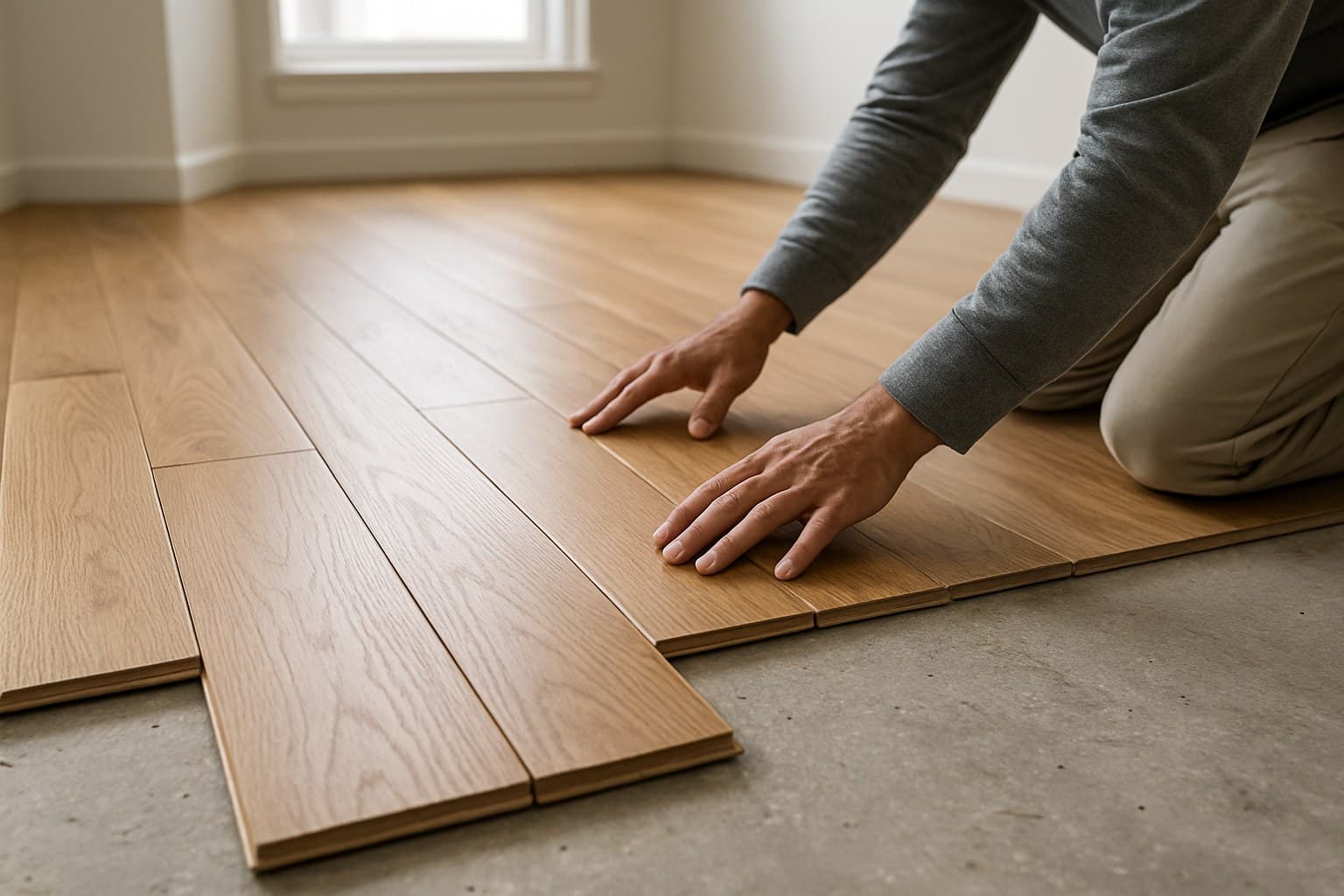
If the slab checks out, you've got two main paths: glue-down or floating. Glue-down bonds engineered boards straight to the slab with the right adhesive, many of which include a moisture barrier built in. Floating lays the floor over an underlayment with a vapor retarder, a sheet that slows moisture from wicking up into the wood. Either way, NWFA's installation guidelines call for a small expansion gap around the whole perimeter, sized by that product's own instructions, because floating and glued floors both need room to move with the seasons.
Be honest with yourself about DIY here. Click-together floating floors in an open room are realistic for a determined homeowner. Slab jobs, big open-plan rooms with moisture transitions, and stairs are where I'd tell you to hire it out. The moisture calls and the tricky transitions are exactly where a wrong guess gets expensive. My full hardwood floor installation walkthrough lays out the whole sequence step by step if you want to see what the job actually involves before you decide.
What Prefinished Hardwood Really Costs: Materials vs Labor
Prefinished costs come as two separate numbers, materials and labor, and anyone quoting you one flat national figure is guessing. Below is the range I see, split so you can build your own estimate. Slab, basement, and stair jobs run higher than a plain open room, so price those up, not down.
| Job | Materials per sq ft | Labor per sq ft |
|---|---|---|
| Prefinished solid oak, nail-down over wood subfloor | $4 - $9 | $3 - $6 |
| Prefinished engineered, floating over slab | $5 - $12 | $3 - $6 |
| Prefinished engineered, glue-down over slab | $5 - $12 | $5 - $9 |
| Premium line (e.g. Mirage) | $8 - $15 | $3 - $7 |
Cost ranges I quote from, split into materials and labor; confirm material pricing on each line's own sheet.
Stairs price on their own. Figure roughly $15 to $40 in materials per step for prefinished treads and risers, plus $40 to $75 per step in labor, because each step is cut, fit, and fastened by hand. A basement adds moisture prep and often a subfloor system under the wood, which is why it lands above an open main-floor room even at the same square footage.
The upfront price is only part of the picture. NWFA life-cycle cost research points to hardwood's refinishability as the reason it can cost less over the long run than flooring that has to be torn out and replaced rather than sanded and recoated, worth weighing against a cheaper floor that won't take a refinish down the road.
To size a whole-house number against real room counts, work through my 500 to 2,500 sq ft hardwood cost breakdown, and if you want the factors that swing the price the most, my hardwood flooring prices guide walks through all seven. Read the hardwood floor installation guide next if you're weighing whether to hire the slab work out, since that's the single choice that moves your labor number the most.