
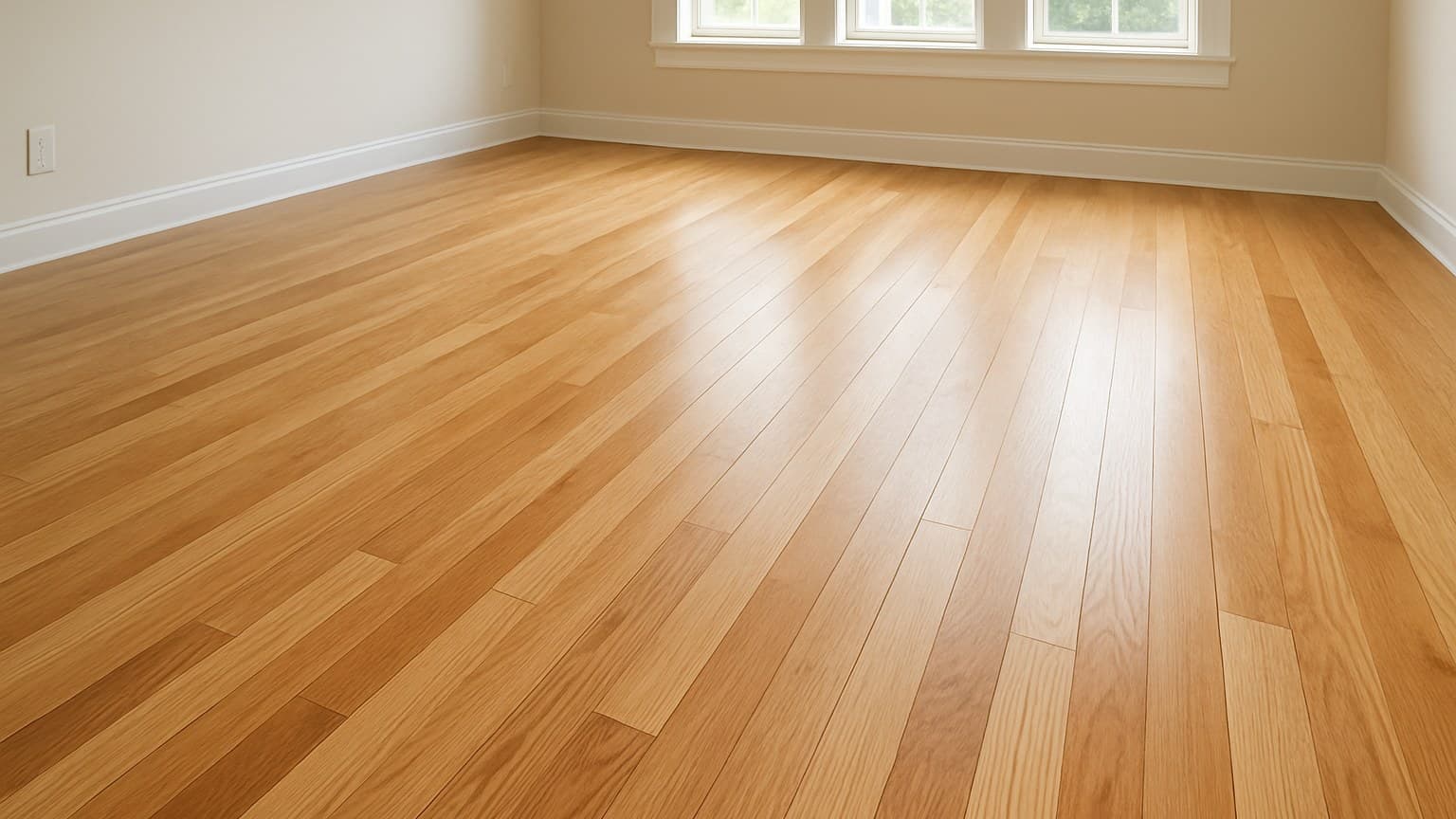
When Terri in Aurora, Colorado texted me a screenshot of her order confirmation, she was sure the store had swapped her floor on her. She'd typed "2 inch hardwood flooring" into the search bar and gotten back 2 1/4 inch instead. She hadn't been swapped, and the reason why is the part that trips up almost every buyer who searches by the numbers.
Key takeaways
- The "2 inch" floor you searched is sold as 2 1/4 inch; that 2 1/4" x 3/4" solid red oak strip is the real US standard, and NWFA/NOFMA allow only about .010" variation in width, so true 2.0" is a rare special-order.
- Anything under 3 inches wide is "strip"; 3-5 inches is "plank." Narrow strip is the classic pre-1960s look, not a dated mistake, and it hides seasonal gapping better than wide plank.
- Grades set price and board length, not strength: NOFMA rules put Clear at about 36" average boards, Select 32", #1 Common 28", #2 Common 24". A knottier grade is cheaper, not weaker.
- Narrow strip costs more labor to install than wide plank because there are more boards to nail per square foot; budget materials and labor separately, and expect basements and stairs to run higher than open rooms.
- Check subfloor flatness (within about 3/16" over 10 ft) and take a moisture reading before any board goes down; that prep is what the manufacturer warranty really rides on.
What "2 Inch" Hardwood Flooring Actually Means
The "2 inch" floor you searched is sold as 2 1/4 inch. It's the same board, and it's the size you want.
Here's what's going on. Flooring gets talked about two ways: the round "nominal" number people say out loud, and the "actual" face width the board really measures once it's milled and ready to lock together. The nominal shorthand is "2 inch." The real face width, the part you see once it's down, is 2 1/4 inches. Nobody is switching your order on you.
That 2 1/4 inch strip is the classic US standard: 2 1/4 inches wide by 3/4 inch thick, solid wood, most often red oak, and usually sold raw so it gets sanded and finished after it's nailed down. If skipping that site-finishing step sounds better than living with sanding dust for a week, the guide to buying prefinished hardwood flooring walks through what to lock down before you order.
Why do the seams still lock up tight if boards can vary at all? Because they barely vary. Under the NWFA/NOFMA Unfinished Wood Flooring Standard, the trade groups that write the rules, the National Wood Flooring Association (NWFA) and the National Oak Flooring Manufacturers Association (NOFMA), allow only about .010 inch of width difference board to board. That's thinner than a couple sheets of paper, so strips still sit shoulder to shoulder with no gaps.
A true 2.0 inch board does exist. It's just rare and almost always a special order, so if a store quotes you 2 1/4, that's the normal floor, not an upsell. If you're specifically hunting for that rarer true 2-inch width, our what to know before buying Johnson Hardwood breakdown covers where to track it down.
| You search | You get | Detail |
|---|---|---|
| 2 inch | 2 1/4 in face width | 3/4 in solid, the real US strip standard |
| 2 1/4 inch | 2 1/4 in | same board, just the correct name |
| width tolerance | about .010 in | how much boards may legally vary, so seams stay tight |
| under 3 inch | classified as strip | 3-5 in is called plank |
Source: I pulled these off the NWFA/NOFMA dimensional tolerance specs
Strip vs Plank: Why Width Has an Official Line
There's an actual dividing line, and it's 3 inches. Per the NWFA/NOFMA Unfinished Wood Flooring Standard, under 3 inches wide is called strip, and 3 to 5 inches is called plank. Your 2 1/4 inch board sits comfortably in the middle of strip.
That line isn't just naming. Width changes how a floor moves with the seasons. Wood swells in humid months and shrinks in dry ones, and a narrow strip spreads that movement across many small seams instead of a few big ones. When the air dries out, narrow strip hides seasonal gapping and cupping better than a wide board does.
Wide plank still wins for some rooms. Big open spaces, casual or farmhouse looks, and anyone who wants fewer seams across the floor are better served going wider. If that's you, read the full breakdown of wide plank hardwood flooring before you commit, because wide boards ask more of your subfloor prep.
Watch the 3 inch board specifically. It counts as a narrow plank, not strip, even though it looks close to strip on paper. Buyers mix those up all the time.
Grades: What You're Really Paying For (and Board Lengths Nobody Mentions)
Grades sort wood by looks and board length, not by strength. A knottier, cheaper grade isn't a weaker floor. It holds up the same underfoot. You're paying for a calmer look and longer boards, nothing more.
Here's the piece novices never get told: grade sets the average board length in the bundle. Under the NWFA/NOFMA Unfinished Wood Flooring Standard's grading rules, Clear averages about 36 inch boards, Select around 32 inches, #1 Common near 28 inches, and #2 Common around 24 inches. Shorter average boards mean more end seams per row, which is part of why a busier grade costs less.
Clear reads uniform and quiet with very few marks. Select shows minor color change and small knots. #1 Common brings visible knots and real color swings. #2 Common is heavy character, dark knots, the rustic look. None of that is a defect. It's a style choice and a budget choice at the same time.
One catch: these length figures come from the unfinished grading rules. Per the NWFA/NOFMA Factory Finished Flooring Standards, factory-finished lines grade under their own separate rules, so decide whether you want raw or prefinished wood before you compare grades. If you're weighing that, the tradeoffs between prefinished and unfinished floors settle it faster than a store clerk will.
| Grade | Look | Avg board length | Relative cost |
|---|---|---|---|
| Clear | most uniform, few marks | about 36 in | highest |
| Select | minor color change, small knots | about 32 in | high |
| #1 Common | visible knots, color swings | about 28 in | mid |
| #2 Common | heavy character, dark knots | about 24 in | lower |
Source: These grade lengths come straight from the NOFMA hardwood grading rules
Solid or Engineered in a 2-Inch Strip
Go solid for a 2 1/4 inch strip when the floor sits on or above ground level over a wood subfloor. That's the traditional pick and the one most stock is made for. Choose engineered when you're over concrete or below ground level, like a basement, where solid wood is generally not recommended. For a fuller walkthrough of that decision and matching the right species to your room, see this guide to picking solid vs. engineered hardwood floors.
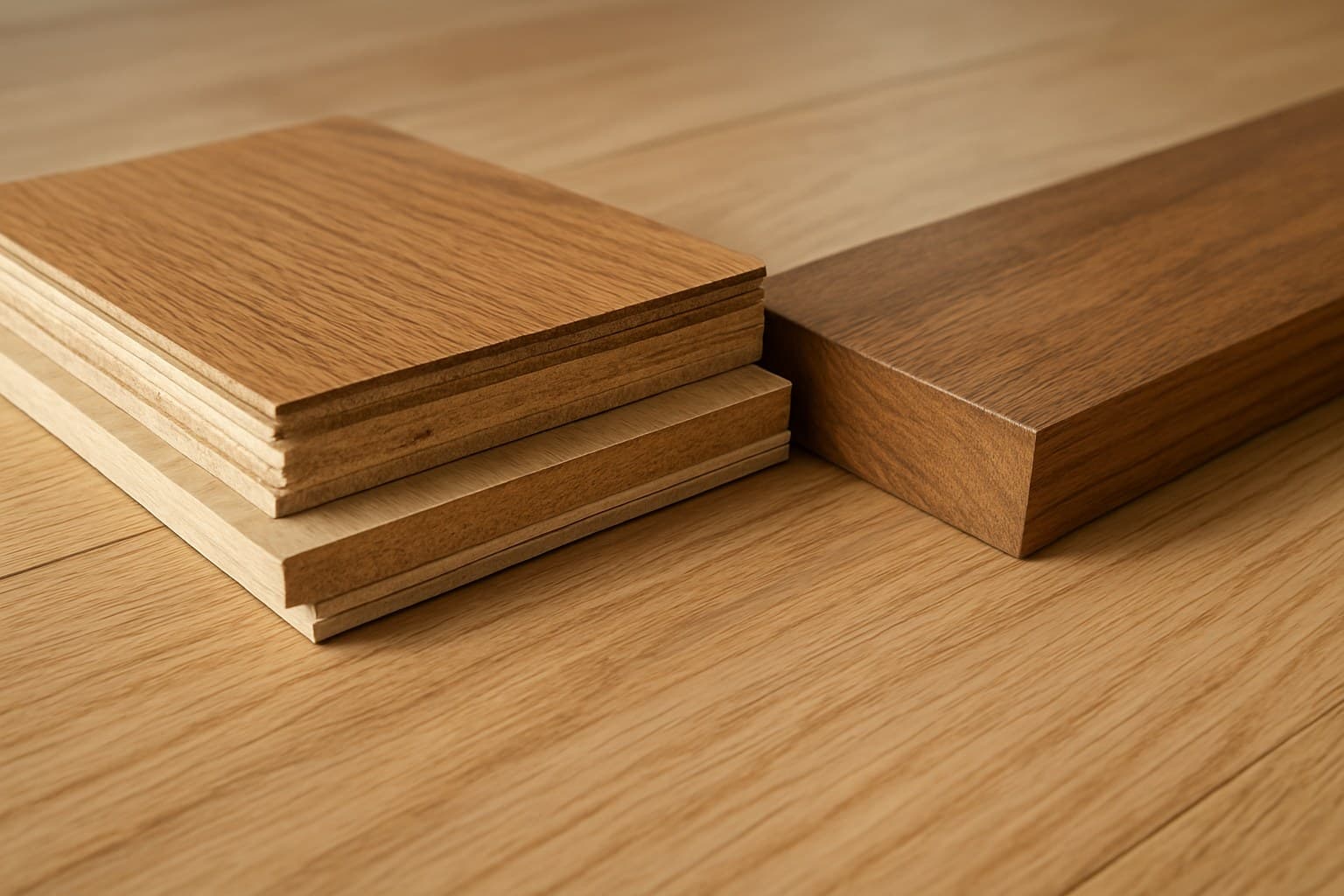
The difference is the guts. Solid is one piece of wood all the way through. Engineered has a thin real-wood top layer glued over a plywood-style core, and that core stays put better against concrete and moisture swings.
Refinishing is the other split. Solid can be sanded and refinished several times over its life. An engineered floor can only be sanded as many times as its top veneer allows, and that number is capped by the veneer thickness the maker publishes. So "can I refinish this in fifteen years" is a spec question you check on the box, not a guarantee.
One reality check: narrow engineered strip isn't common. Most 2 1/4 inch stock you'll actually find on a shelf is solid. If your room fights moisture, point yourself toward a waterproof engineered hardwood option instead of forcing solid strip where it doesn't belong.
Which Species Suits a 2-Inch Strip
Red oak is the default strip species and usually the cheapest. White oak runs a touch harder, wears a cooler tone, and handles water a little better.
Hardness matters if kids, dogs, or heavy chairs are in the picture. The Janka scale measures how well a wood resists dents. Among common strip choices, walnut is the softest and hickory is the hardest, with the oaks and maple sitting in between.
| Species | Janka hardness (lbf) |
|---|---|
| Walnut | 1010 |
| Red Oak | 1290 |
| White Oak | 1360 |
| Hard Maple | 1450 |
| Hickory | 1820 |
None of that hardness ranking changes how the wood looks, it only changes how well it shrugs off daily wear.
Two narrow-strip gotchas worth knowing. Maple can blotch when you stain it, so it looks best clear or in a light tone. Walnut is soft and naturally darkens as it ages. And some species shift color hard in sunlight. Pulling an area rug off a Brazilian cherry floor can reveal a bright patch underneath that no refinish ever evens out. If a warm reddish wood is on your list, read the cherry hardwood color-shift warning before you order, because it's not reversible.
What 2-Inch Strip Really Costs to Buy and Install
There's no single national price, so split it into real lines: materials, labor, and, for raw strip, site sanding and finishing on top. Unfinished oak strip materials commonly run about $3 to $7 per square foot. Nail-down labor tends to run about $4 to $9 per square foot. Site sanding and finishing adds roughly $2 to $4 per square foot.
Here's the part narrow strip buyers miss: strip costs more labor than wide plank, not less. There are simply more boards to nail per square foot, so the installer spends more time on the same room. You're paying for the extra rows.
| Line item | $ per sq ft |
|---|---|
| Site sand and finish | 2.0 - 4.0 |
| Materials (unfinished oak strip) | 3.0 - 7.0 |
| Labor (nail-down strip) | 4.0 - 9.0 |
That total doesn't include basement moisture prep or per-step stair pricing, both of which push the number higher.
Rooms change the math too. Basements run higher than open rooms because of moisture prep and the switch to engineered, and stairs cost more per step than any flat floor since each tread is cut and fit by hand. To map the whole project, use the 500 to 2,500 square foot hardwood cost breakdown, and if you want cost-per-year thinking, the seven factors behind hardwood prices does that math.
Dated or Classic? The Honest Design Verdict
Narrow 2 1/4 inch strip reads as classic, not dated. It's the pre-1960s floor plenty of buyers are now paying to match, and more homeowners are choosing it again for exactly that reason.
It shines in a few spots. Smaller rooms, where tight seams keep the floor from looking chopped up. Traditional and older homes, where wide plank can look out of place. And any job where you're matching an existing strip floor you don't want to rip out, since 2 1/4 is what's already down in most of those houses.
Wide plank still fits better in big open-plan rooms and casual modern spaces. Pick by your room and your house, not by what a trend post says is in this year.
A design note from the field: narrow boards can make a small room feel calmer and less busy, and the direction you run them changes how the space reads. Run strip the long way and a room looks longer. Run it across and the room feels wider.
Before You Buy: Subfloor, Moisture, and a Quick Checklist
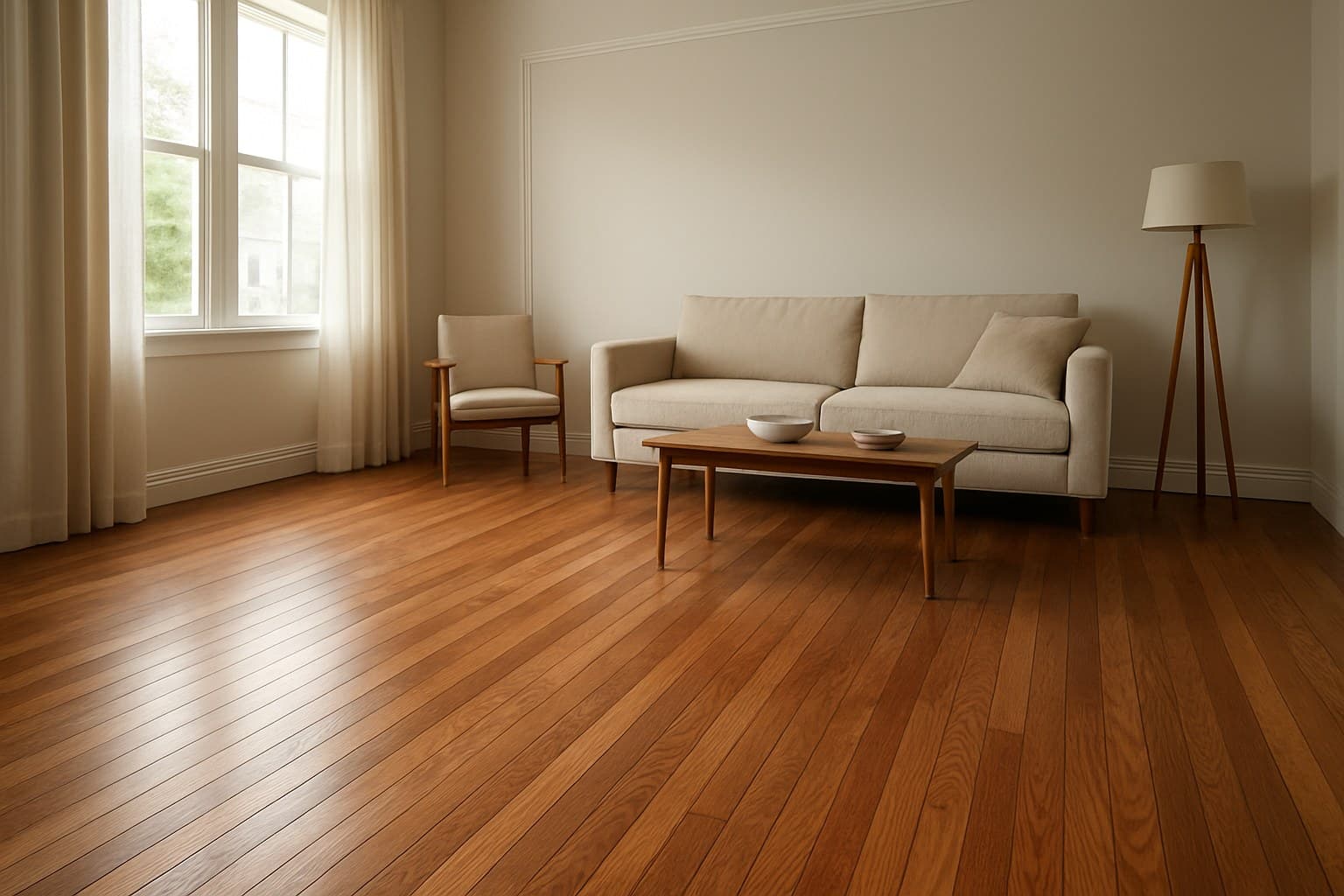
Before a single board goes down, check two things. Per NWFA installation guidelines, the subfloor should be flat to within about 3/16 inch over any 10 foot span, and you need a moisture reading with a meter, which is a handheld tool that tells you how wet the wood or slab is. Most problems on a nail-down job start right here, a slab that felt dry to the hand but not to the meter, or a hump someone talked themselves into ignoring. Finding that out after the floor is nailed down is a far worse day than the check ever costs.
Acclimation, letting the wood sit in the room to adjust before install, depends on the specific product's own instruction sheet. Some lines want it, some say skip it. The box governs, not a rule of thumb from a forum.
On DIY versus hire: nail-down strip is a real step up from click-together LVP. It needs a flooring nailer, tight rows, and clean cuts, so it's doable but not a beginner weekend. Stairs and big moisture transitions are hire territory almost every time. For the full method start to finish, the nine-step guide to installing hardwood flooring walks the whole process and the test that picks your nail-down or glue-down method.
Quick pre-order checklist:
- Confirm the size is 2 1/4 inch face width and the thickness you expect
- Decide solid or engineered based on the room's ground level and moisture
- Pick a grade after you settle on prefinished or unfinished
- Measure square footage and add about 10 percent for waste
- Check subfloor flatness to within about 3/16 inch over 10 feet
- Take a moisture reading before ordering, not after delivery
- Read the product's own acclimation sheet and follow it