
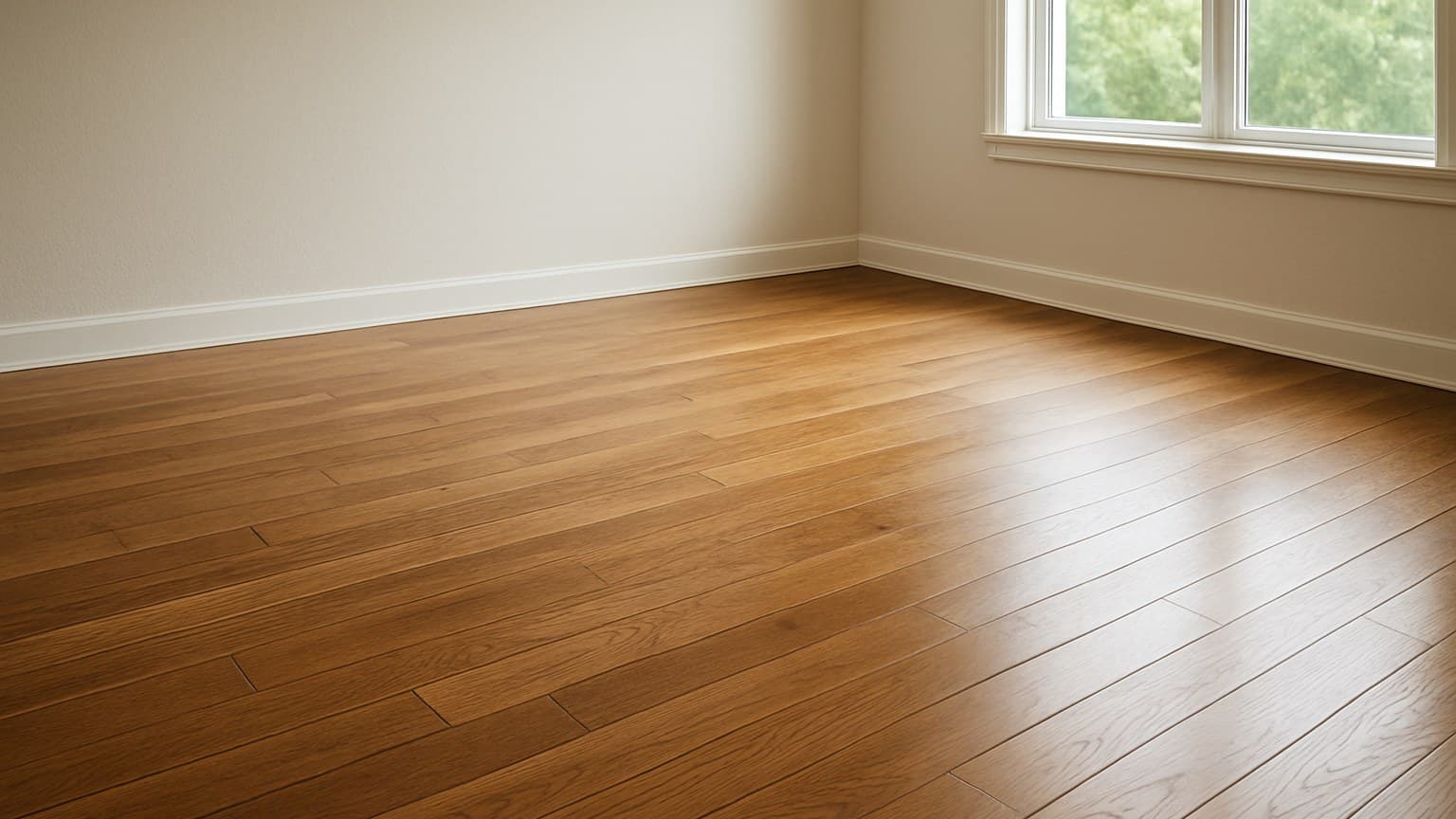
Search "healthiest flooring for a home" and you get the same tidy ranking every time, minus the two questions that actually decide it. My honest, scored ranking puts solid hardwood finished with hardwax-oil (a natural oil-and-wax blend that soaks into the wood instead of coating it) at the top, with natural linoleum and verified lead-free tile close behind, and vinyl at the bottom. But the plank you pick matters far less than the glue and finish under it, and one cheap adhesive can undo even that "natural" floor.
Key takeaways
- Solid hardwood with a hardwax-oil finish, natural linoleum like Marmoleum, and verified lead-free tile top the health ranking; vinyl and PVC sit at the bottom.
- The glue, finish, and underlayment off-gas more than the plank does, so a 'natural' floor set in cheap adhesive is not the low-emission floor you paid for.
- Look for FloorScore or GreenGuard Gold tested to the CDPH Standard Method V1.2-2017, and CARB2 / TSCA Title VI for any wood-based product.
- HempWood's 2,200 lbf Janka beats red oak (1,290) and hickory (1,820), but its 'healthiest' claim is vendor marketing with no independent test behind it.
- Ceramic and porcelain glaze can carry lead, and carpet's 'always avoid it' reputation is genuinely contested once you separate the fiber from the pad and stain treatment.
Why the Floor Under You Changes the Air You Breathe
A floor affects your air because it releases gases as it ages, and it covers more surface than anything else in the room. Those gases have a name: VOCs, short for volatile organic compounds. They're chemicals that escape as vapor from finishes, glues, and composite cores. Off-gassing is just the word for that release, and it's strongest when a floor is new, then fades over weeks or months.
Formaldehyde is one specific VOC worth calling out. It hides in the resin that binds pressed-wood cores, the kind used in laminate and some engineered planks.
Here's why the floor matters more than a chair or a cabinet. Indoor air is often reported to run several times more polluted than the air outside, and VOC levels can climb even higher indoors during and after activities that stir them up. Your floor is the single largest surface in most rooms, and it sits there breathing out 24 hours a day while a small piece of furniture doesn't.
The base material is only half the story. A solid, "clean" material set with the wrong finish still fouls the air. If you want to see how the picks stack up purely on health, I break that down in which type of flooring is best for health.
The Healthiest Flooring, Ranked
The short answer: solid hardwood with a hardwax-oil finish (a natural oil-and-wax blend that soaks into the wood instead of coating it), natural linoleum like Marmoleum, and verified lead-free tile sit at the top. Vinyl and PVC sit at the bottom. Everything else lands in between depending on how it's made and glued. Curious exactly why vinyl and PVC keep landing there, I break down the worst offenders in my guide to the most toxic flooring materials.
I ranked these on three things: the total emissions from the whole assembly (not just the plank), the strength of the certification you can actually verify, and how long the floor lasts before it goes in a dumpster. A floor you replace every 8 years has a health cost too, in dust and new glue, every time. The National Wood Flooring Association notes that solid hardwood can be sanded and refinished multiple times over a service life of 50 years or more, which is a big part of why it holds the top spot here. That same math is why I put together a separate guide to affordable non-toxic flooring, since the cheapest plank up front often costs more once you count the replacements.
Janka hardness shows up in the table for the wood products. It measures how well a material resists dents by pressing a steel ball into it. A higher number, given in pounds of force (lbf), means a harder surface.
| Material | Main health concern | Janka hardness | Certification to look for | Realistic lifespan |
|---|---|---|---|---|
| Solid hardwood | Finish VOCs, not the wood itself | Red oak ~1,290, hickory ~1,820 lbf | FloorScore; hardwax-oil finish | 50+ yrs, refinishable |
| Ceramic / porcelain tile | Glaze may contain lead; grout and sealer VOCs | n/a (not wood) | Ask for lead-free glaze; GreenGuard grout | 50+ yrs |
| Polished concrete | Sealer and densifier VOCs | n/a (not wood) | Low-VOC sealer | Decades |
| Natural linoleum (Marmoleum) | Very low; faint linseed smell that fades | n/a (not wood) | FloorScore | 20-40 yrs |
| Cork | Adhesive and finish, not the bark | n/a (not wood) | GreenGuard Gold / FloorScore | 20-30 yrs |
| Bamboo | Resin binder formaldehyde in cheap lines | Strand-woven up to 3,000+ lbf | CARB2 / FloorScore | 20-25 yrs |
| Hemp (HempWood) | Soy-based binder; few independent tests | ~2,200 lbf | Ask for third-party VOC test | New product, limited track record |
| Laminate | Formaldehyde in core (EPA: usually under 0.03 ppm) | n/a (not solid wood) | CARB2 / TSCA Title VI | 15-25 yrs |
| Engineered wood | Core adhesives and formaldehyde | Varies by veneer species | CARB2 / FloorScore | 20-40 yrs |
| Vinyl / LVP | PVC plus phthalates; worst tier | n/a (not wood) | FloorScore (still bottom tier) | 10-25 yrs |
| Carpet | Pad, adhesive, PFAS stain treatment; contested | n/a (not wood) | CRI Green Label Plus | 5-15 yrs |
Eleven common residential floors scored on their main health concern, hardness where it applies, the certification to verify, and how long they last.
A quick note on the certifications so they're not just letters. FloorScore and GreenGuard Gold are lab programs that test finished products for low emissions. CARB2 (California Air Resources Board Phase 2) and TSCA Title VI (Toxic Substances Control Act, Title VI) are the formaldehyde limits any wood-based product should meet. Both are tested to the CDPH Standard Method V1.2-2017, the California Department of Public Health protocol for indoor emissions that the EPA also references in its Indoor airPLUS building product requirements. On that same standard, the EPA notes that formaldehyde emissions from most laminate flooring now test well under 0.03 parts per million (ppm), a useful benchmark if a retailer hands you a test report and you're not sure what a "pass" looks like.
The tiers, plainly: solid hardwood, tile, concrete, and natural linoleum lead. Laminate, engineered wood, and carpet can be fine but need care in what you buy. Vinyl trails the field. If you want the full rundown on shopping for each of these picks, our guide to non-toxic flooring options walks through every category in more detail.
So what's the single healthiest floor to have in your home? Solid hardwood finished with hardwax-oil, in any room that stays dry. For a wet room where wood is a bad idea, verified lead-free porcelain tile takes the top spot instead. If you want the bottom of the list spelled out, I cover it in what flooring materials should I avoid.
The Two Fights the other guides Dodge
Most lists copy each other's tidy answer on two questions and move on. Both deserve a straight verdict you can act on.
Does Tile Glaze Actually Contain Lead?
Yes, some glazes can, and it's not a myth, but it's also not a reason to fear all tile. Lead was once common in glaze to make colors pop and the surface glassy. It still turns up in some imported, decorative, or vintage tile, less so in modern porcelain from major makers.
Here's the practical part. On a sealed floor you walk on, intact glaze is low day-to-day risk. The real worry is chipped or worn decorative tile, or tile used where food touches it. My verdict: for a floor, buy porcelain from a maker who will confirm the glaze is lead-free in writing, and be extra careful with cheap imported decorative tile. That one email to the supplier settles it.
Is Carpet Really Bad for You?
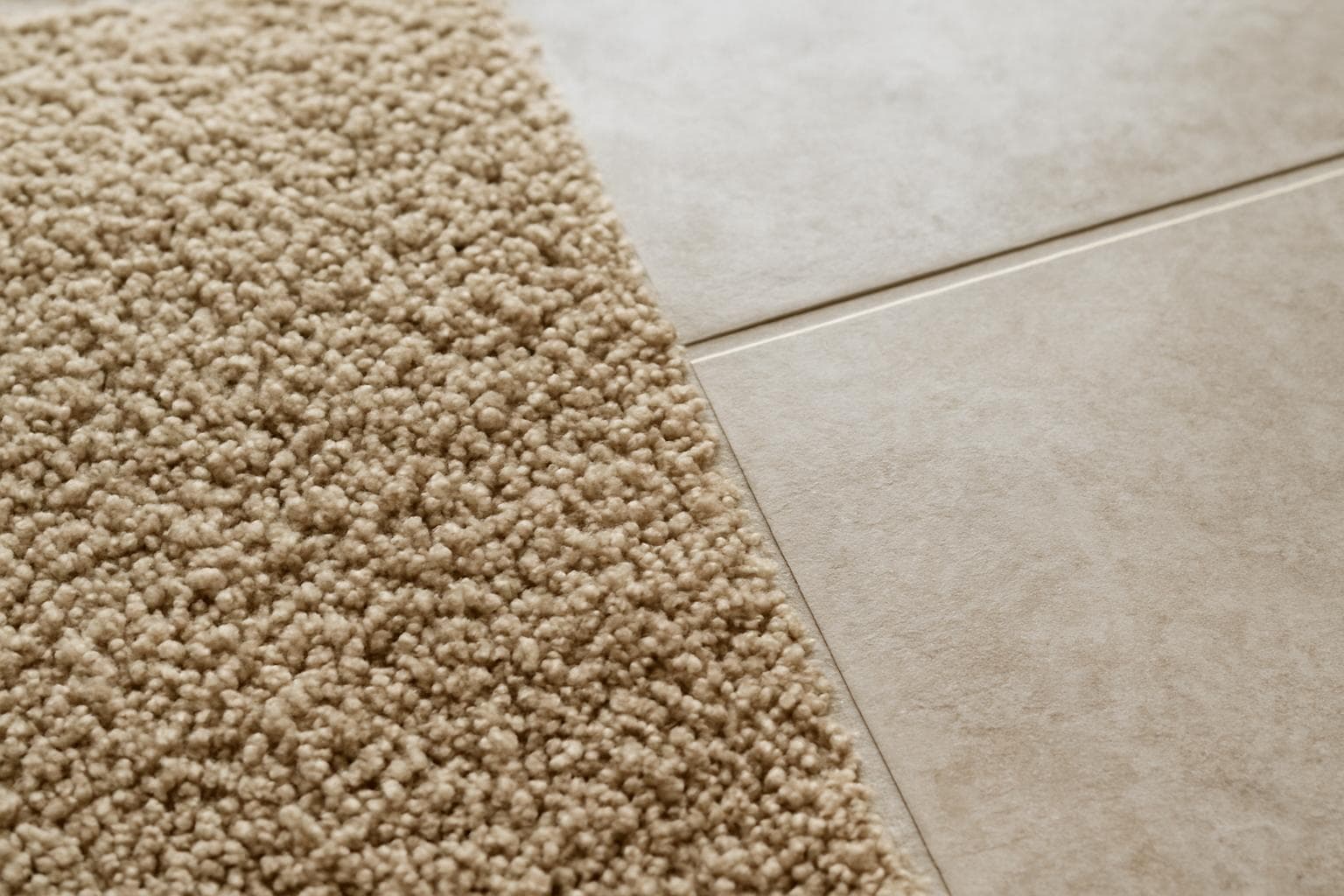
Carpet's "always avoid it" reputation is genuinely contested, and the fight only makes sense once you split the carpet from what goes with it. The fiber itself is usually low concern. The problems ride along underneath and on top: the pad, the glue, and PFAS stain treatments (per- and polyfluoroalkyl substances, the "forever chemicals" sprayed on for stain resistance).
The Carpet and Rug Institute, the industry group behind the Green Label Plus certification, argues that carpet fiber can act like a passive filter, trapping dust and particles until routine vacuuming removes them, a framing that complicates the blanket "avoid carpet" advice. The EPA's own guidance on identifying greener carpet points buyers toward the same pad, adhesive, and treatment choices flagged here, rather than ruling carpet out entirely.
Carpet also traps dust, dander, and whatever gets tracked in, which matters more in an allergy household than any VOC does. My verdict: carpet isn't automatically unhealthy, but it's the hardest floor to buy clean. Look for CRI Green Label Plus (the Carpet and Rug Institute's low-emission label), choose a low-VOC pad, and skip the factory stain treatment. If clean air is the whole point of your project, the safest non-toxic flooring points you toward simpler choices.
Does Hemp Flooring Deserve the #1 Spot It Claims?
Not automatically, and the reason is the binder, not the plant. HempWood markets itself as the hardest, greenest, healthiest floor going, and claims that only a small fraction of buyers even know hemp flooring exists, a figure from its own marketing that we couldn't independently verify. Two of its other claims hold up better under a neutral look.
The hardness claim is largely real, though the numbers come mostly from the manufacturer. According to the National Wood Flooring Association, red oak measures around 1,290 lbf and hickory around 1,820 lbf on the Janka scale. HempWood advertises testing around 2,200 lbf on its own materials, which would beat both if accurate, so "harder than oak" is a fair claim. But strand-woven bamboo listings often cite figures past 3,000 lbf, so hemp isn't the hardest floor you can buy, and neither the HempWood nor bamboo numbers are backed by independent, third-party testing we could confirm.
| Wood | Janka hardness (lbf) |
|---|---|
| Red oak | 1,290 |
| Hickory | 1,820 |
| HempWood | 2,200 |
| Strand-woven bamboo | 3,000 |
Janka hardness of four wood-based floors, in pounds of force. Higher resists dents better.
The green claim is also mostly real. Hemp reaches harvest in roughly 90 to 120 days, and cork bark regrows in about 9 years, so hemp is genuinely fast to renew. But the plant growing fast tells you nothing about the glue holding the plank together. HempWood uses a soy-based binder instead of formaldehyde resin, which sounds great, and it might be. My honest verdict: promising material, but I can't point to independent VOC certification for it, so it doesn't earn an automatic #1 on health. If renewability is your driver, weigh it against the rest in the most eco-friendly flooring option.
The Real Risk Is the Glue and Finish, Not the Plank
The biggest source of off-gassing in most rooms isn't the wood, vinyl, or tile itself, it's the finish, adhesive, and underlayment installed along with it. Those layers can turn a low-emission plank into a high-emission room.
I saw this firsthand on a job near Dayton. A family had installed a floor themselves before their baby arrived, then called me back in because the nursery still smelled weeks later. They'd picked a solid, low-emission wood, a good choice on paper, but grabbed whatever adhesive was on the shelf at checkout, and that adhesive kept venting long after the wood had settled. Nobody had told them the glue needed the same scrutiny as the plank, so they nearly blamed the wrong material and tore out wood that never needed to go.
The culprits are easy to name once you know where to look. Solvent-based finishes off-gas hard; water-based and hardwax-oil finishes release far less. On the glue side, some adhesives carry isocyanates (reactive chemical compounds used to make some strong, fast-curing glues) or urea-formaldehyde resin that keep venting for weeks.
Underlayment and sealers breathe too. That cushion or moisture layer under a floating floor is part of the air you live in, not a hidden layer that doesn't count.
A "natural" floor set in whatever glue was on the shelf isn't the low-emission floor the buyer thinks they got. Ask for the finish and adhesive by name, and get their emission ratings before anyone opens a bucket. For the full breakdown of which materials and glues vent least, what flooring has the least off-gassing is the one to read next, because it ranks the whole assembly, not just the top layer.
Sources
- Carpet and Rug Institute, Benefits of Carpet
- National Wood Flooring Association, Homeowner's Handbook to Real Wood Floors (PDF)
- EPA, Identifying Greener Carpet
- EPA, Indoor airPLUS Compliant Building Products (PDF)
- EPA, Questions and Answers Regarding Laminate Flooring