
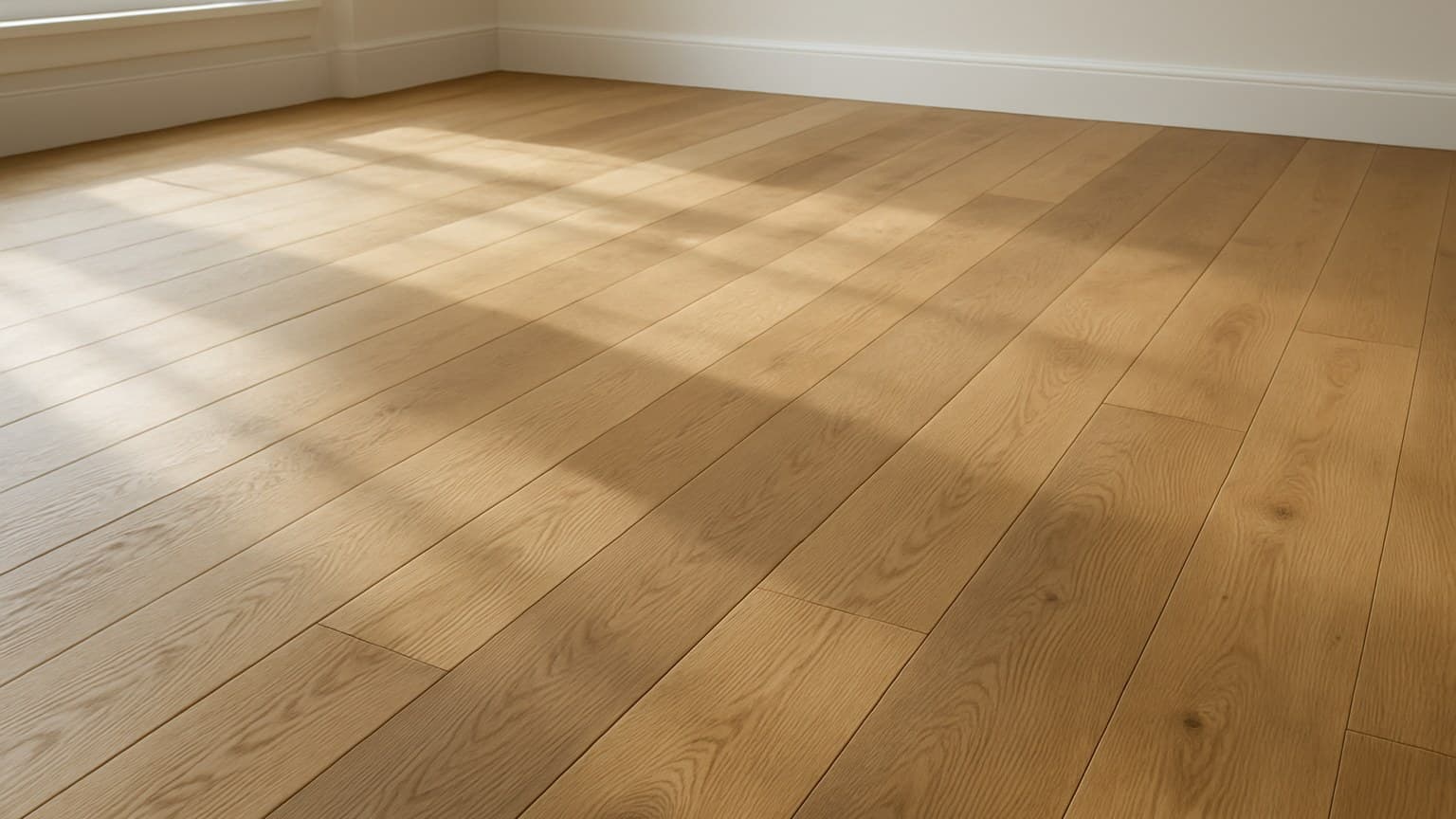
Responsibly sourced solid or reclaimed hardwood is the most eco-friendly flooring option, with cork, bamboo, and real linoleum close behind and carpet dead last. The trouble is most people judge a floor by one trait, when three things decide its real footprint. Get those three wrong and a "green" plank can still end up a loser.
Key takeaways
- Responsibly sourced solid or reclaimed hardwood tops the lifecycle scorecard: the National Wood Flooring Association's Environmental Product Declaration puts solid wood's cradle-to-grave biogenic Global Warming Potential at -17.55 kg CO2e, meaning it stores more carbon than it emits.
- Carpet lands last. Green America reports about 1.8 million tons of carpet go to US landfills each year, where it can persist for roughly 20,000 years.
- Even landfilled wood keeps most of its carbon locked up: NWFA/EPA figures say only about 8% decomposes, so roughly 92% of its biogenic carbon stays stored.
- The plank is only part of the floor. Adhesive, underlayment, and finish can off-gas as much as the material itself, so a fast-renewing cork or bamboo glued down with cheap adhesive isn't the clean floor it looks like.
- Refinishing an existing hardwood floor instead of replacing it cuts the carbon footprint by more than 75%, per gbdmagazine.com.
The Most Eco-Friendly Flooring, Ranked (and the 3 Things That Decide It)
Responsibly sourced solid or reclaimed hardwood sits at the top because it wins on all three things that matter. Cork, bamboo, and real linoleum trail close behind. Carpet comes dead last.
Those three deciding factors:
- Where it's sourced. Is the material renewable, recycled, or dug out of the ground once and gone?
- How long it lasts before replacement. A floor you keep for 40 years beats one you rip out in 7.
- What happens at end of life. Does it rot down, get reused, or sit in a landfill for centuries?
The table below lines up nine common floors against those three measures.
| Rank | Material | Sourcing | Lifespan | End of life |
|---|---|---|---|---|
| 1 | Solid / reclaimed hardwood | Renewable if FSC-certified; reclaimed reuses existing wood | Decades, refinishable many times | ~92% of its stored carbon stays locked up even in landfill; reusable |
| 2 | Cork | Bark regrows without felling the tree | Long and springy, but dents under heavy loads | Natural, biodegradable if not heavily finished |
| 3 | Bamboo | A grass that matures in 3-5 years | Hard-wearing (CALI bamboo rates 5,000+ Janka) | Biodegradable; depends on the adhesive used |
| 4 | Real linoleum | Linseed oil, cork dust, and jute, all natural | 30-40 years | Biodegradable |
| 5 | Tile / stone | Mined; inert and durable once fired | Many decades | Inert and long-lived; hard to recycle but rarely replaced |
| 6 | Rubber (recycled rubber / EPDM) | Often made from recycled tires; virgin EPDM (synthetic rubber) is petroleum-based | Long-wearing; common in gyms and other high-traffic spaces | Technically recyclable, but few facilities take it back, so most ends up landfilled |
| 7 | Laminate | Wood fiber plus resins, energy-heavy to make, often shipped overseas | Moderate, not refinishable | Mostly landfilled |
| 8 | Vinyl / LVP | PVC, petroleum-based; some recycled content exists | 15-25+ years | Hard to recycle; mostly landfilled |
| 9 | Carpet | Petroleum-based synthetics | 5-20 years | ~1.8 million tons landfilled yearly; roughly 20,000 years to break down |
Nine flooring types ranked on sourcing, lifespan, and end-of-life fate. Lifespan and disposal figures vary by product and manufacturer: hardwood's carbon-retention figure is per the National Wood Flooring Association; carpet's landfill figures are per Green America and gbdmagazine.com; other lifespans reflect ranges reported by vermontplankflooring.com and crowlinteriors.com.
One warning before you read your own case off that chart. The plank is only as green as what goes down with it. A fast-renewing cork or bamboo stuck down with whatever adhesive was cheapest on the shelf isn't the clean floor the box promised. The glue, the underlayment, and the finish can carry as much off-gassing risk as the material itself. If you want a wider survey of floors built to limit that kind of off-gassing, there's a full roundup of non-toxic flooring options worth checking.
Why Solid Wood Can Be Carbon-Negative
Solid wood can store more carbon than it releases over its whole life. According to the National Wood Flooring Association's Environmental Product Declaration, a verified report of a product's lifetime environmental impact, solid wood's cradle-to-grave biogenic Global Warming Potential is -17.55 kg CO2e, CO2e means carbon dioxide equivalent, the standard unit used to compare different greenhouse gases on one scale. The minus sign is the whole point.
In plain words: a growing tree pulls carbon out of the air. When you turn it into a floor, that carbon stays locked inside the planks for as long as the floor lives.
It keeps holding most of that carbon even after the floor comes out. According to the National Wood Flooring Association and the U.S. EPA (Environmental Protection Agency), only about 8% of wood decomposes in a landfill, so roughly 92% of its stored carbon stays put.
The biggest green move with wood isn't buying new. It's keeping what you have. According to gbdmagazine.com, refinishing an existing hardwood floor instead of replacing it cuts the carbon footprint by more than 75%. I've sanded back floors in Dayton foursquares that the owners were ready to tear out, and once they saw the grain come back they couldn't believe they'd nearly thrown decades of good wood into a dumpster. For anyone starting without old growth wood to save, there's still a path to affordable non-toxic flooring that skips the harsh adhesives.
One caveat. Wood is only this carbon-smart when it's responsibly sourced, meaning FSC-certified, and finished and glued with low-emission products. A beautiful board ruined by a high-VOC finish gives back some of what makes it clean. Choosing from the flooring types with the least off-gassing up front removes that risk before it ever starts.
Why Tile and Stone Pull Extra Weight Once the Whole Building Counts
Tile and stone's eco case isn't only about sourcing and end of life, it also changes how hard the rest of the building has to work. According to the Tile Council of North America, tile and stone used in ventilated facade systems, a wall design with an air gap behind the tile that lets trapped heat escape before it reaches the inside, can cut a building's overall energy use by 20% to 30%.
That's a wall application, not a floor install, so it doesn't change the numbers in the ranking table above. But it backs up what I see on the job: tile and stone are inert, so they don't absorb and release heat the way some synthetic floors do, and once that tile is down it almost never gets torn out and replaced. That staying power is most of why it ranks as high as it does.
Where Carpet, Vinyl, Laminate, and Rubber Fall Short
Carpet is the worst performer on the board. It's petroleum-based, it lasts only 5-20 years, and Green America reports that about 1.8 million tons of it go to US landfills every year, where it can persist for roughly 20,000 years. Short life plus near-permanent disposal is the exact combination the scorecard punishes.
Vinyl and LVP (luxury vinyl plank) are PVC (polyvinyl chloride) and petroleum-based too, but the story is less one-sided. Recycled-content and low-emission lines do exist, and lifespan runs 15-25+ years per crowlinteriors.com. If you're set on LVP and want it to be as clean as possible, work through the non-toxic LVP checklist of things to confirm before you call it safe before you buy.
Laminate is genuinely split. Vermontplankflooring.com flags energy-heavy production, possible formaldehyde, and overseas shipping. Other sources credit newer low-VOC technology. Both can be true at once, so there's no clean verdict here. Anyone sensitive to fumes specifically will want to check which flooring has formaldehyde before putting laminate on the shortlist.
Rubber flooring, recycled rubber tiles and sheets, plus synthetic EPDM (ethylene propylene diene monomer) rubber, shares the same petroleum-based downside as vinyl and laminate, but it usually starts from recycled tires, which keeps that waste out of a landfill in the first place. It holds up for decades under heavy foot traffic, which is why you see it in gyms and mudrooms. The weak spot is what happens when it wears out: rubber is technically recyclable, but few facilities actually take it back, so most worn rubber flooring ends up landfilled anyway, same as vinyl.
The real lever on all four is lifespan and disposal, not just the raw material. A synthetic floor that lasts 20 years beats one that lasts 7, even when both start from petroleum. If you want the fuller rundown, here's which flooring materials are worth avoiding for health and the planet.
Cork vs. Bamboo vs. Hardwood: Resolving the Conflicting Claims
These three get pitched against each other constantly, and the numbers floating around online don't agree. Here are the sources side by side.
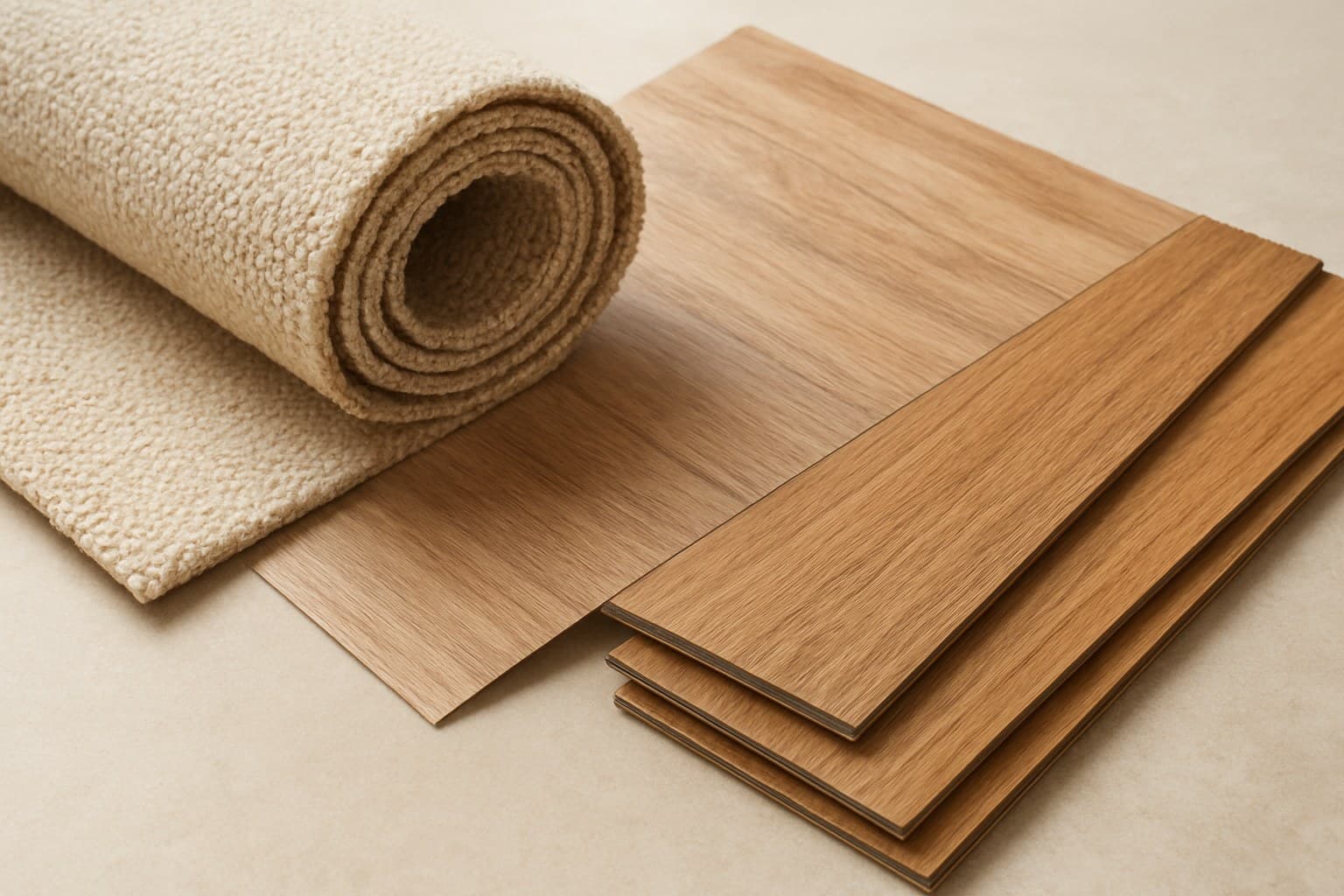
Cork's regrowth claim is the messiest. Green America cites bark regrowing in about 3 years. Vermontplankflooring.com says 8-10 years. The part both agree on: the tree is never cut down, only the bark is stripped.
Bamboo is technically a grass, not wood, and it matures in 3-5 years. CALI bamboo says its stock regenerates in 5-7 years and scores 5,000+ on the Janka hardness test, which measures how well a floor resists dents and scratches. That's harder than most hardwoods.
Hardwood regrows slowest of the three, by decades. But it stores the most carbon and refinishes the longest, so fast regrowth isn't the only thing worth counting.
| Material | Regrowth | Hardness | Note |
|---|---|---|---|
| Cork | Bark regrows ~3 years (Green America) to 8-10 years (vermontplankflooring.com); tree not felled | Soft and springy; dents under point loads | Warm, quiet, easy underfoot |
| Bamboo | Matures 3-5 years; CALI bamboo regenerates 5-7 years | Very hard; CALI bamboo 5,000+ Janka | Technically a grass, not wood |
| Solid hardwood | Decades (slowest) | Species-dependent; refinishable for decades | Carbon-negative lifecycle; longest service life |
Renewal speed and hardness compared across cork, bamboo, and solid hardwood.
That same install rule is what actually decides cork and bamboo's score on the job. Cork and bamboo are only as clean as the adhesive and finish you put down with them. I've seen a fast-renewing plank lose its whole green advantage because it got glued to the slab with a high-VOC adhesive. The material was never the problem. The install was.
Certifications That Actually Mean Something
A certification only proves the one thing it was built to check, so match the label to the worry. Don't assume one stamp covers everything.
- FSC (Forest Stewardship Council) covers responsible sourcing. It tells you the wood came from a well-managed forest, not a clear-cut.
- FloorScore and GREENGUARD Gold cover indoor-air emissions, meaning how much the floor off-gasses once it's in your home.
- CARB 2, from the California Air Resources Board, limits formaldehyde in the product's core.
- GoodWeave covers fair labor in rugs, so you know a child didn't make it.
For an official place to check which labels are legitimate, the Environmental Protection Agency's (EPA) Environmentally Preferable Purchasing program points buyers to recognized ecolabels like FloorScore, the Global Recycled Standard, and Green Circle Certified.
The limit is the one worth remembering. A certification on the plank doesn't cover the glue, grout, or finish you install it with, and that's where a lot of emissions actually come from. Judge the whole assembly, not just the box. If low emissions are your top priority, start with GREENGUARD Gold certified flooring and then vet the adhesive separately.