
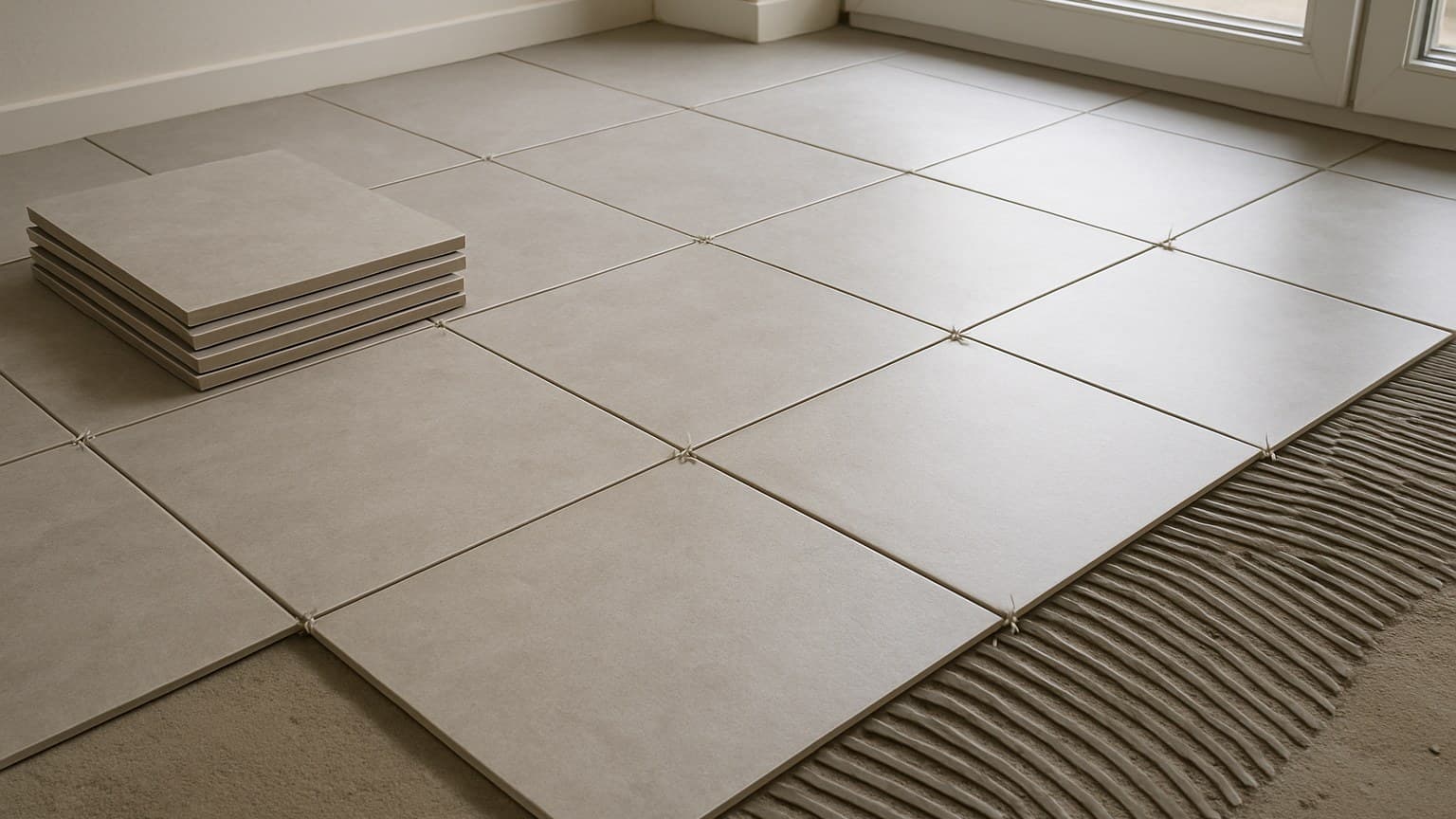
Porcelain and ceramic tile, natural stone, polished concrete, and solid hardwood are the floors that barely off-gas, because their material body is mineral or solid wood with no plastic or glue baked in. The catch homeowners miss is that the glue, underlayment, finish, and grout under and over that inert plank all have their own emissions, so what flooring does not off-gas is really a question about the whole floor, not just the box it came in. Get that part wrong and a "safe" floor still ends up smelling for weeks.
Key takeaways
- Porcelain and ceramic tile, natural stone, and polished concrete are mineral and essentially do not off-gas at all.
- Solid hardwood is inert too, but its finish is where VOCs come from; site-finished with a natural oil off-gasses the least.
- The plank can be inert while the glue, underlayment, finish, and grout off-gas, so judge the whole assembly, not just the box.
- Vinyl, laminate, and synthetic carpet off-gas the most, from PVC plasticizers and formaldehyde in fiberboard cores.
- Look for FloorScore, GreenGuard Gold, and NAUF or ULEF labels; the EPA's formaldehyde rule caps emissions from composite wood flooring.
The Flooring That Genuinely Doesn't Off-Gas
The short answer: porcelain and ceramic tile, natural stone (marble, slate, travertine, limestone, soapstone), polished concrete, and solid hardwood are the floors whose material body is essentially inert. On its own, each gives off little to no VOCs (volatile organic compounds).
The reason is simple. These are mineral or solid wood, not plastic and resin. There's no plasticizer, a chemical added to vinyl to keep it soft and flexible, or glue pressed into the plank to slowly gas off later.
Solid hardwood comes with one asterisk. The wood itself is inert, but the finish is where the VOCs come from. A board finished on site with a natural oil off-gasses far less than one coated in a high-solvent polyurethane.
Most ranking lists stop at the plank itself. They miss that an inert plank can still sit on off-gassing glue and underlayment. More on that below. For the full ranked picture by health, see our breakdown of the healthiest flooring for a home.
| Tier | Flooring | Why |
|---|---|---|
| Essentially none | Porcelain & ceramic tile | Fired clay, inert; questions move to grout and sealer |
| Essentially none | Natural stone | Solid mineral; sealer and adhesive are the variables |
| Essentially none | Polished concrete | Cured slab; any sealer used adds the only VOCs |
| Very low (finish-dependent) | Solid hardwood | Inert wood; oil finish lowest, solvent polyurethane highest |
| Low-to-moderate | Natural linoleum (Marmoleum) | Linseed-oil smell can linger weeks for sensitive people |
| Higher | Engineered wood, laminate, LVP, synthetic carpet | Composite cores, PVC, adhesives and formaldehyde |
Flooring types ranked by how much the material itself off-gasses, before install materials are added. For a dedicated breakdown of which specific floor type releases the fewest fumes, see our guide on flooring with the least off-gassing.
What Off-Gassing and VOCs Actually Mean
VOCs are volatile organic compounds, chemicals that evaporate into the air at room temperature. Off-gassing is a product slowly releasing those chemicals after it's made and installed.
Formaldehyde is the one that matters most in flooring. It's used in the glues that bind fiberboard and plywood cores, so it rides along in a lot of engineered products.
Plastics, resins, and adhesives keep releasing gas as they cure and age. That slow release is the "new floor smell" people notice when they walk into a freshly done room. Solid stone and fired clay have none of that chemistry to release.
Which Floors Off-Gas the Most, and Why
The heavy off-gassers are luxury vinyl plank and sheet vinyl, laminate, synthetic carpet, and many engineered-wood cores. Each carries a different source.
Does vinyl flooring off-gas? Yes. Vinyl is plastic (PVC plus plasticizers), so newer planks commonly give off a chemical smell out of the box. A FloorScore-certified product is tested against a lower emissions limit, which helps, but the base material is still plastic.
Laminate's issue is the formaldehyde in its fiberboard core. Synthetic carpet brings fibers, backing, and adhesives all at once, and some studies have found carpets can release a wide range of chemical substances beyond formaldehyde. Engineered wood hides its emissions in the glue holding the plywood core together.
NAUF flooring (no added urea formaldehyde) releases substantially fewer formaldehyde emissions than standard urea-formaldehyde products, though the exact reduction varies by product and manufacturer.
If you want the full picture on where formaldehyde hides, see which flooring has formaldehyde. And if you're set on vinyl but want the lower-emission route, read the things to confirm before you call LVP safe.
The Catch: Glue, Underlayment, Finish, and Grout Off-Gas Too
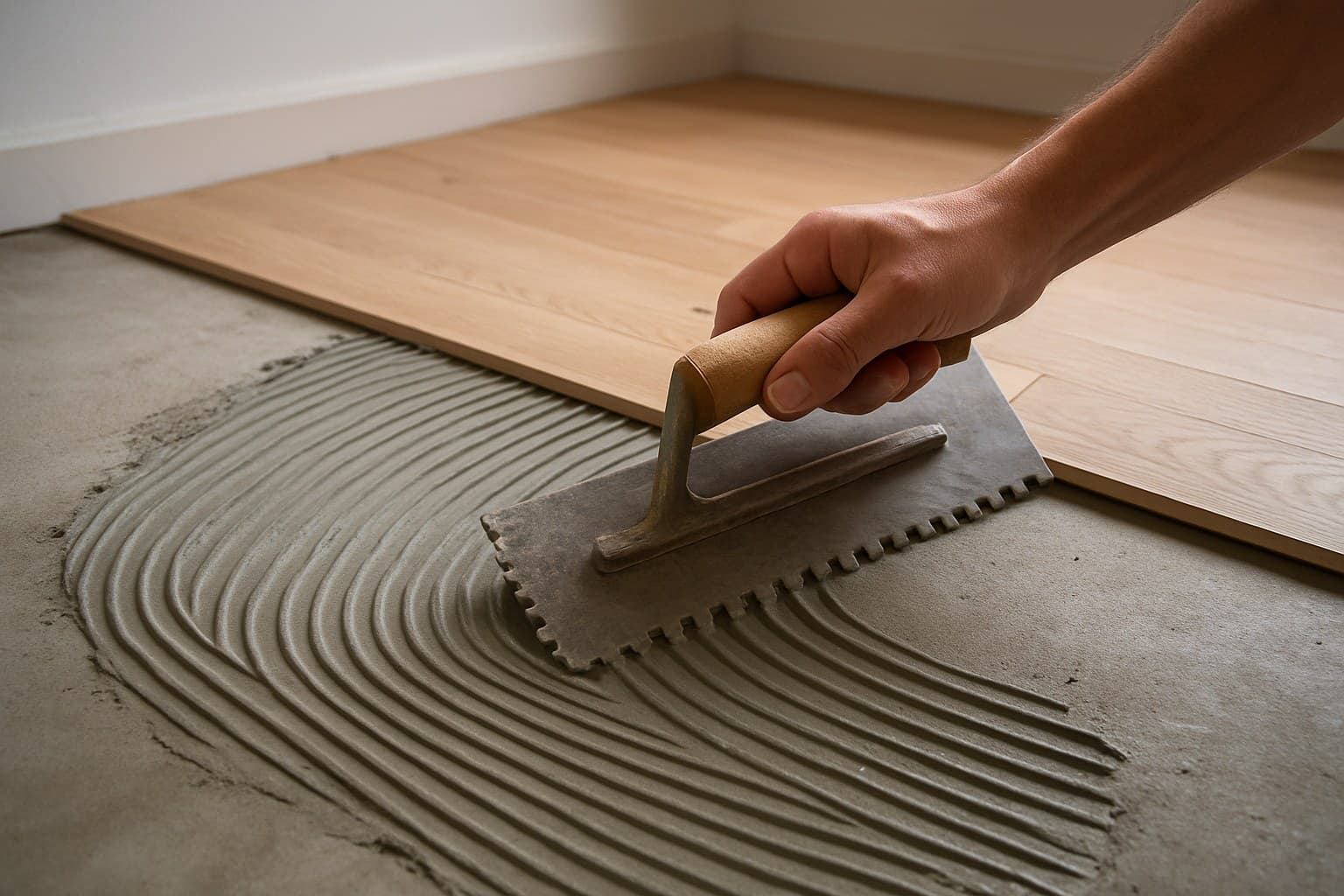
A genuinely inert plank or tile can still end up part of an off-gassing floor. That's because the adhesive, underlayment, finish, and grout under and over it all carry their own emissions, and most other guides never mention that layer. If you're weighing which non-toxic flooring options hold up once those installation layers are factored in, our non-toxic flooring options guide walks through the full list.
The usual suspects are high-solvent polyurethane finishes, standard construction adhesives, foam underlayment pads, and some grout sealers. Any one of them can undo the clean material you paid for.
A "non-toxic" plank set with whatever glue happened to be on the shelf isn't the low-emission floor the homeowner thinks they bought. The whole assembly matters, not just the box.
And the cost conversation is the one that goes quiet. The matched low-emission adhesive, oil finish, and sealer usually run more than the bargain versions. Folks who assumed healthy meant cheap tend to stop talking when the line items land.
So judge the full system, and let each product's own safety data sheet speak instead of a sticker on the carton. For which specific products to confirm, what flooring is formaldehyde-free.
Certifications and Rules That Back Up a Low-VOC Claim
A real low-VOC claim has a test behind it. FloorScore and GreenGuard Gold both measure finished flooring against indoor-air VOC limits, so a floor carrying one has been checked, not just marketed.
Two formaldehyde terms show up on labels. NAUF means no added urea formaldehyde. ULEF means ultra-low-emitting formaldehyde. Both signal a lower-emission composite core.
There's regulatory backing other guides skip. According to the EPA's formaldehyde emission standards for composite wood products, issued under TSCA Title VI of the Toxic Substances Control Act, composite-wood flooring sold in the US is capped on how much formaldehyde it's allowed to release, the Environmental Protection Agency's (EPA) own formaldehyde questions-and-answers guidance explains what that means for consumers. The EPA's Indoor airPLUS program also lists compliant low-emission materials for people who want a starting shortlist.
For the actual VOC and formaldehyde limits behind the labels, and how to check a floor's live certification, see our GreenGuard Gold certified flooring deep-dive. For which makers carry these labels, see our non-toxic flooring brands guide.
How Long Flooring Off-Gassing Lasts
Inert floors first: tile, stone, and polished concrete have essentially nothing to clear from the material, so there's no waiting period on the plank or slab itself. Any smell on those jobs comes from the sealer, grout, or adhesive.
For synthetic floors, estimates vary, and that's worth saying plainly. Some sources report the smell usually fades within about a week, with a month-plus being rare, while others suggest vinyl and carpet can keep off-gassing for several weeks. Both can be true depending on the product and the room.
One piece of advice that doesn't conflict: ventilating for at least a few days (commonly cited as around 72 hours) after installation helps clear lingering VOCs. Open windows, run fans, and give a new synthetic floor air before you move furniture back.
Before you pick any floor, remember the prep rule that quietly governs all of this: the finished product only lasts as long as the subfloor under it. Checking subfloor flatness and moisture is what the maker's warranty really hinges on, and a low-emission floor glued over a damp or wavy base is a callback waiting to happen, no matter how clean the plank.