
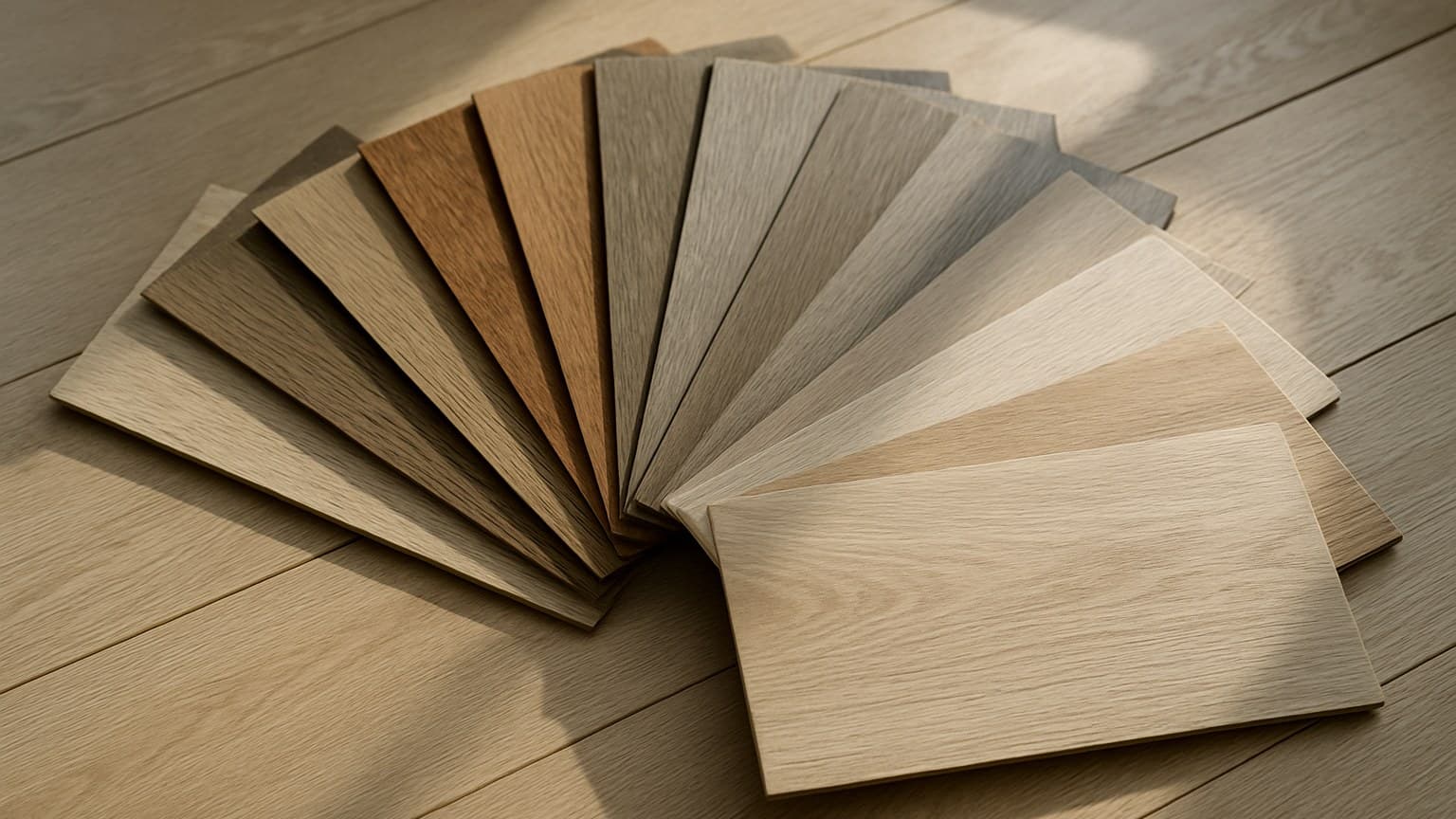
Forbo's Marmoleum and Bona's waterborne wood finishes are two of the few lines that actually show up on a public VOC-emissions registry, most "non-toxic flooring brand" lists never get that specific. Type that phrase into Google and you mostly get generic material round-ups, not brands you can verify. A company can stamp "eco" on the box while that exact product line never appears on a searchable safety database, so I put together a rundown of verified non-toxic flooring options, and here's what held up when I ran the names past the registries myself.
Key takeaways
- Every page ranking for 'brands' actually lists material types. The real test is whether the exact product line appears on the public FloorScore (SCS) or GREENGUARD Gold (UL) registry, not what the box says.
- Solid hardwood with a natural-oil finish, real linoleum like Forbo Marmoleum, and verified porcelain tile sit at the top; flexible PVC vinyl and cheap urea-formaldehyde laminate sit at the bottom.
- Ceramic and porcelain glaze can carry lead. 'Inert tile' is not automatically lead-free, and an XRF test is the only real proof.
- A certification covers the plank, not the glue or the finish. A FloorScore floor set in high-VOC adhesive is no longer a low-VOC floor.
- Certified floors run roughly $2-15 per square foot in materials and $2-14 in labor depending on category, and basement or stair jobs cost more than open rooms.
What Actually Off-Gasses Into Your Home
Three things make a floor "toxic," and none of them is the raw wood or clay. First are VOCs, short for volatile organic compounds, which are gases that finishes and some cores give off into your air. Second is formaldehyde, a specific VOC that hides in the glue of cheap laminate and some engineered cores. Third is PVC, short for polyvinyl chloride, plus the phthalate softeners in flexible vinyl planks and sheet, the stuff that keeps bargain vinyl bendy.
The plank itself is usually the innocent part here. The adhesive, the finish, and the underlayment beneath it are where the real emissions live.
I learned to respect the layer under the plank the hard way. A homeowner in Fort Collins once talked me out of a moisture check to save an afternoon, the floor cupped before the season turned, and I relaid it on my own dime. That was moisture, not off-gassing, but the lesson carries straight over: what sits under and on top of the plank decides how the floor performs. A floor is only as low-toxin as its dirtiest layer, glue included.
How I Checked Each Brand Against the Registries
I did not trust marketing pages. For every line below, I looked it up in the SCS FloorScore product finder and in UL's SPOT database, SPOT is short for Sustainable Product Guide, UL's name for its public list of GREENGUARD Gold products. FloorScore (run by SCS Global Services) and GREENGUARD Gold (run by UL) both test a product for how much it off-gasses and then publish the pass on a searchable registry.
The rule I go by is simple. A brand calling itself "green" means nothing unless the exact SKU you are buying appears on one of those public registries. Not the brand. The SKU.
Two warnings before you shop. Certification is a snapshot in time, so lines get added and dropped; check the live listing the week you buy, not a blog from two years ago. And a certified plank set in an uncertified, high-VOC glue is no longer a low-VOC floor, because the registry covers the plank, not the bucket of adhesive next to it.
Non-Toxic Hardwood and Finish Brands
Raw wood is inert. The finish on top is where the VOCs hide, so a hardwood floor is only as clean as its coating. That means you check two things: the wood line and the finish line.
For factory-finished wood, the coating is baked on at the plant, so you want a collection that shows up on FloorScore. For site-finished oak, you control the coating, so pick a low-VOC finish yourself. Bona's waterborne coatings carry GREENGUARD Gold, and hardwax oils like Rubio Monocoat give you a natural-oil option instead of standard polyurethane.
| Brand | Line | Public listing | Note |
|---|---|---|---|
| Kährs | Engineered oak (factory finish) | FloorScore-listed lines | Low-emission factory coating |
| Lauzon | Organik / Pure Genius | FloorScore-listed lines | Verify the exact collection |
| Mirage | Engineered and solid | FloorScore / GREENGUARD Gold lines | Confirm SKU in the registry |
| Bona (finish only) | Traffic HD waterborne | GREENGUARD Gold | The coating, not the wood |
| Rubio Monocoat (finish only) | Oil Plus 2C hardwax oil | Low-VOC hardwax oil | Natural-oil alternative to poly |
Source: Product lines I pulled up on the SCS FloorScore product finder while writing this
This table lists each wood and finish line along with whether the exact product shows up on a public VOC-emissions registry.
Factory-finished engineered wood is convenient, but do not assume a whole brand is clean because one collection is; confirm your specific line. If you want the full material-by-material ranking rather than just names, my guide to the healthiest flooring for a home lays it out.
Non-Toxic Tile Brands
Porcelain and ceramic are the closest thing to a truly inert floor, and several lines carry GREENGUARD Gold for emissions. Same rule as wood: certification is by line, not brand-wide, so ask for the specific collection name.
Do not forget the hidden layer here either. The thinset (the mortar that bonds tile to the subfloor) and the grout both off-gas while they cure, so pair certified tile with a certified setting product. Mapei and Custom Building Products both list mortars and grouts on FloorScore.
| Brand | Line | Public listing | Note |
|---|---|---|---|
| Daltile | Porcelain and ceramic collections | GREENGUARD Gold lines | Ask for the specific collection |
| Crossville | Porcelain | GREENGUARD Gold lines | US-made porcelain |
| Florida Tile | HDP porcelain | GREENGUARD Gold lines | Confirm SKU listing |
| Mapei / Custom Building Products (thinset) | Select mortars and grouts | FloorScore-listed products | The glue matters as much as the tile |
Source: Checked against UL's GREENGUARD Gold product listings in SPOT
This table lists each tile and setting-material line along with the emissions registry it appears on.
There is one tile caveat worth its own section, because it changes which collection you actually buy. For the wider view on how hard each of these is to install, see the healthiest flooring to install.
The Lead-in-Tile-Glaze Problem Nobody Mentions
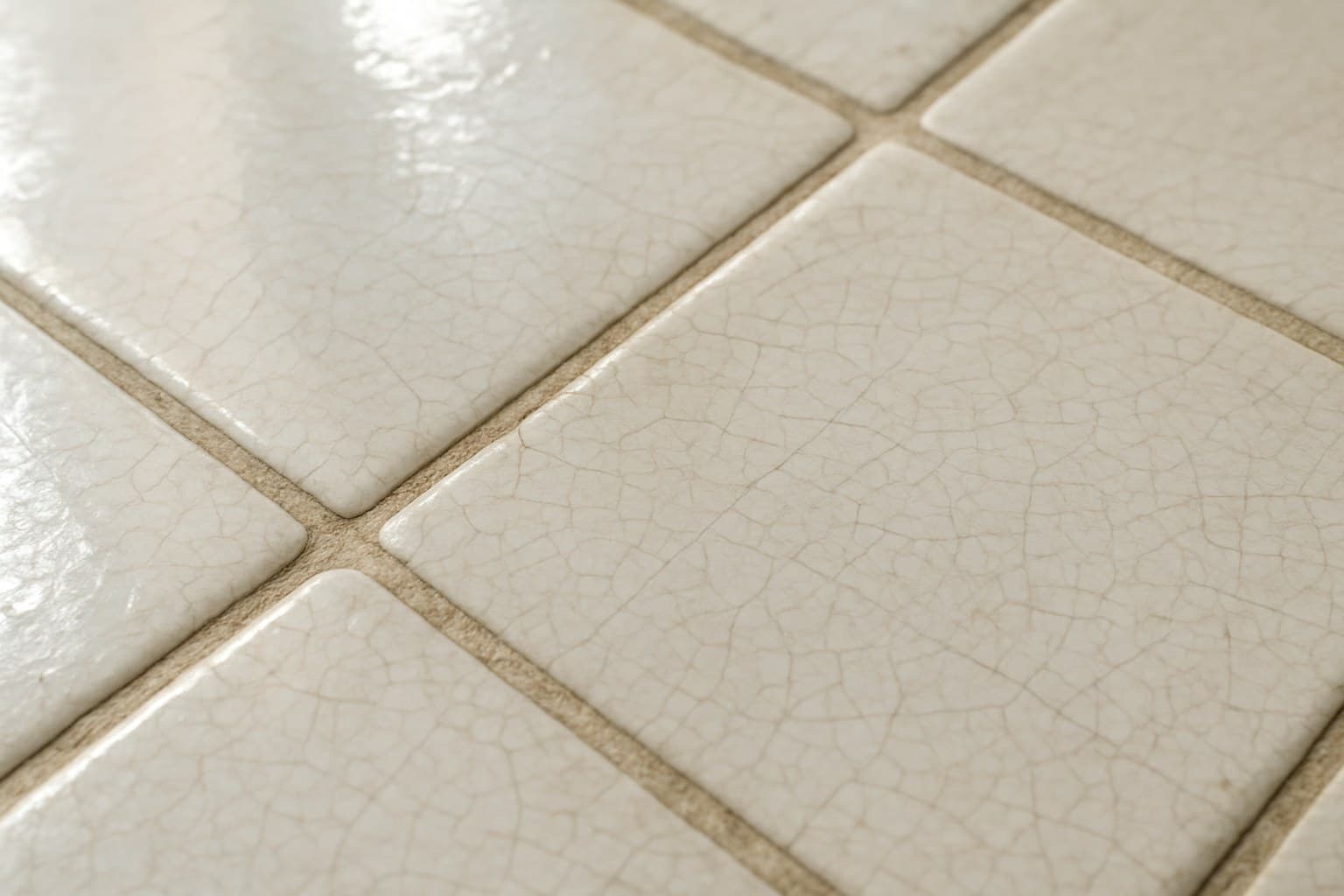
Tile clay itself is inert, but that is not the whole story: the glaze on some ceramic and porcelain can contain lead, especially older or imported decorative tile.
The key thing to understand is that a GREENGUARD Gold listing tells you the tile will not off-gas, not that the glaze is lead-free. Those are two separate questions, and only one of them shows up on the registry. "Inert clay body" and "lead-free glaze" are different claims, and the certification only answers the first.
So make the real check. Ask the maker for a written lead statement, favor domestic lines that publish one, and for salvaged or vintage tile use XRF testing, which is a handheld scanner that reads metal content without damaging the tile. Keep it in proportion, though: a sealed floor tile you are not chewing on is low-risk. It just is not automatically zero, and it is worth knowing which of your candidates can prove it.
Non-Toxic Linoleum, Cork, and Bamboo Brands
First, clear up a name that confuses everyone. Real linoleum is made from linseed oil, cork dust, and jute, and it is nothing like the vinyl sheet people call "lino." Forbo's Marmoleum is the main real-linoleum name on FloorScore, in both sheet and click-together plank.
Cork is a strong low-toxin pick, with one catch. Floating cork clicks together and skips the adhesive, so there is no glue to worry about. Glue-down cork adds an adhesive, and then that glue's certification matters just as much as the cork's. Amorim/Wicanders and USFloors both list cork collections.
| Brand | Line | Public listing | Note |
|---|---|---|---|
| Forbo | Marmoleum (sheet and click) | FloorScore listed | Real linoleum, not vinyl |
| Amorim / Wicanders | Cork floating floors | FloorScore / GREENGUARD Gold lines | Floating avoids extra glue |
| USFloors | Natural cork | FloorScore lines | Confirm the collection |
| Cali | Bamboo / GeoWood | FloorScore lines | Ask about the binder |
Source: Forbo, Amorim, and the bamboo makers' current spec sheets matched to the FloorScore finder
This table lists real linoleum, cork, and bamboo lines along with the emissions registry each one appears on.
Bamboo needs an honest word. Strand-woven bamboo is genuinely hard-wearing, but cheaper bamboo can carry urea-formaldehyde in the binder that holds the strands together, which is exactly the glue you are trying to avoid. Look for the low-emission listing before you buy, and if you want to understand where that binder shows up across product types, read which flooring has formaldehyde. For the full low-VOC picture beyond these names, my rundown on what flooring has the least off-gassing goes deeper.
Non-Toxic Vinyl and LVP Brands
Here is the honest version: most luxury vinyl plank (LVP) carries a FloorScore listing, because FloorScore was developed in partnership with the resilient flooring industry to test its products for VOCs. So the certification is common, but it only covers off-gassing, not the fact that the plank is still PVC.
If you want vinyl and want it as clean as vinyl gets, look for two things together: a live FloorScore listing for that exact line and a phthalate-free statement from the maker. Lines from Karndean, COREtec, Cali Vinyl, Shaw, Mohawk, and Armstrong commonly show FloorScore listings, and several now advertise phthalate-free formulas. Confirm the SKU, not the brand.
That said, flexible vinyl and cheap sheet sit at the bottom of my toxin ranking for a reason, and no certification changes what the material is. If avoiding PVC entirely is the goal, one of the tile, linoleum, or hardwood lines above is the cleaner call. For the products I steer people away from, see what flooring materials to avoid and the fuller most toxic flooring breakdown.
What These Certified Floors Actually Cost
Certified floors are not a single price, so ignore any flat national number. Here is what these categories typically run installed as rough, regional estimates, split into materials and labor, for a straightforward open room. If you want a deeper breakdown by budget tier, my affordable non-toxic flooring guide walks through the numbers further.
| Category | Materials ($/sq ft) | Labor ($/sq ft) |
|---|---|---|
| Solid or engineered hardwood | $4 - 12 | $4 - 8 |
| Porcelain or ceramic tile | $2 - 10 | $6 - 14 |
| Real linoleum (Marmoleum) | $4 - 7 | $3 - 6 |
| Cork (floating) | $3 - 8 | $3 - 6 |
| Bamboo | $3 - 7 | $3 - 6 |
| Rigid-core LVP | $2 - 7 | $2 - 5 |
Two things move those labor numbers up fast. Tile is the priciest to set because of the mortar, layout, and cure time, which is why its labor tops the chart. And the room matters: basements need moisture prep and often a subfloor buildup, and stairs are slow, fiddly hand-work, so both cost more per square foot than a plain open room. Budget extra for either before you sign anything. If price is your first filter, the cheapest non-toxic flooring guide sorts these by value.