
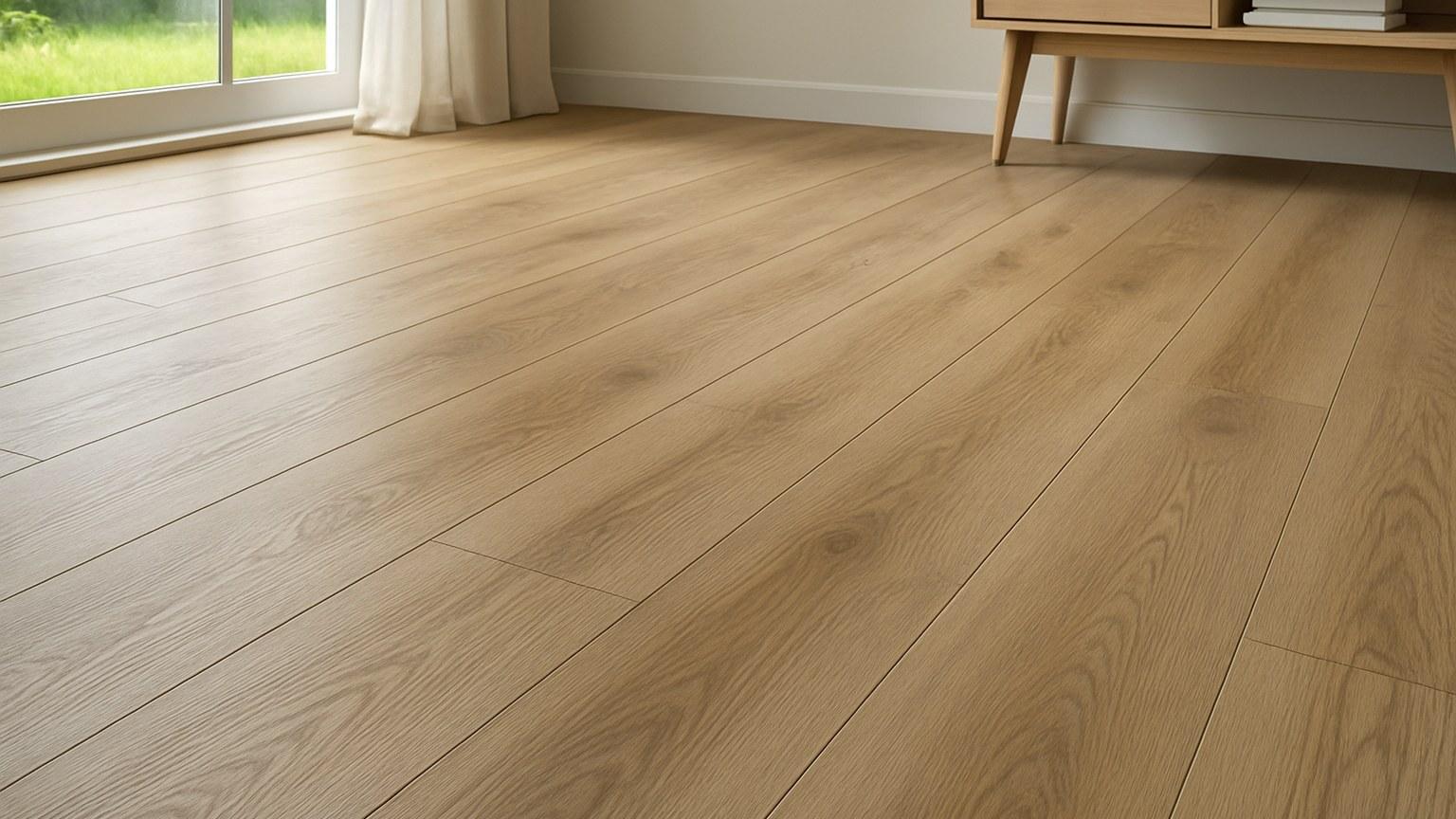
The right LVP (luxury vinyl plank) flooring color comes down to its undertone, the warm, cool, or greige cast hiding under the surface, not the name stamped on the box. Two planks both called "gray" can read icy blue in one room and soft beige in the next. Your light, your trim, and how much dirt you want hidden all push the answer further.
Key takeaways
- The undertone (warm brown, cool gray, or greige, which is gray plus beige) decides whether a color works, not the name printed on the box.
- North-facing and low-light rooms flatten cool grays into a dull blue-gray; greige and warm tones hold their color there.
- Mid-tone greige and natural brown with visible grain hide dirt, scratches, and pet hair best; solid dark and solid light show everything.
- For resale and to dodge a dated look, pick a mid-tone neutral; very cool gray and high-contrast black date the fastest.
- Match the floor's undertone to your existing trim and cabinets, and in open-concept space run one color chosen for the worst-lit room.
Start With the Undertone, Not the Color Name
A color works or fails on its undertone, the hidden cast under the surface, not the marketing name on the box. Get the undertone right and almost any color sits well in the room. Get it wrong and even a popular shade looks off the day it goes down.
Undertone is the faint color mixed into the main one. Think of a gray plank: underneath that gray is either a warm brown-beige lean or a cold blue lean. You can't always name it at first glance, but your eye catches it the second the plank sits next to your trim and cabinets.
That's why names fool people. "Driftwood," "coastal oak," and "smoke" mean one thing at one brand and something else at another. One company's "smoke" is a warm greige; another's is a cold blue-gray. The label is marketing. The swatch is the truth, so judge the swatch.
Every LVP color drops into one of three buckets: warm brown, cool gray, or greige, which is gray mixed with beige. Once you can sort a plank into the right bucket, the rest of the choice gets easier. Before you trust any of this to a product's "premium" label, it helps to know what the word luxury actually buys you on a vinyl box, because the name promises less than shoppers think.
One rule carries the whole article: hold the real swatch in your actual room, in your actual light, before you commit.
The LVP Color Options, Grouped by Undertone
Forget the SKU wall for a minute. Every vinyl plank flooring color and style you'll see at Home Depot or Lowe's sorts into a handful of families, and those swatch walls are really grouping by undertone whether they say so or not. The table below breaks down those real families by the room they flatter and how much mess they show.
| Color family | Undertone | Room it flatters | Dirt and scratches |
|---|---|---|---|
| Cool gray | Cool, blue-gray | Bright south/west rooms, modern spaces | Shows dust, light pet hair, and scuffs |
| Greige | Gray plus beige, neutral | Almost any room, low or high light | Hides dirt and scratches well |
| Blonde / light oak | Warm, pale | Small or low-ceiling rooms you want to open up | Hides light hair and dust, shows dark debris |
| Natural / medium brown | Warm | Most rooms; the safe all-rounder | Hides the most overall |
| Dark brown / walnut | Deep, warm to neutral | Large, well-lit rooms | Shows dust, lint, and footprints |
| Black / high-contrast | Cool, bold | Small accent rooms only | Shows everything; high upkeep |
| Mixed-width / multi-tone | Varies plank to plank | Busy rooms, rustic looks | Camouflages dirt and wear best |
Each LVP color family, its undertone, the room it suits, and how much dirt and wear it shows.
The grain pattern is equally important to the color here. A medium brown with real, varied grain hides more than a flat printed one, so it pays to know how to judge a realistic wood-look vinyl before you fall for a photo. And if the pale, blonde end of that chart is pulling at you, read up on what a light oak vinyl plank name actually tells you, because "light oak" covers a wide range.
How to Read Your Room: Light, Ceiling Height, and Size
Your room narrows the color down before taste ever enters the picture. Light direction, ceiling height, and square footage do most of the sorting for you. Match those first, then pick among the shades that survive. White oak comes in several distinct cuts and finishes, and sorting out which white oak vinyl plank fits which room follows this same room-first logic.
Light is the big one. North-facing rooms and basements get weak, cool light all day, and that light flattens cool gray into a dull, sad blue-gray. Warm browns and greige hold their color in that light. South and west rooms get strong, warm light that can carry a cool gray or a greige without going flat.
Ceiling and size handle the rest. A low ceiling or a small room opens up with a light-to-mid tone. A dark floor in that same small room pushes the walls in and makes it feel like a cave. A big, bright room with high ceilings is the one place a dark or high-contrast floor earns its keep.
| Your room | Pick |
|---|---|
| North-facing or basement (low, cool light) | Greige or warm medium brown; skip cool gray |
| South/west-facing (strong warm light) | Can carry cool gray or greige; avoid very dark |
| Low ceiling or small room | Light to mid tone to open it up |
| Large, bright, high-ceiling room | Dark or high-contrast works here |
| Open-concept across several rooms | One mid-tone greige or natural brown, chosen for the darkest room |
How light, ceiling height, and room size point you to an undertone and value.
Basements deserve a flag of their own: the cool light is only half the story, since a damp slab under a cool gray floor is a bigger problem than the color. Sort why the dry slab matters more than the plank in a basement before you shop color down there.
Once the color is settled, you can match it to an actual product. The best LVP picks lined up by room do that next step.
Match the Floor to Your Trim, Cabinets, and Open Spaces
Match the floor's undertone to what's already standing in the room, because the floor is the one thing you can still change. Warm honey-oak trim fights a cool gray floor every time. Greige is the peacemaker, bridging warm and cool without picking a side.
The common pairings are easy to remember. White shaker cabinets and white trim take almost any floor undertone, warm or cool. Honey or golden oak trim wants a warm floor; drop a cool gray next to it and the oak suddenly looks orange. Cool-gray cabinets want a gray or greige floor to stay in the same family.
For open-concept space, run one color continuous from room to room. Pick the undertone that still looks right in the worst-lit room of the run, usually a greige or a natural brown, and let the brighter rooms carry it easily.
I had a job outside Dayton where Paula had her heart set on a cool gray plank, and the house was full of warm golden-oak trim and doors she wasn't replacing. I laid the first few rows and she stood in the doorway and went quiet. The gray turned the oak a shade of orange she'd never noticed before, and she saw it before the second box was open. We swapped to a greige the next morning, and the trim calmed right down.
Which Colors Hide Dirt, Scratches, and Pet Hair
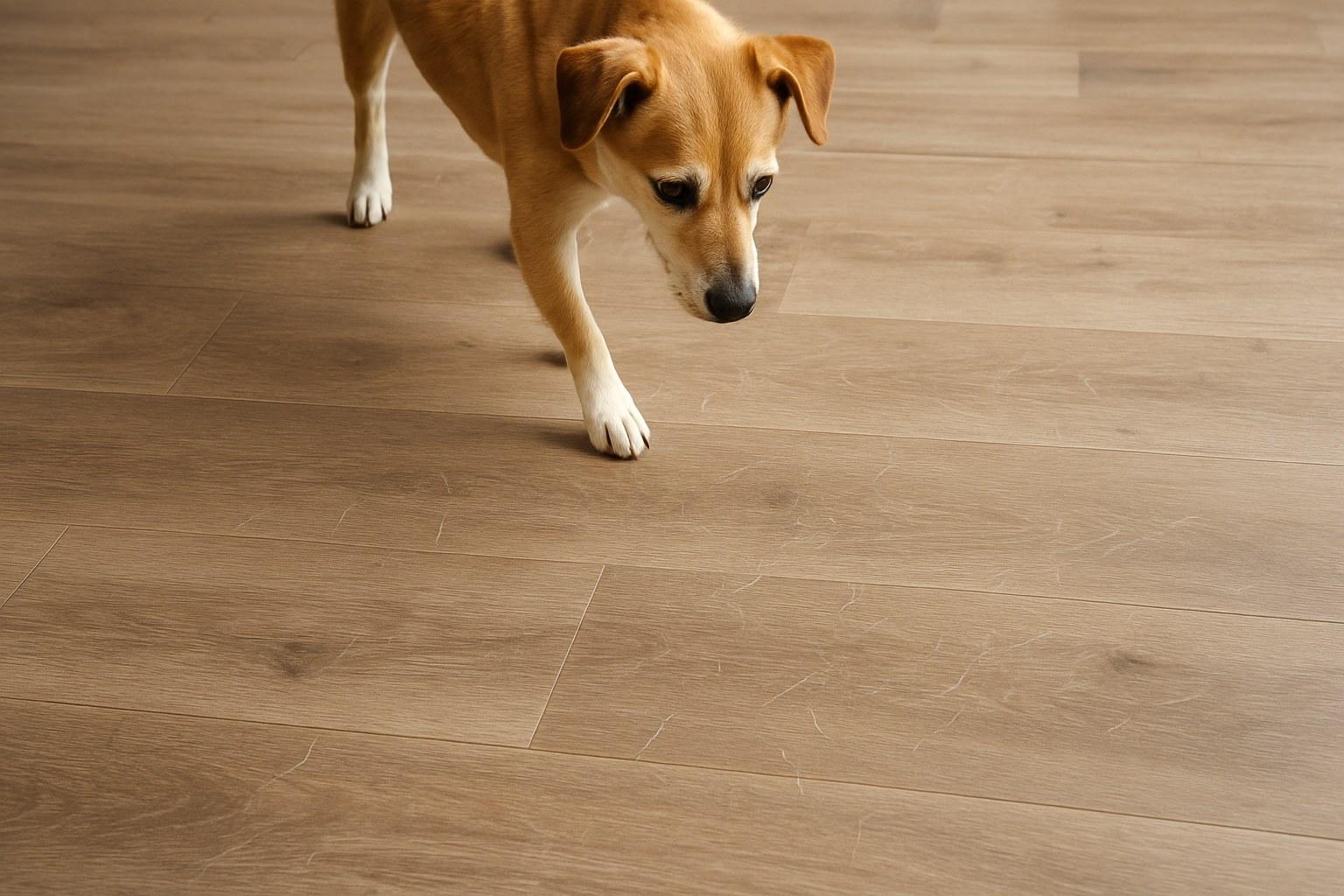
Mid-tone greige and natural brown with visible grain hide the most mess, while solid dark and solid light show every speck. If you have kids, pets, or a busy door, this matters more than any trend. Color aside, the real test of how long that floor stays looking good comes down to the factors that decide vinyl flooring's lifespan.
Most people fall into the same trap. A solid dark floor looks rich in the showroom, then shows dust, lint, and every light pet fur the minute it's in your house. A very light floor does the opposite, showing dark hair, crumbs, and tracked-in grit. Either extreme turns into a floor you're wiping down twice a day.
Finish and texture do a lot of the hiding. A low-sheen matte finish doesn't throw glare, so it won't spotlight every scuff the way a glossy one does. Embossed texture, meaning grain you can actually feel with your hand, breaks up the surface so light scratches disappear into the pattern instead of catching the eye.
So for a busy household with pets, aim for a mid-tone greige or natural brown that has real wood grain and a matte, low-sheen finish, not a flat solid color. Mixed-width or multi-tone planks camouflage even better in the rooms that take the most traffic. The two colors to skip where people actually walk are solid black and solid white; save those for a small accent space if you love them.
Trending vs Timeless: Avoiding a Dated Look
Mid-tone neutrals, meaning greige, natural oak, and warm medium brown, stay safe for resale, while very cool gray and high-contrast black date the fastest. If you plan to sell in the next several years, that's the whole decision right there.
The all-gray wave has cooled off. I still install plenty of gray, but on showroom walls and in the homes I work in, the cold blue-grays are getting pushed aside by warm browns and greige. A very cool gray floor now reads like a specific moment in time the way honey oak did a couple of decades back.
For resale neutrality, pick a mid-tone neutral and match it to the things you won't change soon, like trim, cabinets, and countertops. A floor that gets out of the way is the one a buyer doesn't argue with. Save the bold, high-contrast look for a room you can repaint and restage without ripping up the floor.