
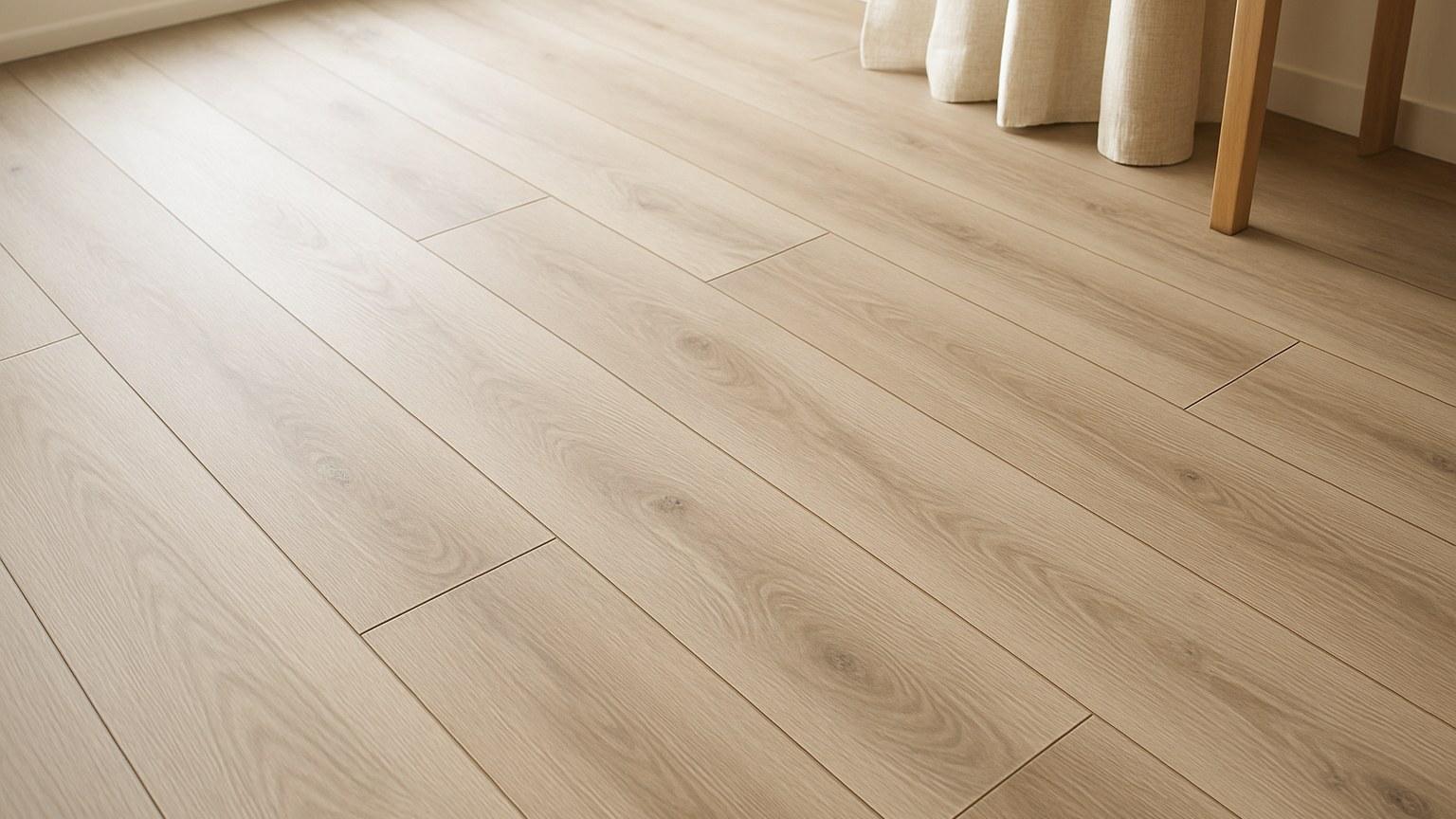
White oak vinyl flooring is a printed vinyl plank, tile, or sheet made to copy the pale, straight grain of white oak, and the type you should buy comes down to the room: rigid-core SPC (stone plastic composite) click-lock for kitchens, baths, and basements, peel-and-stick or sheet for rentals and small, low-traffic spaces. The trouble is that "white oak vinyl" covers four very different formats at four very different price and durability levels, and the box rarely spells out which one belongs in your room. Get the format wrong and you either overpay for a bedroom or watch a cheap floor lift the first wet winter.
Key takeaways
- Rigid-core SPC (stone plastic composite) click-lock is the format that holds up best in kitchens, baths, and basements; peel-and-stick and sheet vinyl suit rentals and small, low-traffic rooms.
- Carpet One recommends at least 3.5 mm plank thickness and a 20 mil wear layer for white oak vinyl in busy rooms.
- "Waterproof" describes the plank core, not the seams; water can still get under a floating floor at the perimeter and sit on the subfloor.
- Real white oak hardwood runs roughly $4-18 per square foot for material depending on grade (flooringexplorer.com); white oak vinyl costs less.
- Click-lock LVP (luxury vinyl plank) is realistic DIY for most rooms; glue-down over large open areas and stairs is usually worth hiring out.
What White Oak Vinyl Flooring Is, and How It's Built
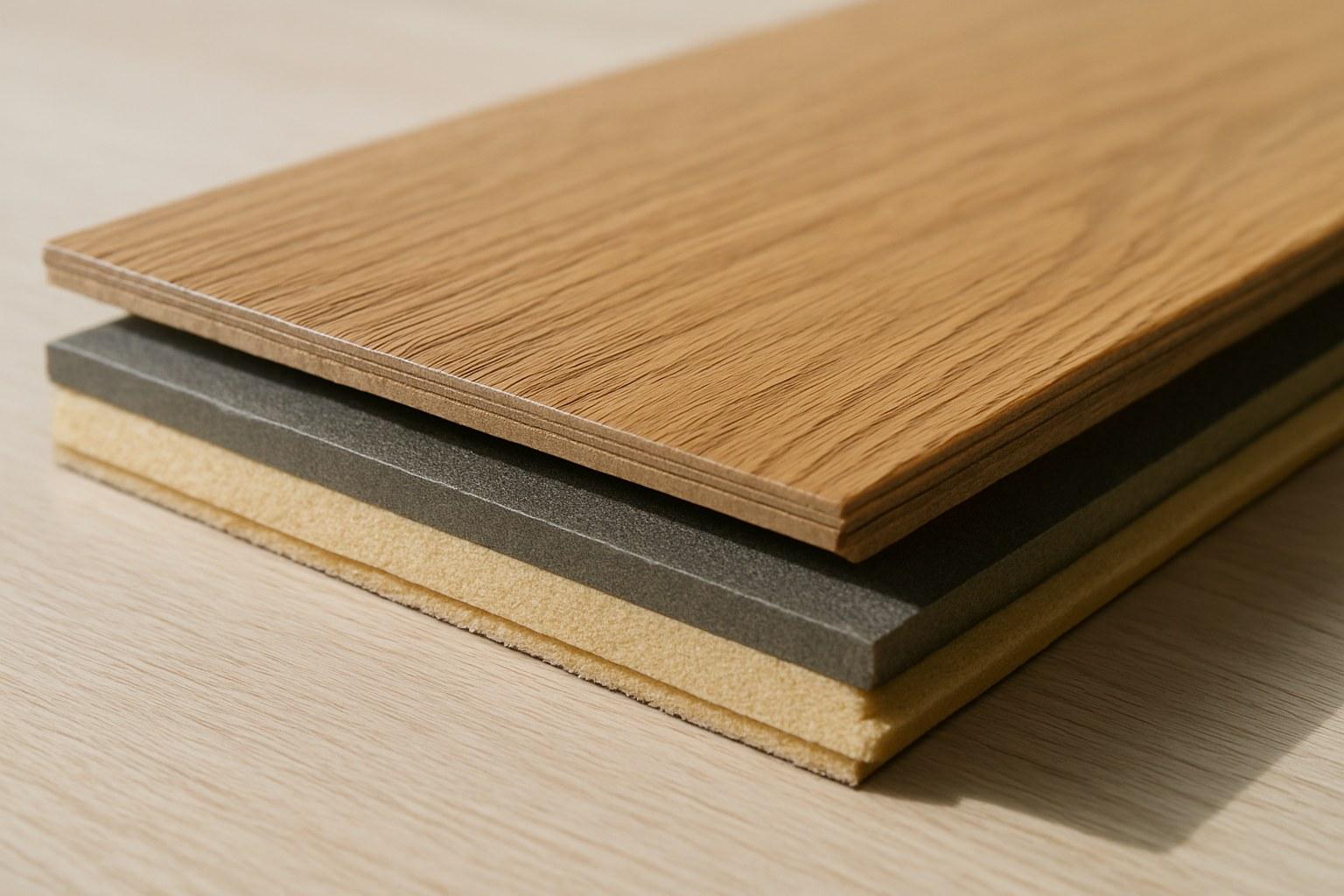
White oak vinyl flooring is a plank, tile, or sheet of PVC (vinyl) with a photo of white oak grain printed on it, built up in stacked layers. It is not real wood, and it does not pretend to be once you know what to look at.
From the top down, a plank runs like this. First a clear wear layer, which takes all the scratches and scuffs. Under that sits the print layer, the high-resolution photo of white oak you actually see. Below the print is the core, either SPC or WPC (wood plastic composite), which keeps the plank flat and stable. At the bottom, many planks carry an attached backing or IXPE pad, a thin foam cushioning layer, that softens footsteps and quiets the floor.
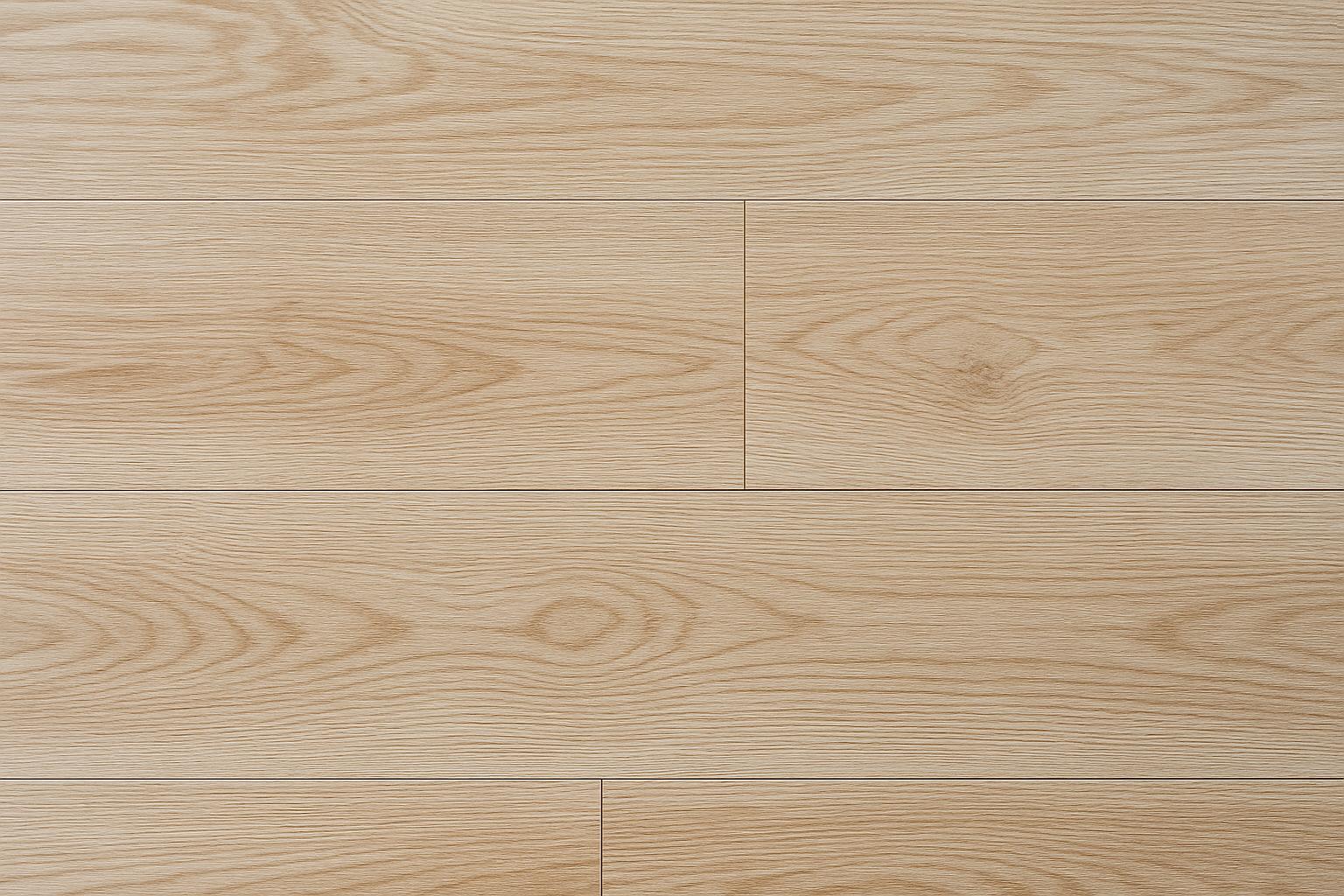
The white oak look comes from two things working together: a sharp print and a texture pressed into the surface. The best planks use embossed-in-register texture, meaning the pressed grooves line up with the printed grain instead of running random. Finish it matte and it reads like wood; finish it glossy and it reads like plastic.
One thing I tell every homeowner: the finished floor only looks as good as that print up top and only lasts as long as the prep underneath. A budget plank laid over a flat, dry subfloor will outlast a premium plank laid over a lumpy, wet one every time.
What Luxury Vinyl Plank Looks Like White Oak
The planks that sell hardest as "white oak" are wide-format luxury vinyl plank, usually 7 inches or wider. Wide boards show more of the straight grain in one piece, so the floor reads more like a real white oak floor and less like a repeating pattern. If you want to understand what separates a convincing wood-look plank from an obvious fake, the nine things worth checking before you buy wood-look vinyl flooring walks through print depth and texture in detail.
The Four Types of White Oak Vinyl, Matched to Each Room
There are four formats you'll cross-shop: click-lock LVP (luxury vinyl plank) that floats, rigid-core SPC or WPC, peel-and-stick plank or tile, and sheet or roll vinyl. Each one has a room it's built for and a room it has no business being in.
This is how the four formats sort out by room:
| Type | Kitchen | Bath | Basement | Rental | Install |
|---|---|---|---|---|---|
| Click-lock LVP (floating) | Good | OK, seal the seams | Good over flat, dry concrete | Great | DIY-friendly |
| Rigid-core SPC/WPC | Best | Best | Best | Good | DIY (click) / hire (glue-down, stairs) |
| Peel-and-stick plank or tile | Light use only | Small baths only | Skip, moisture lifts it | Good for small rooms | Easy DIY |
| Sheet / roll vinyl | Good, fewer seams | Good, fewer seams | OK | Budget pick | Hire for big rooms |
Where to buy without guessing: Home Depot and Floor & Decor both stock wide-plank white oak LVP across these formats, from budget click-lock up to thicker rigid-core lines. Walk in knowing your room and your thickness number and you won't get steered into a bedroom-grade plank for a kitchen.
SPC vs WPC Rigid Core: What's the Difference?
Both are rigid cores, but they feel different underfoot. SPC (stone plastic composite) packs in limestone, so it's denser, harder, and stands up better to dropped pots and rolling chairs. WPC (wood plastic composite) foams in more filler, so it's a touch softer and warmer to stand on but dents a little easier. For kitchens, baths, and basements I reach for SPC; for a bedroom where comfort matters more than abuse, WPC is fine.
The Best White Oak Luxury Vinyl Plank for Most Homes
For most homes the format that holds up best is rigid-core SPC in a wide plank, click-lock version. It survives a wet kitchen, a basement, or a busy hall, and a confident DIYer can lay the click-lock version themselves. If you want specific named lines matched to rooms, the roundup of the five best LVP floors matched to the room you're buying for sorts them by use instead of by brand hype.
White Oak Sheet Vinyl and Rolls
Sheet vinyl comes in wide rolls, so a small bathroom or laundry can go down with almost no seams. Fewer seams means fewer places water sneaks through, which is why it still earns a spot in wet rooms. The catch is handling: a big roll in an open kitchen is awkward and easy to crease, so I'd hire that out rather than fight it alone.
Is NuCore Flooring Good?
NuCore is Floor & Decor's house brand of rigid-core vinyl, and for the money it's a solid middle-of-the-road floor with an attached pad built in. It's a reasonable pick for a basement or a busy family room. Just check the specific plank's thickness and wear-layer numbers against the spec sheet before you buy, because the line spans several tiers and not all of them suit a kitchen.
Specs to Check Before You Buy
Two numbers decide whether a white oak vinyl floor lasts or disappoints: plank thickness and wear layer. As a general buyer's baseline, look for at least roughly 3.5 mm of plank thickness and a wear layer in the 20 mil range before buying a white oak vinyl plank for a busy room, treat it as a minimum to confirm on the spec sheet of the specific product you're looking at, since these numbers vary by brand and aren't guaranteed on every plank on the shelf.
Wear layer is measured in mils (thousandths of an inch), and it's the clear coat taking all your abuse. Thinner wear layers are fine for a bedroom or guest room that sees socks and slippers. Kitchens, halls, and entries need the thicker 20 mil to shrug off grit, chair legs, and pet claws.
Now the part that trips people up. "Waterproof" on the box describes the plank's core, not the seams and not the room. The core can be fully waterproof while water still creeps in at the edges and seams and pools on the subfloor under a floating floor. That perimeter is where failures actually start, not the plank face.
One more trap worth naming: many rigid-core planks already have an IXPE pad attached to the bottom. Adding a second underlayment under that can make the floor too spongy and void the warranty. Whether you need any pad at all is set by that product's own instructions and the subfloor you're going over.
Run down this list before you pay:
- Plank thickness: at least roughly 3.5 mm as a baseline for busy rooms
- Wear layer: at least roughly 20 mil for kitchens and busy rooms
- Waterproof core confirmed on the spec sheet, not just promised on the box
- EIR (embossed-in-register) texture so grooves line up with the grain print
- Matte or low-sheen finish, since gloss reads plastic
- FloorScore or low-VOC certification for indoor air quality
- Attached IXPE pad if going over concrete, and no second pad added under it
- Radiant-heat rating if you have heated floors
Source: Carpet One's white oak vinyl buying guide
Is White Oak Vinyl Plank Really Waterproof?
The core, yes, if the spec sheet says so. The floor as a whole, no. I've pulled up "waterproof" floating floors where the planks were perfect but the subfloor underneath was stained and soft, because water ran in at the toilet base and sat there for weeks. The material held; the installation didn't. Treat waterproof as a plank property and seal your perimeter and seams in any wet room.
White Oak Vinyl in Bathrooms and Other Wet Rooms
White oak vinyl works in bathrooms, and rigid-core SPC, either click-lock or glue-down, is the format I'd reach for there. It handles standing humidity and the odd splash without swelling the way laminate would.
The risk is the same one from the spec section, and it's worth repeating because it's where I get called back. Seal around the tub, the toilet, and the whole room edge. A waterproof core does nothing to stop water pooling under a floating floor once it gets past the perimeter.
In a small bath, this is exactly where sheet vinyl earns its keep. One wide piece means few or no seams, so there are fewer places for water to find its way down.
Basements and mudrooms follow the same rules with one addition: check the concrete for moisture and flatness before anything goes down. Concrete gives off moisture for a long time, and a slab that reads wet or sits out of flat will fail the floor no matter how good the plank is. On a floating floor, the maker's warranty quietly depends on that prep work, not on the plank you picked. Moisture prep like this is one of several factors covered in the breakdown of nine things that decide vinyl flooring's lifespan.
Choosing the Right White Oak Tone and Grain
White oak vinyl splits into four tone families: pale blond, which is true white oak; natural mid-tone; taupe or greige; and gray or white-washed. Picking the right one is a room decision, not just a taste one.
Light, pale shades bounce light and open up small or dim rooms. Greige and taupe hide dust, crumbs, and pet hair better than almost anything, which is why I steer busy households there. And if the plank you're eyeing has a clear yellow cast, you're probably looking at honey or golden oak, not white oak, which runs cooler and more neutral.
For grain realism, three things separate a convincing floor from an obvious fake: embossed-in-register texture so the grooves follow the print, a matte finish that kills the plastic shine, and a deep print repeat with more plank faces so the pattern doesn't obviously loop. Count how many unique board faces a line offers; more faces means fewer twins staring back at you across the room.
If you're torn between pale white oak and its warmer cousins, the breakdown of light oak vinyl plank flooring and what that name actually tells you sorts out the exact shade you're after.
White Oak Vinyl vs. Real White Oak: Cost and Look
The gap is real: white oak vinyl costs less than real white oak and shrugs off water, but you give up the depth, the solid feel underfoot, and the ability to sand and refinish. Real white oak material costs vary widely by grade and source.
| Grade | Material $/sq ft | Notes |
|---|---|---|
| Engineered white oak (domestic) | $4-12 | Veneer over plywood core; most common |
| Solid white oak (2¼-5 in) | $5-12 | Narrow strips, refinishable |
| European white oak (engineered) | $8-18 | Wider planks, premium look |
Source: flooringexplorer.com
White oak vinyl lands below all of these grades in material cost, which is why it wins wet rooms and basements on both price and performance. Installed cost for the vinyl itself still splits into material and labor, and both move with the format: click-lock LVP material runs cheaper than rigid-core SPC or WPC, and labor climbs for glue-down jobs, stairs, and basements where the subfloor needs more prep than an open, flat room. For the full room-by-room material-and-labor numbers, the LVP flooring cost breakdown by square foot runs the real figures instead of me guessing them here.
The practical call: use white oak vinyl in wet rooms, basements, and rentals where water and budget rule. Lay real white oak in the living areas where resale feel and the option to refinish down the road matter. If you want to pressure-test whether a plank is worth its "premium" price at all, the piece on what the word "luxury" in vinyl flooring actually buys you is the one to read before you spend up.
Sources
- Carpet One's white oak vinyl buying guide
- Flooringexplorer.com
- Carpet One's white oak vinyl buying guide