
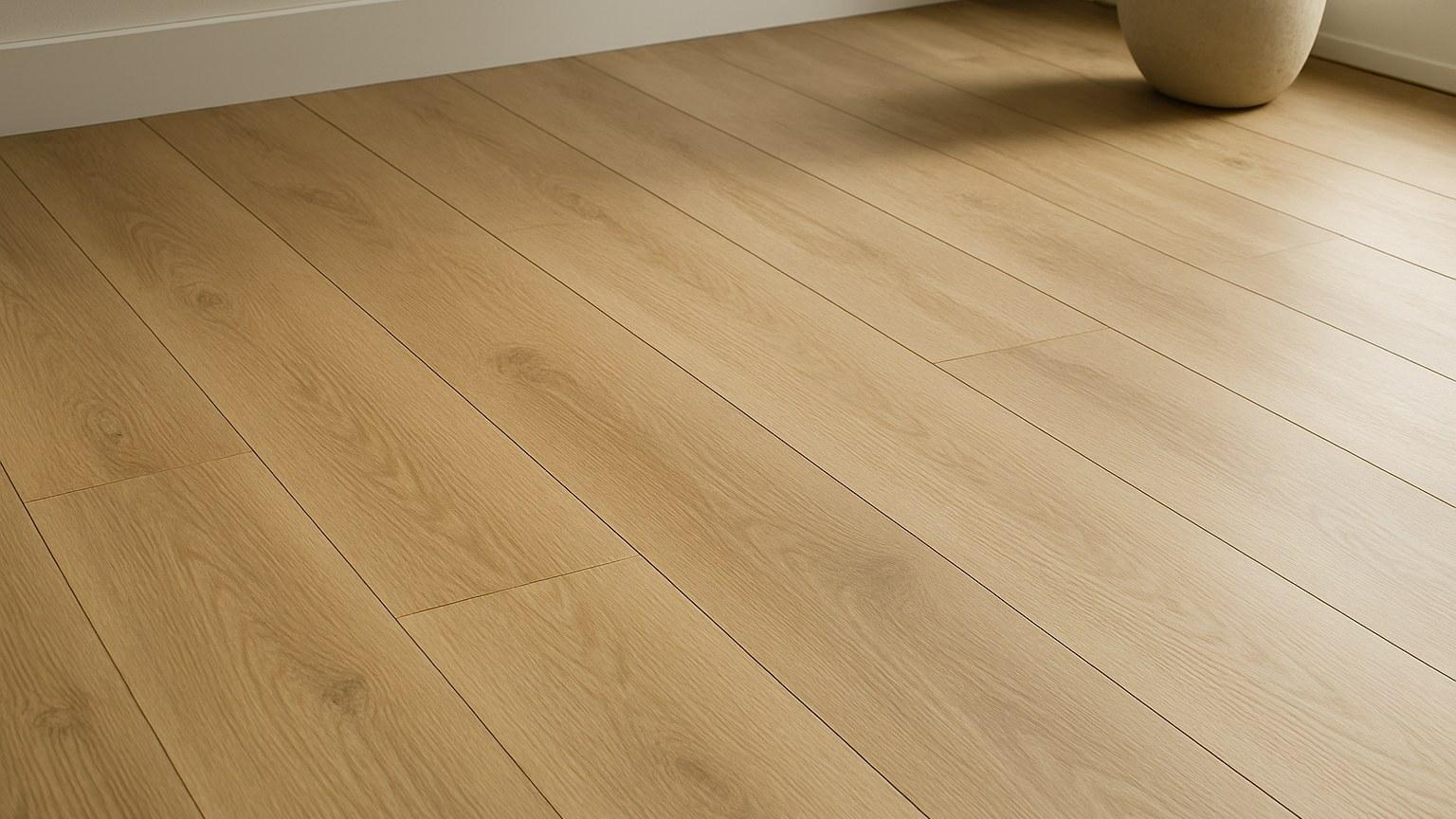
Light oak vinyl plank flooring names a printed photo of pale oak grain, not the plank's material or any grade of how it wears. Two floors sold under that same name can share almost the same picture and still perform completely differently underfoot. That gap is where shoppers get fooled.
Key takeaways
- "Light oak" names a printed photo on the plank's film layer, not a material or a durability grade, so two floors with the same name can wear and read totally differently.
- The name tells you the undertone (warm honey, gray-washed, or whitewashed) and nothing about wear layer mil, embossing texture, or core type (SPC vs WPC).
- Material for light oak vinyl plank runs about $1-$4.50 per square foot (floorcity.com); fully installed LVP (luxury vinyl plank) runs about $5-$16 per square foot (rightstepflooringnc.com), with stairs and detail at the high end.
- Warm honey undertones hide dust and feel cozy; whitewashed and gray-washed read modern but show every crumb and need more cleaning.
- Click-lock light oak is a realistic DIY; glue-down, stairs, and large open-plan moisture transitions are usually worth hiring out.
What "Light Oak" Actually Names on a Vinyl Plank
Light oak is a printed image of pale oak grain. It sits on a thin film layer under the plank's clear top coat. It is not the material the plank is made of, and it is not a promise about how long the floor holds up.
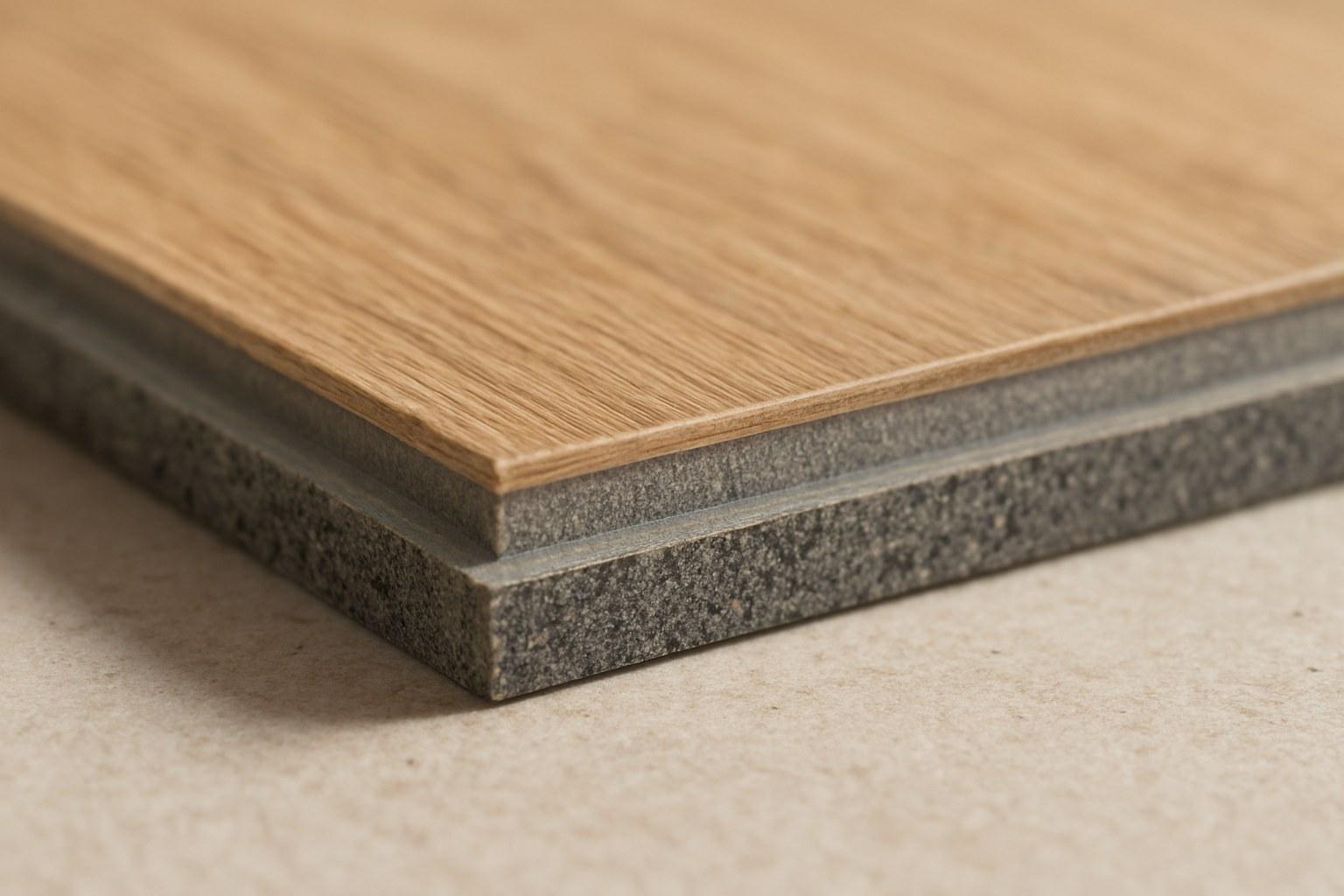
Here is the build, bottom to top. The core underneath is plastic, or stone mixed with plastic. On top of the core sits the design film, which is just a photo of oak. Over that photo sits a clear wear layer, and that clear layer is what actually takes your scuffs, your chair legs, and your dog's nails. That same core-and-wear-layer structure shows up in vinyl tile formats too, where LVT (luxury vinyl tile) and VCT (vinyl composition tile) differ mainly in thickness, water tolerance, and cost, as the LVT vs VCT guide lays out.
So the color name tells you what the floor looks like. It tells you almost nothing about what is under that photo.
Two planks both sold as light oak luxury vinyl plank flooring can share a nearly identical picture and still be built completely differently. One might have a thick, tough top coat over a dense core. The other might have a thin coat over a soft core that dents under a kitchen stool. The name doesn't sort them for you.
The word "luxury" doesn't sort them either. It's a category label, not a quality rating. If you want to know what that word does and doesn't buy, I broke it down in the luxury vinyl flooring label guide.
What the Name Does Tell You: Warm, Gray, or Whitewashed
The one real thing "light oak" signals is undertone. It splits three ways: warm honey, gray-washed, and whitewashed. Each reads differently in a room, and each hides or shows dirt differently. Matching one of those three to your room's light and traffic is really a color decision, and the guide to choosing LVP (luxury vinyl plank) flooring colors walks through that match beyond just light oak.
Warm Honey Oak
Warm honey reads cozy and gold. It leans traditional, and it hides dust and foot traffic better than the other two. Honey oak pairs cleanly with cream walls and sage greens. If you hate seeing every speck, this is your undertone.
Gray-Washed Oak
Gray-washed reads cooler and more modern. It flattens a floor into a calm, even look and works well in bright rooms. The trade is that it shows crumbs and pet hair more than honey does, so you'll wipe it more often.
Whitewashed Oak
Whitewashed is the palest of the three, airy and Scandinavian. It opens a small room up better than the others. It also shows every crumb, every hair, every bit of grit tracked in from outside.
| Undertone | Reads as | Best in | Watch out |
|---|---|---|---|
| Warm honey | Cozy, gold, traditional | North-facing or dim rooms | Can look orange in strong south light |
| Gray-washed | Cool, modern, flat | Bright rooms, lots of window | Can go dull and cold in low light |
| Whitewashed | Airy, Scandinavian, pale | Small rooms you want to open up | Shows every crumb and pet hair |
How the three light oak undertones read and where each one fits.
One rule holds for all three: judge the undertone from a full-size sample laid on your own floor, in your own light. Don't trust the website swatch. A screen can't show you how your kitchen window will push a honey plank toward orange at 4 p.m.
What the Name Tells You Nothing About: Wear Layer, Texture, and Core
This is where same-name planks part ways. The label hides the three specs that actually decide how the floor wears, so read the product sheet, not the color name.
Wear layer comes first. A mil is one-thousandth of an inch, and the wear layer is measured in mils. Each plank carries a number published by the manufacturer, so use the individual plank's measurement rather than estimating at a category level. A thinner top coat is fine for a guest room that sees slippers. A kitchen with a sliding stool and a dog wants a thicker one. Wider-format planks often pair a heavier wear layer with a broader board, a combination the wide plank vinyl flooring guide covers in more depth.
Core type is next, and the name won't tell you which you're buying. SPC stands for stone polymer composite. It's denser and more dent-resistant underfoot, so it shrugs off a dropped can better. WPC stands for wood polymer composite. It's softer and warmer, easier on the feet and quieter, but it gives a little more under a heavy point load.
Texture is the last tell. Embossed-in-register, often shortened to EIR, means the grooves pressed into the surface line up with the printed grain, so the floor feels like wood when you run a hand over it. A cheaper plank prints the grain but leaves the surface flat and slick. From across the room they look alike. Under a bare foot they feel nothing alike.
A couple of other things belong on your checklist before you buy. Most rigid-core planks arrive with an attached pad, and adding a second underlayment beneath it may null the warranty, check your install sheet. And look for a low-emission mark like FloorScore on the product sheet, which tells you the plank was tested for the fumes, called VOCs (volatile organic compounds), that some flooring gives off.
For the full list of what to verify on a wood-look plank before it goes in your cart, see the wood-look vinyl flooring checklist.
Match the Shade to Your Room's Light
Your room's light decides which light oak looks right, so test the same plank against north-facing and south-facing light before you commit. A plank that looks perfect in the store can go flat or orange once it's home.
North-facing and dim rooms carry cool light. That cool light drains gray-washed and whitewashed planks, leaving them looking dull and a little cold. Warm honey usually wins in those rooms because it puts the warmth back in.
South-facing rooms throw strong warm light. That light can push a honey oak plank toward orange, especially late in the day. Gray-washed holds its balance better there.
In a small or dark room, any light oak opens the space up, and whitewashed opens it most. Laminate also prints a very convincing light oak, often at a lower price and with a sharper wood look. The real trade between the two is water tolerance versus look and cost, which I walk through room by room in the vinyl vs laminate guide.
The same light oak plank, placed in four different rooms. Drawing is not to scale.
What Light Oak Vinyl Plank Costs, Material vs Labor
Budget light oak planks run about $1-$2 per square foot and premium about $2.50-$4.50 per square foot, per floorcity.com. A fully installed LVP (luxury vinyl plank) floor runs about $5-$16 per square foot, per rightstepflooringnc.com. The plank is rarely the big number. Labor is.
Work it out on a 1,000 square foot job. Buy a mid-grade plank at $2.50 per square foot and your material is about $2,500. Have the same floor installed at $8 per square foot and the full job is about $8,000. Labor and prep carry more of the total than the planks do.
| Tier | Cost per sq ft | Note |
|---|---|---|
| Budget material only | $1-$2 | bare planks, you install |
| Premium material only | $2.50-$4.50 | thicker wear layer, better texture |
| Fully installed (LVP) | $5-$16 | material plus labor; low end open rooms, high end stairs and detail |
Source: floorcity.com and rightstepflooringnc.com
Basements and stairs cost more per square foot than an open room. A basement needs more moisture work, and stairs mean cutting and wrapping each tread, which is slow, detailed labor. Price those at the high end of the installed range, not the middle.
Before any of this goes down, two checks come first. The subfloor has to be flat, because a floating floor telegraphs every dip and hump up through the planks and the seams work loose over time. And the subfloor has to be dry, since water that gets under a floating floor can sit on the slab and ruin everything on top. Both factors quietly underpin the maker's warranty terms. Our vinyl flooring durability guide walks through the other factors that decide whether a floor holds up for five years or twenty.
As for doing it yourself: click-lock light oak is a realistic DIY if your subfloor is flat and dry and you take your time on the first few rows. Glue-down floors, stairs, and large open-plan spaces with a moisture transition are where I earn my keep, and where hiring a pro usually pays off.
A customer once asked me to name the single best brand of plank; I don't answer that anymore, because the right plank depends entirely on the room and the wear it will take. For the full picture of how material and labor stack up, see the LVP flooring cost breakdown. If the room in question is below grade, the vinyl flooring for basement guide covers the moisture steps that room needs.
Sources
- Floorcity.com and rightstepflooringnc.com