
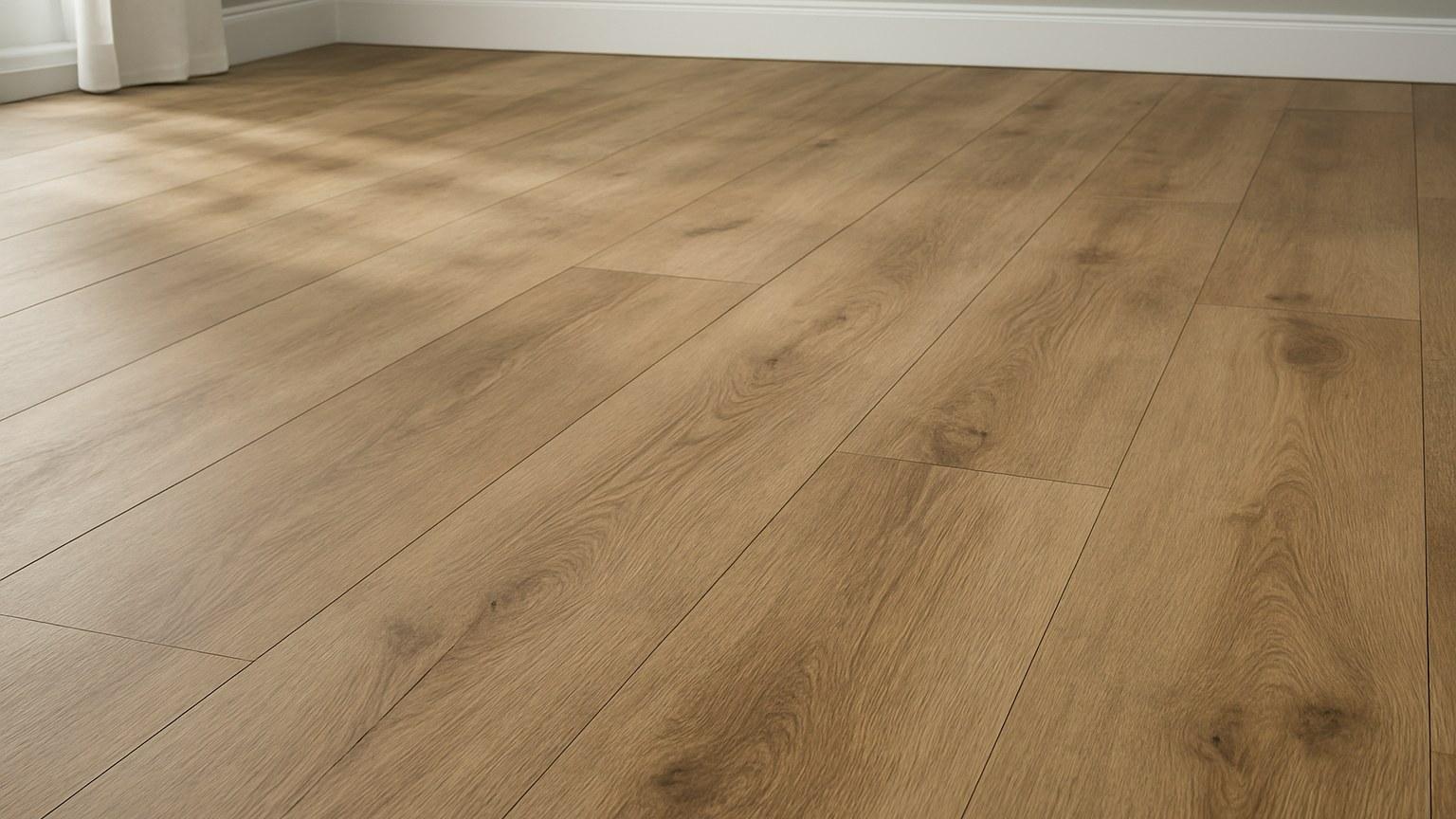
Before you buy wide plank vinyl flooring, check your subfloor flatness first, because a wider plank shows every dip and hump underneath far more than a narrow one does. The look is the easy part to fall for. The eight checks below are where the real money and the real problems hide.
Key takeaways
- Wide plank starts around 6-7 inches or wider by Empire Today's definition, with extra-wide planks running up toward about 12 inches.
- A wider plank shows every hump and dip in the subfloor, so flatness prep matters more as width goes up, not less.
- "Waterproof" on the box refers to the plank core, not the seams; water still gets under a floating floor at the edges and sits on the subfloor.
- Budget vinyl plank material runs about $2-$3 per sq ft and mid-range LVP (luxury vinyl plank) about $3-$5 per sq ft (Carpet Exchange), with labor adding roughly $2-$5 per sq ft.
- Click-lock wide plank is realistic DIY; glue-down, stairs, and big open-plan moisture transitions are worth hiring out.
First, What Counts as "Wide Plank" (and "Extra Wide")
Empire Today puts wide plank at roughly 6-7 inches or wider. Standard vinyl plank runs about 4-6 inches, and extra-wide pushes toward 12 inches.
So there are really three tiers. Standard is the narrow strip look with the most seams. Wide sits in that 6-9 inch band, and the 9-inch plank is a common pick in that range. Extra-wide covers 9-12 inches, with 12-inch planks being the "one big floor" option people picture when they want a modern room.
The wider you go, the fewer seams you get, and the more the floor reads as one continuous surface instead of a grid of boards. That's the whole draw of going wide.
| Tier | Typical width | Look |
|---|---|---|
| Standard plank | 4-6 in | Traditional strip-floor look, more seams |
| Wide plank | 6-9 in | Fewer seams, modern; wide starts around 6-7 in |
| Extra-wide plank | 9-12 in | Boldest, fewest seams, needs the flattest subfloor |
Width tiers and the definition of wide plank. The wide-plank cutoff is Empire Today's.
Most buyers are chasing a convincing wood look here, so it's worth running through the 9 things to check before you buy wood-look vinyl flooring alongside width.
Wider Planks Expose Every Dip in Your Subfloor
This is the one nobody warns you about: the wider the plank, the more it telegraphs every hump and hollow underneath. Flatness prep is the hidden cost of going wide, not an afterthought.
A narrow plank can flex a little and ride over a small dip without complaint. A wide, rigid plank can't. It bridges the low spot like a plank across a ditch, leaving a hollow underneath. Step on it and you feel the give, sometimes a click. Over a high spot it does the opposite and rocks like a table with one short leg.
I pulled up a wide-plank floor in a basement outside Dayton where the owner swore the planks were defective. They weren't. The slab had a high ridge running near the stairs, and every board that crossed it rocked. Grinding that ridge flat and re-laying the same planks fixed it. The floor was never the problem.
So before a single plank goes down, two checks come first. Run a straightedge across the floor to find dips and humps, and fix anything outside the flatness tolerance on your product's install sheet, because that number is set per product, not by a universal rule. Then test the subfloor for moisture, especially on concrete. On a floating floor, the manufacturer's warranty quietly hinges on both.
Fewer Seams, but the Seam Is Still the Weak Point
Fewer seams is the visual payoff of wide plank. A big room with long boards reads bigger and cleaner, with less of that busy grid you get from narrow strips.
But every seam you do have is still where trouble starts. "Waterproof" on the box describes the plank core, not the joint between planks. On a product that states a waterproof core, that core can sit in water without swelling. The seam next to it usually can't claim the same thing. On most floating floors the seams and edges are only water-resistant, which isn't the same promise.
Here's the part that catches people out. Water that reaches the perimeter of a floating floor runs under the planks and sits on the subfloor, out of sight, where it has nowhere to dry. The plank surface survives. What's underneath may not. When I'm called in to address floating-floor water failures, they originate at the seam or the edge, not on the board's top.
There's a smaller catch too. With fewer, bigger planks, a single damaged board is a bigger, pricier swap than it would be with narrow strips. A layout that staggers the seams spreads the stress and keeps the floor looking right.
Thickness vs. Width: 12 mil, 12mm, and Half-Inch Decoded
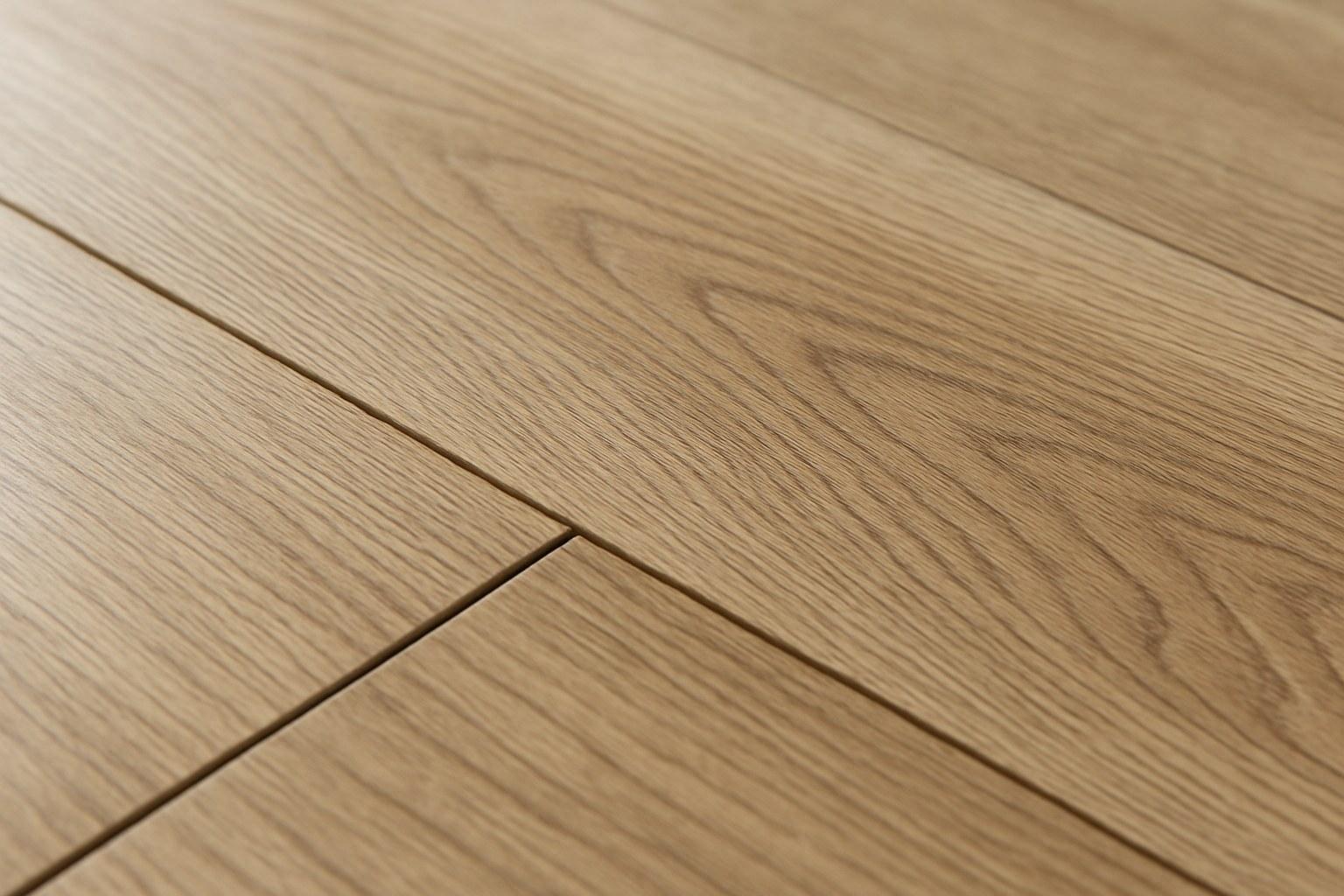
Three numbers get cross-shopped as if they were the same thing. They aren't. Width is how wide the board is. Thickness, in millimeters, is how tall the whole plank stands. The wear layer, in mils, is only the clear top coat that takes the scuffs.
A 12mm or half-inch plank feels thick and solid for LVP (luxury vinyl plank), but thickness alone isn't durability. A tall core makes a plank feel sturdier underfoot and can bridge minor subfloor flaws a touch better. It doesn't tell you how well the surface resists scratches and wear. That job belongs to the wear-layer mil rating and the specific product's warranty, and those numbers live on that product's spec sheet, never as an industry-wide figure.
| Spec | What it measures | Where to find it |
|---|---|---|
| Wear layer (mil) | Thickness of the clear top layer that takes scuffs | Product spec sheet; higher mil resists wear better, but the real rating is per product |
| Overall thickness (mm) | Total plank height including the core | Spec sheet; 12mm is thick for LVP, roughly half an inch |
| Half-inch / thick plank | A rigid, tall core sold as more solid underfoot | Spec sheet; thickness alone is not durability |
What each spec number actually measures and where the real figure lives.
If the mil, mm, and warranty numbers still read like alphabet soup, the breakdown of what "luxury" vinyl flooring actually buys you walks through them plainly.
Where Wide-Plank Vinyl Fits Your Rooms (and Where It Looks Off)
Wide plank shines in open living and dining areas, where long sightlines show off the fewer seams. It looks chopped and awkward in small bathrooms and narrow halls.
Basements and mudrooms are strong fits too, as long as you pick a rigid-core plank and lay it over a flat, moisture-checked slab. Those rooms want water tolerance and a floor that handles grit, and a good rigid-core wide plank gives you both. If you want the fuller picture of what makes vinyl hold up over time in rooms like basements and bedrooms, the guide to what decides vinyl flooring's lifespan covers the other factors that matter.
The trouble spots are the small ones. In a tight hallway a wide plank may run just one or two boards across the whole width, which looks off and wastes material on rip cuts. Small bathrooms do the same, leaving odd slivers around the tub and toilet. In those rooms a standard-width plank usually sits better.
Where wide-plank vinyl fits room by room, from best fit to awkward.
If you want picks tied to the exact room you're buying for, start with the 5 best LVP floors matched to the room.
Wide-Plank Vinyl vs. Wide-Plank Hardwood: Cost and Supply
Wide-plank vinyl is cheaper and far easier to find in wide widths than hardwood. Solid wood is limited by the tree: mill a solid board too wide and it wants to cup and move with the seasons. Vinyl has no such limit, so a 9-inch or even 12-inch plank is easy to source.
On price, the material tiers below come from carpetexchange.com. Labor typically adds roughly $2-$5 per square foot on top. Those are open-room numbers. Basements and stairs run higher, because basements need more moisture and flatness work and stairs are slow, fiddly, cut-heavy work.
| Item | Cost |
|---|---|
| Budget vinyl plank (material only) | $2-$3 / sq ft |
| Mid-range LVP (material only) | $3-$5 / sq ft |
| Quality, better durability (material only) | $4-$6 / sq ft |
| High-end vinyl (material only) | $5-$7 / sq ft |
| Professional labor | $2-$5 / sq ft |
| DIY install (no labor) | Material only, plus tool rental |
Source: carpetexchange.com
Wide-plank vinyl material and labor ranges, split so you can price your own room. Material tiers are from carpetexchange.com.
So a mid-range wide-plank floor installed by a pro lands somewhere around $5-$10 per square foot once you add material and labor together. Doing the install yourself cuts the labor, which is why click-lock is worth considering if your subfloor is already flat. For a deeper per-square-foot picture, see the full LVP flooring cost breakdown.
On the DIY-versus-hire call: click-lock wide plank over a flat, dry floor is realistic for most handy homeowners. Glue-down, stairs, and big open-plan floors with moisture transitions are where I'd tell you to pay a pro, because those are the jobs that go wrong quietly and cost more to redo than to hire out the first time.