
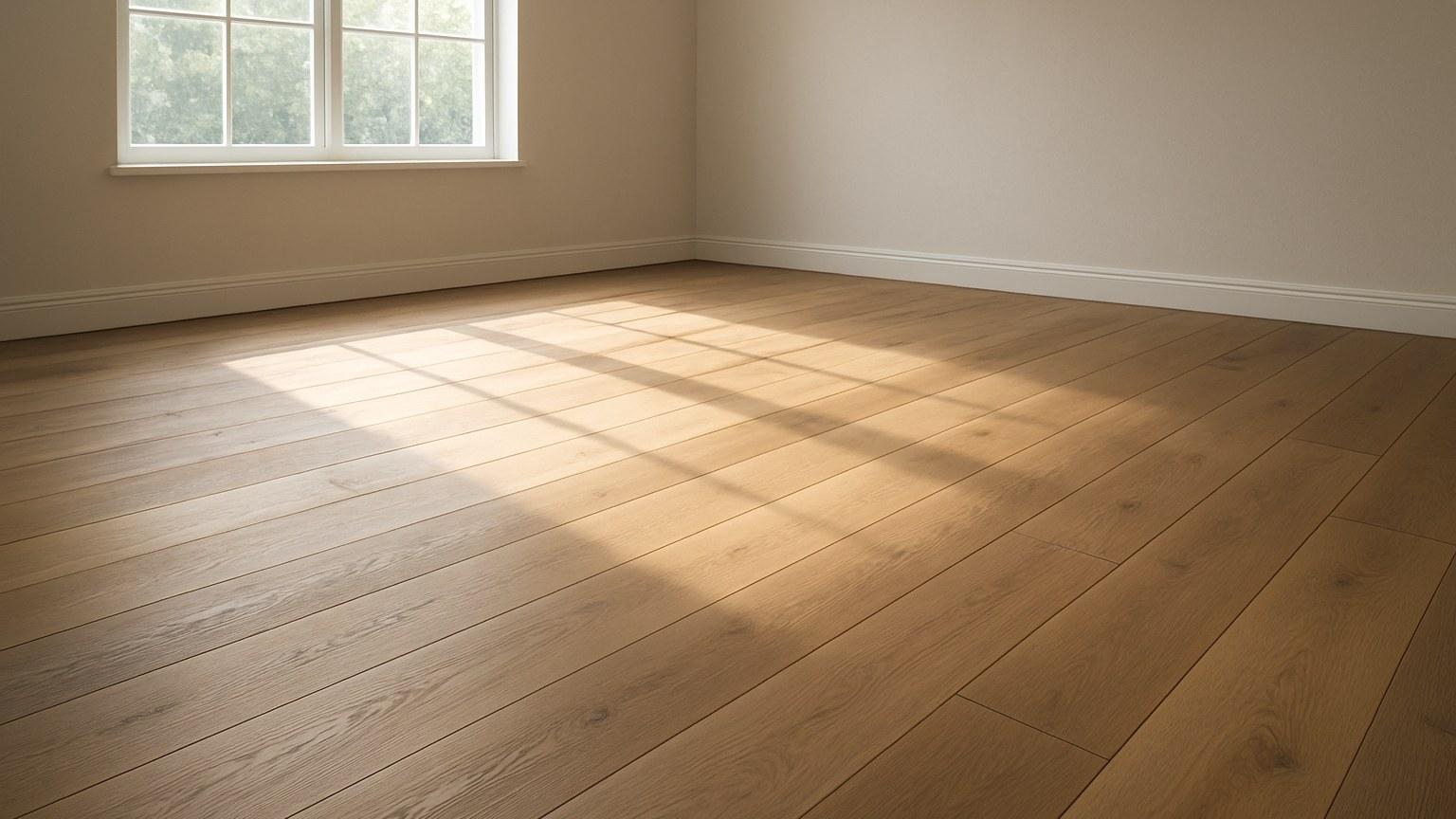
Malibu Wide Plank sells French Oak as two completely different floors: a rigid-core vinyl plank and an engineered hardwood, both under the same name at Home Depot. People get burned because they price-shop one and install the other, not realizing the vinyl is a printed image over a waterproof core while the engineered is real oak that can scratch. Knowing which Malibu Wide Plank French Oak you're actually buying is the whole game.
Key takeaways
- "French Oak" is a color and style name, not a wood species. Malibu Wide Plank sells that look in two separate Home Depot lines: a rigid-core vinyl plank and an engineered hardwood.
- The vinyl line has a waterproof core and clicks together as a floating floor; the engineered line is real oak veneer that can scratch and is only water-resistant, but may take one light refinish.
- Expect the Malibu French Oak vinyl around $165.88 per box (superarbor.io); engineered French oak boxes run $83.97-$159.85 across sellers (Lumber Liquidators, Reserve Hardwood, Hurst Hardwoods).
- Professional install adds roughly $3-$22 per square foot in labor (TaskRabbit, HomeAdvisor, HomeGuide) on top of materials, and basements and stairs cost more.
- Pick the vinyl for wet rooms, basements, and high traffic; pick the engineered for dry living areas where you want real wood underfoot.
What "French Oak" Means on a Flooring Label
French Oak is a color and style name, not a promise about what wood is under your feet. It describes a warm, wide-board oak look, not the material the plank is built from.
The look that earns the name is pretty consistent across brands: long, wide boards, muted brown and greige tones (that gray-brown in between), heavy grain, and some knots left showing. Most French oak floors also get a sawn or wire-brushed texture, a raked surface that lets you feel the grain instead of a flat, glassy finish.
That look-alike naming hides a real split. On a vinyl plank, that "french oak" look is a photograph printed onto a design layer. On engineered wood, it can be a real slice of European oak. Same two words on the box, very different product in the room.
As for the color itself, French oak runs from light honey-brown up to a medium greige-brown. It's rarely truly dark. If you want espresso or near-black, French oak isn't that look.
Two Products, One Name: Vinyl vs. Engineered Malibu Wide Plank
Malibu Wide Plank is a Home Depot house brand, and it sells French Oak as both a rigid-core luxury vinyl plank (LVP) and an engineered hardwood. Same name, different materials, different price, and they behave nothing alike once they're down. Home Depot isn't the only retailer worth checking before you commit, and a broader look at where vinyl flooring is actually worth buying can save you from overpaying for the same core material elsewhere.
The vinyl line has a waterproof rigid core, clicks together as a floating floor, and shows a printed oak image under a clear wear layer. It never refinishes. What you buy is what you keep until you replace it.
The engineered line is a real oak veneer over a plywood core. You can nail it, glue it, or float it. It's water-resistant but not waterproof, and it may take one light refinish if the veneer is thick enough to survive a sanding.
The fastest way to tell them apart in the store is to ignore the picture and read the product category on the Home Depot listing. If it says vinyl plank, it's the printed, waterproof one. If it says hardwood, it's real oak veneer. Don't judge by looks or price alone, they're close enough to fool you from across the aisle.
| Material | Surface | Water | Refinish | Install | Best for |
|---|---|---|---|---|---|
| Rigid-core vinyl (LVP) | Printed oak image | Waterproof core, water-resistant seams | No | Click-lock floating | Basements, baths, kitchens, high traffic |
| Engineered hardwood | Real oak veneer | Water-resistant, not waterproof | Maybe once, if the veneer is thick enough | Nail, glue, or float | Dry living rooms and bedrooms |
| Solid hardwood (for reference) | Solid oak board | Not for wet areas or below grade | Several times | Nail down | Main-floor living, long haul |
How the two Malibu French Oak lines compare, with solid oak shown for reference.
Spec Breakdown: Wear Layer, Core, and the Refinish Question
The wear layer is the clear top coat on a vinyl plank, measured in mils, and it's what takes the scuffs and scratches before the printed image underneath. The Malibu Wide Plank rigid-core French Oak vinyl lists a wear layer of roughly 20 mil over roughly a 1 mm attached pad. That thickness holds up in a busy kitchen or entry, not just a light-traffic bedroom.
Let me decode the core terms, because the box throws them around. SPC (stone plastic composite) means stone-polymer composite, a dense, stiff core that stays flat and keeps water out of the plank itself. WPC (wood plastic composite), wood-polymer composite, is lighter and a touch softer underfoot. IXPE is the foam pad already glued to the back of the plank.
That attached pad creates a warranty trap that catches DIYers all the time. Because the pad is already there, laying a second underlayment under it can void the maker's warranty. Whether you need any underlayment at all depends on that product's own instructions and the subfloor it's going over, so read the sheet in the box, not a forum post.
Now the water claim, said straight. The vinyl core is waterproof, but "waterproof" describes the plank, not the room. Water can still slip under a floating floor at the edges, run along the perimeter, and sit on the subfloor where you can't see it. The surface shrugs off a spill; the seams and the perimeter are the weak point. On a basement job I did outside Dayton, the planks were fine and the slab underneath them wasn't, because water had crept in at the wall and had nowhere to go. That's one of several reasons basement installs need extra scrutiny, something covered in more detail in this guide to what makes vinyl flooring last 5 years or 20.
On the engineered side, the refinish question comes down to veneer thickness. A thin veneer may not survive even one sanding, and once you cut through it you're staring at plywood. Confirm the actual veneer thickness before you plan on ever refinishing. "Real wood" doesn't automatically mean "sand it like Grandma's oak floor."
French Oak Colorways: Shoreline, Fortuna, Astoria and the Rest
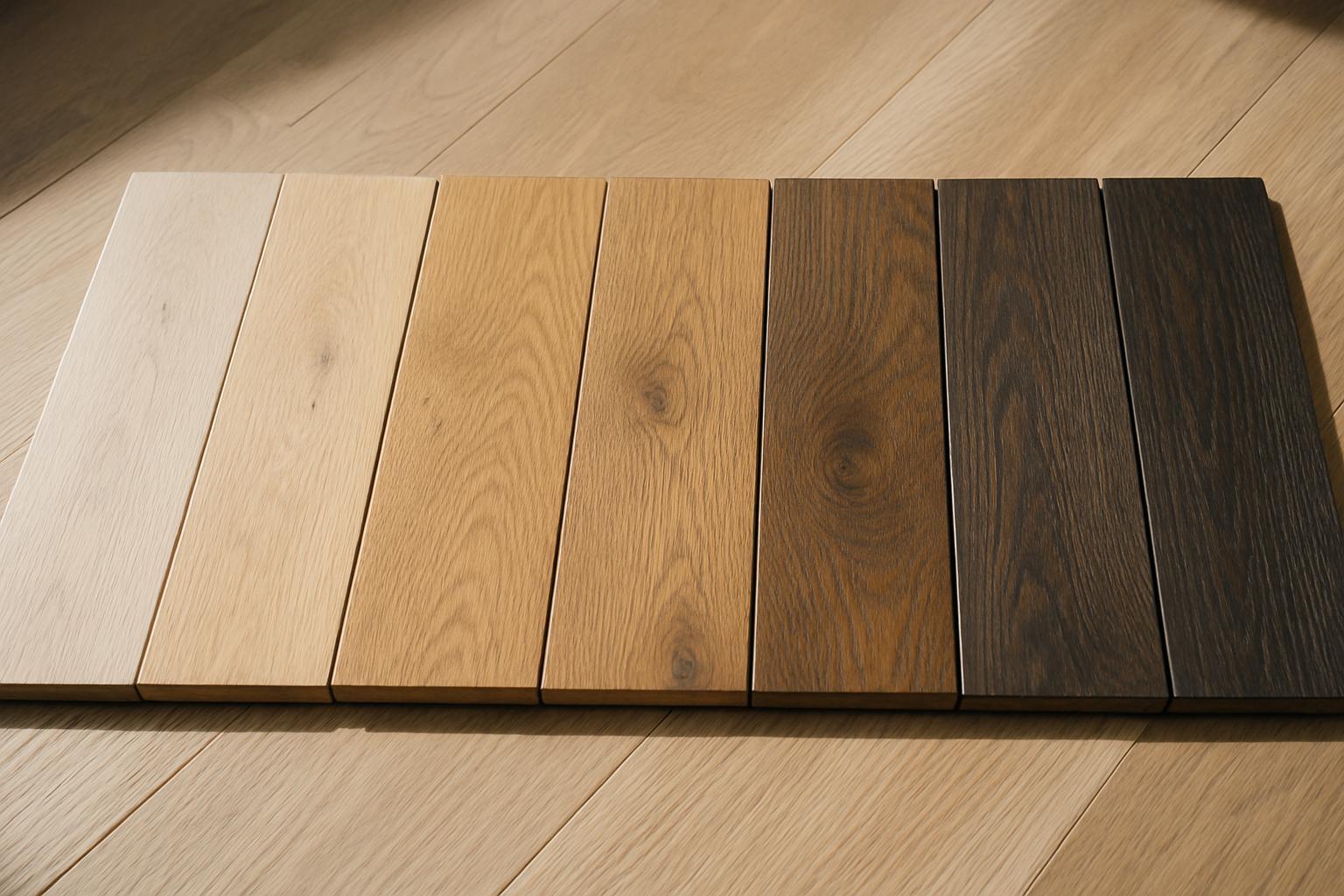
Malibu Wide Plank French Oak comes in a run of named colorways from light to medium-dark. Names you'll see include Shoreline, Alturas, Astoria, Fortuna, Melrose, Terzo, Covelo, Del Prado, Dorris, and Bidwell.
Group them by tone and the shortlist gets easier. There are lighter, white-oak-leaning shades for a bright, airy room. There are honey and medium browns for a warmer, traditional look. And there are darker greige colors that read gray-brown in most light. That white-oak-leaning group covers enough ground on its own that it helps to see which white oak vinyl plank fits which room before settling on a colorway.
One warning worth repeating: not every colorway ships in both the vinyl and the engineered line. The name you fell in love with might only exist as vinyl, or only as hardwood. Confirm which product your exact color comes in before you order a full room, or you'll end up settling on install day.
If you're chasing a shade that's been pulled from the catalog, don't assume it's gone for good. Older stock often turns up through outlets that list discontinued vinyl flooring for sale, worth a look before you give up on a color or go hunting for a close match.
What It Costs and Where to Buy It
Split it into materials and labor and the picture gets clear. The Malibu French Oak vinyl runs about $165.88 per box (superarbor.io). Engineered French oak boxes run $83.97 to $159.85 across sellers (Lumber Liquidators, Reserve Hardwood Flooring, Hurst Hardwoods). On top of materials, professional install adds roughly $3 to $22 per square foot in labor (TaskRabbit, HomeAdvisor, HomeGuide), and Angi puts the 2026 national average near $12.50 per square foot.
| Item | Cost | Unit | Source |
|---|---|---|---|
| Malibu French Oak vinyl (materials) | $165.88 | per box | superarbor.io |
| Engineered French oak (materials) | $83.97-$159.85 | per box | lumberliquidators.com, reservehardwoodflooring.com, hursthardwoods.com |
| Professional install (labor) | $3-$22 | per sq ft | TaskRabbit, HomeAdvisor, HomeGuide |
| 6 mil vapor barrier | $0.15-$0.50 | per sq ft | howspruce.blog, truxpestcontrol.com |
| Moisture meter (tool) | $15-$60 | one-time | inspectandtest.net, currentcost.org |
Materials, labor, and prep costs for a Malibu Wide Plank French Oak job.
Here's the arithmetic for your own room. Take your square footage, add about 10% for waste and cuts, then divide by the box's listed coverage to get the number of boxes. Multiply boxes by the box price for materials. For labor, multiply your square footage by the installer's per-foot rate.
A worked example: a 180 square foot bedroom, plus 10% waste, is about 198 square feet to buy. Labor alone on that room swings from roughly $540 at $3 per foot to about $2,250 at $12.50 per foot, depending on your installer and the job. That spread is why one flat national number is useless. Basements and stairs land at the high end because of transitions, cuts, and extra prep; a plain open room sits lower.
Malibu Wide Plank sells through Home Depot. Before you order, read the box's listed square-foot coverage so you buy the right number of boxes plus that waste cushion. If a whole house is in play, it's worth pricing LVP bought in bulk before you pay per-box retail, the savings over a few thousand square feet are real.
Subfloor Prep and Installation: Check These First
Before a single plank goes down, check two things: subfloor flatness and moisture. On a floating floor, the warranty quietly hinges on the prep, not the plank you picked.
You'll want a moisture meter ($15 to $60 one-time) to read the subfloor, whether it's CDX plywood, OSB (oriented strand board, sheets of compressed wood chips glued together), or a concrete slab. Over concrete, add a 6 mil vapor barrier (about $0.15 to $0.50 per square foot) if the product calls for one. Flatness matters because a floating floor telegraphs every dip and hump; wide boards make it worse. Grind the highs and fill the lows before you start, not after the floor starts flexing.
Two more rules that live on the box, not online. Nearly every floating floor requires an expansion gap along its edges, and the exact size comes from the manufacturer's instructions, so look up the number for your product instead of guessing. Acclimation is the same story: some products demand it, while others claim it's optional, and the sheet in the box decides, not a rule of thumb.
On the DIY-versus-hire call, be honest with yourself. Click-lock vinyl over a flat, dry subfloor in a simple rectangular room is a realistic weekend job for a careful DIYer. Glue-down engineered is a different job, it calls for a flooring adhesive like Bostik, Mapei, or Sika, applied with the right trowel and working time, and a bad spread can telegraph through the whole floor.
That, plus stairs and big open-plan floors with moisture transitions, is where hiring a pro usually pays for itself, because that's where a small mistake turns into a floor you pull back up. If you do hire out, look for an installer certified through the National Wood Flooring Association's Certified Professional Installers program, it's a sign they've been tested on exactly this kind of work.
Before you commit to any brand, it's worth knowing which vinyl plank brands get the worst reviews and why, so you can judge Malibu against the floors that actually come back as problems.