
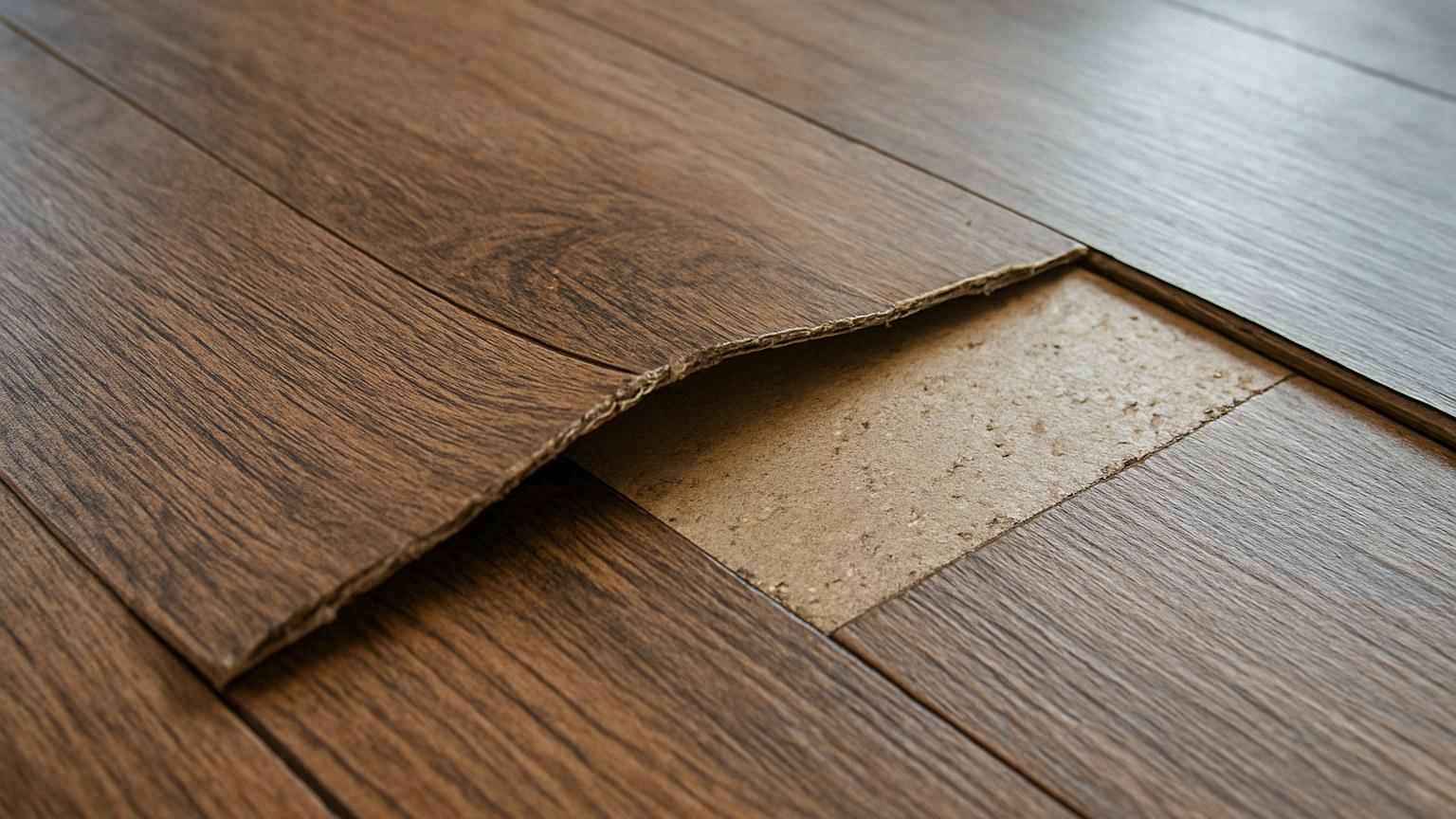
If your vinyl pattern is no longer made, you can usually still find it for sale as boxed surplus at clearance outlets, salvage dealers, and online marketplaces, so a repair beats a full tear-out most of the time. The hard part isn't finding vinyl; it's finding your vinyl in the same dye lot, because the same pattern name can drift a shade between batches and leave a line at the seam. Get the match wrong and a quick patch turns into replacing the whole room.
Key takeaways
- "Discontinued" only means the maker stopped producing that pattern; leftover surplus can still match your floor if the dye lot lines up.
- Find your exact pattern name or SKU on the original box, the back of a leftover plank, or a closet scrap before you start shopping.
- Order a sample and lay it beside your floor in day and night light; the same pattern from a different dye lot can leave a visible line at the seam.
- Plank and tile are easy to patch one piece at a time; sheet vinyl is the hard one because it's a single continuous piece.
- For a plank repair, buy roughly 10% over the damaged area plus a few spare planks, since the line won't be there next time.
What Discontinued Vinyl Means, and Whether You Can Still Match Yours
Discontinued just means the maker stopped producing that pattern or SKU, short for stock keeping unit, the code stores use to track one exact product. It doesn't mean the floor is bad or gone for good, and you can often still patch it with leftover surplus, as long as you confirm the exact pattern and the dye lot.
Lines get cut for ordinary business reasons. Color and style trends move on, a product gets re-specced, two brands merge, or a slow seller stops earning its shelf space. That's why names from house lines like Allen + Roth or Armstrong patterns vanish while the floors themselves keep living in millions of homes.
Think about what's actually riding on a good match. A good match means pulling a few planks or patching one spot and walking away. No match often means ripping out and replacing the entire floor, which is when people start pricing a whole new material like laminate that actually holds up by room instead of chasing the old one.
So work it in order: identify your pattern, source the surplus, inspect what you find, then buy the right amount. The rest of this guide takes those one at a time.
How to Identify Your Exact Pattern and Confirm a Dye-Lot Match
Start with the name or SKU, because you can't match what you can't name. It hides in a few predictable places: the original carton or receipt, a label printed on the back of a leftover plank, a scrap somebody tucked in a closet or crawlspace, or an old phone photo of the box.
A pattern name alone isn't proof of a match. The same name made in a different year can carry a different texture, gloss, or thickness. Watch for embossed-in-register grain, where the surface texture follows the printed wood lines; a later run might drop that and look flatter under side light even with the identical name.
A dye lot is one production batch. Color can shift a shade from one batch to the next, which is exactly the trap people fall into. Order a sample first and lay it next to your floor in daylight and again under your room lights at night before you commit a dime.
I had a repair in a Kettering kitchen where the homeowner swore the boxes in her garage were the same floor. Same pattern name, yes, but a different lot. In the morning you couldn't tell; by evening, under the recessed cans, the patched row read a touch warmer than the rest. We ended up re-pulling it with stock from a different seller. Lesson stuck: match the lot, not the label.
Search the exact pattern name plus the brand when you shop, not just "vinyl flooring." People hunt for specific discontinued patterns like Acadia Pine, Stardust Maple, or Bar Harbor, and that precise string is what turns up a seller sitting on your lot.
Plank, Sheet, or Tile: How the Format Changes Your Repair
The format decides how hard the repair is before you buy a single box.
Click-lock plank, luxury vinyl tile, and interlocking tiles are the easiest. You can lift and swap one piece without disturbing the rest, and most handy homeowners can do a plank or tile patch themselves in an afternoon.
Sheet vinyl is the hard one. It's a single continuous piece, so a patch means cutting a seam into the field and lining up the pattern repeat so the join disappears. That seam work and any glue-down repair is where I'd recommend outsourcing rather than risk damage to a second piece while learning. If your sheet is extra wide, a patch may even call for matching the roll width, so it helps to know who stocks 15-foot-wide sheet vinyl before you cut.
Peel-and-stick tiles pop up and swap easily too, but two things can still give a fresh tile away: aged adhesive underneath and a little sun fade on the originals that a brand-new tile won't share.
Whatever the format, match the thickness as well as the pattern. A patch that's thinner sits sunk below the floor; thicker, and it rides proud and catches a toe. Flush is the goal.
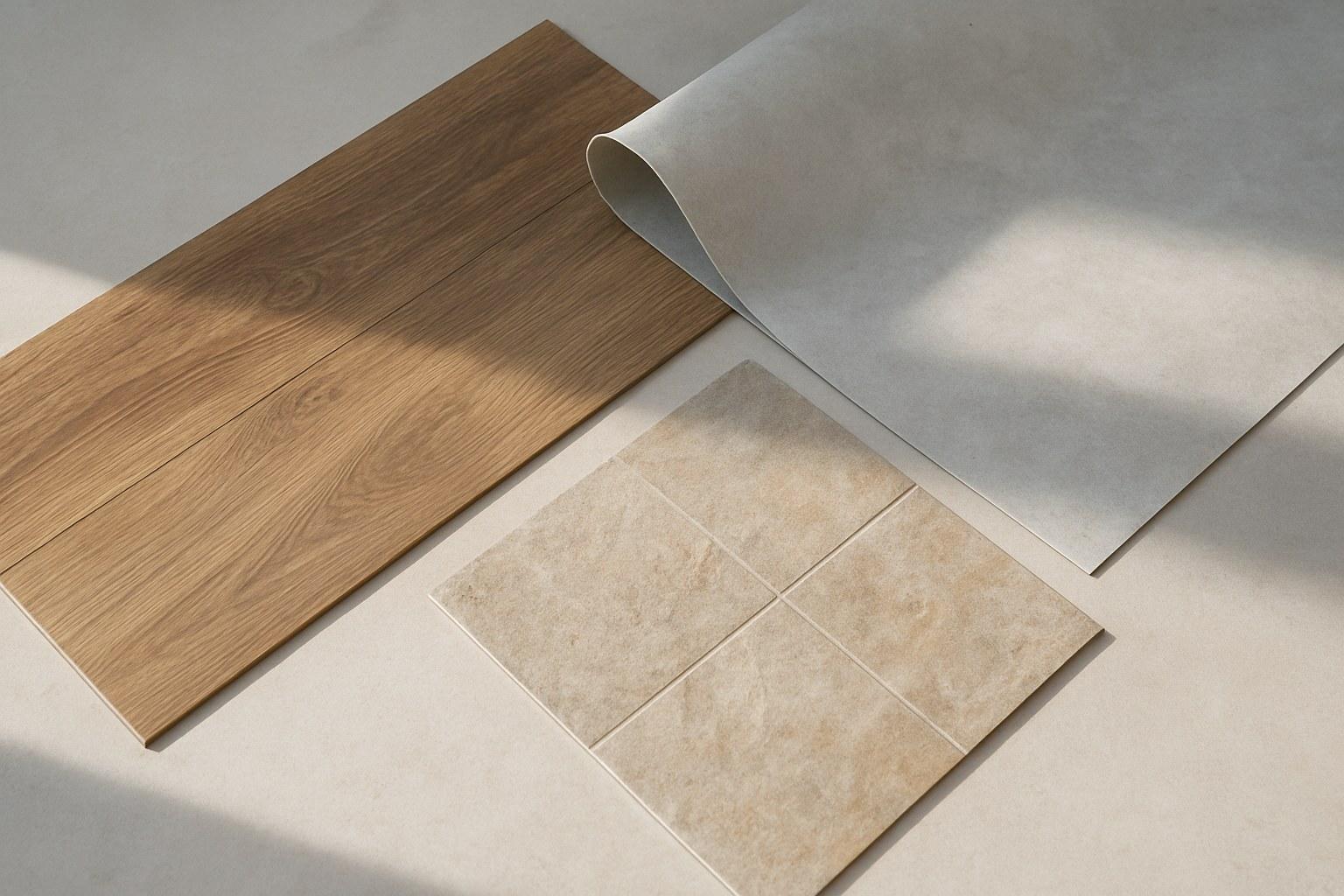
Where to Find Discontinued Vinyl Flooring for Sale
Most surplus vinyl was bought new and never installed. It comes from commercial remodels, facility upgrades, contractor overbuys, and cleanouts, then lands with a dealer who moves it cheap. You'll see three condition tiers: unused surplus still in cartons, lightly used pulls, and salvaged material taken up off a floor.
Clearance Outlets and Discontinued Flooring Warehouses
These are your best shot at a named line still boxed. They buy end-of-line and overrun stock in bulk and sell it below retail. The catch is that stock moves fast and isn't restocked, so call and confirm the pattern and lot before you drive an hour for it. If chasing surplus starts to feel like more trouble than it's worth, it helps to know how the major vinyl retailers actually compare before you just buy new.
Surplus Dealers and Reuse Stores
Surplus and salvage dealers handle overbuys and facility pulls, which is where commercial-grade material and odd lots show up. A reuse store resells donated or salvaged materials; it's one slice of the broader salvage category called a reuse center, a distinction drawn in the Construction and Demolition Materials Scoping Study. Reuse stores are cheap, which makes them good for a low-stakes room, but condition and quantity swing, so go see it in person.
Home Depot, Lowe's, and Online Marketplaces
Big-box clearance racks are where house brands like Allen + Roth turn up as end-of-line stock. Just know each store runs its own clearance on its own schedule, one location clearing out a pattern doesn't mean the store across town is doing the same.
Craigslist and Facebook Marketplace are quiet options for residential patterns, because homeowners list the leftover boxes from their own jobs. Make them send a photo of the carton label and confirm the SKU before you agree to meet.
Finding It Near You (and Finding It Cheap)
Price is the whole reason to buy surplus, so know the bar. New vinyl plank material alone runs about $2 to $7 per square foot according to rightstepflooringnc.com, and standard sheet vinyl about $1 to $2 per square foot according to floorcity.com. Surplus should beat those numbers, not match them. If a seller is asking full retail for discontinued stock, walk. For bulk buys on a bigger patch, it's worth comparing those surplus prices against wholesale and bulk LVP (luxury vinyl plank) pricing before you decide.
| Channel | Typical condition | Best for | Watch for |
|---|---|---|---|
| Clearance outlet / discontinued warehouse | Mostly unused surplus in cartons | Finding a named line still boxed | Stock moves fast; call before you drive |
| Surplus / salvage dealer | Overbuys and facility pulls | Commercial-grade and odd lots | Mixed dye lots across cartons |
| Reuse store | Salvaged, light to moderate wear | Cheap material for low-stakes rooms | Condition and quantity vary widely |
| Craigslist / Facebook Marketplace | Leftover boxes from a homeowner's job | Matching a residential line locally | Confirm SKU and photos before meeting |
| Home Depot / Lowe's clearance | Unused, end-of-line | House brands like Allen + Roth | Clearance is per store, not chain-wide |
Where discontinued vinyl stock comes from, by sales channel, with what each is best and worst at.
How to Inspect Salvaged Vinyl Before You Buy
Buy with your eyes, not the seller's word. Unused surplus should look new, light wear means it was walked on, and salvaged means it was pulled up and may be bent or still carrying dried glue.
Open the cartons and check. Look for edge curl or warped planks, dried adhesive gummed on glue-down backs, and sun fade on the top rows that leaves them a shade lighter than the stack below. Hunt for gouges, and trust your nose: a musty or mildew smell means the stock sat in moisture at some point, and that's a pass. These same red flags matter beyond a patch job, since they're part of the broader list of things that decide whether vinyl flooring lasts five years or twenty.
Before you pay, confirm two things. Every carton has to be the same dye lot, and the total square footage has to cover your patch plus a reserve. A cheap pile that's two lots mixed together is worthless for a seam you care about.
One more thing. Skip lines with a known bad reputation even when the price is tempting, because some discontinued stock got cut because it never held up. It's worth knowing which vinyl plank brands have earned a bad name before you haul home a bargain that'll fail again.
How Much Extra to Buy for a Repair
Buy more than the hole. The math is simple: material to buy equals the damaged area times one plus your waste percentage, then add a spare reserve for the future.
On the plank jobs I run, I plan on about 10% waste to cover cuts and mistakes. I go higher for sheet vinyl, because the pattern repeat eats material when you line up the match, and higher again for diagonal layouts or cut-heavy spaces like a room full of cabinet toe-kicks.
Most people skip this step: buy beyond the patch on purpose. This line is discontinued, so it won't be sitting there the next time a chair leg gouges it or a leak takes out a plank. A few spare planks tucked in the garage now is cheap insurance against a full-room tear-out later.
Here's how I size a patch on a real job. Say you've got a 40 square foot area of click-lock plank to replace. Work it end to end:
| Step | Figure |
|---|---|
| Damaged area to replace | 40 sq ft |
| Add waste for cuts (about 10%) | +4 sq ft |
| Add a reserve for future repairs | +4-8 sq ft |
| Total to buy | about 48-52 sq ft |
Worked overage for a 40 square foot plank patch, from damaged area to total boxes to buy.
Round up to full cartons from there, since you can't buy a partial box, and keep the leftovers labeled with the pattern name and lot so future-you isn't guessing.