
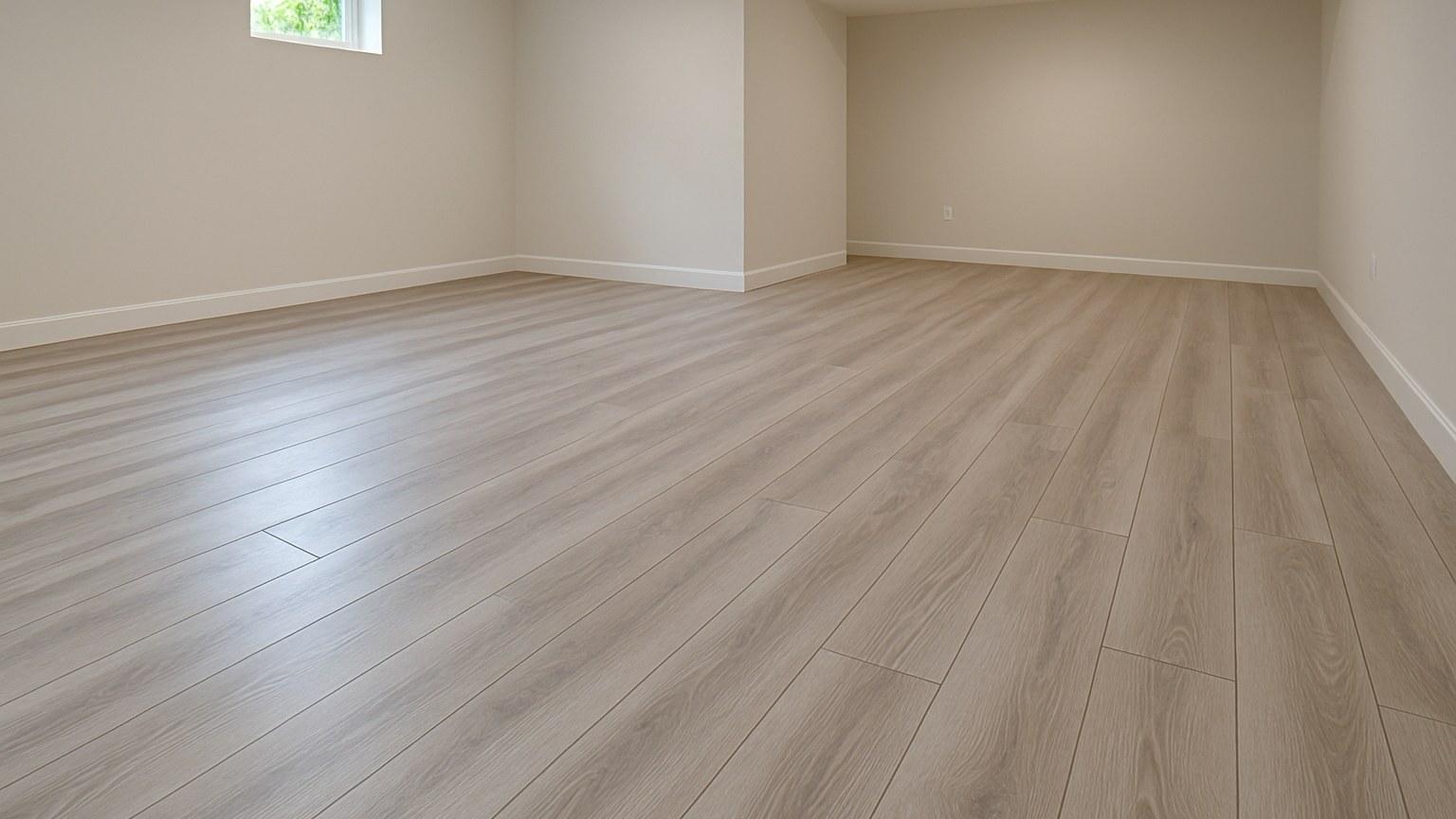
For most basements, rigid-core SPC (stone plastic composite) vinyl plank or interlocking vinyl tile is the right vinyl flooring, and both beat carpet down there. But a dry, flat slab, not the brand on the box, decides whether it lasts. That is where basement floors quietly fail.
Multiple basement floors I've removed appeared fine in their boxes but failed when placed on the concrete. The plank almost never let the homeowner down. The slab did.
Key takeaways
- For most basements, rigid-core SPC (stone plastic composite) luxury vinyl plank or interlocking vinyl tile is the right pick; skip glue-down and sheet vinyl over a slab you aren't sure is dry.
- "Waterproof" describes the plank body, not the seams or perimeter; water that sneaks under a floating floor sits on the slab, and that is where basement vinyl fails.
- Test the slab for moisture and check it for flatness before you buy anything; the maker's warranty quietly hinges on both.
- Installed basement vinyl runs roughly $6-$10 per square foot (carpetexchange.com); stairs and lots of perimeter cuts push the labor end up.
- Raised, interlocking tiles with an air-gap bottom buy you drainage and a warmer floor on a cold, damp slab.
Yes, Vinyl Belongs in a Basement, If the Slab Is Dry
Rigid-core SPC luxury vinyl plank or interlocking vinyl tile is the right call for most basements. Both luxury vinyl and sheet vinyl handle a below-grade room better than carpet or solid wood, which either trap damp or warp outright.
But here is the part people skip: the floor you choose matters far less than whether the concrete under it is dry. A top-tier plank over a wet slab still fails. The water doesn't care what you paid.
Vinyl fits a basement for a few plain reasons. The plank body shrugs off humidity instead of swelling. It wipes clean with a damp mop. And there's no carpet pad underneath to soak up moisture and feed mold.
The rest of this guide is really about the slab, the seams, and the install method. Get those right and almost any decent vinyl works. Get them wrong and no brand saves you.
The Real Pros and Cons
The good side is real. The plank body is waterproof and won't warp in basement humidity, it's easy to clean with no pad to trap mold, and in click-lock form most handy homeowners can lay it themselves.
The catches are just as real. The seams and perimeter are only water-resistant, not waterproof. Bare vinyl over concrete runs cold and hard underfoot. And a damp or uneven slab can wreck any of it, no matter the price.
The Slab Is What Kills Basement Vinyl, Not the Plank
Most basement vinyl failures trace back to two things: moisture wicking up through the concrete, or an uneven slab. Not a defective floor.
So before you buy anything, test the slab for moisture. According to the Environmental Protection Agency's (EPA) guidance on moisture control in buildings, checking a slab's moisture level before installing new flooring is a key step in preventing mold growth, since trapped moisture is one of the most common causes of indoor mold. A calcium chloride kit or an in-slab probe gives you a real number. For a quick read, tape a square of plastic sheeting tight to the concrete and leave it overnight. If the underside is beaded with water or the concrete beneath has darkened in the morning, you have moisture moving up through that slab and you need to deal with it first.
Check flatness in the same breath. Lay a long straightedge, 6 to 10 feet, across the slab in several directions and mark the high and low spots with a pencil. Rigid-core planks telegraph every hump underneath.
I learned to trust that straightedge the hard way. On one job the rigid-core material I laid showed every bump in the concrete, and the seams peaked up right over the high spots within weeks. Flexible flooring might have hidden some of it; rigid core never does. Now I won't set plank on a slab I haven't run a straightedge over.
Fix it in order. Grind or patch the high spots down. Fill the dips with a leveling compound made for concrete. Only then do you worry about which vinyl goes on top.
Waterproof Core vs Water-Resistant Seams
A "waterproof" rating on a vinyl box describes the plank material, not the seams, the edges, or the room. That one distinction causes more basement grief than any other. If you want to see the full list of factors that decide whether a flooring product actually keeps water out, this guide to waterproof vinyl flooring walks through all eight criteria.
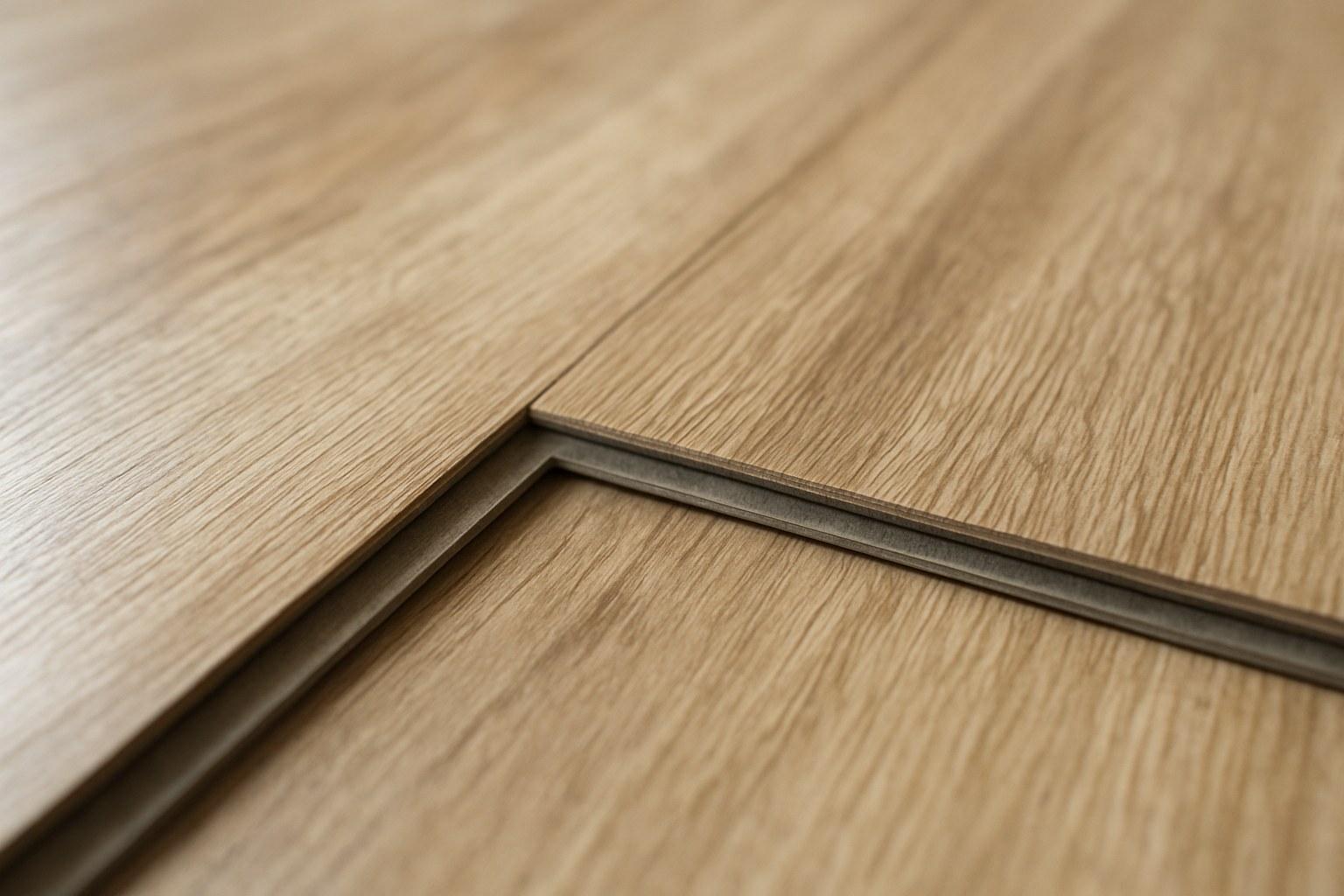
The water takes a predictable path. It enters below a floating floor by way of the perimeter gap or any seam that has lifted, eventually settling on the slab. The plank on top never warps, so you don't see a thing. Meanwhile mold can grow in the dark under a surface that looks perfectly fine.
Read the warranty for the exact claim rather than the word on the front. If you want to know what the marketing terms really cover, this breakdown of what the "luxury" and "waterproof" labels actually buy you is worth a read before you spend.
The practical takeaway is simple. Seal the perimeter, keep the expansion gaps clean, and fix a lifting edge fast. Don't trust the word on the box to do that work for you.
What Type of Vinyl Is Best for a Basement
Short version: rigid-core SPC plank for a dry, flat slab, and interlocking or raised air-gap tile for a slab that gets damp or runs cold.
Rigid-Core SPC Plank for a Dry Slab
SPC stands for stone plastic composite. The core is dense and hard, so it handles the temperature swings of a below-grade room better than WPC (wood plastic composite), a softer and more cushioned core. In a cold basement that denser SPC core is the safer bet because it moves less. Over a slab you've confirmed is dry and flat, click-lock SPC plank is the format I'd steer most people to. Many SPC lines also come in wide plank vinyl flooring options, which can make a small basement room feel less chopped up.
Interlocking and Raised Air-Gap Tile for a Damp Slab
If the slab runs cold or goes damp now and then, look at raised, interlocking tiles. The underside is dimpled, which leaves a small air gap. That gap lets any moisture move instead of pooling and keeps the finished floor warmer underfoot. You'll also find LVT (luxury vinyl tile), stone-look tiles, and self-adhesive planks, but the raised air-gap tile is the one that earns its keep on a problem slab.
Why Sheet Vinyl and Glue-Down Are a Harder Sell Over a Slab
Sheet vinyl (the roll) and glue-down plank both bond the floor to the concrete. Sheet vinyl sold in the U.S. is generally made to meet ASTM F1303, the standard specification for sheet vinyl floor covering with backing, while vinyl composition tile is covered under the related ASTM F1066 standard. That's fine on a bone-dry slab, but any moisture coming up will attack the adhesive, and you lose the air gap and the easy fix a floating floor gives you. On a basement slab you aren't fully sure about, floating rigid core is the lower-risk choice.
When you shop for a specific product, the look matters too. For picking an actual plank, these best LVP (luxury vinyl plank) floors matched to the room and this guide on what to check before you buy wood-look vinyl will get you there.
A quick buying checklist for a basement: a rigid SPC core rather than thin peel-and-stick; an attached pad only if the maker allows it over your subfloor; a wear layer rated in mils (thousandths of an inch) for your traffic; a raised interlocking tile if the slab runs cold or damp; and a format you can honestly install yourself if you're going DIY. Those same core, wear-layer, and format choices are what separate a vinyl floor that lasts five years from one that lasts twenty, whether it ends up in a basement or a bedroom, and this rundown of vinyl flooring longevity factors breaks down each one.
Putting Vinyl Plank Over Basement Concrete
Yes, you can lay vinyl directly over a basement concrete slab, but only after the moisture and flatness checks pass. Skip those and you're gambling.
Work the prep in order. Clean the slab down to bare concrete. Patch and level it so a straightedge reads flat. Add a vapor barrier where the product and your slab call for one, and leave the exact expansion gap the maker specifies around the whole perimeter. That gap number comes from the install sheet in the box, not from a figure someone repeats online. Deciding whether that vapor barrier belongs under your particular plank, or whether it's safe to skip, comes down to this guide to picking the right vinyl underlayment.
A raised air-gap tile earns its extra cost here. The dimpled underside lets trapped moisture move and keeps the floor warmer, which is exactly what a cold or occasionally damp slab needs.
On cost, installed basement vinyl runs roughly $6 to $10 per square foot, according to carpetexchange.com. Stairs and rooms with lots of perimeter cuts push the labor end up. For a fuller split of where that money goes, see the full LVP flooring cost breakdown.
Should you DIY it? Click-lock plank over a flat, dry slab is realistic for most handy homeowners. A slab that needs grinding and leveling, a big open-plan run, or a basement stairway is usually worth hiring out.
One more reason I check the slab myself. I once took a homeowner's word that the concrete was ready to go, then lifted a corner and found old adhesive ridges all over it. That cost me half a day I hadn't quoted. Now I pop up a corner before I ever put a start date on the calendar.
Vinyl vs Carpet, Laminate, and Epoxy in a Basement
The verdict first: vinyl beats carpet and laminate on moisture tolerance, and epoxy ties it on moisture but loses on comfort and look. For a below-grade room, moisture tolerance is the trait that should win the argument.
| Material | Moisture tolerance | Install difficulty | Comfort underfoot |
|---|---|---|---|
| Vinyl plank (SPC) | High, body waterproof | Easy, click-lock | Hard, warmer with pad |
| Vinyl tile (interlocking) | High | Easy | Hard, warmer if raised |
| Vinyl sheet / roll | High in the field, leaks at seams | Moderate | Hard, thin |
| Carpet tile | Low, can trap damp | Easy | Soft and warm |
| Laminate | Low, core swells if wet | Easy | Firm |
| Epoxy | High | Hard, usually a pro job | Hard and cold |
How basement flooring options compare on moisture tolerance, install difficulty, and comfort underfoot.
The laminate tradeoff deserves a straight word. Laminate often reads more like real wood than vinyl does, and it usually costs less. But its core is fiberboard, and fiberboard swells the moment water reaches it. In a basement, water reaching the core is the whole risk, which is why I rarely put laminate below grade.
If you're torn between the two materials across your whole house, the room-by-room call in vinyl vs laminate flooring lays out exactly where each one wins, and it's worth reading before you commit a single box.