
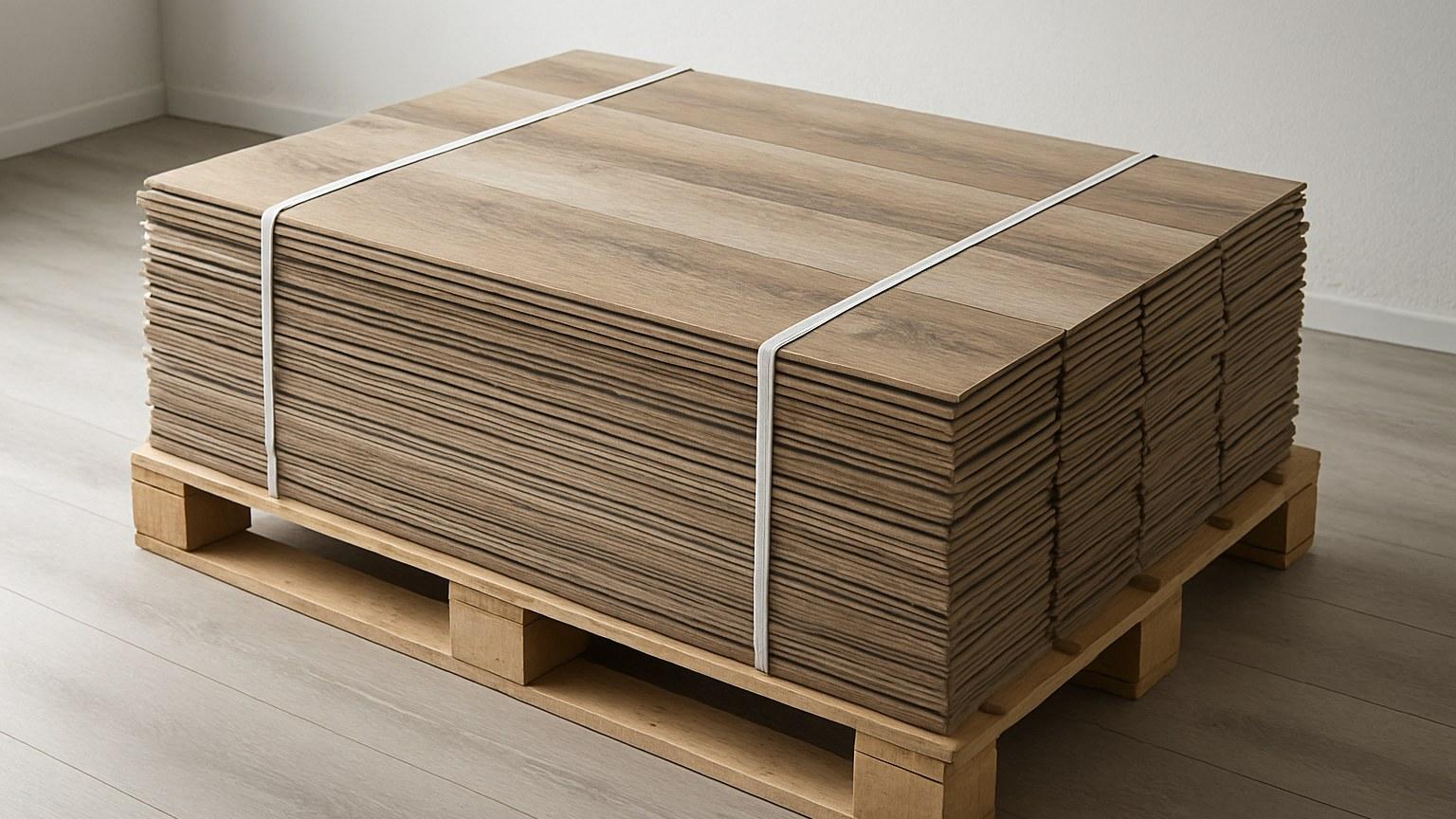
Wholesale vinyl plank flooring is a sales channel, not a protected price, so the sticker tells you nothing until you read the dollars per square foot and the spec behind it. That gap is where people overpay, because a "30% off" claim can still sit above what a big-box clearance charges for the same floor. The fix is simple math, and this guide walks it with you.
Key takeaways
- Wholesale is a sales channel, not a protected price. A "30% off" claim means nothing until you see the per-square-foot number tied to the exact wear layer and core.
- reallycheapfloors.com lists entry-level 12-mil LVP (luxury vinyl plank) around $0.39-$1 per sq ft and mid-range 20-mil SPC (stone plastic composite) at $1.99-$2.79 per sq ft, so wear layer and core drive the price far more than the word "wholesale."
- Buying by the pallet mostly saves on middle markup and freight. A big-box clearance on last-season stock can beat a wholesale sticker, so always compare landed price per sq ft.
- Floating click-lock labor runs about $1.50-$4 per sq ft (nedesestimating.com); glue-down, stairs, and basements cost more. Click-lock is realistic DIY; glue-down and stairs are worth hiring.
- Before any pallet order, get the wear-layer and core spec, FloorScore status, return policy, and warranty in writing. A supplier who only quotes a percent off is the red flag.
What "Wholesale" Really Means for Vinyl Plank Flooring
Wholesale describes how you buy, direct, in bulk, by the pallet. It is not a guaranteed low rate, and the word on the sticker is not a spec you can verify.
The real saving comes from two things: skipping a layer of middle markup, and spreading freight across one big order instead of a few boxes. That's it. A percent-off claim with no base price next to it is marketing, not a deal.
This is where a lot of buyers get fooled: a plain retail sale can beat a "wholesale" price on the same quality floor. A clearance on a named retail line like Home Depot's Malibu Wide Plank French Oak can land cheaper per square foot than a pallet with a wholesale label and a vague spec. The only way to know is to compare the actual dollars.
So ignore the label and check two numbers: the price per square foot, tied to the exact wear layer in mils and the core type. Those two things decide what you're really buying. The word "wholesale" decides nothing.
How Wholesale LVP Pricing Works: Tiers, MOQs, and Trade Accounts
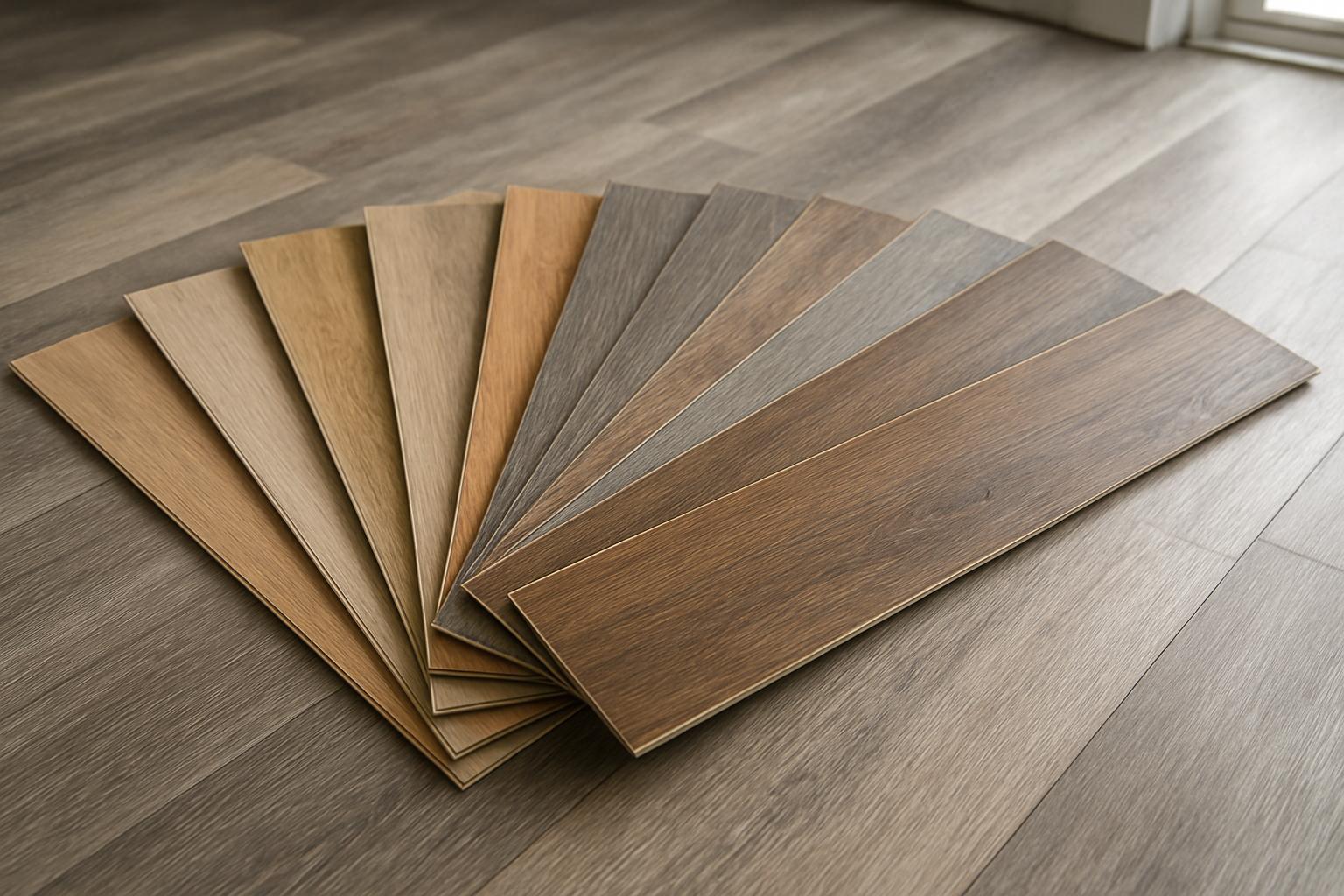
Wholesale LVP (luxury vinyl plank) prices step down in tiers as the wear layer and core change, not just as volume goes up. The cheapest pallet and the priciest pallet can both wear the same "wholesale" sticker. A named line like Certaplank's full product lineup shows how wear-layer tiers, not bulk, set the final price.
Bulk and Pallet Pricing Tiers
Spec drives the number far more than the channel does. The table below uses reallycheapfloors.com's own listed per-square-foot prices to show the tiers. The wear layer in each row is that site's figure for the products it lists at that tier, not a fixed rule for the category, so confirm the mil rating on the specific product's own spec sheet before you buy. Established manufacturers such as Mannington's full flooring lineup publish similar tiered spec sheets for each product line.
| Tier | Wear layer (varies by product) | Core | Price per sq ft | Best for |
|---|---|---|---|---|
| Entry-level | ~12 mil | Thin / basic | $0.39-$1 | Rentals, low-traffic rooms |
| Mid-range | ~20 mil | SPC (rigid) | $1.99-$2.79 | Kitchens, busy households |
| Premium | 20-22 mil | SPC, name brand | ~$2.99 | Long-wear, high-traffic |
Source: reallycheapfloors.com's listed per-square-foot prices
A minimum order quantity, or MOQ, is the smallest amount a supplier will sell at the quoted price. It's often a full pallet. The per-square-foot number tends to drop as you jump to bigger volume, which is where a genuine pallet buy earns its keep.
Do You Need a Trade Account to Buy?
Not usually. A trade or contractor account asks for proof you're a business, often a resale certificate, and it can unlock a slightly better tier. But plenty of wholesale LVP outlets sell straight to homeowners, sometimes at a tier a notch above what a contractor pays. Weighing those wholesale outlets against big-box stores and online retailers is worth doing before you commit to a pallet, since comparing vinyl flooring sellers side by side often turns up a better deal than either alone.
For the wider frame, estimators.us puts LVP material alone at $2.50-$7 per square foot for 2026. A true wholesale number should sit at or below the low end of that. If it doesn't, the word on the sticker is doing all the work.
What Bulk LVP Actually Costs: The 1,000 Sq Ft Math
The math breaks down into one formula, with every piece named: total = (area x 1.10 for waste x material price per sq ft) + (area x labor rate per sq ft). The 1.10 covers cuts and mistakes; order 1,000 square feet of floor and you buy about 1,100.
Run it for a 1,000 square foot room using reallycheapfloors.com's mid-range tier, which lists products around 20-mil wear layer SPC (stone plastic composite), check the exact mil rating on whichever product you actually pick. Material uses reallycheapfloors.com's $1.99-$2.79 range. Labor for floating click-lock runs $1.50-$4 per square foot, per nedesestimating.com.
| Line item | Detail | Cost |
|---|---|---|
| Flooring ordered | 1,000 sq ft + 10% waste = 1,100 sq ft | - |
| Material (mid-range SPC, ~20 mil, confirm per product) | 1,100 sq ft x $1.99-$2.79 | $2,189-$3,069 |
| Labor (floating click-lock) | 1,000 sq ft x $1.50-$4 | $1,500-$4,000 |
| Total installed | material + labor | $3,689-$7,069 |
| DIY total (click-lock, no labor) | material only | $2,189-$3,069 |
Installed and DIY cost for 1,000 sq ft of mid-range LVP, material from reallycheapfloors.com and floating click-lock labor from nedesestimating.com.
Read the labor line and the DIY line next to each other. Floating click-lock is realistic for most handy homeowners, and doing it yourself erases that whole labor half. That's $1,500-$4,000 you keep on this job.
Glue-down is a different animal. So are stairs and a big open-plan floor that crosses from one room's moisture conditions into another. Those are worth hiring out, and they cost more per square foot than an open bedroom because of the prep, the cuts, and the slower going.
Basements and stairs carry that same premium. So a pallet price alone never tells you the project cost. Two homes buying the identical floor can land thousands apart once the room decides the labor.
SPC, WPC, and Wear Layer: What You're Buying by the Pallet
SPC stands for stone plastic composite, a dense, rigid, harder core. WPC stands for wood plastic composite, which is a bit softer and warmer underfoot. Most wholesale LVP sold today is SPC, which is why the mid and premium tiers above are SPC. Every one of those letters, plus the mil rating and the rest of the tag, gets spelled out plainly in every acronym and spec on the tag.
The wear layer is the clear plastic top skin that takes the scratches, measured in mils. Buy 12 mil for a light-traffic rental or guest room, and 20 mil or more for a kitchen or a busy family home. That specification is listed on the manufacturer's spec sheet, so reference it instead of guessing from a forum.
| Factor | SPC | WPC |
|---|---|---|
| Core | Stone + plastic, rigid and dense | Wood flour + plastic, lighter |
| Feel underfoot | Firm, harder | Softer, a touch warmer |
| Dent resistance | Higher | Lower |
| Typical use | High-traffic, commercial, rentals | Residential comfort rooms |
| Water | Waterproof core; seams/edges still a risk | Waterproof core; same edge risk |
SPC versus WPC on the factors that matter for a bulk order.
Now the claim that gets twisted on every wholesale listing. A waterproof core is not a waterproof floor. The plank itself won't swell when wet, true. On a floating floor, water can still penetrate through the click joints or escape from the edge at the perimeter gap, where it pools underneath on the subfloor. For a basement or a bathroom order, that difference is the whole ballgame. Getting the core, the underlayment, and the edge sealing right is really what decides a vinyl floor's lifespan, and the factors that decide vinyl flooring's lifespan go well beyond the pallet price tag.
In the work I've done, the floors I get called back on are rarely the cheap thin plank. They're the floors laid over a subfloor nobody checked, or edges that let a dishwasher leak pool out of sight. The plank stayed fine; the trouble was under it.
Buying by the pallet adds one more trap: dye lots. On a job near Dayton I opened a "bargain" pallet where two boxes ran a shade off the rest, and the only clean fix was setting those boxes in a closet. Before committing, verify the core type, check the wear layer, and confirm the dye lot per product, or your deal becomes a problem on install day.
How to Vet a Wholesale Supplier: Green Flags vs. Red Flags
The single best test is this: a supplier who will only quote you "a percent off" and can't hand over a spec sheet is the red flag. Walk.
Before any pallet order, get these four things in writing:
- Wear layer in mils and core type for the exact product, not the category.
- FloorScore status. FloorScore is a certification that tests flooring for low chemical emissions into the air you breathe indoors. A named product will show whether it carries it.
- Return policy, especially on opened pallets and short dye-lot runs.
- Warranty term, tied to that product and what it actually covers.
Green flags are the mirror image. A named product with a real spec sheet, a stated dye-lot guarantee, a written return window, and a warranty you can read before you pay. Those cost a good supplier nothing to provide, so silence on any of them tells you plenty.
One more guard against a cheap order that bites: know which vinyl plank brands to avoid before a low price talks you into one. And when you compare offers, price a clearance of discontinued vinyl against the wholesale sticker on landed dollars per square foot, because last-season stock often wins outright.
Sources
- National Wood Flooring Association, NOFMA-certified manufacturers directory
- Reallycheapfloors.com's listed per-square-foot prices