
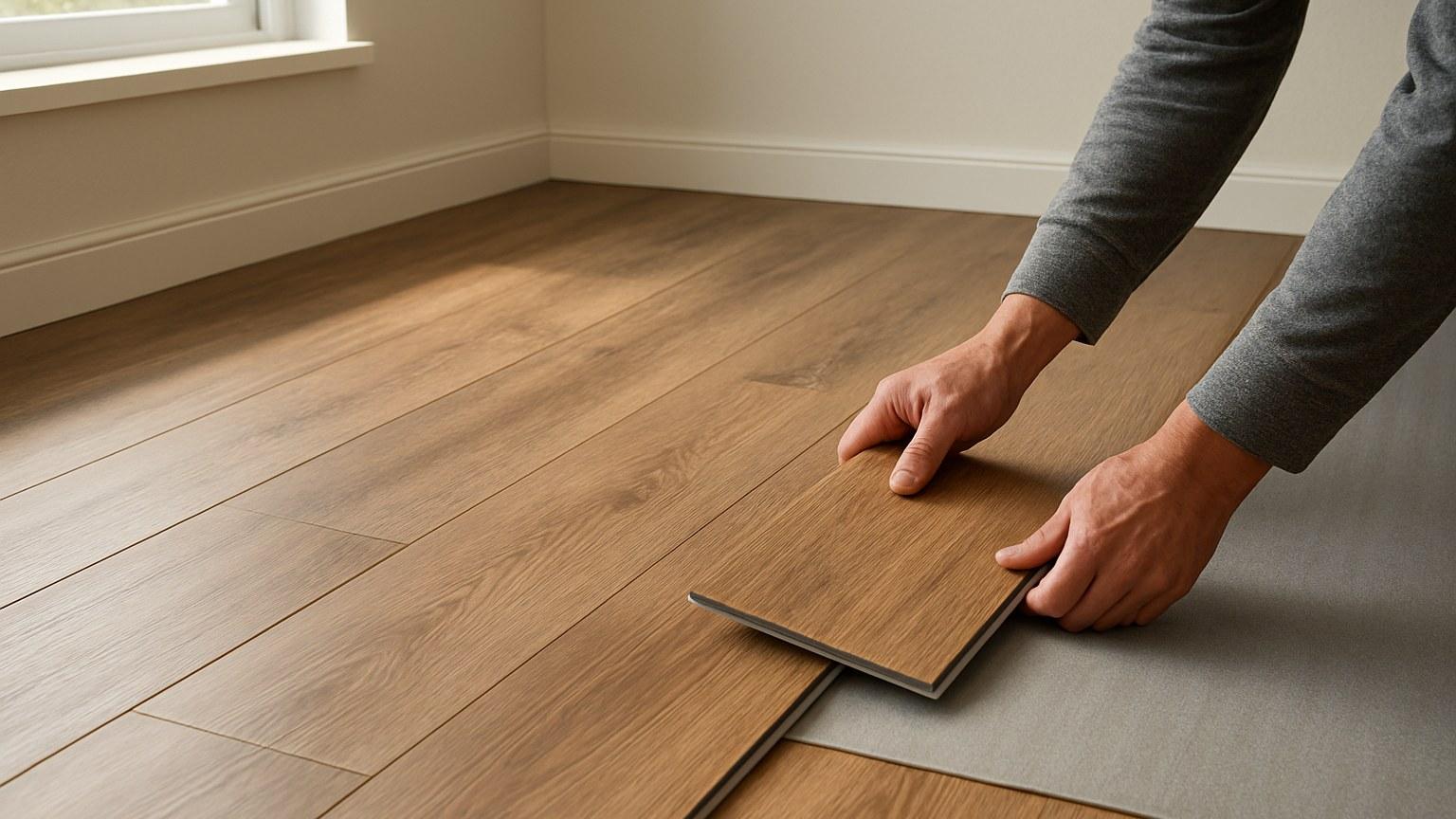
Lowe's doesn't sell one standout vinyl plank, the smart pick comes down to matching core type and wear layer to the room and the traffic it takes, not whichever brand badge sits highest on the shelf. The aisle mixes three house lines at three different price tiers, and the names tell you almost nothing about how the plank will hold up. Match the plank to the room first, and the color choice gets easy.
Key takeaways
- There is no single best Lowe's plank; the house lines sit at different tiers, so the right one is whichever core and wear layer match your room.
- allen + roth reads as the entry look, SmartCore as the mid rigid-core workhorse, and STAINMASTER as the premium stain- and pet-focused line; CoreLuxe is often cross-shopped but is not a Lowe's house brand.
- Most current Lowe's rigid-core vinyl is SPC (hard, stable, good over slabs and basements); WPC (wood plastic composite) is thicker and warmer underfoot but shows up less often.
- "Waterproof" on the box describes the plank core, not the seams or the room, so wet-room failures usually start at the seams, not the surface.
- A 12x12 room is 144 sq ft; add about 10% for cuts and buy roughly 160 sq ft. Click-lock floating is realistic DIY, but stairs, glue-down, and big open-plan jobs are worth hiring out.
Which Vinyl Plank at Lowe's Fits Your Room?
Lowe's house lines sit at different tiers, so "best" only means something once you name the room. allen + roth reads as the entry look and price. SmartCore is the mid rigid-core workhorse. STAINMASTER is the premium line built around stain and pet resistance. You'll also see CoreLuxe brought up in online cross-shopping, but that's a Floor & Decor brand, not one of Lowe's own house lines. Karndean comes up in those same cross-shop threads too, especially among shoppers after a light wood vinyl flooring look.
Homeowners often want me to just name a winner, like one plank could cover every room in the house. I can't do that. Someone with a slab basement, two dogs, and south-facing windows needs a different plank than someone redoing a quiet upstairs bedroom, so I ask what room and what abuse before I'll name anything.
A few terms worth knowing, because most aisle signs skip them. LVP (luxury vinyl plank) is just a printed plank. SPC (stone-plastic composite) and WPC (wood-plastic composite) are the two rigid cores. The wear layer is the clear top coat, measured in mils (thousandths of an inch), and that mil number, not the line name, is the real durability spec.
Every one of these planks is built in the same stack: a clear wear layer on top that takes the scratches, the printed photo layer you actually see, the rigid core that gives the plank its stiffness, and on many lines an attached pad underneath that quiets the floor. Pick the core and wear layer first, then the look. Popular wood looks like Dovetail Oak show up across more than one line anyway, so color comes last.
SPC vs WPC: The Core Under Each Lowe's Line
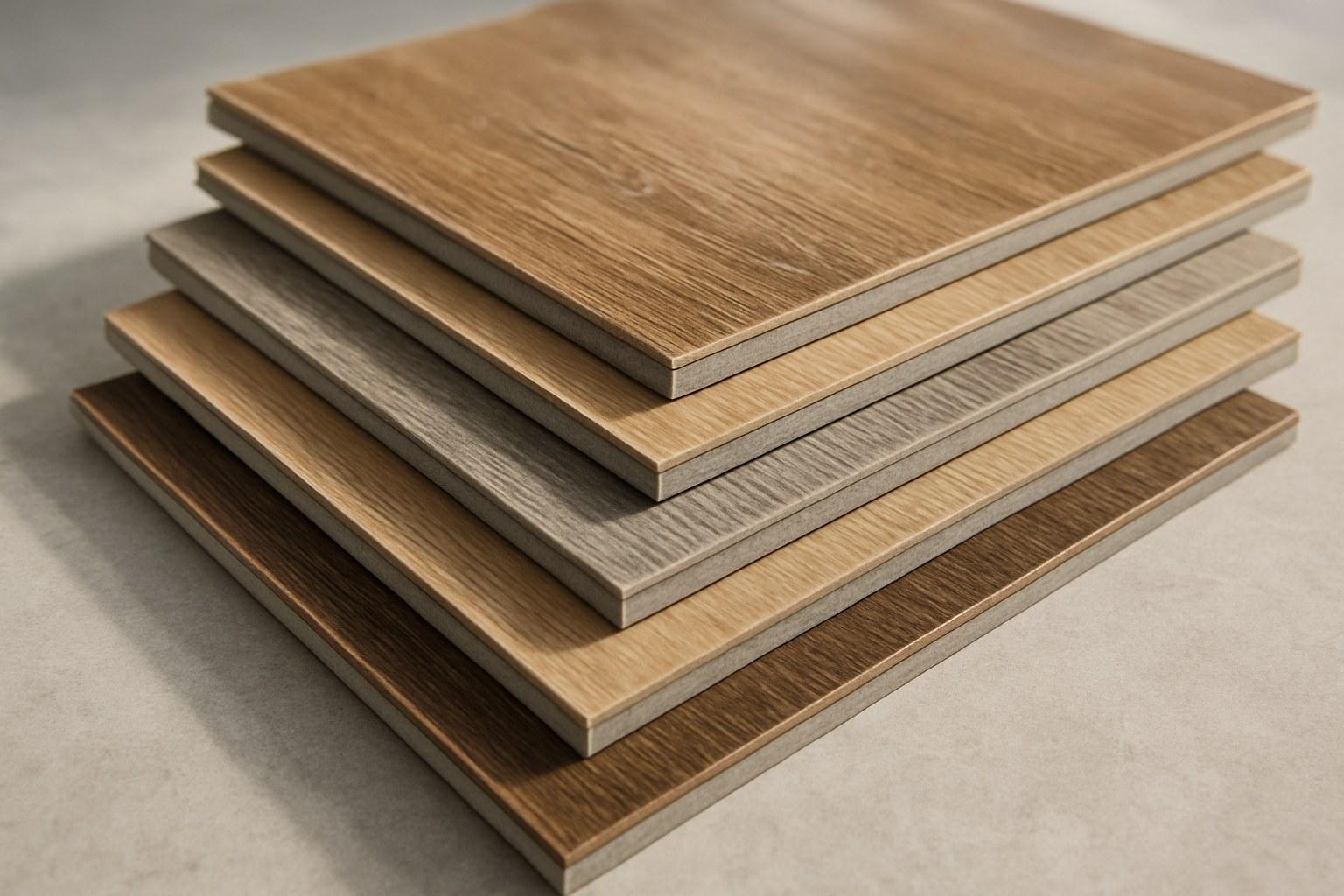
SPC is the hard, dense core. It stays dimensionally stable over slabs and through temperature swings, which is why it suits basements and sunny rooms, but it reads harder and a little louder underfoot. WPC is thicker and softer, so it feels warmer and hides a slightly rough subfloor better. WPC shows up less often in Lowe's current lineup, so most of what's labeled rigid core on the shelf is SPC. Shaw's Pantheon HD Plus line leans into that WPC comfort outside Lowe's shelves, for anyone comparing options beyond the big-box aisle.
The wear layer is where I'd spend your attention. A thin wear layer, the kind spec'd for a light-traffic bedroom, wears through faster than a thick one built for a kitchen or entry. Look up each exact product's published mil rating on its own spec sheet rather than trusting the line name to tell you.
| Trait | SPC (stone-plastic) | WPC (wood-plastic) |
|---|---|---|
| Feel underfoot | Harder, firmer, slightly louder | Softer, warmer, quieter |
| Thickness | Thinner plank | Thicker plank |
| Stability in heat/sun | Holds its shape well | More movement in hot, sunny rooms |
| Over a less-than-flat subfloor | Telegraphs bumps more | Hides minor imperfections better |
| Best fit | Basements, slabs, sunrooms, high traffic | Living areas and bedrooms where comfort matters |
How the two rigid cores compare on feel, stability, and best use.
One more thing on the core: many rigid-core planks ship with an attached IXPE pad, a thin, dense foam cushioning layer already bonded to the plank's back that softens the feel underfoot and muffles sound. Stacking a second underlayment under them can void the warranty, and whether you need any is set by that product's own instructions and the subfloor beneath it. If you're sorting out that question, our guide to Lifeproof underlayment and when vinyl needs any at all walks through it.
Waterproof vs Water-Resistant: What Lowe's Labels Really Promise
The "waterproof" rating on the box describes the plank core, not the seams and not the room. Water can still creep under a floating floor at the edges, sit on the subfloor, and cause trouble you won't see until it's a problem. Read the label as a claim about the material, not a promise about a wet room. For the full waterproof-versus-water-resistant breakdown, see our vinyl flooring buyer's guide.
Matching Each Lowe's LVP Line to Your Room
Work room by room, not line by line. Light-traffic rooms like bedrooms and closets can run the thinner, cheaper entry looks. Kitchens, halls, and entries want a thicker wear layer. Basements and over-slab installs want SPC for its stability and its tolerance of temperature swings. That's because in basements, the slab's moisture condition decides whether the floor lasts even more than the plank choice does, which is exactly why the dry slab matters more than the plank in basement installs.
| Room | Main demand | What to look for | DIY or hire |
|---|---|---|---|
| Bedroom / closet | Comfort, low traffic | WPC or softer rigid core; thinner wear layer is fine | DIY-friendly (click-lock) |
| Living room / hallway | Steady foot traffic | SPC or WPC with a thicker wear layer | DIY in a simple layout |
| Kitchen | Traffic + spills | Thick wear layer; mind seam tightness | DIY if open; hire for appliance transitions |
| Basement (over slab) | Moisture + temperature swings | SPC rigid core; check moisture first | Hire if large or moisture is uncertain |
| Bathroom / mudroom | Standing water risk | SPC; seams and perimeter sealing matter | DIY small; hire for tricky cuts |
| Stairs | Nosing + fastening | Glue-down or stair-nose system, not floating | Hire |
A room-by-room read on core type, wear layer, and whether the job is realistic DIY.
Stairs are their own animal. Planks have to be cut, nosed, and fastened, so that's rarely a floating click-lock job and rarely a good first DIY. Those stair cuts also call for choosing the right tool for each vinyl plank cut, since a utility knife that handles a straight floor cut won't notch cleanly around nosing.
Bathrooms and Basements: Where the Seams Decide It
In wet rooms the seams, not the plank surface, decide whether the floor lasts. That's where water gets under a floating floor, and it's where I end up back out for repairs. Dark planks show this off the worst. You can watch the same seam problem play out in our guide to why walnut vinyl plank flooring looks worn and dirty at the seams.
A kitchen taught me the same lesson sideways. One customer had me install flooring around her new refrigerator rather than waiting for delivery, so I ran the planks to the opening and left it at that. The delivery crew pulled out the old flooring by dragging it, which cut a gouge running across three planks. A single day's delay could have prevented the entire restoration job.
Shelf Price Isn't the Project Price
The per-square-foot number on the shelf tag is materials only. Your real total adds underlayment (unless the plank has an attached pad), trim and transition strips, blades or tools, and labor if you hire out. Basements and stairs run higher than an open room. That shelf price also swings a lot depending on which of the places to buy vinyl flooring you choose, not just which core or wear layer you pick.
Here's the math most people search for. A 12x12 room is 144 square feet. Add about 10 percent for cuts and waste and you're buying roughly 160 square feet. Multiply the shelf rate by 160 for materials, and the labor rate by the room's 144 square feet if you hire the install.
| Cost piece | Typical rate | 12x12 room |
|---|---|---|
| Flooring (buy ~160 sq ft) | $2-$5 / sq ft | $320-$800 |
| Underlayment, trim, transitions | varies by job | $50-$150 |
| Labor if hired (~144 sq ft) | $1-$3 / sq ft | $145-$430 |
| Installed total, hired | ~$515-$1,380 | |
| DIY total, no labor | ~$370-$950 |
Worked cost for a 12x12 vinyl plank install, split into materials and labor; rates vary by region and rise for basements and stairs.
Those rates move with your region, the line you pick, and the room. An entry allen + roth look lands near the low end of materials; a STAINMASTER plank pushes the high end. Click-lock floating in a simple square room is realistic DIY, which cuts out the labor line entirely. Glue-down, stairs, and big open-plan floors with moisture transitions are where hiring out pays for itself.